The best walks and hikes around Chérac
4.4
(97)
691
hikers
113
hikes
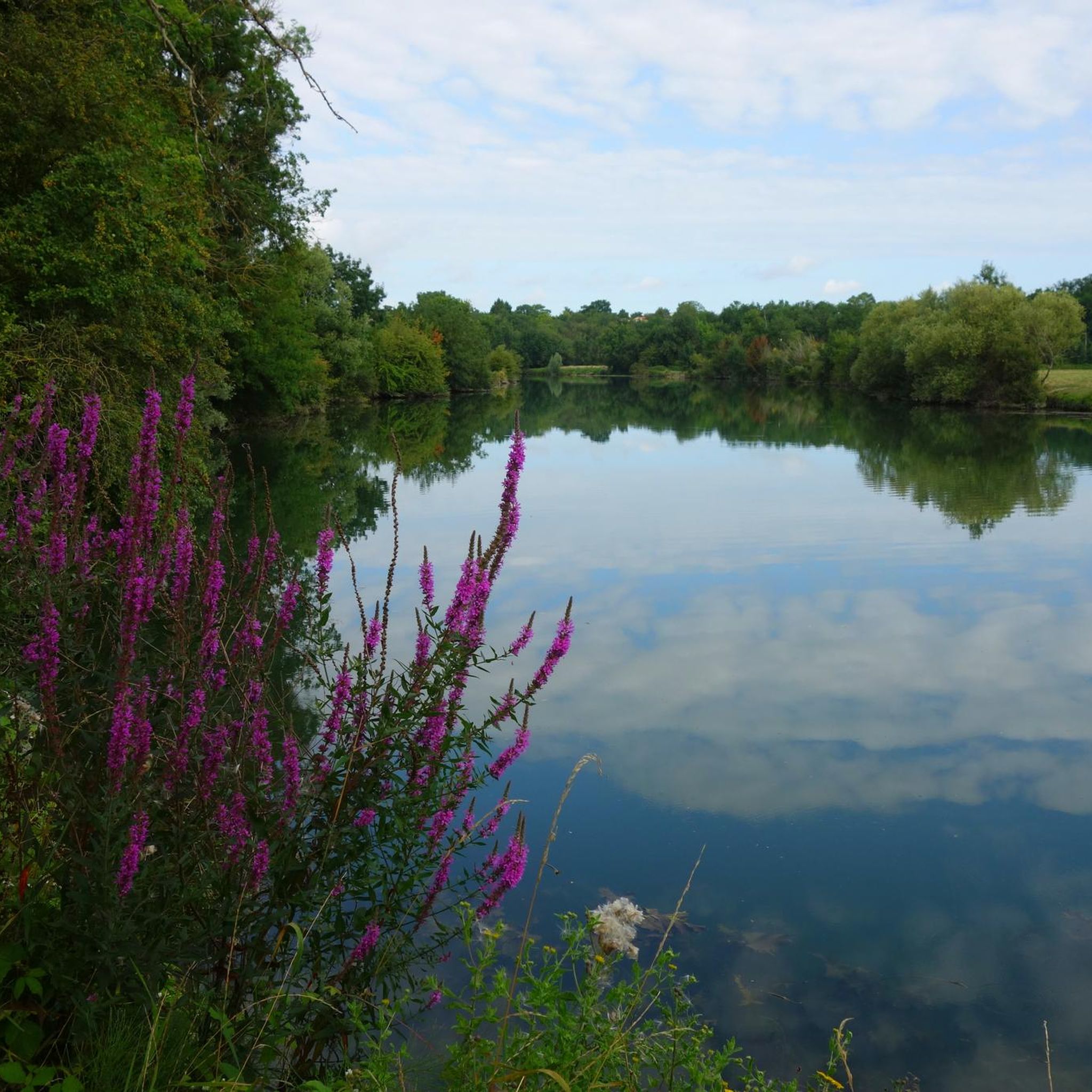
Hiking around Chérac offers diverse landscapes characterized by vineyards, rolling hills, and extensive woodlands. The region features numerous valleys and dells, with trails often providing views over the Charente valley. The Charente river and its tributaries also contribute to the varied terrain, offering serene waterside experiences. This area provides a blend of natural beauty and cultivated environments for outdoor exploration.
Best hiking trails around Chérac
- The most popular hiking route is Saint-Laurent-de-Cognac – loop, an 11.6 miles (18.7 km)…
Last updated: May 15, 2026
5.0
(1)
3
hikers
18.7km
04:57
180m
180m
Moderate hike. Good fitness required. Easily-accessible paths. Suitable for all skill levels.
4.6
(7)
21
hikers
12.5km
03:21
140m
140m
Moderate hike. Good fitness required. Easily-accessible paths. Suitable for all skill levels.

Sign up for free
5.0
(3)
18
hikers
8.05km
02:11
120m
110m
Moderate hike. Good fitness required. Easily-accessible paths. Suitable for all skill levels.
2
hikers
11.3km
03:02
130m
130m
Moderate hike. Good fitness required. Easily-accessible paths. Suitable for all skill levels.
4.0
(2)
8
hikers
13.0km
03:31
170m
170m
Moderate hike. Good fitness required. Easily-accessible paths. Suitable for all skill levels.
Get access to more routes and recommendations from other explorers.
Sign up for free
Already have an account?
Our route recommendations are based on thousands of hikes, rides, and runs completed by other people on komoot.
Start today with a free account
Your next adventure awaits.
Login or Signup



Tips from the Community

This cave is open during the opening hours of the paleosite which offers tours.
0
0

Chesnel Castle, which has the appearance of a fortified castle, is intriguing. However, the niches here have a purely decorative function. The architecture of this building, erected in 1610, is therefore rather original. You can visit the castle by making an appointment via this link: https://patrivia.net/visit/chateau-chesnel
0
0
This imposing holm oak is approximately 500 years old. We do not know if it was planted on the occasion of the birth of the future king of France François I in 1494, on the occasion of his coronation in 1515 or on the occasion of his death in 1547. What we do know, however, is that it measures 17 meters high with a trunk circumference of 5.5 meters. Classified as a “remarkable tree”, it was even elected “tree of the year” in 2014 by the National Forestry Office.
0
0

A particularity is located in the gallery of arcature which overhangs the portal. Indeed it has three arched windows on one side of the central window and two semicircular on the other. Note that the two bays on the right occupy the same width as the three on the left. The bell tower, like many others in the region, has a pyramidal roof. Simple columns come to partition the two windows which cover each face. Inside the church, archival documents prove that the nave with two bays was originally vaulted with warheads. Unfortunately, this vault was destroyed during religious wars. Still according to archival documents, it would seem that at the beginning of the 20th century, a narthex, where the catechumens were held, leaned on its facade. Today, it has completely disappeared. The church was classified as a historic monument in 1913. The building underwent a complete restoration in 1935. To admire just next to the church a magnificent and majestic period residence.
0
0

Take a closer look at the rocks to see the location of a Gallic medieval bridge.
2
0
Home of the Roffignac family, one of whom offered to be executed in place of Louis XVI, the other traveled to the United States and became mayor of New Orleans.
2
0
It was in the 12th century that the church of Saint Césaire was built. It is a Saintonge Romanesque style church.
0
0
Le lieu, sur un promontoire dominant le Ris-Bellot, un affluent de l'Antenne était proche de la voie romaine Saintes-Lyon dite Chemin des Romains ou Chemin chaussé. La paroisse "Saint-Andrea de Combis' est signalée dans les textes anciens. Un sanctuaire précéda l'église (fin 12e siècle) puis l'implantation d'un prieuré de l'ordre de Saint-Augustin cité au 14e siècle. L'église Saint-André faisait partie d'un important prieuré qui a existé jusqu'à la Révolution. Ce prieuré-cure dépendait de Saint-Vivien de Saintes. Les bâtiments jouxtaient l'église qui fut exhaussée pour créer un appartement au-dessus du choeur. Les religieux restèrent dans ces lieux jusqu'au 18e siècle. C'est une église romane à un vaisseau, à nef voûtée en berceau brisé et chœur voûté en plein-cintre. Le chevet est adjacent aux bâtiments de l'ancien prieuré, devenu un temps l'école. Le clocher de plan carré, accolé au sud de l'église, peut dater du 15e siècle. La cloche daterait du XIIe siècle. La sacristie qui suit à l'est porte la date de 1685. Restaurée en 1784 et au 19e siècle, l'église fut ensuite refaite à l'intérieur en 1910-1911 : parois, voûtes et plâtre. Une simple nef de plan allongé se terminait par une abside. Cette dernière garde quelques éléments romans occultés par les bâtiments de l'ancien prieuré. La nef est couverte d'un berceau brisé en briques. La travée sous clocher est sur croisée d'ogives. Le chœur se termine par un cul de four. Il est précédé de colonnes engagées au décor roman. Le retable en bois tourné mouluré date du XIXe siècle. Les tableaux sont de la même époque. Le portail ouest est à trois voussures, les deux dernières étant sculptées de losanges et de pointes de diamant. Un enfeu a été pratiqué à gauche du portail. Deux statues encadrent la baie de la façade. La façade occidentale, datant du XIIe siècle fait l’objet d’une inscription au titre des monuments historiques depuis le 5 décembre 1991. Elle comporte un portail, une fenêtre et une corniche avec des modillons sculptés. Lors de la rénovation de 2002 ce sont les visages du maire de Louzac et du maire adjoint de Saint-André qui ont servi de modèles. Un petit bijou d'histoire et de mutation historique dans la destination des lieux.
0
0
Frequently Asked Questions
How many hiking trails are available around Chérac?
There are over 100 hiking routes around Chérac, offering a wide range of options for different preferences and skill levels. You'll find a mix of easy and moderate trails to explore the diverse landscapes of the region.
Are there easy hiking options suitable for beginners or families?
Yes, Chérac offers a good selection of easy hiking trails. Approximately 40 routes are classified as easy, perfect for a leisurely stroll with family or for those new to hiking. These often traverse vineyards or gentle valleys, providing pleasant scenery without significant challenge.
Can I find circular hiking routes in the Chérac area?
Many of the trails around Chérac are designed as circular routes, allowing you to start and end at the same point. For example, the St Sauvant loop from Saint-Sauvant is a moderate 4.9-mile (7.9 km) path that explores the rural landscape, passing through wooded sections and open fields.
What kind of landscapes can I expect to see while hiking near Chérac?
Hiking near Chérac offers a rich tapestry of landscapes. You'll primarily encounter picturesque vineyards and rolling hills, especially in areas like the Borderies and Petite Champagne. Trails also wind through tranquil valleys and extensive woodlands, with some routes offering views over the Charente valley. The Charente river and its tributaries provide serene waterside experiences.
Are there any unique natural features to discover on hikes in this region?
Yes, a distinctive natural feature in the broader region, particularly near Clérac and Guizengeard, are the 'blue lakes.' These former clay exploitation sites reflect the sky, creating striking turquoise waters. While not directly in Chérac, some regional tours allow you to experience this unique phenomenon. Additionally, the Coran Valley features charming water mills and springs.
What are some interesting historical or cultural sites I can visit along the trails?
The Chérac area is rich in history and culture. Many hiking routes pass through charming villages and past historical sites. You can discover Romanesque churches like Saint-Martin Church or Saint-Brice Church. The Abbaye de Fontdouce is another notable historical site nearby. For an interactive experience, the Paléosite Center in Saint-Césaire, just 5 minutes from Chérac, offers outdoor adventure games and activities.
Are the hiking trails around Chérac dog-friendly?
Many trails in the Chérac region are suitable for walking with dogs, especially those through woodlands and open countryside. It's always recommended to keep your dog on a leash, particularly when passing through vineyards or near livestock, and to check local regulations for specific areas or nature reserves.
What do other hikers say about the trails in Chérac?
The hiking trails around Chérac are highly rated by the komoot community, with an average score of 4.4 stars from nearly 100 reviews. Over 700 hikers have explored the varied terrain, often praising the peaceful vineyards, charming rural paths, and the well-maintained nature of the routes.
Are there any longer hiking routes for experienced hikers?
For those seeking longer excursions, Chérac offers several moderate routes that provide a good challenge. The Saint-Laurent-de-Cognac – loop is a substantial 11.6-mile (18.7 km) trail that takes nearly 5 hours to complete, traversing vineyards and offering expansive countryside views. Another option is the Pont des Gaulois loop from Saint-Laurent-de-Cognac, which is 12.6 miles (20.3 km) long.
Is it possible to access hiking trails around Chérac using public transport?
While Chérac is a rural area, public transport options might be limited for direct access to all trailheads. It's advisable to check local bus schedules for connections to Chérac and surrounding villages. For greater flexibility, traveling by car is generally recommended to reach various starting points for hikes.
Where can I park my car when starting a hike in Chérac?
Many hiking routes in the Chérac area, especially those starting from villages like Saint-Laurent-de-Cognac, Saint-Sauvant, or Louzac-Saint-André, typically have designated parking areas or roadside parking available near the trailheads. Always look for signs or local information regarding parking availability and restrictions before you begin your hike.
Are there any trails that feature water mills or river views?
Yes, the region's rivers and tributaries offer picturesque waterside experiences. The Pont des Gaulois – Moulin de Saint-Laurent loop from Louzac-Saint-André is a notable trail that leads through valleys and past historical water mills, providing charming river views and a glimpse into the area's heritage.
What is the best time of year to go hiking in Chérac?
The best time to hike in Chérac is typically during spring (April to June) and autumn (September to October). During these seasons, the weather is mild and pleasant, and the landscapes are particularly beautiful, with blooming wildflowers in spring and vibrant colors in autumn. Summer can also be enjoyable, but it's best to hike early in the morning or late afternoon to avoid the midday heat.
Most popular attractions around Chérac

Get inspired with the komoot mobile app


Explore more
Browse the best Hikes in other regions.
