The best road cycling routes around Bournand
4.7
(21)
735
riders
202
rides
Road cycling routes around Bournand traverse a region characterized by rolling agricultural lands, river valleys, and historical sites. The terrain generally features moderate elevation changes, with routes often passing through rural villages and past châteaux. The area's geology includes limestone formations, which contribute to the presence of troglodyte dwellings in some parts. Road cyclists can expect a mix of open country roads and sections near historical landmarks.
Best road cycling routes around Bournand
- The most popular road cycling route is…
Last updated: November 19, 2026
5.0
(1)
28
riders
60.8km
02:31
350m
350m
Moderate road ride. Good fitness required. Some segments of this route may be unpaved and difficult to ride.
13
riders
43.3km
02:09
230m
230m
Moderate road ride. Good fitness required. Some segments of this route may be unpaved and difficult to ride.

5
riders
Moderate road ride. Good fitness required. Some segments of this route may be unpaved and difficult to ride.
6
riders
63.1km
02:45
410m
410m
Moderate road ride. Good fitness required. Mostly well-paved surfaces and easy to ride.
6
riders
88.7km
03:55
460m
460m
Moderate road ride. Good fitness required. Some segments of this route may be unpaved and difficult to ride.
Get access to more routes and recommendations from other explorers.
Already have an account?
Our route recommendations are based on thousands of hikes, rides, and runs completed by other people on komoot.
Start today with a free account
Your next adventure awaits.

Tips from the Community

A short but memorable passage in the heart of troglodyte galleries.
0
0
A must-see. As beautiful up close as from afar.
0
0

At this precise point, view of the entire Abbey. There are even benches to sit and enjoy the panorama
0
0

The Royal Abbey of Fontevraud is one of the largest monastic communities in Europe dating back to the Middle Ages. It is a place with a rich history, located in the heart of the Loire Valley and listed as a UNESCO World Heritage Site. The abbey is a unique cultural site! An abbey with a royal destination, a formidable prison is today a place of creation (museum of modern art).
3
0
Welcome to the shop. Let yourself be triggered by the products offered. The abbey is a unique cultural place! An abbey with a royal destination, a formidable prison is today a place of creation (museum of modern art). Buy a ticket and dive back in time.
3
0
History in brief Antiquity: the site is strategically located on a promontory and has been inhabited for 3,000 years. It was not fortified until the end of the Roman Empire. Middle Ages: in 1154, the new King of England, Henry II Plantagenet, became ruler of an empire stretching from Scotland to the Pyrenees and made Chinon his continental capital. He had a large palace built next to the fortress, which has now disappeared. In 1189, abandoned by his sons, Richard the Lionheart and John Lackland, and fleeing from the King of France, he eventually died there. Philippe Auguste had the defensive Tour du Coudray built there after the siege of 1205. Renaissance: in 1454, the fortress became the main residence of Queen Marie d'Anjou, who lived there without her husband. She spent lavishly on decorating the house to her taste. From the 16th century onwards, the fortress was gradually abandoned and fell into disrepair. Despite the dangerous nature of the terrain, it became a public promenade in 1824 and was listed as a monument in 1840. The restoration of the estate began in 1854 thanks to the efforts of the writer Prosper Mérimée. Source: https://loirelovers.fr/en/visit-royal-fort-chinon/
6
0
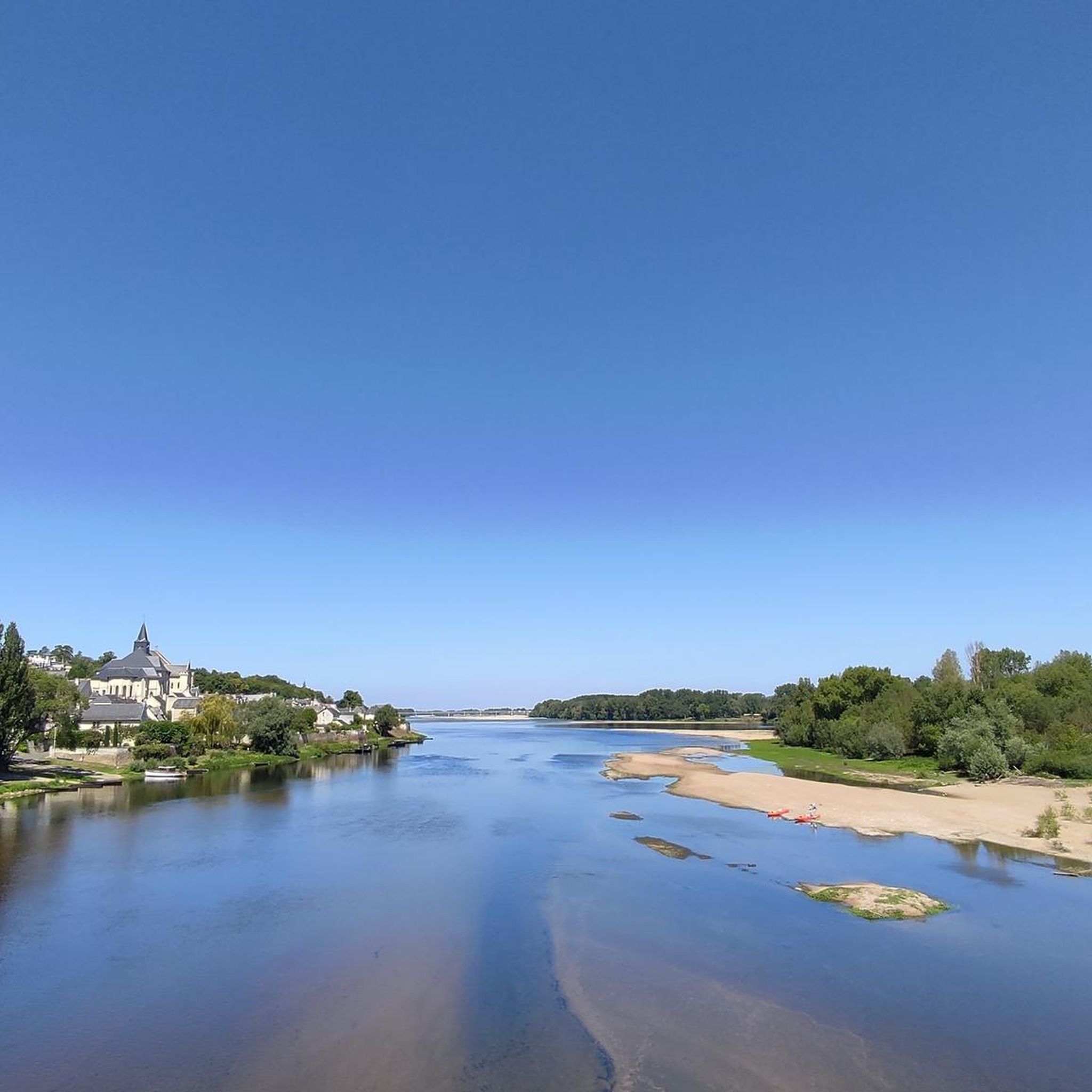
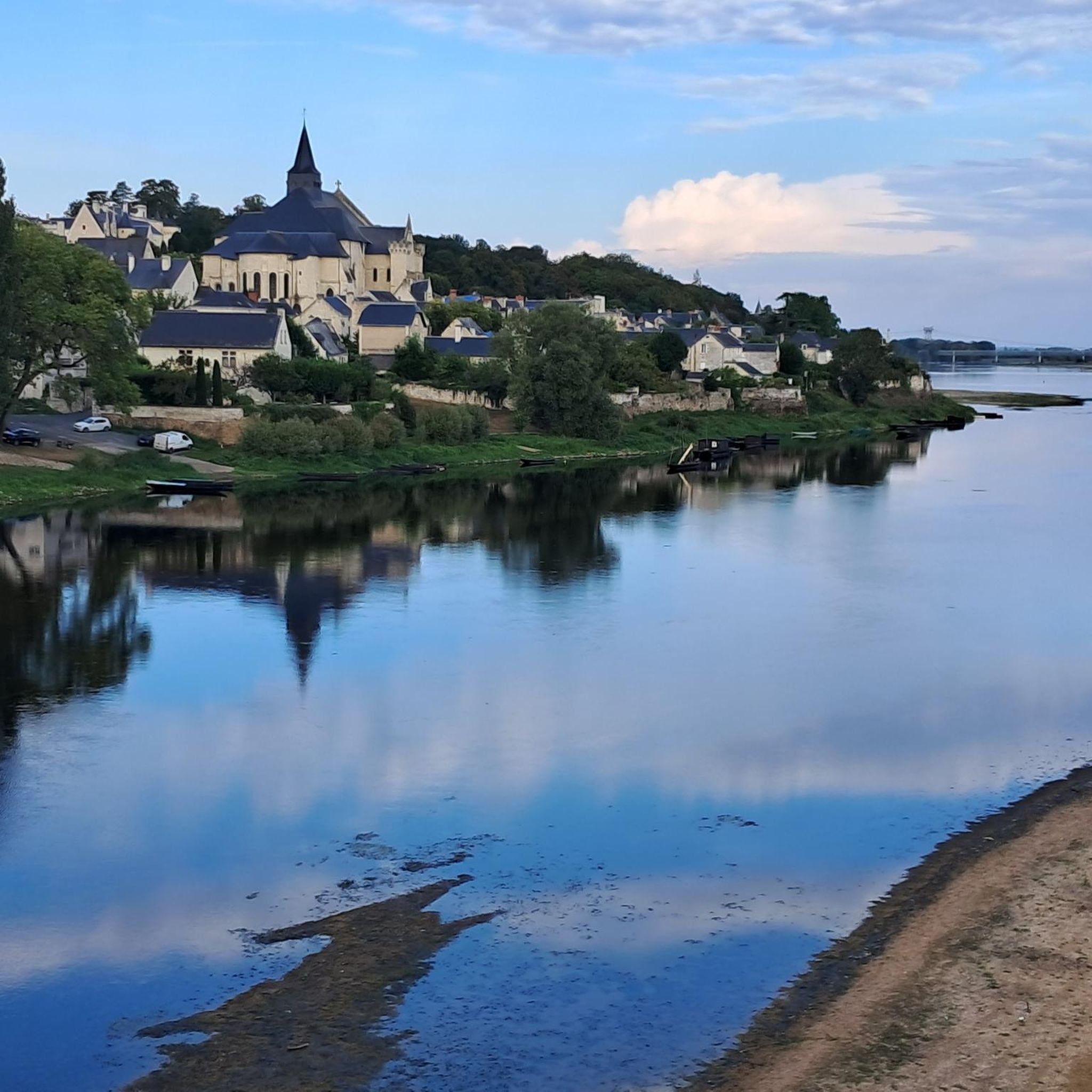
On this bridge over the La Vienne you have a nice view of the skyline of Candes-Saint-Martin. This cozy village is located near the confluence of the Vienne and the Loire.
4
0
Fontevraud-l'Abbaye is located in the natural region of the Loire Valley, listed as a "living cultural landscape" by UNESCO. As its name suggests, the history and present of the municipality are closely linked to the Abbey of Notre-Dame, founded in 1099. The abbey presents the originality of being part of a mixed order, but led by abbesses until the Revolution. was the necropolis of the Plantagenet dynasty. The recumbent figures of Richard the Lionheart, Henry II and Eleanor of Aquitaine are still preserved there. The vast abbey complex was transformed by Napoleon I into a penal colony and then into a "central house". This extraordinary prison closed its doors in 1963. While the abbey church and the various monastic sites were rehabilitated, the entire old abbey has since housed a prestigious cultural centre with, among other things, a renowned art museum, welcoming meetings and artists in residence. Art, history and heritage are highlighted throughout the year.
4
0
Frequently Asked Questions
How many road cycling routes are available around Bournand?
Bournand offers a wide selection of road cycling routes, with over 190 options available for exploration. These routes cater to various preferences, from leisurely rides to more challenging excursions.
What is the general terrain like for road cycling in Bournand?
The Bournand region is characterized by rolling agricultural lands and picturesque river valleys. Road cyclists can expect moderate elevation changes, with routes often passing through charming rural villages and past historical châteaux. The area's geology also features limestone formations, contributing to unique landscapes.
What are the difficulty levels of road cycling routes in Bournand?
The routes around Bournand offer a good mix of difficulty levels. You'll find approximately 39 easy routes, perfect for a relaxed ride, while the majority, around 152 routes, are considered moderate, providing a satisfying challenge for most road cyclists. There are currently no routes classified as difficult.
When is the best time of year for road cycling in Bournand?
The moderate elevation changes and agricultural landscapes of Bournand make it enjoyable for road cycling throughout much of the year. Spring and autumn generally offer pleasant temperatures and beautiful scenery, while summer can be warm but still very suitable for early morning or late afternoon rides.
Are there family-friendly road cycling routes in Bournand?
Yes, Bournand offers several easier routes that are suitable for families or those new to road cycling. These routes typically feature less elevation gain and pass through scenic, quieter areas, allowing for a relaxed experience.
Can I find circular road bike routes around Bournand?
Many of the road cycling routes in Bournand are designed as loops, allowing you to start and finish at the same point. For example, the Saumur – troglodytes loop from Les Trois-Moutiers is a popular circular route that takes you past historical sites.
What historical sites or landmarks can I see along road cycling routes in Bournand?
The region is rich in history. Many routes pass by significant landmarks such as the Fontevraud Royal Abbey, a UNESCO World Heritage site. You might also encounter charming rural villages and châteaux, offering glimpses into the area's past.
Are there any unique geological features to explore while road cycling?
Yes, the limestone formations in the area have led to the creation of unique troglodyte dwellings. Some routes, like the Saumur – troglodytes loop from Les Trois-Moutiers, specifically highlight these fascinating historical cave homes carved into the rock.
Where can I find parking for road biking trails in Bournand?
Parking is generally available in the villages and towns that serve as starting points for many routes. For instance, routes often begin near central areas or designated parking zones in places like Les Trois-Moutiers or Roiffé, providing convenient access to the trails.
Are there road bike trailheads in Bournand accessible by public transport?
While Bournand itself is a rural area, some larger towns in the vicinity may offer public transport connections. It's advisable to check local bus or train schedules for nearby hubs like Saumur, from where you might be able to cycle to various trailheads.
Are there places to stop for refreshments or cafes along the routes?
Many road cycling routes in Bournand pass through rural villages where you can often find local bakeries, small cafes, or restaurants. These provide excellent opportunities for a break and to experience local hospitality. Planning your route to include these stops can enhance your ride.
What do other road cyclists appreciate about the routes in Bournand?
The road cycling routes in Bournand are highly rated by the komoot community, with an average score of 4.7 stars from over 20 reviews. Cyclists often praise the scenic agricultural plains, the quiet country roads, and the opportunity to discover historical landmarks like the Château de Saumur.
Are there any routes that offer views of significant châteaux?
Absolutely. The region is known for its châteaux. For example, the Château de Saumur – Saumur loop from Roiffé offers splendid views of the Château de Saumur and its surrounding countryside, making for a very picturesque ride.
Most popular attractions around Bournand

Get inspired with the komoot mobile app


Explore more
Browse the best Road cycling routes in other regions.
