Attractions and Places To See around Brie - Top 15
Best attractions and places to see around Brie, located in the Deux-Sèvres department, offer a variety of historical and architectural sites. This region is characterized by its historical landmarks, including ancient churches and medieval castles. Visitors can explore sites along the Thouet river, which provides a natural setting for these historical points of interest. The area features a blend of cultural heritage and natural landscapes.
Best attractions and places to see around Brie
- The most popular attractions is Small Church…
Last updated: May 11, 2026
Small Church of Saint-Généroux (10th century)
Highlight • Religious Site
Translated by Google •
Tip by

Montguimier Mill
Highlight • Monument
Translated by Google •
Tip by
Sign up now to discover places like this
Get recommendations on the best single tracks, peaks, & plenty of other exciting outdoor places.
Sign up for free
Château de La Coindrie
Highlight • Castle
Translated by Google •
Tip by

Château d'Oiron
Highlight • Castle
chateau-oiron.fr
Tip by

Curçay-sur-Dive Keep
Highlight • Other
Translated by Google •
Tip by
Sign up for free to discover even more attractions around Brie.
Sign up for free
Already have an account?
Start today with a free account
Your next adventure awaits.
Login or Signup




Tips from the Community


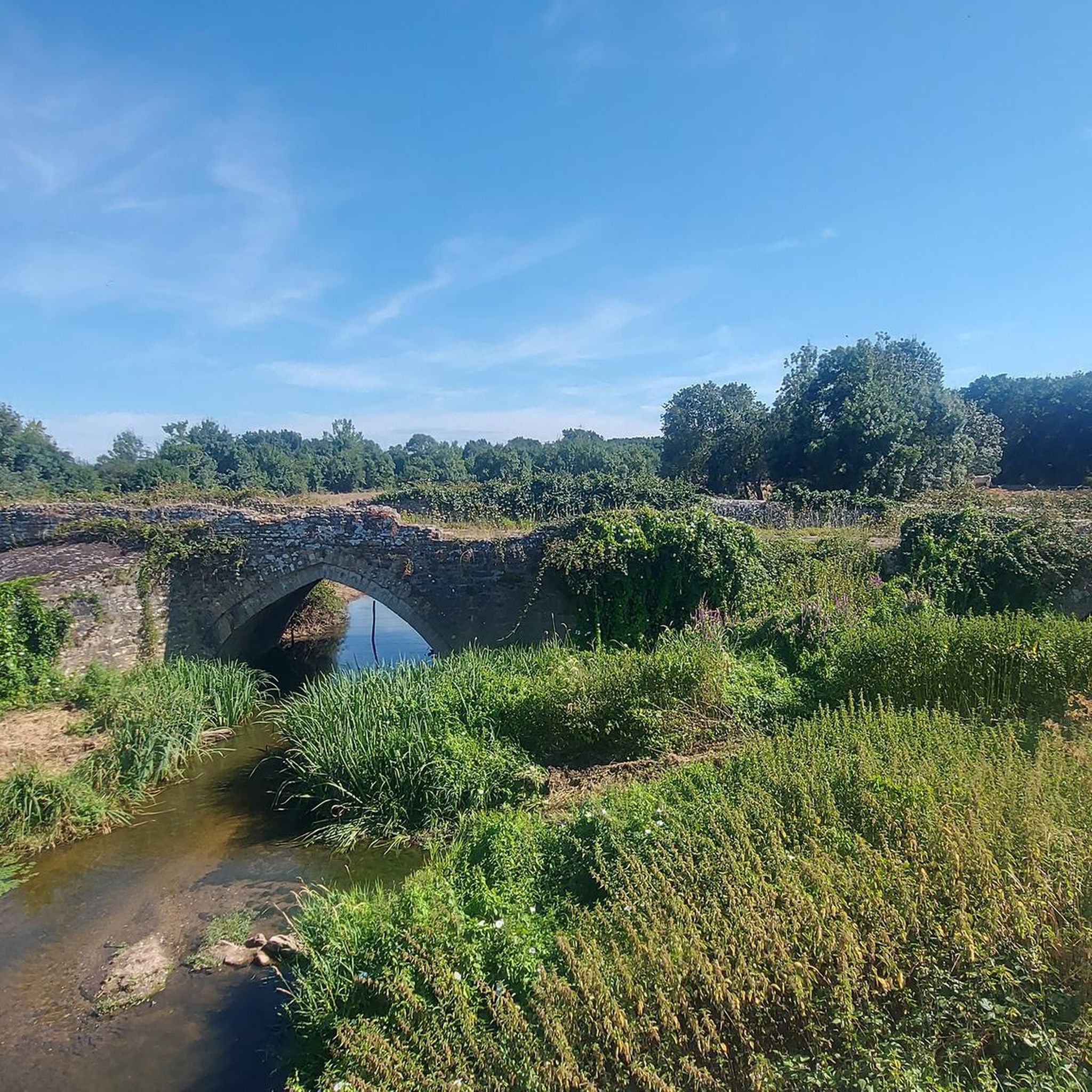
The Church of Saint-Généroux is a site well worth a visit during a hike. It dates back to the 10th century and is considered one of the oldest churches in France, as it features pre-Romanesque architecture found nowhere else. The church is located on the banks of the Thouet River. You can also admire the Romanesque bridge (13th century).
0
0

Without the characteristic wings - which used to capture the power of the wind to set the heavy millstones in motion - the once proud windmill, which was certainly impressive at the time, is missing an essential architectural element. From a distance, the observer can see its modern successors: within sight of the former windmill, the slender towers and turbine blades of a modern wind farm, which is used to generate electricity, rise into the sky.
2
0
In the proverbial "good old days" of centuries past, this (former) windmill, standing in a very prominent position in the vast landscape, must have made a deep impression on the viewer. However, this changed a long time ago: the no longer intact tower stump is missing the wings, precisely those elements that were once so fundamental to the appearance of those four-armed giants (at least that is what the character "Don Quixote" invented by Miguel Cervantes thinks in one of the famous Spanish author's bizarre stories).
3
0

The church of Saint-Généroux is a historical and cultural site which is worth a visit during a walk in Deux-Sèvres. Dating from the 10th century, it is considered one of the oldest churches in France and features remarkable pre-Romanesque architecture. You can admire its sculpted capitals, its three-bay triumphal arch and its cul-de-four apse. The church is located on the banks of the Thouet, a peaceful river which offers a pleasant natural setting for a walk. You can also enjoy the 13th century Romanesque bridge which spans the river and offers a beautiful view of the church and the surrounding landscape.
3
0
The Moulin de Montguimier is a 12th century mill that belonged to the monks of Saint-Jouin-de-Marnes. You can start your hike from the parking lot of the Saint-Généroux church, a remarkable example of Romanesque art. Cross the bridge over the Thouet and follow the yellow markings. You will pass an old lime kiln and enjoy the view of the valley and hills. You can also picnic by the river and relax in the shade of the walnut trees.
4
0

Very beautiful remains of an old castle. It's good to imagine what life might have been like here. A picnic area welcomes us to the side for lunch. Silence and serenity here.
1
0

Imposing keep of the old fortress of Curçay, listed as a Historic Monument.
1
0
Frequently Asked Questions
What historical sites can I explore around Brie in Deux-Sèvres?
Brie in Deux-Sèvres is rich in historical landmarks. You can visit the Small Church of Saint-Généroux (10th century), considered one of France's oldest churches with pre-Romanesque architecture. Explore the imposing ruins of Château de La Coindrie, a former fortified monastery, or the 12th-century Montguimier Mill. Further afield, discover the magnificent Château d'Oiron, which houses a contemporary art collection, and the impressive Curçay-sur-Dive Keep, a remnant of a 14th-century fortress.
Are there any family-friendly attractions near Brie?
Yes, several attractions around Brie are suitable for families. The Small Church of Saint-Généroux and the Château de La Coindrie offer historical exploration in natural settings, often with picnic areas. The Château d'Oiron also welcomes families, with its park accessible free of charge and the castle offering contemporary art exhibitions that can engage older children.
What outdoor activities can I do near Brie's attractions?
The area around Brie is excellent for outdoor activities, especially along the Thouet river. You can enjoy running, gravel biking, and cycling. For running, explore routes like the 'Running loop from Brie' (6.1 km) or 'Running loop from Arçay' (6.8 km). Cyclists can tackle longer routes such as 'Château d'Oiron et Moncontour – loop in the Thouarsais Country' (44.8 km) or 'Montguimier Mill – Pont des Chouans on the Thouet loop from Taizé' (39.9 km). You can find more details on these routes in the Running Trails around Brie, Gravel biking around Brie, and Cycling around Brie guides.
Are there any hiking or walking trails near Brie?
While specific hiking trails are not detailed, the region offers opportunities for walks. The Small Church of Saint-Généroux is located on the banks of the Thouet, providing a peaceful natural setting for a walk, including a 13th-century Romanesque bridge. The area around Montguimier Mill also offers pleasant walks, with tips suggesting starting from Saint-Généroux church, crossing the bridge, and following yellow markings to enjoy views of the valley and hills.
What natural features can I see around Brie?
The primary natural feature around Brie in Deux-Sèvres is the Thouet river, which provides a picturesque setting for many historical sites. You can enjoy peaceful walks along its banks, offering views of the surrounding landscape and historical structures like the Small Church of Saint-Généroux and the ruins of Château de La Coindrie. The region is characterized by its natural settings and open countryside.
What do visitors enjoy most about the attractions around Brie?
Visitors particularly appreciate the historical depth and serene natural settings of Brie's attractions. The Small Church of Saint-Généroux is admired for its ancient architecture and riverside location. The ruins of Château de La Coindrie are valued for their atmospheric beauty and the opportunity to imagine past life, often with a picnic. The Montguimier Mill is noted for its prominent position in the landscape and historical significance.
Are there any other notable castles or historic towns near Brie in Deux-Sèvres?
Yes, beyond the immediate vicinity of Brie, the Deux-Sèvres department offers more historical gems. Just 4 km south-south-east, Moncontour features a castle. About 15 km west-north-west, Thouars is known for its 17th-century castle and historic sites. An impressive 15th-century castle, Château de Montreuil-Bellay, is located 25 km north-north-west. Additionally, the significant Fontevraud Abbey is about 30 km north-north-east.
What is the best time of year to visit Brie attractions?
The region's attractions, which include historical sites and natural river settings, are generally pleasant to visit during spring, summer, and early autumn. These seasons offer favorable weather for exploring outdoor ruins, walking along the Thouet river, and enjoying cycling or running routes. Specific seasonal events or opening hours for indoor attractions like the Château d'Oiron should be checked directly with the venue.
Can I find places to eat or stay near the attractions in Brie?
While specific cafes or accommodation are not detailed for every attraction, the tip for the Small Church of Saint-Généroux mentions asking for the key at the bar-restaurant opposite, indicating local amenities. The Château de La Coindrie and Montguimier Mill also have picnic areas, suggesting visitors often bring their own food. For accommodation and dining, exploring the nearby towns like Moncontour or Thouars would be recommended.
Are there any long-distance cycling routes that pass through or near Brie?
Yes, the region offers several longer cycling and gravel biking routes. For instance, the 'Pont des Chouans on the Thouet – Saint-Médard Church of Thouars loop from Pas-de-Jeu' is a challenging 79.7 km gravel biking route. A significant cycling route is the 'Château d'Oiron et Moncontour – loop in the Thouarsais Country' covering 44.8 km. These routes allow you to explore the broader landscape and connect multiple historical sites. More details can be found in the Gravel biking around Brie and Cycling around Brie guides.
What kind of architecture can I expect to see in Brie?
The architecture around Brie primarily showcases historical styles, ranging from pre-Romanesque to Gothic and medieval. The Small Church of Saint-Généroux is a prime example of rare pre-Romanesque architecture from the 10th century. You'll also find Romanesque elements, such as the 13th-century bridge near the church. Castles like Château de La Coindrie and Curçay-sur-Dive Keep represent medieval fortifications, while Château d'Oiron features architecture from the 16th century onwards.

Get inspired with the komoot mobile app


Explore more
Still not found the Highlight you’re looking for? See guides of the top attractions in other regions:
