The best road cycling routes around Boulon
4.1
(127)
4,174
riders
248
rides
Road cycling routes around Boulon traverse a landscape characterized by varied terrain, offering options from coastal stretches to rural hinterlands. The region features rolling hills and open countryside, providing diverse cycling experiences. Riders can expect a mix of relatively flat sections and areas with moderate ascents, suitable for different fitness levels.
Best road cycling routes around Boulon
- The most popular road cycling route is Ouistreham Lighthouse – Pegasus Bridge loop from Mutrécy, a 52.1 miles (83.8 km) trail that…
Last updated: October 1, 2026
4.8
(5)
138
riders
93.0km
04:08
760m
760m
Moderate road ride. Good fitness required. Mostly well-paved surfaces and easy to ride.
5.0
(1)
89
riders
Moderate road ride. Good fitness required. Some segments of this route may be unpaved and difficult to ride.

51
riders
89.4km
03:42
590m
590m
Moderate road ride. Good fitness required. Mostly well-paved surfaces and easy to ride.
32
riders
102km
04:55
1,400m
1,400m
Hard road ride. Very good fitness required. Some segments of this route may be unpaved and difficult to ride.
22
riders
93.0km
03:49
530m
530m
Moderate road ride. Good fitness required. Some segments of this route may be unpaved and difficult to ride.
Get access to more routes and recommendations from other explorers.
Already have an account?
Our route recommendations are based on thousands of hikes, rides, and runs completed by other people on komoot.
Start today with a free account
Your next adventure awaits.

Tips from the Community

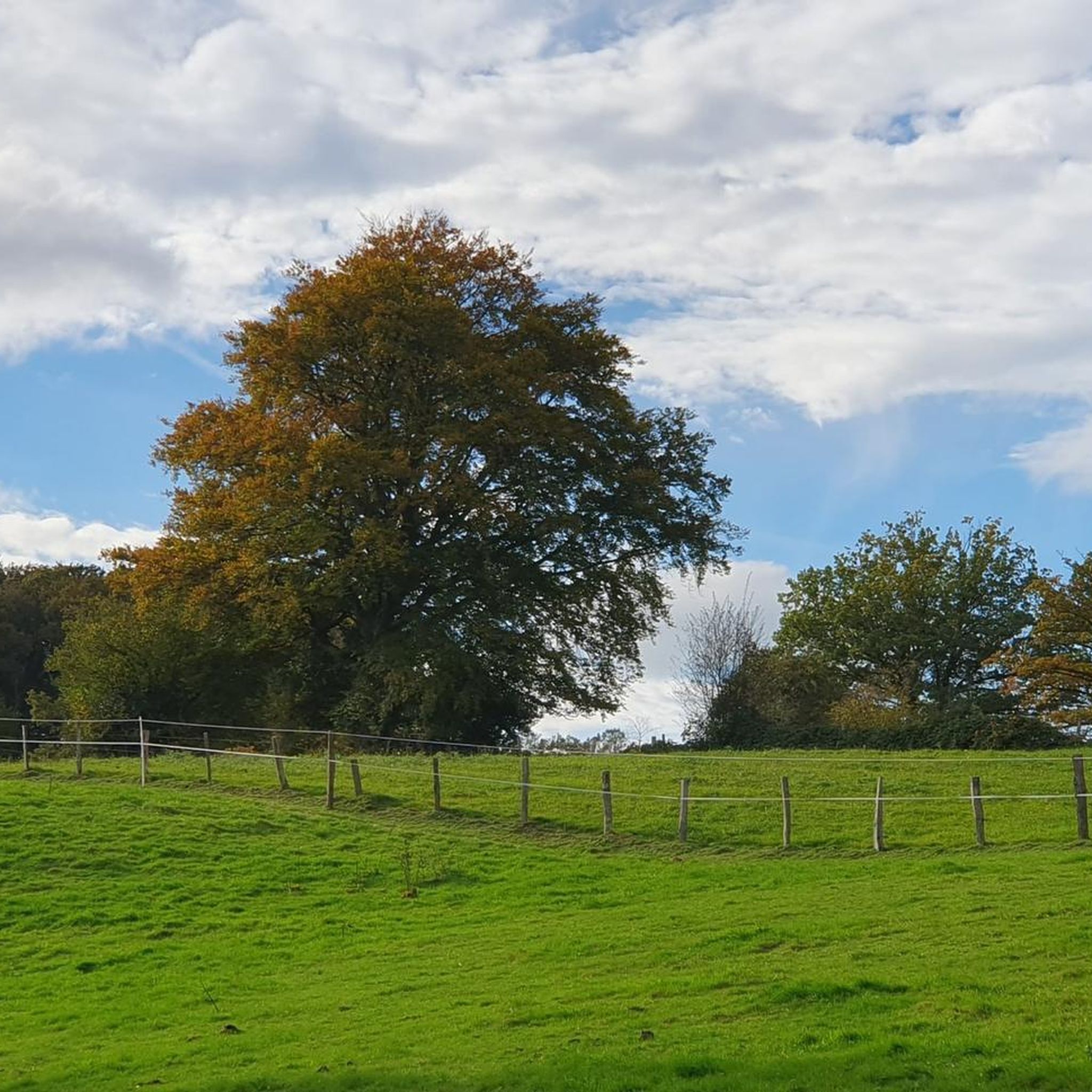
For those who are fond of mountainous landscapes in Normandy: the Suisse Normande.
0
0

Totally impressive. You should stop by.
0
0

Very good quality Voie Verte. Impeccable surface, good signing, very few annoying crossings where you lose momentum. Plenty of places to stop if you wish.
0
0

The first trotting race was organized in the Prairie on August 26, 1837, by the Caen Agricultural and Commercial Society. On February 13, 1839, the city decided to create a permanent racecourse. In August of the following year, it was agreed to build stands to accommodate spectators. In 1845, the earth from the digging of the Caen-Sea Canal was dumped in the Prairie to build the racecourse. On October 21, 1864, the Society for the Encouragement of the Improvement of the French Half-Blood Horse was created in Caen to regulate the trotting racing code for the whole of France. (https://www.letrot.com/hippodromes/caen/1400)
0
0

Ideal place for jogging
0
0

Caen, first mentioned in documents in 1027, experienced rapid urban development in the 11th century. It was called a burgus (bourg), was the centre of an extensive ducal domain, lay at the crossroads of important roads and had markets and a port. It first developed as an important city in the Duchy of Normandy under William the Conqueror. He had a strong fortress built in Caen and around 1059 an abbey for women (Abbaye aux dames) and one for men (Abbaye aux hommes), in which he was also buried. Later, during the Huguenot Wars (1562), his grave was destroyed and his bones were lost. William's gravestone can still be seen in the church today. He had the monasteries built to atone for his marriage to his cousin Mathilde, which was disapproved of by the Pope. Both monasteries are among the most important monuments in Normandy and are today – by the monks and nuns during the French Revolution
2
0
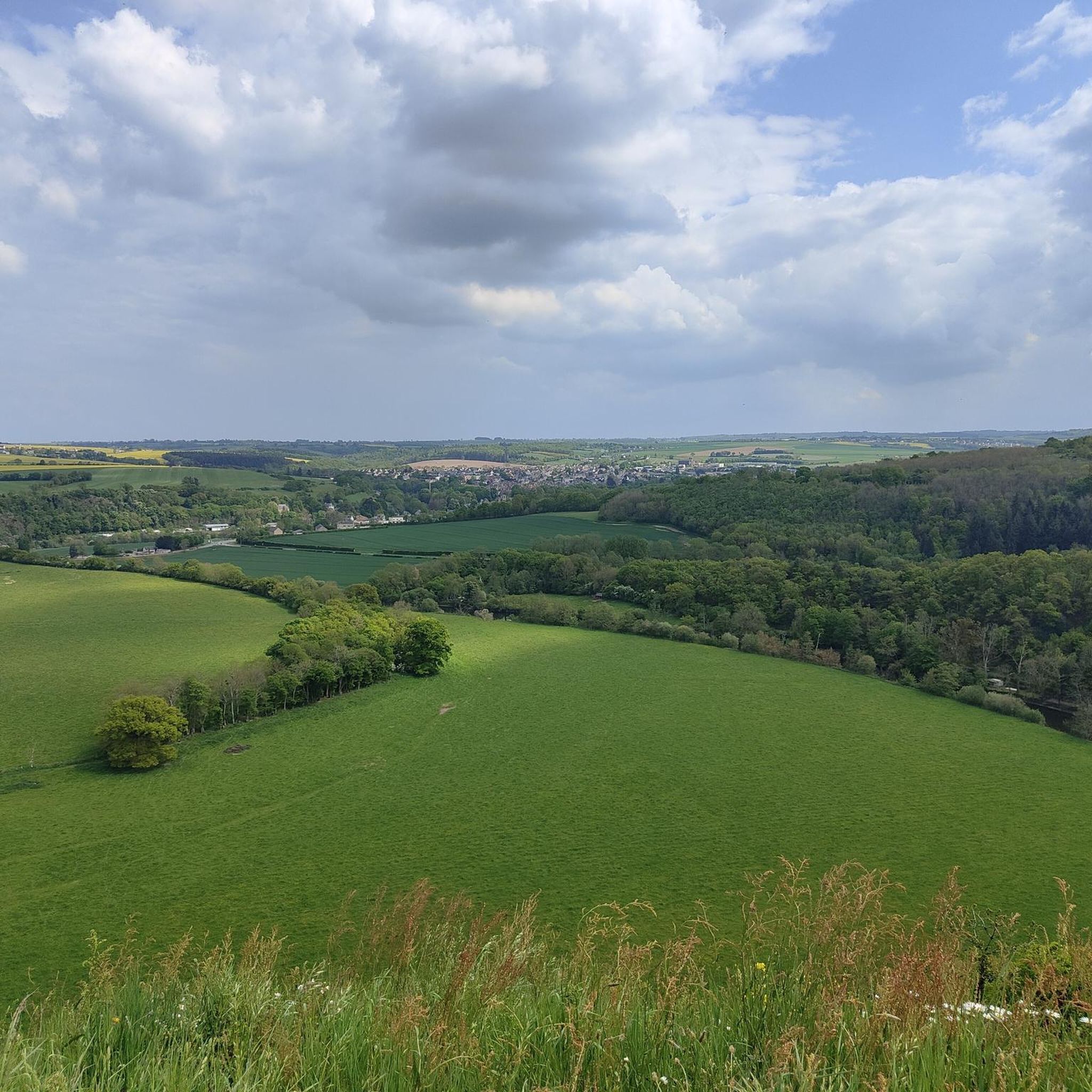
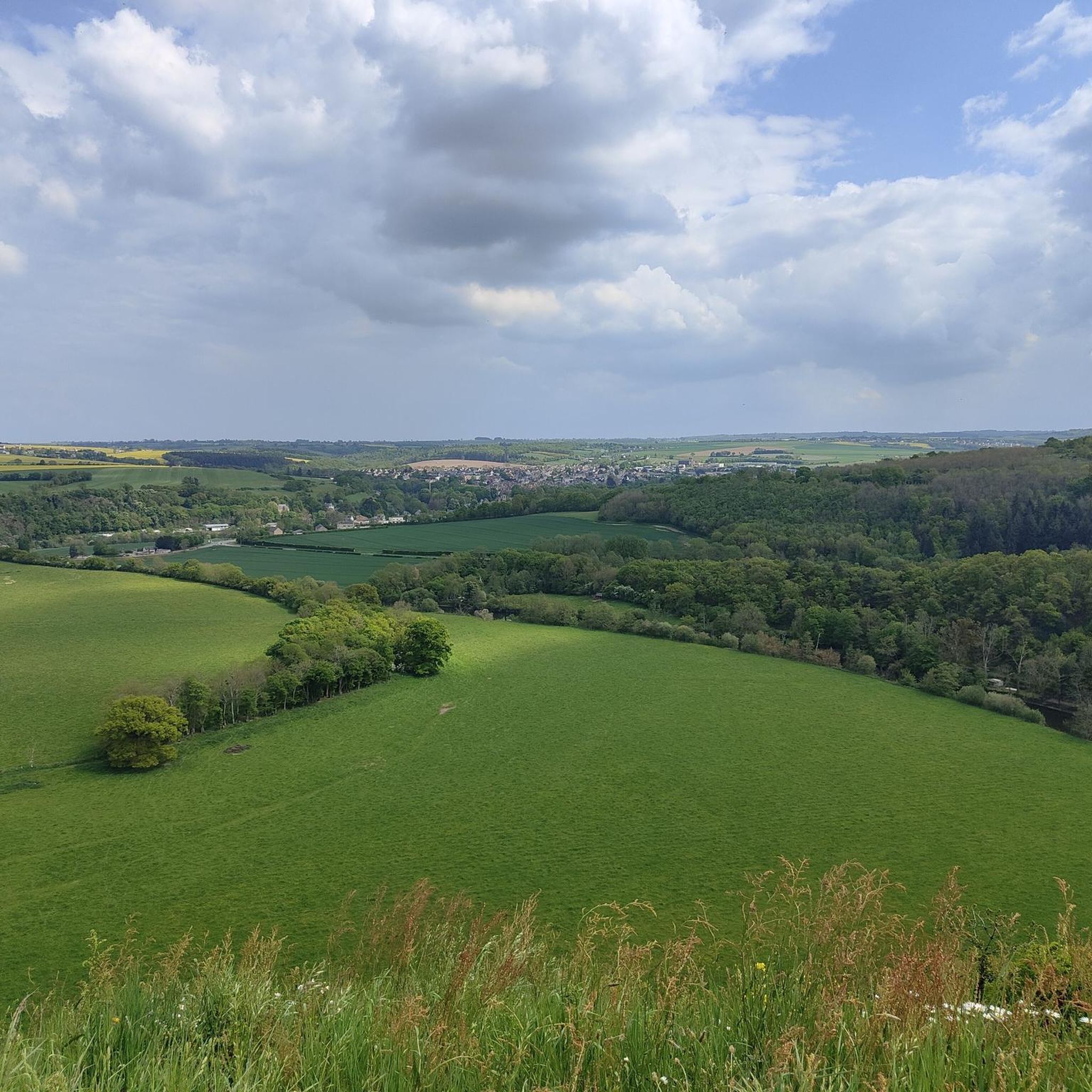
Great view - a must - tough climb
0
0

The former Benedictine abbey with the monastery church of Saint-Étienne was founded by William the Conqueror in Caen, built from 1060 onwards, but probably not completed until after 1090. From 1120/25 onwards, six-part cross-ribbed vaults were installed in the originally flat-roofed building, which are among the oldest in France.
5
0
Frequently Asked Questions
How many road cycling routes are available in the Boulonnais region?
The Boulonnais region offers a wide selection of road cycling routes, with over 260 tours available on komoot. These routes cater to various skill levels, from easy to difficult, ensuring there's something for every cyclist.
What kind of terrain can I expect when road cycling around Boulon?
Road cycling in the Boulonnais region features a diverse landscape. You'll find exhilarating coastal stretches with dramatic cliff-top views, particularly around Cap Gris Nez and Cap Blanc Nez. Inland, the terrain transitions to rolling hills and open countryside, offering a mix of moderate ascents and flatter sections through charming villages and verdant fields.
Are there road cycling routes suitable for beginners or less experienced cyclists?
Yes, the Boulonnais region has routes suitable for all abilities. Among the 266 available routes, 46 are classified as easy, providing gentler gradients and shorter distances. For example, the Former mine at May-sur-Orne – Sainte-Anne Viaduct loop from Grimbosq is a moderate 27.5 km route that can be completed in about 1 hour 14 minutes, offering a good introduction to the area's varied terrain.
What are some scenic viewpoints or natural features I can see along the road cycling routes?
The Boulonnais region is rich in scenic beauty. Along the coast, you can enjoy breathtaking views from Cap Gris Nez and Cap Blanc Nez. Inland, routes often pass by natural and historical landmarks. Consider the Viewpoint over the River Orne at Val de Viard for picturesque river vistas, or the impressive Sainte-Anne Viaduct.
Are there any challenging road cycling routes for advanced riders?
Absolutely. For experienced road cyclists seeking a challenge, the Boulonnais region offers 35 difficult routes. A notable option is the Berjou Pass – Clécy loop from Les Moutiers-en-Cinglais, a demanding 103.2 km route with significant elevation gain, typically taking around 5 hours to complete.
What do other road cyclists say about the routes in Boulon?
The road cycling routes in the Boulonnais region are highly regarded by the komoot community, holding an average rating of 4.1 stars from over 120 reviews. More than 4,000 road cyclists have explored the area using komoot, often praising the diverse terrain, from coastal paths to tranquil rural roads.
Are there any historical sites or attractions accessible by road bike?
Yes, several routes pass by or near historical sites. For instance, the Ouistreham Lighthouse – Pegasus Bridge loop from Mutrécy offers a blend of coastal scenery and historical landmarks. You can also find highlights like the Former mine at May-sur-Orne and the majestic Château d'Harcourt in the wider area, which can be incorporated into your rides.
Can I find long-distance road cycling routes in the Boulonnais region?
Yes, the region provides several longer routes for endurance cyclists. The Vieux-la-Romaine Villa – Le Bessin loop from Mutrécy is a moderate 87.6 km route, typically taking around 3 hours 40 minutes. For an even longer ride, consider the difficult Berjou Pass – Clécy loop from Les Moutiers-en-Cinglais at 103.2 km.
Are there loop routes available for road cycling?
Many of the road cycling routes in the Boulonnais region are designed as loops, allowing you to start and finish at the same point. Examples include the La Vélo Francette – Enchanted Island loop from Les Moutiers-en-Cinglais, a moderate 51.1 km path, and the Ouistreham Lighthouse – Pegasus Bridge loop from Mutrécy, which is 83.8 km.
What is the best time of year for road cycling in the Boulonnais region?
The Boulonnais region offers pleasant road cycling conditions for much of the year. Spring and autumn generally provide mild temperatures and beautiful scenery, ideal for exploring both the coastal and inland routes. Summer is also popular, especially for coastal rides, though it can be busier. Winter cycling is possible but may require more preparation due to cooler temperatures and potentially wetter conditions.
Are there any seaside resorts or towns that make good starting points for road cycling?
Yes, the Boulonnais coast features attractive seaside resorts like Wimereux, Wissant, Hardelot, and Le Touquet. These towns can serve as excellent starting points for coastal rides or as scenic stops, offering amenities and a pleasant atmosphere for cyclists.
Most popular attractions around Boulon

Get inspired with the komoot mobile app


Explore more
Browse the best Road cycling routes in other regions.
