Attractions and Places To See around Saint-Vulbas - Top 20
Attractions and places to see around Saint-Vulbas, a commune in the Ain department of France, offer a blend of historical sites and natural beauty. Located within the Auvergne-Rhône-Alpes region, the area is characterized by its peaceful countryside and proximity to the Rhône River. Visitors can explore cultural points of interest and well-maintained natural spaces.
Best attractions and places to see around Saint-Vulbas
- The most popular attractions is Medieval town of Pérouges, a historical site that is ranked among France's most beautiful villages. This medieval walled town features a 15th-century church-fortress with unique defensive architecture.
- Another must-see spot is La Balme Caves, a natural cave system. Visitors can explore the caves on their own along a paved path about 1 kilometer long, or opt for guided tours.
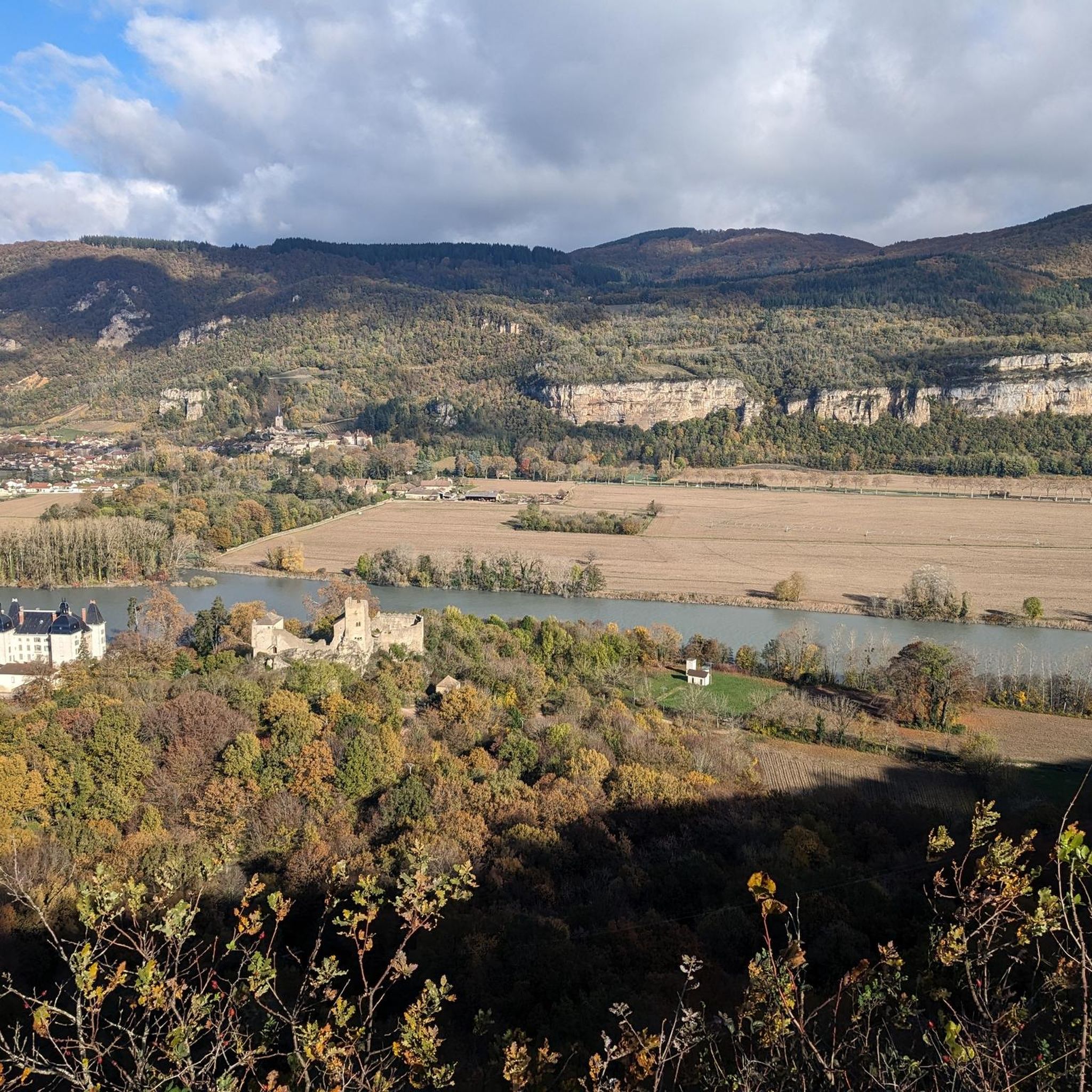
- Visitors also love Cingle Castle, a historical castle. This fortified house, first mentioned in 1540, retains architectural elements dating from the 16th century.
- Saint-Vulbas is known for its historical sites, natural features, and cultural points of interest. The area offers a variety of attractions to see and explore, from medieval towns to caves and castles.
- The attractions around Saint-Vulbas are appreciated by the komoot community, with 34 photos and 122 upvotes.
Last updated: May 21, 2026
Medieval town of Pérouges
Highlight • Historical Site
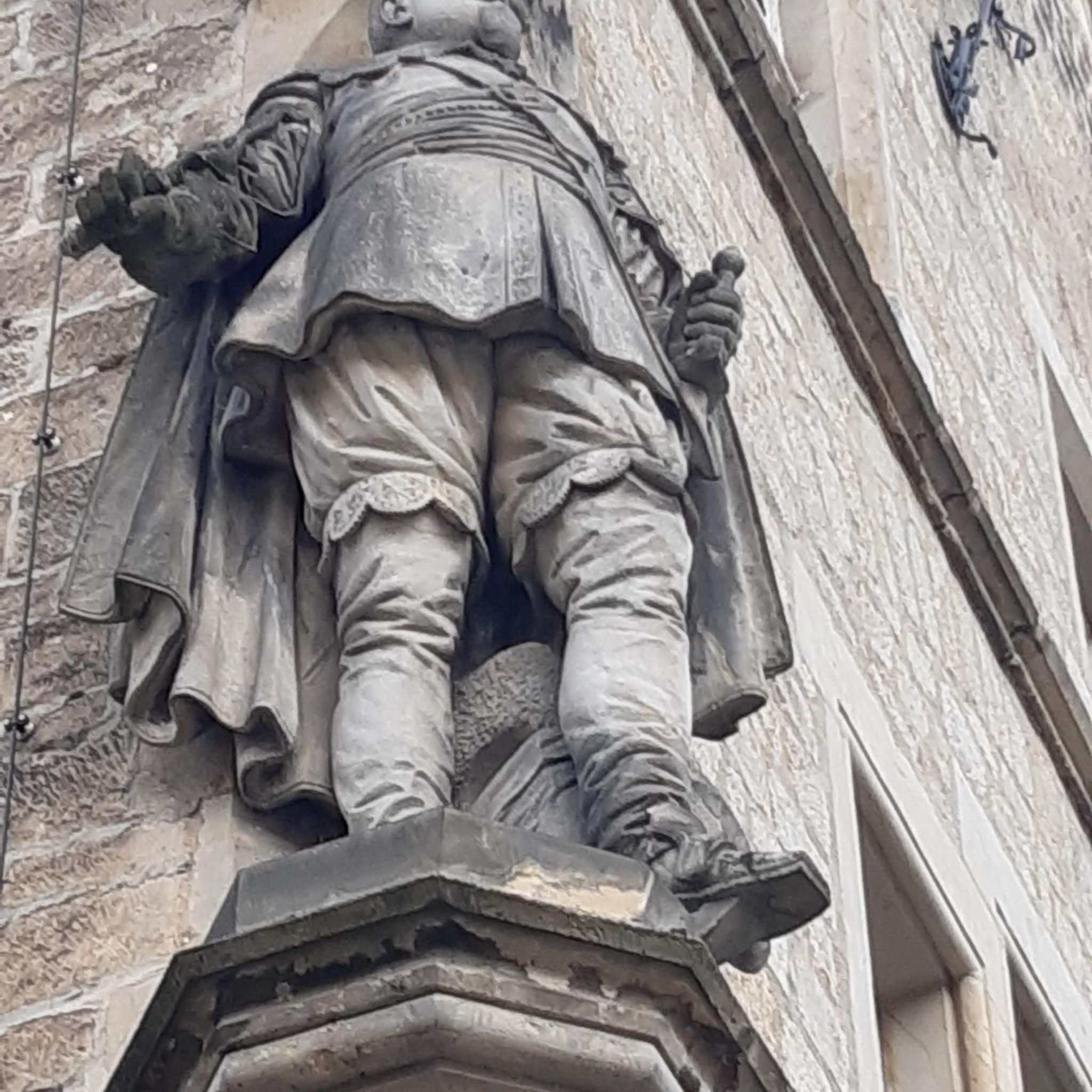
Its location at the entrance to the medieval city sets the tone: the church of Pérouges cannot be a traditional Gothic church! Built like a fortress defending access to the medieval town, it consists of defensive walls pierced with narrow stained glass windows and a few side chapels. Of great austerity, which it has not always had, the church impresses with its dimensions and its ancient statues. The presence of loopholes makes it a rare building, witness to a bygone era. The church still hosts sacraments and celebrations, as well as many concerts. The statue of Mary Magdalene, present since the 15th century, watches over this raw jewel of Gothic art.
lofficiel.net/eglise-sainte-marie-madeleine_8_7449.aspx
Translated by Google •
Tip by

Medieval town of Pérouges
Highlight • Settlement
Translated by Google •
Tip by

Sign up now to discover places like this
Get recommendations on the best single tracks, peaks, & plenty of other exciting outdoor places.
Sign up for free
La Balme Caves
Highlight • Cave
Translated by Google •
Tip by

Château de Bienassis
Highlight • Castle
Translated by Google •
Tip by

Cingle Castle
Highlight • Castle
Translated by Google •
Tip by

Sign up for free to discover even more attractions around Saint-Vulbas.
Sign up for free
Already have an account?
Start today with a free account
Your next adventure awaits.
Login or Signup
Tips from the Community

Cool during the heatwave while visiting the caves
0
0

Information in German: https://www.balconsdudauphine-tourisme.com/de/equipement/les-grottes-de-la-balme/ Website (French): https://www.grotteslabalme.com/ Also closed on certain days, information in the calendar: https://www.grotteslabalme.com/organisation/les-horaires-calendrier/
0
0

Very beautiful medieval city. The village of my childhood. Absolutely taste the pancakes! 😉🍰
0
0

Although first mentioned in 1540, the Cingle fortified house was undoubtedly built in the second half of the 14th century by the Pèlerin family. Originally composed of a main tower and a wing back to the west, it perhaps originally included a curtain wall. During the 15th century, the south wing was extended towards the west, a main building comprising a lower room and an upper room was attached to the north of the main tower, while a turret occupied on the first floor by an oratory and on the second by a dovecote is built to the east, projecting. A wing including the kitchen on the ground floor is also built at right angles to the north of the courtyard. The farm itself retains some architectural elements dating from the 16th century. Source: Ministry of Culture
1
0
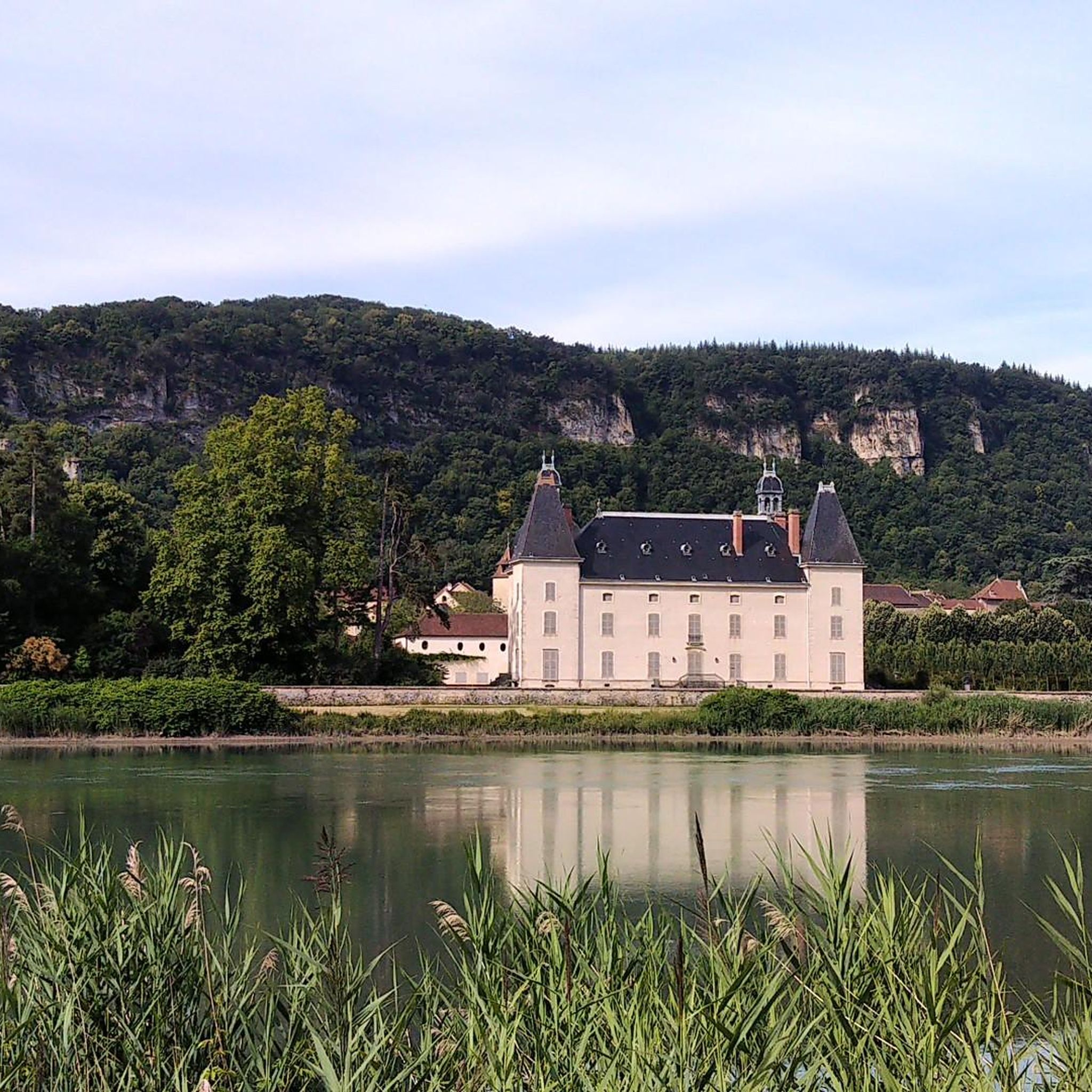
The Bienassis fortified house, built by the Vallin family at the end of the 14th century, was organized around an enclosed courtyard and included a pavilion surrounded by watchtower turrets. The current building was completed in 1897 for Casimir Gournet, who wanted to give the old feudal residence the appearance of a medieval castle. Alphonse de Lamartine made several stays in Bienassis with his friend Nicolas Prosper Guichard, between 1804 and 1808. The castle, built of limestone rubble, consists of an L-shaped building covered with a long-pitched roof covered with mechanical tiles extended to the south by a high quadrangular tower with a porch in the work. The north wing has four levels of elevation: three cellars on the basement floor, a square floor and an attic floor. The tower rises on three levels: a ground floor with ribbed vaults and two square floors, the buildings are crowned with false machicolation. The corner turrets are covered with conical slate roofs. The stained glass windows of the ground floor living room are decorated with two bust-length women and two bust-length men in rondels. The coat of arms of the Joubert de Montlevon family can be found on one of the windows of the first living room on the ground floor. In the library, two shields with scrolling scroll motifs, a shield decorated with three female heads, a shield decorated with a passing griffin, and a shield decorated with two hammers with the initials C G for Casimir Gournet adorn the windows. Source: Châteaux de France
0
0

The medieval city of Pérouges is a true jewel of the past. Located to the east of Lyon, it transports us to a distant era, where cobbled streets and houses made of pebbles and bricks tell stories of yesteryear. With its 80 inhabitants living within its walls and 1,200 residents in the commune, Pérouges is an inhabited village which freely welcomes visitors all year round.
0
0

Ranked among the most beautiful villages in France, Pérouges offers you a trip to the Middle Ages. The tourist activities between April and August will allow you to see the city from another angle. Between history and terroir, this city of character 30 kilometers from Lyon will not leave you insensitive with its medieval and authentic charm. Before leaving, don't forget to taste the local speciality: the Peruvian pancake, the unmissable sugar pie.
2
0
Ranked among the most beautiful villages in France, Pérouges offers you a trip to the Middle Ages. The tourist activities between April and August will allow you to see the city from another angle. Between history and terroir, this city of character 30 kilometers from Lyon will not leave you insensitive with its medieval and authentic charm. Do not forget before leaving to taste the local speciality: the Peruvian pancake, the unmissable sugar pie.
2
0
Frequently Asked Questions
What historical sites can I visit in and around Saint-Vulbas?
Saint-Vulbas and its surroundings are rich in history. You can explore the Eglise de Saint-Vulbas, which houses the marble tomb of Saint Vulbas, and the 12th-century Chapelle de Marcilleux on the banks of the Rhône. The Medieval town of Pérouges, ranked among France's most beautiful villages, is a must-see with its 15th-century church-fortress. Other notable sites include the Musée du Patrimoine, the medieval ramparts of Cremieu, and historical castles like Cingle Castle and Château de Bienassis.
Are there any natural attractions or outdoor spaces to explore near Saint-Vulbas?
Yes, Saint-Vulbas offers several natural attractions. You can enjoy picturesque walks along the Rhône River and its towpath, or utilize the commune's well-maintained landscaped paths and fitness trail. The La Balme Caves provide a unique underground exploration opportunity. Further afield, the Dombes Region is known for its thousands of small lakes, ideal for fishing and bird-watching, and the Base de loisirs de Vénérieu offers a swimming beach and recreational activities.
What kind of outdoor activities are available around Saint-Vulbas?
The area around Saint-Vulbas is excellent for various outdoor activities. You can find numerous options for hiking, road cycling, and gravel biking. For hiking, explore routes like the 'Small Waterfall – Château de Brotel loop' or the 'Cingle Castle – View of Hières-sur-Amby loop'. Road cyclists can tackle longer routes such as the 'Col de Fay – Portes Pass loop'. Gravel biking enthusiasts might enjoy the 'Crémieu–Morestel Greenway'. You can find detailed routes and guides for these activities on the Hiking around Saint-Vulbas, Road Cycling Routes around Saint-Vulbas, and Gravel biking around Saint-Vulbas guide pages.
Are there family-friendly attractions near Saint-Vulbas?
Absolutely! Families can enjoy exploring the Medieval town of Pérouges, which offers a captivating step back in time. The La Balme Caves are also a great option for an adventurous family outing. For more active fun, Walibi Rhône-Alpes amusement park is about 31 km away, and Parc de la Tête d'Or in Lyon provides a large green space with various recreational opportunities. The Aquarium de Lyon is another popular choice for marine life enthusiasts.
What is the best time to visit Saint-Vulbas attractions?
The period between April and August is particularly recommended for visiting attractions around Saint-Vulbas, especially for experiencing the full range of tourist activities in places like the Medieval town of Pérouges. This time of year generally offers pleasant weather for exploring historical sites and enjoying outdoor activities.
Can I find any unique cultural experiences in Saint-Vulbas?
Yes, Saint-Vulbas offers unique cultural insights. The Musée du Patrimoine, maintained by passionate volunteers, showcases extensive collections of old tools, books, and agricultural machinery, providing a glimpse into the region's heritage. The Eglise de Saint-Vulbas also hosts concerts, leveraging its historical ambiance. Additionally, the region's ancient Gallo-Roman history is evidenced by numerous constructions and thermal installations, reflecting its past as a significant settlement.
Are there any accessible paths or trails in Saint-Vulbas?
Saint-Vulbas is recognized with a 'Quatre fleurs' label, indicating well-maintained natural spaces. The commune features landscaped paths and a dedicated fitness trail that are generally suitable for walking. Inside the La Balme Caves, visitors can explore along a paved path about a kilometer long, which may offer some accessibility, though it's always advisable to check directly with the venue for specific accessibility needs.
What are some lesser-known or 'hidden gems' to discover near Saint-Vulbas?
Beyond the main attractions, consider exploring the Stèle aux Bergeries, a stele commemorating French Resistance soldiers, offering a poignant historical stop. For an interactive outdoor adventure, Saint-Vulbas also offers various geocaching routes, which can lead you to discover hidden spots and local viewpoints in a fun way.
What is the significance of the Rhône River to Saint-Vulbas?
The Rhône River is central to Saint-Vulbas's identity and offers significant recreational value. The commune is nestled along its banks, providing picturesque opportunities for walks along its towpath. Historically, the river would have played a crucial role in trade and transport, and today it contributes to the region's natural beauty and outdoor activity options.
What do visitors enjoy most about the attractions around Saint-Vulbas?
Visitors particularly appreciate the blend of historical charm and natural beauty. The Medieval town of Pérouges is often highlighted for its authentic medieval charm and unique architecture, with many recommending tasting the local Peruvian pancake. The La Balme Caves are praised for their historical depth and providing a cool escape during hot weather. The overall appeal lies in the opportunity to step back in time while enjoying the peaceful countryside.
Can I visit a nuclear power plant near Saint-Vulbas?
Yes, the Centrale Nucléaire du Bugey, an industrial site, is located near Saint-Vulbas and offers guided visits. This provides a unique opportunity to gain insight into its operations and its importance to the region's electricity supply.
Are there any specific local delicacies or products to try when visiting?
When visiting the Medieval town of Pérouges, a local specialty not to be missed is the Peruvian pancake, also known as the unmissable sugar pie. It's a popular treat that adds to the authentic charm of the medieval experience.
Most popular routes around Saint-Vulbas

Get inspired with the komoot mobile app


Explore more
Still not found the Highlight you’re looking for? See guides of the top attractions in other regions:
