Attractions and Places To See around Crécy-Au-Mont - Top 20
Best attractions and places to see around Crécy-Au-Mont include a blend of historical sites and natural landscapes. Situated in the Hauts-de-France region, within the Seine-Normandy basin, the commune is characterized by a rural setting. The area is drained by waterways such as the Canal de l'Oise à l'Aisne, the Ailette, and the Argentel. Visitors can explore local heritage and enjoy the tranquil environment.
Best attractions and places to see around Crécy-Au-Mont
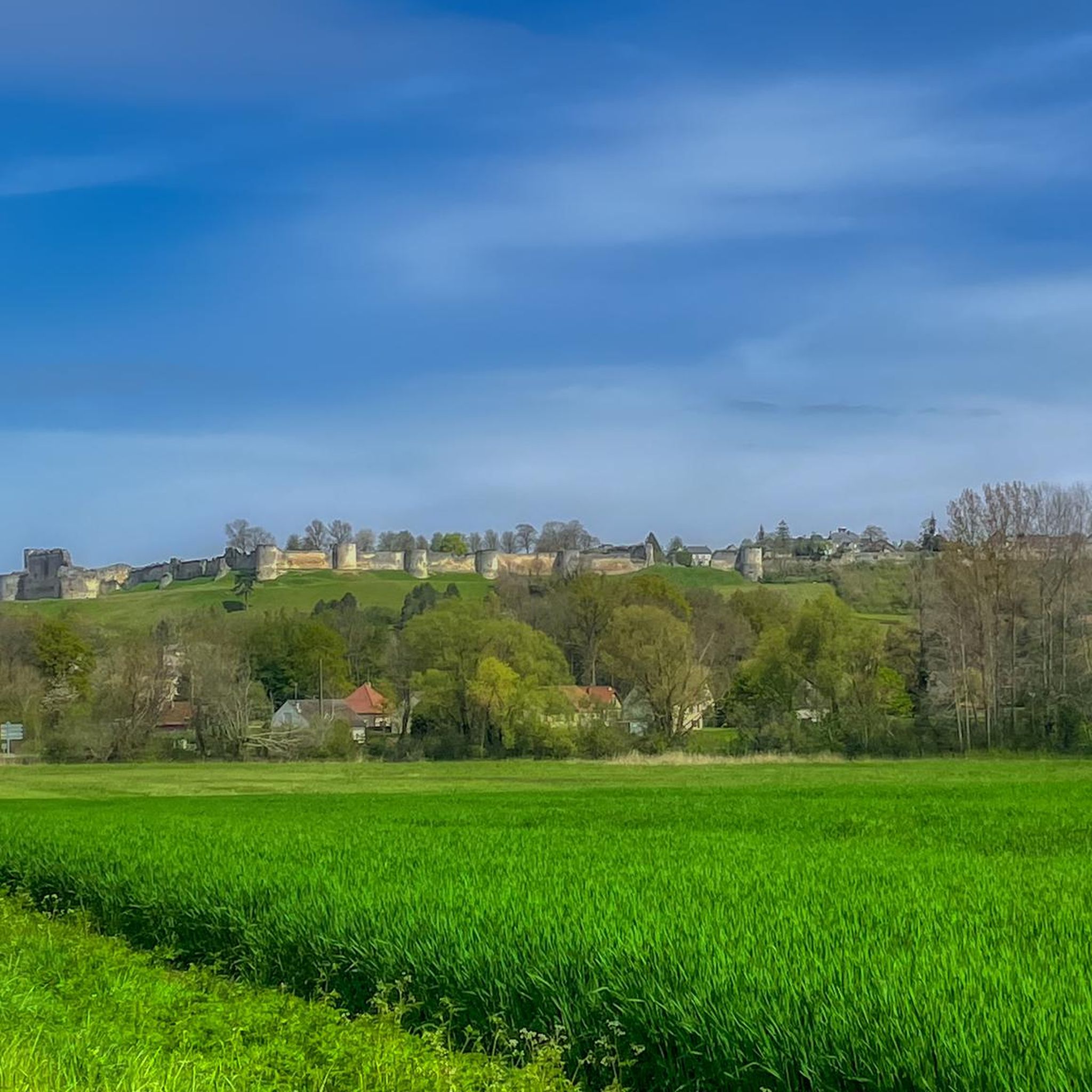
- The most popular attractions is Coucy Castle, a castle that was built in the 13th century by Enguerrand III. Its ruins still bear witness to its past glory, offering a cultural and historical experience.
- Another must-see spot is Laon Gate (Coucy-le-Château-Auffrique), a medieval gate. Visitors can admire its architecture and military devices, along with panoramic views of the city and surrounding countryside.
- Visitors also love Saint-Sauveur Church of Coucy-le-Château-Auffrique, a religious building. The church was rebuilt identically after being destroyed in 1917 and houses remarkable 11th-century Romanesque baptismal fonts.
- Crécy-Au-Mont is known for its historical sites, religious buildings, and natural features. The area offers a blend of historical structures, cultural landmarks, and tranquil rural environments.
- The attractions around Crécy-Au-Mont are appreciated by the komoot community, with more than 40 upvotes and 20 photos shared.
Last updated: May 20, 2026
Coucy Castle
Highlight • Castle
Translated by Google •
Tip by

Laon Gate (Coucy-le-Château-Auffrique)
Highlight • Other
Translated by Google •
Tip by

Sign up now to discover places like this
Get recommendations on the best single tracks, peaks, & plenty of other exciting outdoor places.
Sign up for free
Saint-Sauveur Church of Coucy-le-Château-Auffrique
Highlight • Religious Site
Les magnifiques vitraux de facture moderne ont été créés par Mazetier et Delange en 1936. Ils constituent une bible en image avec l’Ancien et le Nouveau Testament. Un vitrail, celui de Jean, a participé à l’exposition universelle de Paris en 1937. Deux vitraux rappellent l’histoire de Coucy, d’Enguerrand II et de ses enfants égarés… La faible luminosité est due à la teinte grise des vitraux, émaillée de couleurs vives, qui s’illuminent sous le soleil. Elle traduit le passage de l’ombre à la lumière.
Les fonts baptismaux romans du xie siècle sont remarquables. Ils sont sculptés dans du marbre noir veiné de bleu. Les sculptures, finement ciselées, représentent des motifs végétaux, des petits animaux, des personnages et de très jolis visages.
Le chœur et le transept de l’église datent du xiiie siècle et n’ont pas été détruit en 1917. L’ajout du 2e transept et des 2 collatéraux au xvie siècle en font une « église halle ». À noter : l’architecture très riche des 3 voûtes et l’alternance de piles fortes et faibles dans la nef. Les chapiteaux de style gothiques inspirés de l’Art Roman représentent des plantes, des fruits, des petits animaux, mais cachent parfois quelque chose d’insolite à découvrir… Le Chemin de Croix réalisé par Hector de Pettigny en 1950 est une fresque moderne sur ciment. Les teintes employées restent douces et ne correspondent pas à l’agressivité des souffrances. Autres éléments remarquables : le retable en bois sculpté, les 2 autels, l’orgue, la chaire.
Campée à l’extrémité de l’éperon rocheux et proche de la Tour de la Porte de Soissons, l’Église Saint-Sauveur offrait une vue dominante sur la plaine et constituait un point d’appui militaire solidement organisé. C’était une annexe de la célèbre Abbaye de Nogent.
Tip by

Soissons Cathedral
Highlight • Other
The oldest part is the southern transept, with a striking quadripartite structure and a rounded apse. The choir, completed around 1212, is light and spacious, surrounded by an ambulatory with five chapels. The stained glass windows date largely from the 13th and 14th centuries. A 15th-century tapestry depicts the lives of the patron saints.
The west façade is simple but impressive, with three portals and a large rose window. Only one of the two planned towers was built; this southern tower, 66 metres high, was inspired by Notre-Dame de Paris .
Inside, you will also find works of art by Rubens and Philippe de Champaigne. Despite damage during the First World War, the cathedral remained a powerful symbol of Gothic architecture and religious history in northern France.
Translated by Google •
Tip by
Broken Cross Monument
Highlight • Other
Translated by Google •
Tip by
Sign up for free to discover even more attractions around Crécy-Au-Mont.
Sign up for free
Already have an account?
Start today with a free account
Your next adventure awaits.
Login or Signup


Tips from the Community

In the footsteps of the Poilus
0
0

Built in 1929 by the Marquis de Croix, owner of the land, this monument symbolises the suffering of all the soldiers who fought on the Confrécourt plateau during the First World War. The monument is in the shape of a broken cross, reminiscent of the many postcards showing crucifixes or Christs who miraculously survived the bombardments of the war. The monument is located near a stone marker that marks the furthest advance of the German troops during their offensives in 1918. You can also see the new Confrécourt farm, rebuilt after the war on the site where the French front lines were located.
0
0


The Monument de la Croix-Brisée is a monument in memory of the victims of the First World War. The monument is located in Nouvron-Vingré, in the Aisne department, France. Erected in 1929 by the Marquis de Croix, owner of the estate, the monument symbolizes the suffering of all the fighters of the First World War on the Confrécourt plateau. The monument has been registered as a historical monument since 1990.
1
0
This early Gothic cathedral, located in the heart of Soissons, was built from 1176 and continued to develop until the 14th century. Dedicated to the martyrs Gervasius and Protasius, it serves as the seat of the Bishop of Soissons. The oldest part is the southern transept, with a striking quadripartite structure and a rounded apse. The choir, completed around 1212, is light and spacious, surrounded by an ambulatory with five chapels. The stained glass windows date largely from the 13th and 14th centuries. A 15th-century tapestry depicts the lives of the patron saints. The west façade is simple but impressive, with three portals and a large rose window. Only one of the two planned towers was built; this southern tower, 66 metres high, was inspired by Notre-Dame de Paris . Inside, you will also find works of art by Rubens and Philippe de Champaigne. Despite damage during the First World War, the cathedral remained a powerful symbol of Gothic architecture and religious history in northern France.
9
0

Coucy Castle is a magnificent castle built in the 13th century by Enguerrand III, Lord of Coucy. It was one of the largest and most impressive castles in Europe, with a massive keep and four towers dominating the landscape. The castle was partially destroyed during the First World War, but its ruins still bear witness to its past glory. You can discover the castle and its history by participating in the Trail Enguerrand, a running race that takes you around the castle and its surroundings. The race is 30 km long, with 700 m of altitude difference, and it offers breathtaking views of the castle and the countryside. You can also opt for a shorter distance of 15 km, with 370 m of elevation gain. The race takes place in April and you can register online on the official website. By hiking this trail, you will not only get a good workout, but also a cultural and historical experience.
2
0
This medieval gate, built in the 13th century, was part of the impressive fortifications of Coucy-le-Château, a town once famous for its castle and its motto: "I am neither king, nor prince, nor count, I am the lord of Coucy ". The Porte de Laon is a massive structure with two round towers and an arched passage, defended by a drawbridge, a double portcullis and a barbican. You can admire the architecture and military devices of this ancient bastion, as well as the panoramic view of the city and the surrounding countryside.
3
0
This monument, built in 1929 by the Marquis de Croix, owner of the land, symbolizes the suffering of all the soldiers who fought during the First World War on the Confrécourt plateau. The monument is in the shape of a broken cross, which evokes the numerous postcards showing crucifixes or Christs having miraculously survived the bombings of the war. The monument is located near a stone marker which indicates the furthest advance of German troops during their offensives in 1918. You can also see the new Confrécourt farm, which was rebuilt after the war on the site even where the French front lines were located.
2
0
Frequently Asked Questions
What historical sites can I explore around Crécy-au-Mont?
The area is rich in history. You can visit the impressive ruins of Coucy Castle, a 13th-century fortress. Another significant historical landmark is the Laon Gate (Coucy-le-Château-Auffrique), a medieval gate that was part of the town's fortifications. Additionally, the Soissons Memorial to the Missing of the Aisne commemorates British soldiers from WWI.
Are there any religious buildings of interest nearby?
Yes, you can visit the Saint-Sauveur Church of Coucy-le-Château-Auffrique, which was rebuilt after being destroyed in 1917 and features remarkable 11th-century Romanesque baptismal fonts. Further afield, Soissons Cathedral is an early Gothic cathedral with a rich history and impressive architecture.
What natural features characterize the Crécy-au-Mont area?
Crécy-au-Mont is situated within the Seine-Normandy basin and is drained by several waterways, including the Canal de l'Oise à l'Aisne, the Ailette, and the Argentel. The broader Hauts-de-France region is known for its extensive forests and rivers, offering a tranquil, rural environment.
What outdoor activities can I do near Crécy-au-Mont?
The region offers various outdoor activities. You can find numerous hiking trails, including easy and moderate options around Coucy-le-Château-Auffrique. For cyclists, there are road cycling routes and gravel biking trails available. Explore options like the 'Château de Coucy – Coucy-le-Château-Auffrique loop' for road cycling or the 'Saint-Gobain Caves – Cross-country area' for gravel biking. You can find more details on hiking, road cycling, and gravel biking guides.
Are there family-friendly attractions around Crécy-au-Mont?
Yes, Coucy Castle is considered family-friendly. Its vast ruins and historical significance can be an engaging experience for all ages. The surrounding rural environment also provides opportunities for family walks and exploring nature.
Are there any viewpoints offering panoramic views?
Yes, the Laon Gate (Coucy-le-Château-Auffrique) offers panoramic views of the city and the surrounding countryside. Coucy Castle also provides excellent vantage points over the landscape.
What kind of hiking trails are available near Crécy-au-Mont?
You'll find a variety of hiking trails, including easy and moderate options. For example, there's an easy 4.2 km 'Coucy Castle – View of Coucy-la-Ville loop' and a moderate 10 km 'Château de Coucy — loop from Coucy-le-Château-Auffrique'. These trails allow you to explore the historical sites and natural surroundings. More details can be found in the hiking guide.
Is there anything specific to see within Crécy-au-Mont itself?
Within Crécy-au-Mont, you can find local heritage sites such as the Église Saint-Michel, the Monument aux morts, and the Ancienne gare de Crécy-au-Mont. There are also solemn sites like the Nécropole nationale and Cimetière allemand, and the historical route of the old railway line with a Michelin post.
What is the best time to visit Crécy-au-Mont for outdoor activities?
While specific seasonal data isn't provided, the Hauts-de-France region, with its forests and rivers, is generally pleasant for outdoor activities during spring, summer, and early autumn when the weather is milder and nature is in full bloom. This allows for comfortable exploration of historical sites and natural landscapes.
Are there any wheelchair-accessible attractions?
Yes, the Soissons Memorial to the Missing of the Aisne is noted as being wheelchair accessible, allowing visitors to pay their respects comfortably.
What do visitors enjoy most about the attractions around Crécy-au-Mont?
Visitors appreciate the blend of historical structures, cultural landmarks, and the tranquil rural environment. The grandeur of sites like Coucy Castle and the historical significance of the churches and memorials are frequently highlighted. The opportunity for a 'cultural and historical experience' combined with outdoor exploration is a key draw.
Can I find long-distance cycling routes in the area?
Yes, there are several longer cycling routes. For road cycling, you can find routes like the 'Coucy-le-Château-Auffrique – Bridge over the Ailette loop' which is approximately 87 km. For gravel biking, routes such as the 'Coucy-le-Château-Auffrique – Château de Coucy loop from Osly-Courtil' cover about 72 km. These routes offer a good challenge for experienced cyclists. Refer to the road cycling and gravel biking guides for more options.
Most popular routes around Crécy-Au-Mont

Get inspired with the komoot mobile app


Explore more
Still not found the Highlight you’re looking for? See guides of the top attractions in other regions:
