The best road cycling routes around Rouffiac
4.9
(27)
793
riders
125
rides
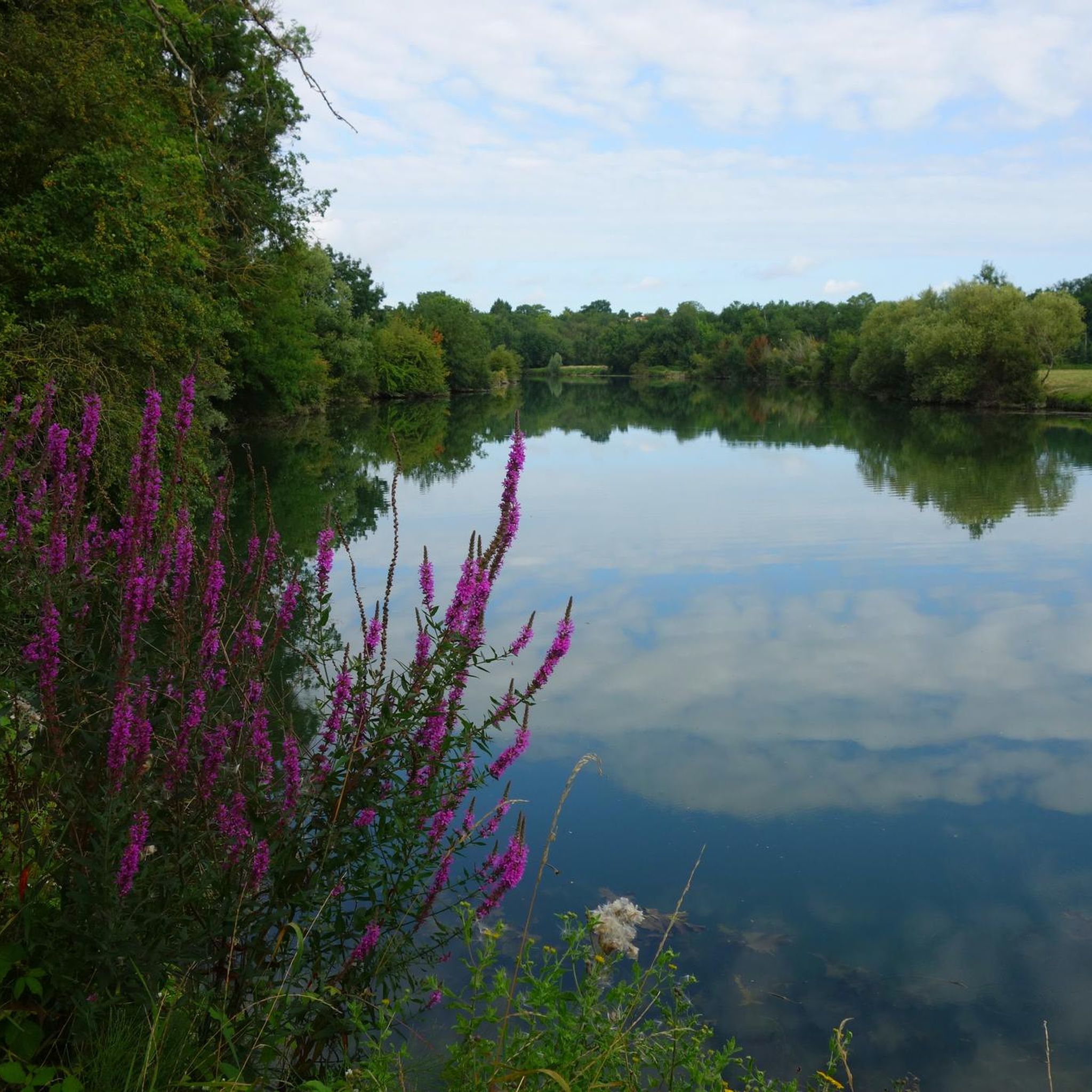
Road cycling around Rouffiac offers diverse landscapes within the Périgord Vert region of Dordogne, characterized by its green setting and lush greenery. The area features rolling hills, valleys, and extensive wooded parks, providing varied terrain for road cyclists. The expansive Lac de Rouffiac, a 40-hectare body of water, serves as a central natural feature, enhancing the scenic appeal of routes. This combination of natural elements creates a suitable environment for road cycling experiences of different intensities.
Best road cycling routes…
Last updated: November 1, 2026
14
riders
88.1km
03:41
470m
470m
Moderate road ride. Good fitness required. Some segments of this route may be unpaved and difficult to ride.
5.0
(3)
13
riders
Moderate road ride. Some segments of this route may be unpaved and difficult to ride.

12
riders
37.5km
01:34
150m
150m
Moderate road ride. Some segments of this route may be unpaved and difficult to ride.
12
riders
Moderate road ride. Some segments of this route may be unpaved and difficult to ride.
5.0
(1)
2
riders
201km
08:19
1,130m
1,130m
Hard road ride. Very good fitness required. Some segments of this route may be unpaved and difficult to ride.
Get access to more routes and recommendations from other explorers.
Already have an account?
Our route recommendations are based on thousands of hikes, rides, and runs completed by other people on komoot.
Start today with a free account
Your next adventure awaits.




Tips from the Community

The site of La Baine, in Chaniers, predates the current mill. 14th century: the first attested mills A document dated 1310 mentions cloth mills at La Baine. They were built on piles driven into the riverbed and were used, among other things, for fulling fabrics. These mills then belonged to the dean and chapter of the cathedral of Saintes. They had been destroyed a few years earlier by the Count of la Marche. In 1313, the chapter obtained authorization to rebuild two mills, a weir, and a fishery. 17th century: Colbert's royal mill It was in the 17th century that La Baine gained considerable importance. A complex of five wheat mills was rebuilt on a secondary branch of the Charente, which was not used for navigation. Around 1630, the mills belonged to the brothers Charles and Jacques Duval, who held the beneficial ownership, while the lordship of Chaniers was under the chapter of the Saint-Pierre de Saintes cathedral. Then came Jean-Baptiste Colbert, minister to Louis XIV and Secretary of State for the Navy. Around 1670, Colbert had the mill redeveloped and enlarged to considerably increase its production capacity. The new complex had seven water passages and thus became one of the most powerful mills in the region. Why was Colbert interested in La Baine? The reason was directly linked to the creation and development of the Rochefort arsenal. The mill primarily produced wheat and barley flour intended for the sustenance of the Royal Navy sailors. The grains arrived via the Charente aboard gabares (flat-bottomed barges). After delivering their cargo to the mill, the gabares departed with the flour destined, among other places, for Rochefort. The mill of La Baine was therefore part of a true royal industrial and logistical system organized around the Charente and Rochefort. 19th century: gradual transformation In the 19th century, milling activity continued. The old mills gradually became a true industrial establishment. In 1845, the site was operated by five different millers. From 1897, the complex was gradually brought together by Mr. Lardy, who modernized the facilities and introduced machinery. His son Rémy Lardy succeeded him. 20th century: the flour mill In the 1930s, the mill had become a true industrial flour mill. Its capacity reached about 50 quintals of wheat per day. In 1936, the hydraulic power was supplied by several wheels about 5 meters in diameter. The total water intake was about 4 meters, with a head of 1.50 meters. The facilities included, among other things: two double grinders; a double converter; a pair of millstones; a plansichter; five purifiers. Milling activity finally ceased in the mid-20th century, with sources placing the end of industrial activity around the years 1940-1960, depending on whether one refers to the flour mill or the complete disappearance of milling activity. Today The building has been preserved and transformed into a restaurant, while retaining remarkable elements of its industrial past, notably the wheel and part of the old machinery. The Moulin de la Baine is now located at 14 rue Colbert, 17610 Chaniers, directly above the Charente. A particularly interesting point The mill, the dam, and the locks form an inseparable historical ensemble. The current dam has, however, undergone modern transformations: a prefectural decree from 2012 classifies the hydraulic structure of the Moulin de La Baine as a Class D dam, among other things.
0
0
The Chaniers ferry (Charente-Maritime) is one of the last traditional river ferries still in operation in France. It allows crossing the Charente River between Chaniers and Courcoury, a few kilometers downstream from Saintes. A crossing used for centuries History of the Chaniers ferry The ferry crossing at Chaniers is very old: it dates back to the Middle Ages. In the mid-17th century, it was already an important crossing point on the Charente. It was not only used to cross the river: it also allowed residents to access the meadows on the other side, particularly for agricultural activities. In the early 20th century, the Chaniers ferry was part of a much larger network of crossings on the Charente. In 1909, thirteen ferries were still recorded in Charente-Inférieure, including the one in Chaniers. Ferries were essential at the time before the proliferation of bridges. Why "chain ferry"? The principle consists of holding the ferry on a chain connecting the two banks. The ferryman uses this chain to move the boat forward and keep it on its course despite the current. In Chaniers, the current ferry is motorized, unlike the ferry in Dompierre-sur-Charente, which is operated manually. The Tourist Office, however, still describes it as a "chain ferry," and the municipality as the traditional crossing method connecting Chaniers to Courcoury. The ferry today The crossing takes place between Le Communal in Chaniers and the Courcoury bank. It is free and can transport pedestrians, cyclists, and motorized vehicles. Its operation depends in particular on the flow of the Charente River. The municipality of Chaniers officially presents "the port of Chaniers and its chain ferry" as an element of its local heritage. Important point: I am correcting my previous message: the Chaniers ferry is not simply a "19th-century ferry." The crossing has been attested since the Middle Ages; it is its mode of operation and its equipment that have evolved over the centuries.
0
0

Built from 1955 and consecrated in 1958, the Notre-Dame de Royan church symbolizes the city standing tall and proud again. The reinforced concrete monument thus fits into the general trend of renewal in sacred art after the sad events the world experienced in the 1940s. It is considered today as a feat and a masterpiece of modern architecture. "Upon entering this concrete cathedral, be silent. Here, everything is momentum, rigor, roughness, austere beauty. The twilight sings the elusive, the divine, variable and constant like the sea." ANDRÉ MALRAUX Minister of Cultural Affairs (1958-1969)
1
0

Perfect beachside bike trail along the boulevard, with several rest stops with seating and beach acces.
0
0

A beautiful church with beautiful houses hidden in an ancient but romantic village, it's worth a stop. The Saint-Étienne church in Brives-sur-Charente is recent. It was consecrated in 1868 and reflects the 14th-century Gothic style. It replaced an older church, of which only a baptismal font, listed as a historic object in 1922, and a capital remain. This font, square and made of a single block of siliceous limestone, is a rare specimen of 12th-century sculpture and symbolism. Certain characteristic features, such as the draperies, allow it to be dated to the 1150s. On three sides, we discover the Annunciation made to Mary, then on the main face of the font, Christ officiating in heaven, and finally Christ descending into hell, savior of souls.
0
0

I really enjoyed this ride. I’m 46, I did it on a 40 year old road bike, it’s more suited to a cyclocross bike!
1
0

On the beach of Royan (20,000 inhabitants). This is where the boat that takes you across the Gironde docks/departs.
0
0

HISTORY OF THE HOUSE OF HINE In 1791, Thomas Hine (1775-1822), then aged 16, left his native land on the south coast of England to go to France… in the middle of the French Revolution. He went to Jarnac, Charente, where he was hired as a clerk in the Ranson et Delamain trading house, which produced his father’s favourite cognac. James Delamain (1738-1800), a Huguenot who had emigrated from Ireland, founded the trading house in 1763 with his father-in-law Jean-Isaac Ranson. On 3 October 1797 (13 Brumaire Year VI), Thomas Hine married Françoise Élisabeth Delamain, daughter of James Delamain and Marie Ranson. In 1817, the Ranson et Delamain house was liquidated, the heirs having been unable to agree on the succession. The eponymous son-in-law founded Thomas Hine & Co, and his cousins Paul Roullet and Henri Delamain (James' grandson) founded the Maison Roullet et Delamain seven years later, which would become Delamain et Cie. The links between the two Protestant Jarnac families remained close, and Thomas Hine's great-granddaughter, Adrienne Hine (1850-1922) married Philippe Delamain (1847-1902) - they had sons Jacques and Robert Delamain. Today, as in Thomas Hine's time, the Hine establishments line the banks of the Charente in Jarnac. The logo is inspired by Hine's speaking arms, hind meaning doe in Old English. He is lying down, his head turned backwards, symbolically looking towards England2. In 1962, Hine was granted the Royal Warrant of Her Majesty Queen Elizabeth II, and became the official supplier of cognac to the Court of England. In 1987, the company was bought by Moët Hennessy. In 2003, it became the property of the CL Financial group, which emerged from the Angostura group. The House was bought in 2013 by the Edv company. TYPOLOGY OF HINE EAUX DE VIE The House of HINE is located on the banks of the Charente, in the heart of the Cognac region. In the cellars, which ensure the protection of the precious vintages under seal, little has changed in more than 260 years. From the neighboring quays once began the journey of HINE cognacs around the world. This house is one of the oldest in Jarnac. Cognacs exclusively from the Grande and Petite Champagne vintages, a distillation with the lees, and an aging in fine grains with a light to moderate heating. Here, every manufacturing detail will be revealed to you. > To find out more: - https://hine.com/fr - Address: 16 quai Orangerie 16200 Jarnac - 05 45 35 59 59 - Visits, Tasting and Purchases possible - Opening periods: From 01/04 to 31/12 Monday, Tuesday, Wednesday, Thursday and Friday from 9 a.m. to 5:30 p.m. Excluding public holidays. Full price: from €20. Free for children under 18. (Subject to change)
0
0
Frequently Asked Questions
How many road cycling routes are available around Rouffiac?
There are over 120 road cycling routes around Rouffiac, catering to various skill levels. You'll find a good mix of easy, moderate, and challenging rides to explore the Périgord Vert region.
What kind of terrain can I expect on road cycling routes in Rouffiac?
Road cycling in Rouffiac, located within the Périgord Vert, features a diverse landscape of rolling hills, valleys, and extensive wooded areas. This provides varied terrain, offering both enjoyable descents and some challenging climbs, all set amidst lush greenery.
Are there any easy road cycling routes suitable for beginners in Rouffiac?
Yes, Rouffiac offers a good selection of easier routes. There are 34 easy road cycling tours available, perfect for beginners or those looking for a more relaxed ride through the scenic countryside.
What are some notable landmarks or points of interest I can see along the road cycling routes?
Many routes offer glimpses of the region's rich heritage. You might pass by historical sites such as Abbaye de Fontdouce, or charming religious buildings like Saint-Césaire Church and Saint-Martin Church. The expansive Lac de Rouffiac itself is a central natural feature providing picturesque views.
Are there any loop trails for road cycling in Rouffiac?
Yes, many road cycling routes in Rouffiac are designed as loops, allowing you to start and finish at the same point. For example, the Roadbike loop from Beillant is a popular moderate option.
What do other road cyclists enjoy most about the routes in Rouffiac?
The road cycling routes in Rouffiac are highly rated by the komoot community, with an average score of 4.9 stars from over 15 reviews. Cyclists often praise the varied terrain, the scenic beauty of the Périgord Vert, and the peaceful atmosphere of the wooded areas surrounding Lac de Rouffiac.
What is the best time of year for road cycling in Rouffiac?
The Périgord Vert region, with its lush greenery, is particularly enjoyable during spring and autumn when temperatures are mild and the natural scenery is at its most vibrant. Summer also offers pleasant conditions, with the wooded areas providing natural shade on warmer days.
Are there any family-friendly road cycling options in Rouffiac?
While specific family-friendly road cycling routes are not detailed, the presence of a 'bike park' with varying difficulty levels and general 'cycling routes' in the Rouffiac leisure center area suggests a cycling-friendly environment. For road cycling, consider the easier, shorter routes available, which can be more suitable for families.
Where can I find parking for road cycling routes in Rouffiac?
The Rouffiac leisure center, a hub for outdoor activities, is a good starting point and likely offers parking facilities. Many routes, such as those starting 'from Beillant,' suggest common access points where parking might be available.
Can I combine road cycling with other activities in Rouffiac?
Absolutely! Rouffiac is known for its leisure center at Lac de Rouffiac, where you can combine road cycling with various other activities. These include water sports like wakeboarding, sailing, and paddleboarding, or simply relaxing by the lake. You can find more information about the leisure center at perigord-limousin-tourisme.com.
Are there any challenging road cycling routes for experienced riders?
Yes, for experienced riders seeking a challenge, Rouffiac offers several difficult routes. An example is the View of the Charente River – Port of Mortagne-sur-Gironde loop from Beillant, an extensive 141.6 km path with significant elevation gain, offering views towards the Gironde estuary.
What is a popular moderate road cycling route in the area?
A popular moderate route is the View of the Charente River – Chaniers chain bin loop from Beillant. This 59.2 km trail offers views of the Charente River and varied terrain, typically taking around 2 hours and 25 minutes to complete.
Most popular attractions around Rouffiac

Get inspired with the komoot mobile app


Explore more
Browse the best Road cycling routes in other regions.
