Attractions and Places To See around Mons-En-Laonnois - Top 20
Best attractions and places to see around Mons-En-Laonnois include a blend of historical landmarks, unique natural features, and cultural sites. The region is characterized by its historical depth, including fortifications and troglodytic dwellings. Mons-En-Laonnois and its immediate surroundings offer diverse environments, from ancient churches to medieval city gates. The area provides opportunities to explore both historical heritage and natural landscapes.
Best attractions and places to see around Mons-En-Laonnois
- The most popular attractions is Notre-Dame Cathedral, a religious site that…
Last updated: July 20, 2026
Notre-Dame Cathedral
Highlight • Other
Translated by Google •
Tip by

Porte d'Ardon
Highlight • Monument
Translated by Google •
Tip by
Sign up now to discover places like this
Get recommendations on the best single tracks, peaks, & plenty of other exciting outdoor places.
Sign up for free
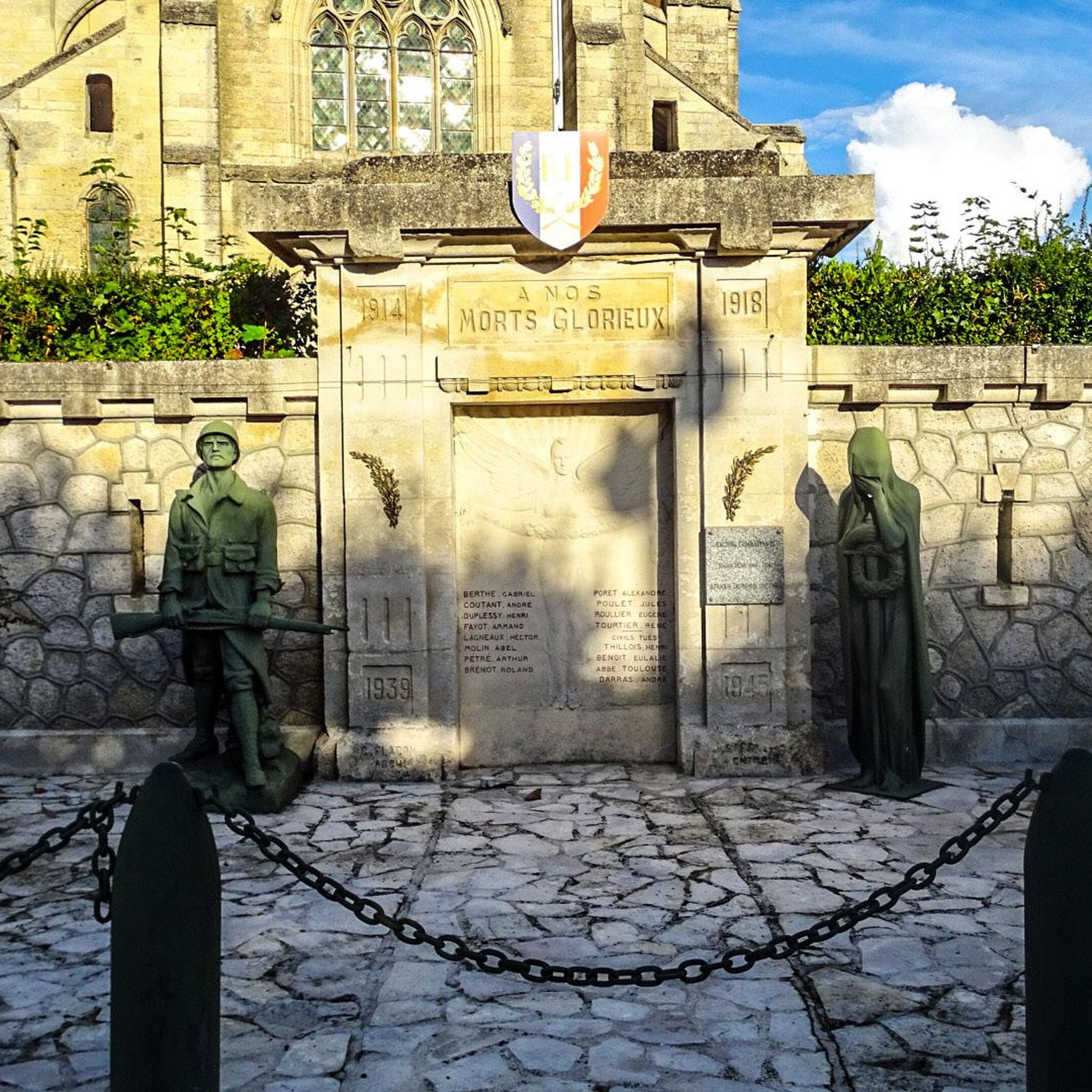
Laon Old Town — Murals and Fortifications
Highlight • Historical Site
Translated by Google •
Tip by

Notre-Dame Cathedral of Laon
Highlight • Other
Translated by Google •
Tip by

Croix Sézinne
Highlight • Monument
Translated by Google •
Tip by

Sign up for free to discover even more attractions around Mons-En-Laonnois.
Sign up for free
Already have an account?
Start today with a free account
Your next adventure awaits.
Login or Signup
Tips from the Community

For its opening hours, the cathedral is open every day from 8:30 am to 6:30 pm and can be visited free, however, there is an audioguided tour for 7 €
0
0
The present Notre-Dame de Laon cathedral is the heir to an ancient building, built under the Carolingians and destroyed during the communal insurrection of 1112. Completed around 1235, the cathedral underwent a major restoration in the 19th century, and again in the 2000s. Note that since September 3, 2021, the building has been home to a “Blueberry of Memory” (a work of art by artist Matt Seaward) offered by the Bishop of Durham (UK) in memory of the soldiers who fell in the First World War.
0
0

Here, visitors will find an early masterpiece of Gothic architecture, a style often found in this part of France – Chartres and Reims, for example, attract enthusiastic international visitors and are far more famous than Laon. In the following 13th century, many Gothic churches were built, not only in their country of origin, France, but also beyond the country's borders, where this skyward-striving, light-filled architectural style was now in great demand for new churches (for example, the laying of the foundation stone for Cologne Cathedral in 1248).
2
0
In the forest south of Saint-Nicolas-Aux-Bois, we encounter a small sacred monument, which, based on its intention, can be classified as a memorial cross. The metal cross located at the top of the monument, surrounded by trees, is comparatively small in relation to the towering, divided shaft. The base of the "Croix Sézinne" consists of two (three if you count the transition) stone elements: a square shaft at the bottom, a slightly projecting, tapered connecting piece in the middle section, and above it, a round shaft that supports the actual cross.
2
0


The Porte d’Ardon is one of the medieval city gates of Laon. The current structure dates from the 13th and 14th centuries. Originally, this gate was called “Porte Royée” because of its proximity to the royal palace of Laon. The gate consists of a châtelet with a portcullis and used to have doors. There was also a barbican, but this has now disappeared. Under the gate there was a fountain and wash houses, some of which still exist. The Porte d’Ardon was classified as a historical monument in 1909.
9
0

The Croix Sézinne in Saint-Nicolas-Aux-Bois is a historic monument located in the Saint-Gobain forest, in the Aisne department, in France. This is a cross which commemorates a medieval conflict between the monks of the neighboring abbey and the local lords.
2
0
The Croix Sézinne is a cross-shaped monument located in the Saint-Gobain forest, near the village of Saint-Nicolas-aux-Bois in France. It is a historical and cultural landmark which commemorates the death of three young Flemish lords captured and executed by the lord of Coucy in the 13th century.
2
0
Frequently Asked Questions
What historical landmarks can I explore near Mons-En-Laonnois?
The region is rich in history. You can visit the impressive Notre-Dame Cathedral in Laon, a significant example of early Gothic architecture. Also, explore the medieval city gates of Laon, such as the well-preserved Porte d'Ardon and the Porte de Soissons. Don't miss the historical Laon Old Town — Murals and Fortifications, which is France's largest contiguous protected area.
Are there any unique natural features to discover around Mons-En-Laonnois?
Yes, the area is known for "Les Creuttes," a unique natural and historical site featuring troglodytic dwellings carved into cliffs and rock formations. These caves provided shelter for inhabitants through various historical periods and can still be seen from the rural path of Les Creuttes.
What outdoor activities are available near Mons-En-Laonnois?
The area offers a variety of outdoor activities. You can explore a network of rehabilitated rural paths, forming a hiking circuit of approximately 10 kilometers. For more structured routes, consider the running trails, gravel biking routes, or MTB trails available around Mons-En-Laonnois.
Where can I find historical military sites in the region?
You can visit the Fort de Laniscourt, also known as Fort de Mons-en-Laonnois, which was built between 1879 and 1883 for defense. Although decommissioned, it played a role in both World Wars. Additionally, the Mons-en-Laonnois German Military Cemetery holds significant historical importance, containing 5,003 German graves from World War One.
Are there any religious or memorial sites of interest?
Beyond the Notre-Dame Cathedral, you can find the Croix Sézinne in the Saint-Gobain forest. This cross-shaped monument commemorates the execution of three young Flemish lords in the 13th century. The Église de Mons-en-Laonnois itself also has a rich history, having served as a refuge during times of unrest.
What kind of hiking trails are available around Mons-En-Laonnois?
There's a network of rehabilitated rural paths forming a hiking circuit of approximately 10 kilometers, offering diverse natural environments. For more specific routes, you can explore various running trails, some of which are suitable for walking, with distances ranging from moderate to difficult.
What is the historical significance of Laon's fortifications?
Laon's fortifications, including the medieval city gates like Porte d'Ardon and Porte de Soissons, are remnants of its past as a strategic fortified city. The Laon Old Town — Murals and Fortifications represents the largest contiguous protected area in France, showcasing centuries of defensive architecture and urban development.
Can I find any unique architectural features in the local churches?
The Église de Mons-en-Laonnois, despite sustaining damage in past conflicts, retains an imposing appearance and features a small bartizan dating back to 1592, highlighting its historical role as a fortified refuge for residents.
What do visitors particularly appreciate about the attractions near Mons-En-Laonnois?
Visitors often appreciate the rich historical depth of the region, from the ancient fortifications and medieval architecture of Laon to the unique troglodytic dwellings of Les Creuttes. The blend of historical sites, religious buildings, and natural features provides a diverse and engaging experience, as evidenced by the 109 upvotes and 116 photos shared by the komoot community across the highlights.
Are there opportunities for cycling or mountain biking?
Yes, the area provides excellent opportunities for cycling. You can find dedicated gravel biking routes and MTB trails around Mons-En-Laonnois, with various difficulty levels to suit different riders.
What is the significance of the 'montagne des creutes'?
The 'montagne des creutes' is a prominent landscape feature near Mons-en-Laonnois, known for its unique geological formations and the historical troglodytic dwellings, or 'Les Creuttes,' carved into its cliffs. It's a key site for understanding the region's ancient human habitation.
Most popular routes around Mons-En-Laonnois

Get inspired with the komoot mobile app


Explore more
Still not found the Highlight you’re looking for? See guides of the top attractions in other regions:
