Attractions and Places To See around Saint-Ciers-Du-Taillon - Top 20
Best attractions and places to see around Saint-Ciers-Du-Taillon include historical landmarks, cultural sites, and natural features within the Charente-Maritime department of southwestern France. The commune is situated in a wide valley with the Taillon River flowing through it, surrounded by hillsides and vineyards known for producing grapes for Cognac. Visitors can explore a blend of historical charm and natural beauty, including ancient churches, a Templar chapel, and a Gallo-Roman bridge. The area also offers access to the Gironde estuary, with…
Last updated: May 9, 2026
Port Maubert
Highlight • Settlement
Tip by

Saint Paul Chapel
Highlight • Other
Translated by Google •
Tip by

Sign up now to discover places like this
Get recommendations on the best single tracks, peaks, & plenty of other exciting outdoor places.
Sign up for free
Donkey bridge
Highlight • Other
Translated by Google •
Tip by
Saint-André Church of Clion
Highlight • Religious Site
Translated by Google •
Tip by
Saint-Séverin Church, Nieul-lès-Saintes
Highlight • Religious Site
Translated by Google •
Tip by

Sign up for free to discover even more attractions around Saint-Ciers-Du-Taillon.
Sign up for free
Already have an account?
Start today with a free account
Your next adventure awaits.
Login or Signup


Tips from the Community

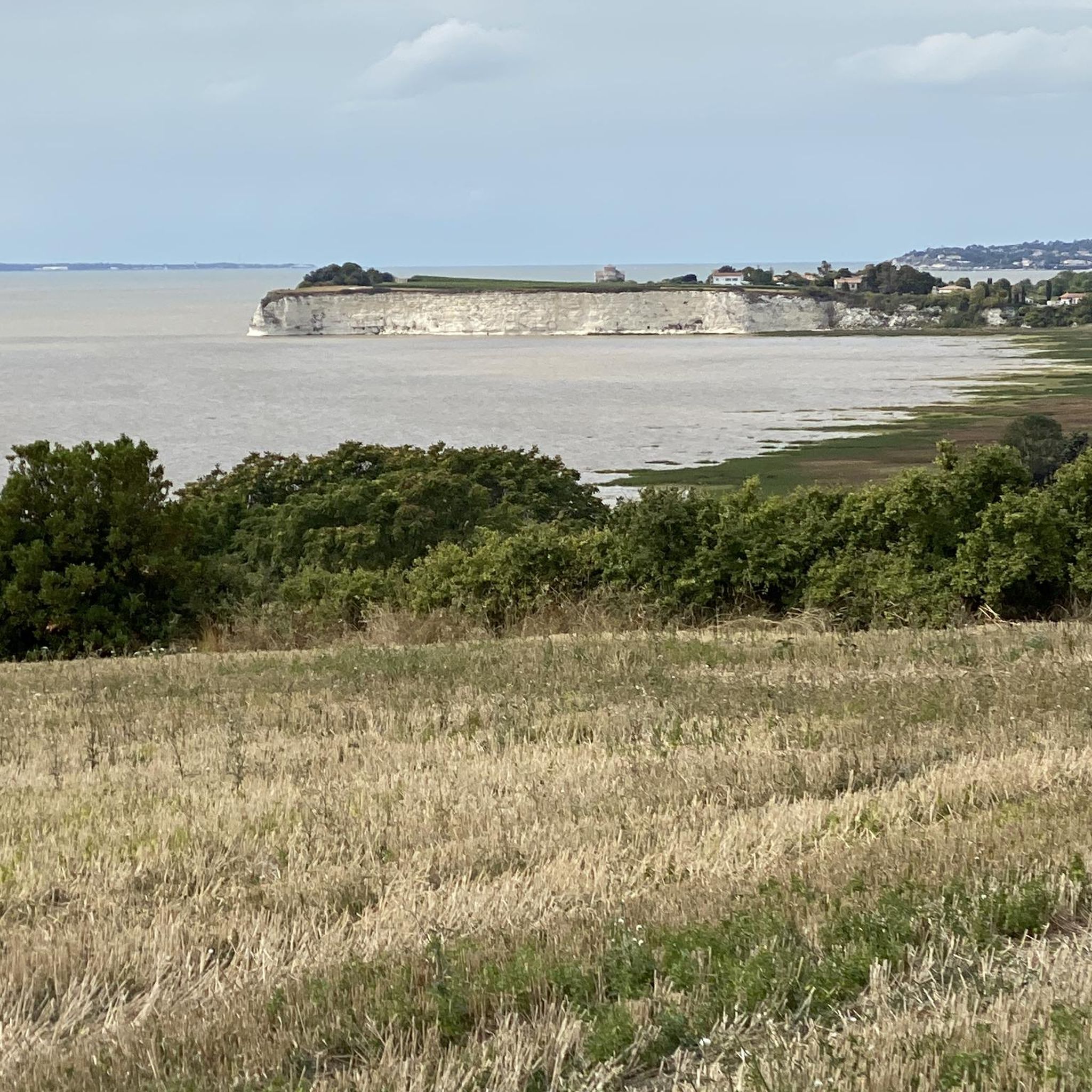
Cute little coastal village at the mouth of a small canal, with a recreational port and a few restaurants as well as picnic spots for a break.
0
0

This Templar chapel was built in the 12th century and renovated in 1706. It was acquired in 1949 by Mr. and Mrs. Frédéric, the current owners, who completely restored it. Since 1986, on August 15 of each year, a mass has been celebrated there.
2
0
This Romanesque church was built in the 12th century, but all that remains of the original building is the bell tower. It was modified in the 15th and 16th centuries. A Renaissance style facade replaces the original facade and the square bell tower was built in the 12th century.
2
0
Dating from the Gallo-Roman period, the so-called "Pas de la Mule" bridge is located on the Seugne. Made up of 6 blocks of stone, it linked the village of Lansac to a water mill called "la cité". It also allowed the passage of animals transporting cereals and flour between the watermill, in the commune of Saint Georges Antignac, and the windmills of Les Groies in Clion.
2
0

Charming little piece of nature. The chapel (above) can be visited when it is open. A skeleton welcomes you but don't worry, it is very discreet!
0
0

The church, built in the shape of a Latin cross, the first construction elements of which date from the 11th and 12th centuries, with later additions and alterations (15th and 19th centuries to the beginning of the 13th century then modified in the 15th and 16th centuries, is dedicated to Saint Séverin, alias Seurin, bishop of Bordeaux in the 5th century, and whose feast day takes place on October 21. However, the solemn patronal feast is that of Saint Blaise, martyr bishop of the 4th century, fixed on February 3, and for which there is great veneration in the country. The main portal of the church, as well as the two false doors, are crowned by ogival arcades with a few rare ornaments borrowed from the Romanesque period, such as saw teeth, diamond points, etc. These gantries have been the subject of a subconstruction. The nave is made up of three recently vaulted bays in brick and plaster, without ribs; each span is separated by groups of four small columns, only two meters and fifty high, and appearing to date from the 14th century. The apse has two bays in the 15th century ogival style. The Saint-Joseph chapel, to the north, has kept its original Romanesque style; it is dominated by a semi-circular vault, and offers the example of an apsidion of which no advantage is currently being taken. It is adorned with a small apse which housed the baptismal font. The chapel of the Virgin, to the south, was remodeled in the 17th century; it has the character of a 15th century restorer; it was then lengthened, and consists of three spans. There is, it is said, an ossuary under the choir. The bell tower with a cone or "pine cone" spire, placed above the transept, and about 24 meters high (54 steps lead to its summit), is worthy of attention. This is the oldest part of the church. It is covered with a stone dome carved in tortoiseshell called the pine cone bell tower, similar examples of which can be found in Saintonge (Abbaye aux Dames de Saintes, Notre-Dame-de-l'Assomption church in Fenioux)3 but which recalls above all the domes of Byzantine inspiration observed in Poitou, Angoumois and Périgord (church of N.-D.-la-Grande in Poitiers, cathedral of Saint-Pierre in Angoulême, cathedral of Saint-Front in Périgueux). The foreground includes five Romanesque windows on each side, oriented as usual, on the upper level there are only two; the tower ends in a cut of stone, formed of small somewhat deformed cubes and forming a slightly rounded cone, but deformed by time. Inside, this bell tower offers a quadrangular vault, with cut sides, of very good taste. The bell, weighing 430 kilograms, was cast by Guillaume Besson, from Angers, and blessed in 1859, under the name of Marie. The godfather was Mr. Blanc Fontenille, former lawyer and notary, mayor of Nieul, and the godmother Mrs. Marie Belloteau, born Babin; parish priest M.Antoine Lanson.
1
0
The first mention of Port-Maubert appears in the 16th century. It is one of the ports with an intense wheat trade activity on the Gironde estuary. Trade is mainly with Bordeaux. The goods are loaded on barges which transported their cargoes according to the tides and the winds. In the middle of the 19th century, work changed the appearance of the port. At the same time, a landing stage was built to accommodate steamboat passengers. In the 1860s, the State ceded its land to build houses, warehouses for goods, a fairing slipway and establish a shipyard (the future "le Chérif" shipyard). At the entrance to the port, a steam flour mill processes and exports a large part of the cereal production of the Jonzac district. Port activity was at its peak: wines, wheat, potatoes, and other goods flowed in from all over Saintonge to be shipped to Bordeaux, Libourne, Pauillac. The fishing activity continues, the fishermen use boats equipped with nets the "filardières", some come out of the shipyard of Port Maubert, the "Chérif". Fishing has been mentioned in the estuary since the Middle Ages, a modest activity which grew with the modernization of the ports in the middle of the 19th century. The sturgeon, called here "Créac" or "Créa" is one of the fish caught for their flesh. According to tradition, a Russian princess would have come to St-Seurin-d'Uzet. She would then have undertaken to re-teach them how to prepare caviar and when she left, she would have forgotten her umbrella, now carefully kept in St-Seurin-d'Uzet. More specifically, the Prunier house, a great Parisian restaurateur, undertook in 1921 to organize the production of caviar in France and sent Alexandre Scott to St-Seurin-d'Uzet to teach the preparation of caviar to the fishermen of the region. From this activity by several production sites develop as in Port Maubert. The intensity of fishing, in addition to pollution and the modification of natural environments, leads to the scarcity of sturgeons. Its fishing declined in the 1960s and was finally banned in the 1980s, the sturgeon becoming a protected species. Since the 1990s, research has been carried out to reintroduce the original species of sturgeon, the sturio. At the same time, Baerii sturgeon farms are open along the estuary to provide caviar. In the 1980s, sturgeon fishing was banned and fishermen reoriented themselves towards pibales, hitherto practiced on foot or in skiffs with a landing net, and which now is done with boats equipped with "haveneaux": the "pibaliers", also used for shrimp fishing. Today the activity of Port Maubert is mainly linked to fishing and yachting, while a sailing school allows learning how to handle the Optimists on the hunting basin in complete safety. Local fishermen perpetuate the activity and offer the product of their work in the form of numerous recipes sold at the on-site shop.
0
1

Frequently Asked Questions
What historical landmarks are there to visit near Saint-Ciers-Du-Taillon?
The region is rich in history. You can visit the 12th-century Saint Paul Chapel, a Templar chapel that has undergone extensive restoration. Another significant site is the Saint-André Church of Clion, a Romanesque church with a 12th-century bell tower and a Renaissance-style facade. Don't miss the ancient Donkey bridge, dating back to the Gallo-Roman period, which once connected villages over the Seugne River.
Are there any natural features or scenic areas to explore?
Yes, Saint-Ciers-Du-Taillon is set in a wide valley with the small Taillon River flowing through it, surrounded by hillsides. The area is also known for its vineyards, which produce grapes for Cognac. For a pleasant outing, visit Port Maubert, a charming coastal village with a recreational port and picnic spots on the Gironde estuary.
What kind of outdoor activities can I do near Saint-Ciers-Du-Taillon?
The area offers various outdoor activities. You can find several running trails, such as the moderate 'Running loop from Saint-Ciers-du-Taillon'. For mountain biking enthusiasts, there are routes like the 'Climbing spots loop from Clion-sur-Seugne'. Cyclists can enjoy scenic rides like the 'Gironde Estuary by Bike: Mortagne-sur-Gironde to Vitrezay'. You can find more details and routes on the Running Trails, MTB Trails, and Cycling around Saint-Ciers-Du-Taillon guide pages.
Are there family-friendly attractions in the area?
Absolutely. Port Maubert is a great spot for families, offering a recreational port and picnic areas. The Saint-André Church of Clion is also considered family-friendly, providing an interesting historical visit. For active families, there's a paintball park with a 'WoodPark' in Saint-Ciers-Du-Taillon, operating year-round by reservation.
What is the historical significance of the churches in the region?
The churches hold deep historical roots. The Saint-André Church of Clion, for instance, retains its 12th-century bell tower despite modifications in later centuries. The Church of Saint-Ciers-du-Taillon itself, dedicated to Saint Cyriac, dates back to the 12th century and was rebuilt with English influence, recognized as a Historic Monument. Further afield, the Saint-Séverin Church in Nieul-lès-Saintes features elements from the 11th and 12th centuries, including a notable cone-shaped spire.
Can I find any unique or unusual attractions around Saint-Ciers-Du-Taillon?
Beyond the well-known sites, the Donkey bridge, or 'Pas de la Mule', offers a glimpse into Gallo-Roman engineering and local folklore about its worn stones. The private Saint Paul Chapel, a Templar site, is unique for its extensive restoration by private owners and the annual mass celebrated there on August 15th.
What are the best times of year to visit Saint-Ciers-Du-Taillon for outdoor activities?
The region generally enjoys pleasant weather for outdoor activities from spring through early autumn. These seasons offer comfortable temperatures for exploring historical sites, walking along the Taillon River, cycling through vineyards, or enjoying the recreational port at Port Maubert.
Are there any towns or villages nearby worth visiting for a day trip?
Yes, several charming towns are within easy reach. Jonzac, about 16 km away, is known for its thermal baths and castle. Pons, around 19 km away, features a historic castle tower and a pilgrim hospital. The picturesque village of Talmont-sur-Gironde, famous for its imposing Church Sainte-Radegonde, is also highly recommended for a visit.
What do visitors enjoy most about the attractions around Saint-Ciers-Du-Taillon?
Visitors particularly appreciate the blend of historical charm and natural beauty. The tranquil atmosphere of Port Maubert, with its recreational port and picnic spots, is often highlighted. The historical depth of sites like the Saint Paul Chapel and the Saint-André Church of Clion also receives positive feedback for their architectural and cultural significance.
Can I find opportunities for walking or hiking in the area?
Yes, the surrounding landscape of Saint-Ciers-Du-Taillon, with its river valleys and hillsides, offers opportunities for walking. While specific hiking trails are not detailed for this guide, you can explore various running routes that can also be enjoyed as walks, such as the 'Running loop from Les Gatines' or the 'Running loop from Lorignac'.
What is the significance of the vineyards in the Saint-Ciers-Du-Taillon region?
The vineyards surrounding Saint-Ciers-Du-Taillon are a significant part of the local economy and culture. They are known for producing grapes that are transformed into Cognac, specifically classified as 'Fin Bois'. This viticulture contributes to the scenic beauty of the landscape and the region's renowned culinary heritage.
Are there any specific architectural styles or periods represented in the local landmarks?
The local landmarks showcase a range of architectural styles, primarily Romanesque and Gothic. The Saint-André Church of Clion features a 12th-century Romanesque bell tower and a Renaissance-style facade. The Church of Saint-Ciers-du-Taillon itself, originally 12th-century, was rebuilt with English Gothic influences between the 14th and 15th centuries. The Saint Paul Chapel is a 12th-century Templar structure.
Most popular routes around Saint-Ciers-Du-Taillon

Get inspired with the komoot mobile app


Explore more
Still not found the Highlight you’re looking for? See guides of the top attractions in other regions:
