The best cycling routes around Beauvoir-Sur-Mer
4.5
(458)
2,632
riders
42
rides
Touring cycling routes around Beauvoir-Sur-Mer are characterized by the flat, expansive wetlands of the Marais Breton Vendéen, crisscrossed by numerous canals. The region also features a coastline with sandy beaches and the unique Passage du Gois, a submersible road connecting to Noirmoutier Island. The terrain is generally low-lying, with minimal elevation changes, making it suitable for various cycling abilities.
Best touring cycling routes around Beauvoir-Sur-Mer
- The most popular touring cycling route is Passage du Gois – Entrance to the Passage…
Last updated: October 22, 2026
4.6
(33)
238
riders
88.4km
05:23
100m
100m
Hard bike ride. Very good fitness required. Mostly paved surfaces.
4.3
(26)
194
riders
52.1km
03:09
50m
50m
Moderate bike ride. Good fitness required. Mostly paved surfaces.

4.7
(18)
122
riders
Moderate bike ride. Good fitness required. Mostly paved surfaces.
4.3
(9)
97
riders
132km
07:49
300m
300m
Hard bike ride. Very good fitness required. Mostly paved surfaces.
4.5
(35)
228
riders
Moderate bike ride. Good fitness required. Mostly paved surfaces.
Get access to more routes and recommendations from other explorers.
Already have an account?
Our route recommendations are based on thousands of hikes, rides, and runs completed by other people on komoot.
Start today with a free account
Your next adventure awaits.

Tips from the Community

Passage through the forest. Even if there are fewer than south of the Vélodyssée, we still appreciate these sections!
0
0
Trail in the middle of the pine forest... It's so nice!!
0
0
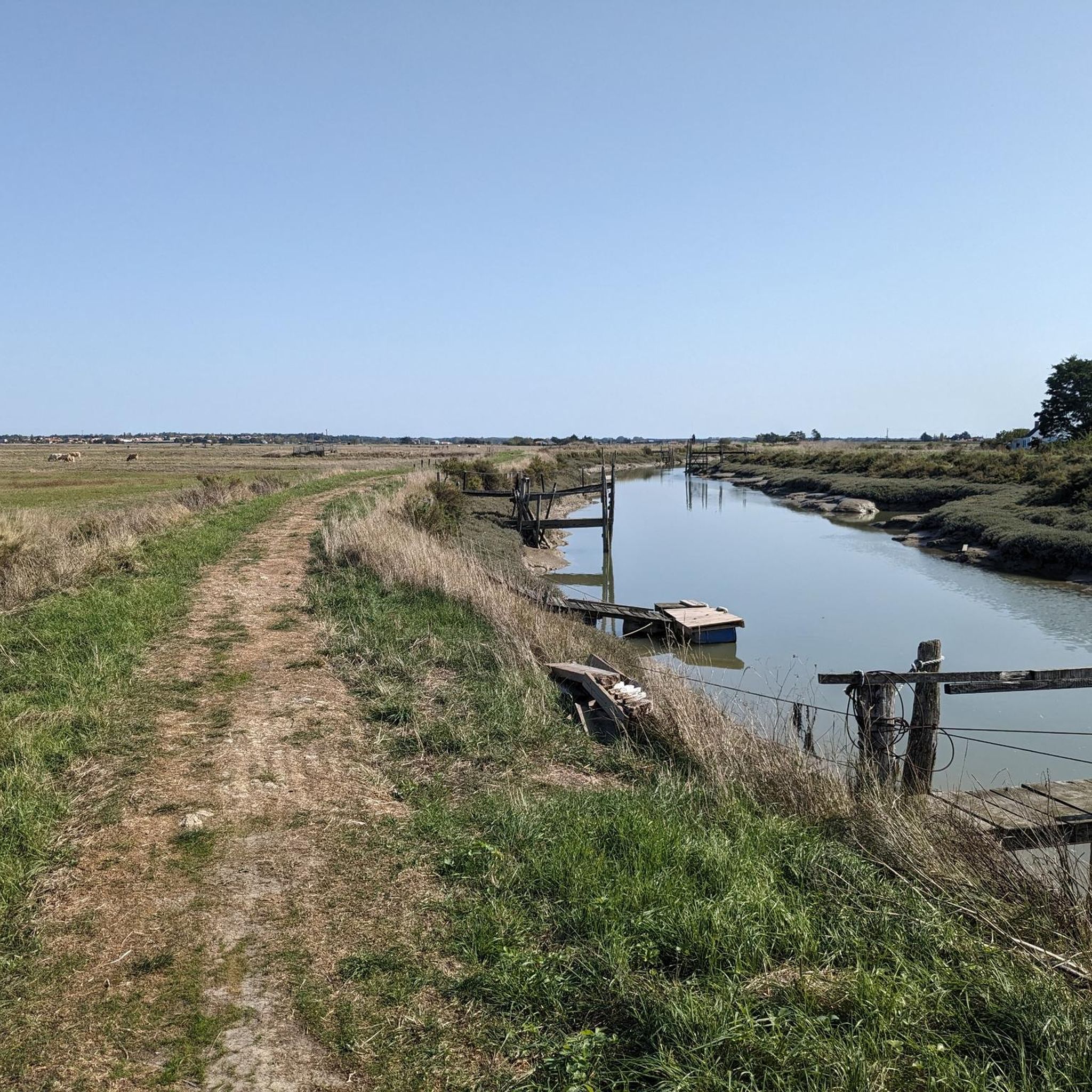
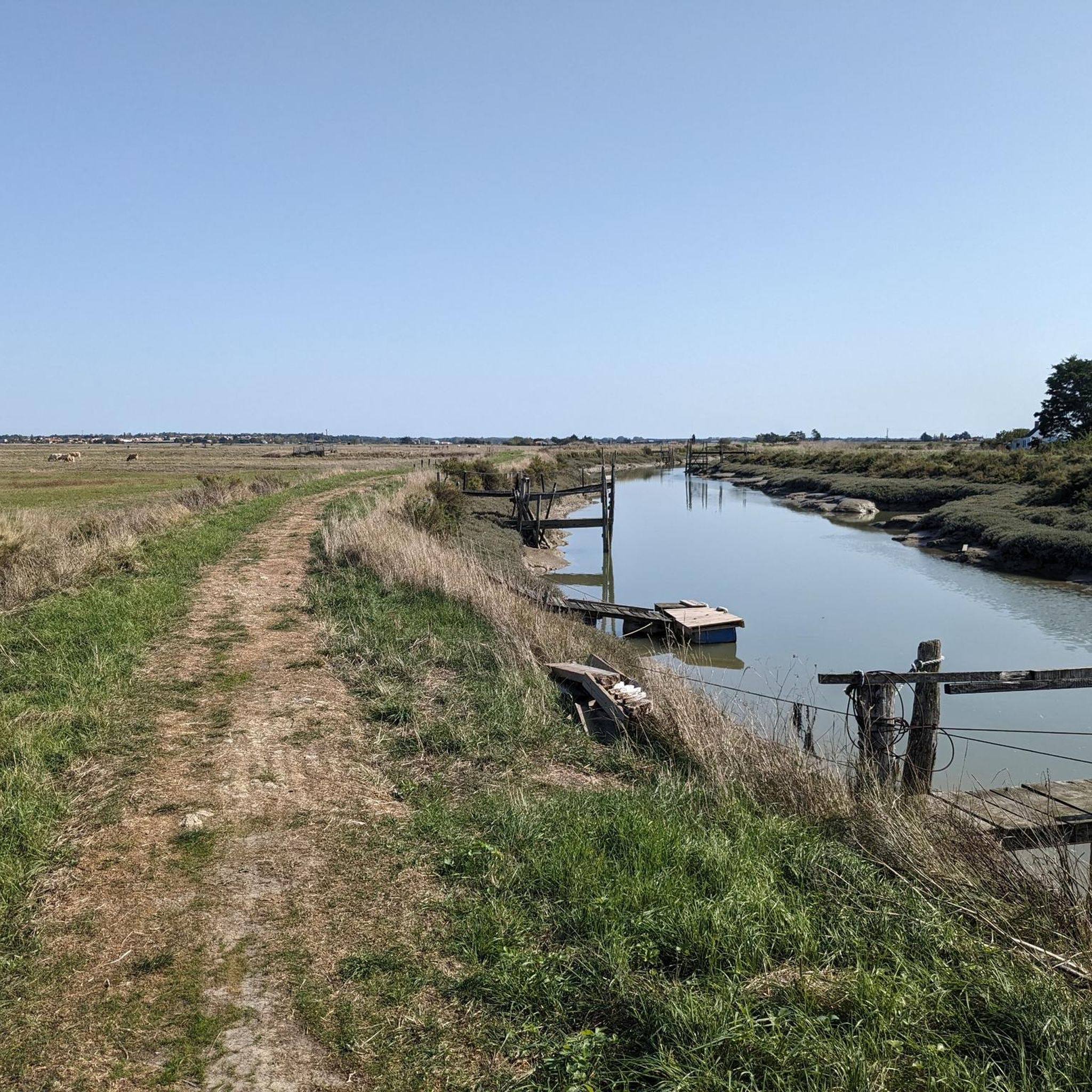
Beautiful fishermen's huts, there are quite a few in the region!
0
0
Beautiful harbor with colorful houses!
0
0
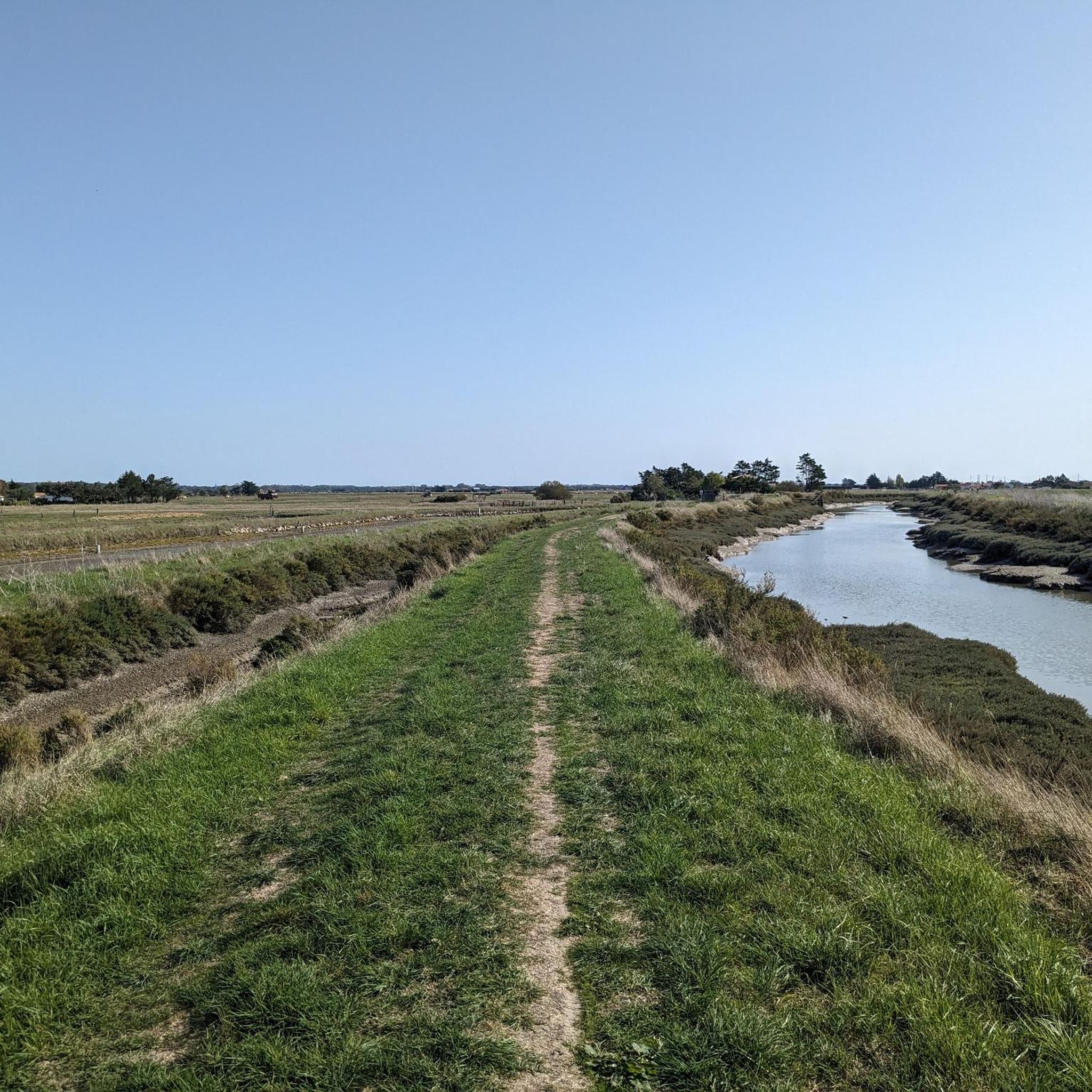
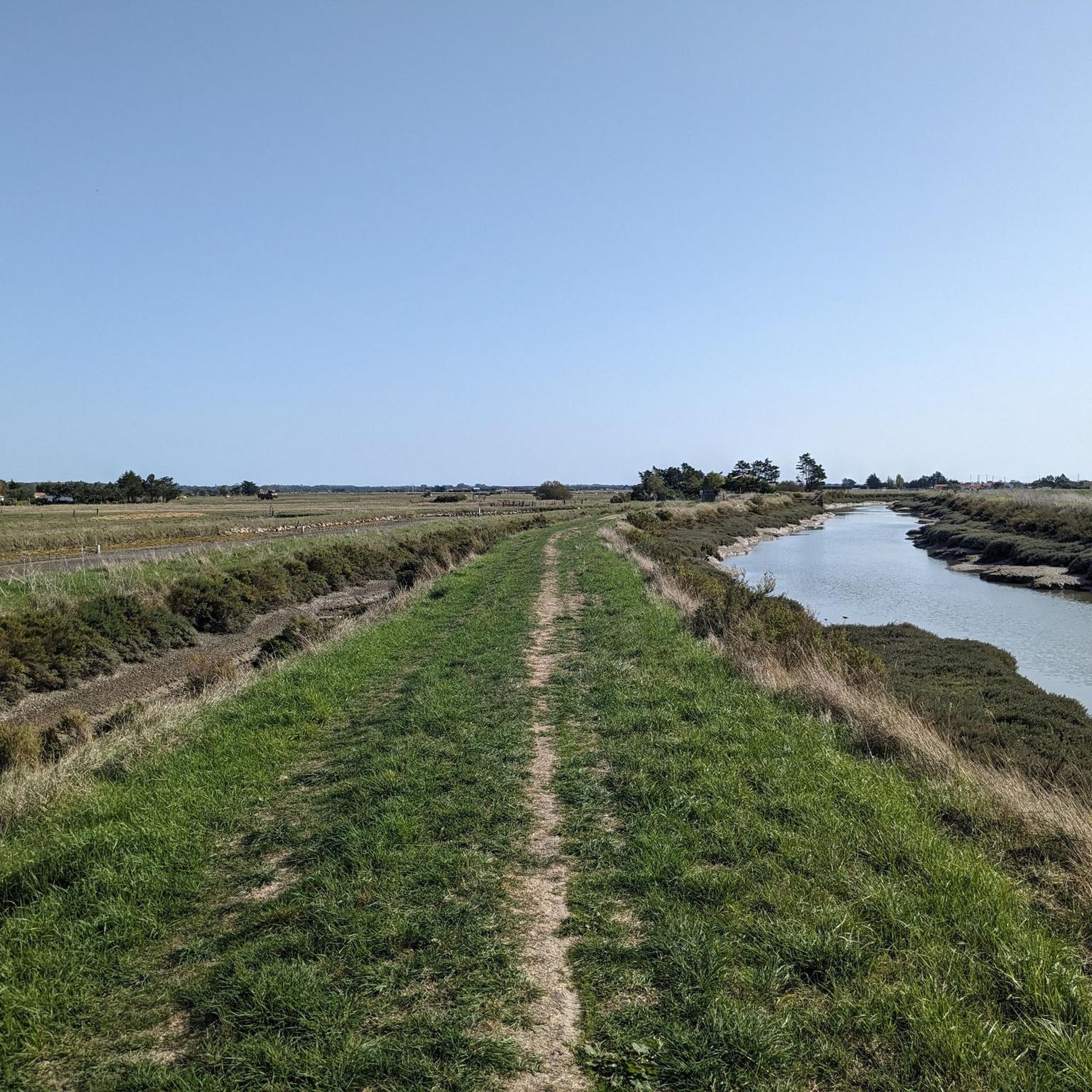
The salt marshes are very pretty, especially in this corner. This mix of greenery and water forms magnificent landscapes!!
0
0
Here you can see lots of fishing equipment, plus it's stylish!
0
0
This place has quite a few fishing huts, it's magnificent, I wonder how much they are still used today. I didn't see any activity when I passed by, but there are so many that they must still be in use, right?
0
0

The Château de Noirmoutier is a castle on the Île de Noirmoutier in the Vendée département of France. It dominates the town of Noirmoutier-en-l'Île with its almost 20-metre-high (66 ft) keep. The castle is very well preserved and a fine example of 12th-century medieval architecture. The first traces of the castle appeared in 830 with the construction of a castrum by the abbot Hilbold, from the monastery of Saint-Philbert. It served to defend the monks and the island's population from the Vikings. The castle was rebuilt in stone in the 12th century by the feudal power who was trying to stabilise the region, notably by preventing Norman pillaging. The island at that time was under the control of the barons of La Garnache. The keep was built by Pierre IV of La Garnache, then an enclosure equipped with towers was built around the lower courtyard. In the 16th century, the castle was held by the La Trémoille family, then viscounts of Thouars. The castle resisted numerous attacks: the English in 1342 and 1360, and again in 1386 under the command of the Earl of Arundel the Spanish in 1524 and 1588 but in 1674, it was taken by the Dutch troops of Admiral Cornelis Tromp. The castle was sold in 1720 to Louis IV Henri de Bourbon-Condé, who resold it in 1767 to Louis XV. During the French Revolution, the castle was used as a military prison. During the 19th century, it was used as a barracks. In 1871, during the Paris Commune, insurgents were imprisoned there. The castle was used to intern German nationals during the First World War. In 1690, a house was built within the castle grounds by the governor of the island and the castle. Today, the keep houses the Noirmoutier Museum. The keep at the centre of the castle is solid and rectangular. Built of rubble, it has three floors, with the lords' residence at the top. The keep has numerous murder holes and defensive turrets at the corners. The rectangular fortification consists of two towers, a single gate and two watch turrets in the four corners. At the beginning of the 18th century, the towers were reconstructed and the keep adapted for artillery. Property of the commune, the Château de Noirmoutier is listed as a monument historique by the French Ministry of Culture. https://en.wikipedia.org/wiki/Ch%C3%A2teau_de_Noirmoutier
0
0
Frequently Asked Questions
How many touring cycling routes are available around Beauvoir-Sur-Mer, and what are their difficulty levels?
There are over 40 touring cycling routes around Beauvoir-Sur-Mer. The majority, about 30, are classified as easy, making them suitable for various skill levels. Additionally, there are 9 moderate routes and 3 more challenging options for experienced cyclists.
What makes cycling the Passage du Gois a unique experience, and what precautions should I take?
Cycling the Passage du Gois – Entrance to the Passage du Gois loop from Passage du Gois offers a truly unique adventure as it's a 4.5 km submersible road connecting the mainland to Noirmoutier Island. It becomes completely submerged at high tide, so it's crucial to check tide times and only cross at low tide for safety. This iconic natural feature is also a notable highlight: Passage du Gois.
Are there any family-friendly touring cycling routes in Beauvoir-Sur-Mer?
Yes, the flat terrain of the Marais Breton Vendéen makes many routes ideal for families. A great option is the Nice gravel through polder – Gravel Road Through the Polder loop from Beauvoir-sur-Mer, an easy 26.2 km path that winds through picturesque polders and marshlands, offering gentle cycling and scenic views.
What kind of landscapes can I expect to see while cycling around Beauvoir-Sur-Mer?
You'll primarily experience the vast, serene wetlands of the Marais Breton Vendéen, characterized by wet meadows, reed beds, and a network of canals. The region also features a coastline with expansive sandy beaches and the unique Passage du Gois. The terrain is generally flat, offering easy rides through diverse natural environments.
What are some interesting landmarks or points of interest I can explore along the cycling routes?
Beyond the natural beauty, you can discover several points of interest. Consider visiting the charming oyster farming Port and Brochets Tidal Creek – Port des Champs loop from Le Port du Bec, or explore the traditional salt marshes. Other highlights include the Noirmoutier Bridge and the historic town of Sallertaine. You might also spot diverse birdlife from the Stork Observation Platform in Marais Breton.
Are there any longer touring cycling routes for more experienced riders?
For those seeking a longer challenge, the Marais de Lyarne – Saint-Jean-de-Monts loop from Beauvoir-sur-Mer is a difficult 107.4 km route. It offers an extensive exploration of the marshlands and coastal areas, providing a full day's adventure for well-prepared cyclists.
What do other touring cyclists enjoy most about cycling in Beauvoir-Sur-Mer?
The area is highly rated by the komoot community, with an average score of 4.5 stars from over 380 reviews. Reviewers often praise the unique experience of cycling across the Passage du Gois, the tranquility of the Marais Breton Vendéen, and the generally flat, accessible terrain that makes for enjoyable rides.
Are there any circular touring cycling routes available?
Yes, many of the touring cycling routes in Beauvoir-Sur-Mer are designed as loops, allowing you to start and end at the same point. For example, the Port du Bec – Port des Champs loop from Lotissement de l'Écluse is a moderate 51.4 km circular route that takes you through varied landscapes.
When is the best time of year to go touring cycling in Beauvoir-Sur-Mer?
The region is generally pleasant for cycling from spring through autumn. The flat terrain means weather conditions are a primary factor. Spring and early autumn offer milder temperatures and fewer crowds, while summer can be warm but also provides opportunities for coastal rides with ocean breezes. Always check the local weather forecast before heading out.
Is it possible to find parking near the starting points of cycling routes?
Yes, many routes around Beauvoir-Sur-Mer, especially those starting from towns or popular attractions like the Passage du Gois, typically have designated parking areas nearby. It's advisable to check specific route details on komoot for information on parking availability at the suggested starting points.
Can I bring my dog on the cycling routes in Beauvoir-Sur-Mer?
While specific regulations for dogs on cycling paths can vary, the open nature of many routes through the Marais Breton Vendéen and along coastal paths often allows for dogs on a leash. However, always be mindful of local signage, protected natural areas, and other cyclists. Ensure your dog is comfortable with cycling alongside you for longer distances.
Are there opportunities to see wildlife while cycling in the Marais Breton Vendéen?
Absolutely. The Marais Breton Vendéen is a rich wetland ecosystem, home to exceptional biodiversity. Cyclists can often spot a variety of bird species, including owls, herons, egrets, and black-winged stilts, especially during winter when around 50,000 birds migrate to the area. The serene environment offers excellent opportunities for wildlife observation.
Most popular routes around Beauvoir-Sur-Mer
Most popular attractions around Beauvoir-Sur-Mer

Get inspired with the komoot mobile app


Explore more
Browse the best Cycling routes in other regions.
