The best road cycling routes around Juicq
4.2
(71)
1,863
riders
104
rides
Road cycling routes around Juicq are set within the Charente-Maritime department, characterized by a blend of vineyards, forests, and the unique Marais Poitevin wetlands. The terrain varies from the flat, canal-laced landscapes of the Marais Poitevin to gently rolling hills through agricultural areas and vineyards. The region is influenced by the Charente River, offering routes with waterside views and access to historical towns. This environment provides a range of road cycling experiences across mostly paved surfaces.
Best road cycling routes…
Last updated: November 1, 2026
3.5
(2)
108
riders
33.1km
01:32
270m
270m
Easy road ride. Mostly well-paved surfaces and easy to ride.
3.0
(1)
17
riders
47.2km
02:02
330m
330m
Moderate road ride. Good fitness required. Mostly well-paved surfaces and easy to ride.

14
riders
47.9km
02:08
390m
390m
Moderate road ride. Good fitness required. Mostly well-paved surfaces and easy to ride.
8
riders
Moderate road ride. Good fitness required. Some segments of this route may be unpaved and difficult to ride.
5.0
(1)
4
riders
Moderate road ride. Good fitness required. Some segments of this route may be unpaved and difficult to ride.
Get access to more routes and recommendations from other explorers.
Already have an account?
Our route recommendations are based on thousands of hikes, rides, and runs completed by other people on komoot.
Start today with a free account
Your next adventure awaits.


Tips from the Community

The site of La Baine, in Chaniers, predates the current mill. 14th century: the first attested mills A document dated 1310 mentions cloth mills at La Baine. They were built on piles driven into the riverbed and were used, among other things, for fulling fabrics. These mills then belonged to the dean and chapter of the cathedral of Saintes. They had been destroyed a few years earlier by the Count of la Marche. In 1313, the chapter obtained authorization to rebuild two mills, a weir, and a fishery. 17th century: Colbert's royal mill It was in the 17th century that La Baine gained considerable importance. A complex of five wheat mills was rebuilt on a secondary branch of the Charente, which was not used for navigation. Around 1630, the mills belonged to the brothers Charles and Jacques Duval, who held the beneficial ownership, while the lordship of Chaniers was under the chapter of the Saint-Pierre de Saintes cathedral. Then came Jean-Baptiste Colbert, minister to Louis XIV and Secretary of State for the Navy. Around 1670, Colbert had the mill redeveloped and enlarged to considerably increase its production capacity. The new complex had seven water passages and thus became one of the most powerful mills in the region. Why was Colbert interested in La Baine? The reason was directly linked to the creation and development of the Rochefort arsenal. The mill primarily produced wheat and barley flour intended for the sustenance of the Royal Navy sailors. The grains arrived via the Charente aboard gabares (flat-bottomed barges). After delivering their cargo to the mill, the gabares departed with the flour destined, among other places, for Rochefort. The mill of La Baine was therefore part of a true royal industrial and logistical system organized around the Charente and Rochefort. 19th century: gradual transformation In the 19th century, milling activity continued. The old mills gradually became a true industrial establishment. In 1845, the site was operated by five different millers. From 1897, the complex was gradually brought together by Mr. Lardy, who modernized the facilities and introduced machinery. His son Rémy Lardy succeeded him. 20th century: the flour mill In the 1930s, the mill had become a true industrial flour mill. Its capacity reached about 50 quintals of wheat per day. In 1936, the hydraulic power was supplied by several wheels about 5 meters in diameter. The total water intake was about 4 meters, with a head of 1.50 meters. The facilities included, among other things: two double grinders; a double converter; a pair of millstones; a plansichter; five purifiers. Milling activity finally ceased in the mid-20th century, with sources placing the end of industrial activity around the years 1940-1960, depending on whether one refers to the flour mill or the complete disappearance of milling activity. Today The building has been preserved and transformed into a restaurant, while retaining remarkable elements of its industrial past, notably the wheel and part of the old machinery. The Moulin de la Baine is now located at 14 rue Colbert, 17610 Chaniers, directly above the Charente. A particularly interesting point The mill, the dam, and the locks form an inseparable historical ensemble. The current dam has, however, undergone modern transformations: a prefectural decree from 2012 classifies the hydraulic structure of the Moulin de La Baine as a Class D dam, among other things.
0
0
🏛️ Construction: 18-19 AD The arch was built around 18-19 AD, during the reign of Emperor Tiberius. It stood at the entrance to the Roman bridge crossing the Charente, at the outlet of the Via Agrippa, which connected Lyon to Saintes. It is therefore not truly a "triumphal arch": it was both a road monument and a monumental gate marking the entrance to Mediolanum Santonum, the capital of Roman Aquitaine. 👤 Who had it built? The arch was financed by Caius Julius Rufus, a Romanized notable from Saintonge. He dedicated it to Tiberius as well as his nephew Germanicus. The inscriptions engraved on the entablature still allow us today to know the figures to whom it was dedicated. The name "Arch of Germanicus" therefore comes from this dedication, and not from the fact that Germanicus personally had the arch built or crossed it. 🏗️ A rather exceptional monument The arch has two bays, likely allowing for the differentiation of traffic flows. It measures approximately 15 m high by 16 m wide. Its Corinthian and composite capitals bear witness to particularly meticulous Roman architecture. It constituted a true demonstration of the power and Romanization of Saintes. ⚠️ The moment the arch almost disappeared This is probably the most interesting episode in its history. For centuries, the arch was always located at the level of the Roman bridge and then the medieval bridge, on the right bank of the Charente. In the 19th century, the old bridge had become dilapidated. When it was decided to demolish it, around 1843, the arch was also threatened with destruction. It was then that Prosper Mérimée, Inspector General of Historical Monuments, intervened. He advocated for its preservation and arranged for its dismantling, relocation, and reassembly on the new bank. Another figure is also associated with this preservation: Victor Hugo, who stayed in Saintes in September 1843 and intervened in favor of the monument's conservation with Mérimée. 📍 Why is the arch no longer exactly in its ancient location? The arch we see today, on Place Bassompierre, is therefore no longer in its original location. It was moved a few dozen meters during the transformation of the quays and the disappearance of the old bridge. It was dismantled stone by stone and then reassembled in order to preserve it. It is now located in the immediate vicinity of the ancient Roman bridge crossing. 🏛️ Protection The Arch of Germanicus was finally classified as a historical monument in July 1905. An interesting detail The Crazannes quarries, located near Saintes, supplied a limestone widely used in the region's ancient constructions. Crazannes stone was notably used for monuments such as the Arch of Germanicus. In summary: 18-19 → construction of the arch at the entrance to the Roman bridge ↓ Antiquity → Middle Ages → the arch remains associated with the crossing of the Charente ↓ 1843 → demolition of the old bridge and threat to the arch ↓ 1843-1844 → Mérimée's intervention and relocation of the arch ↓ 1905 → classified as a Historical Monument
0
0

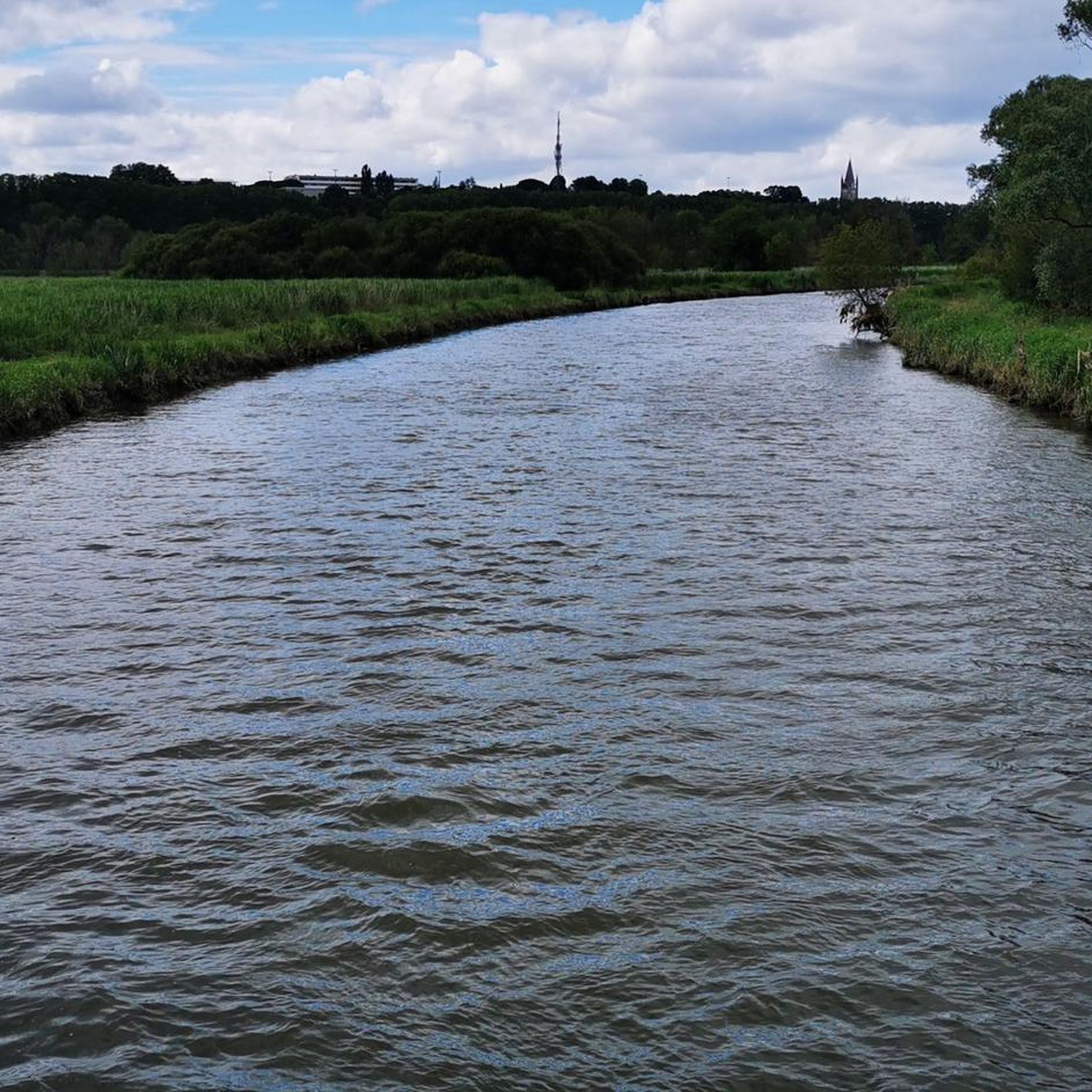
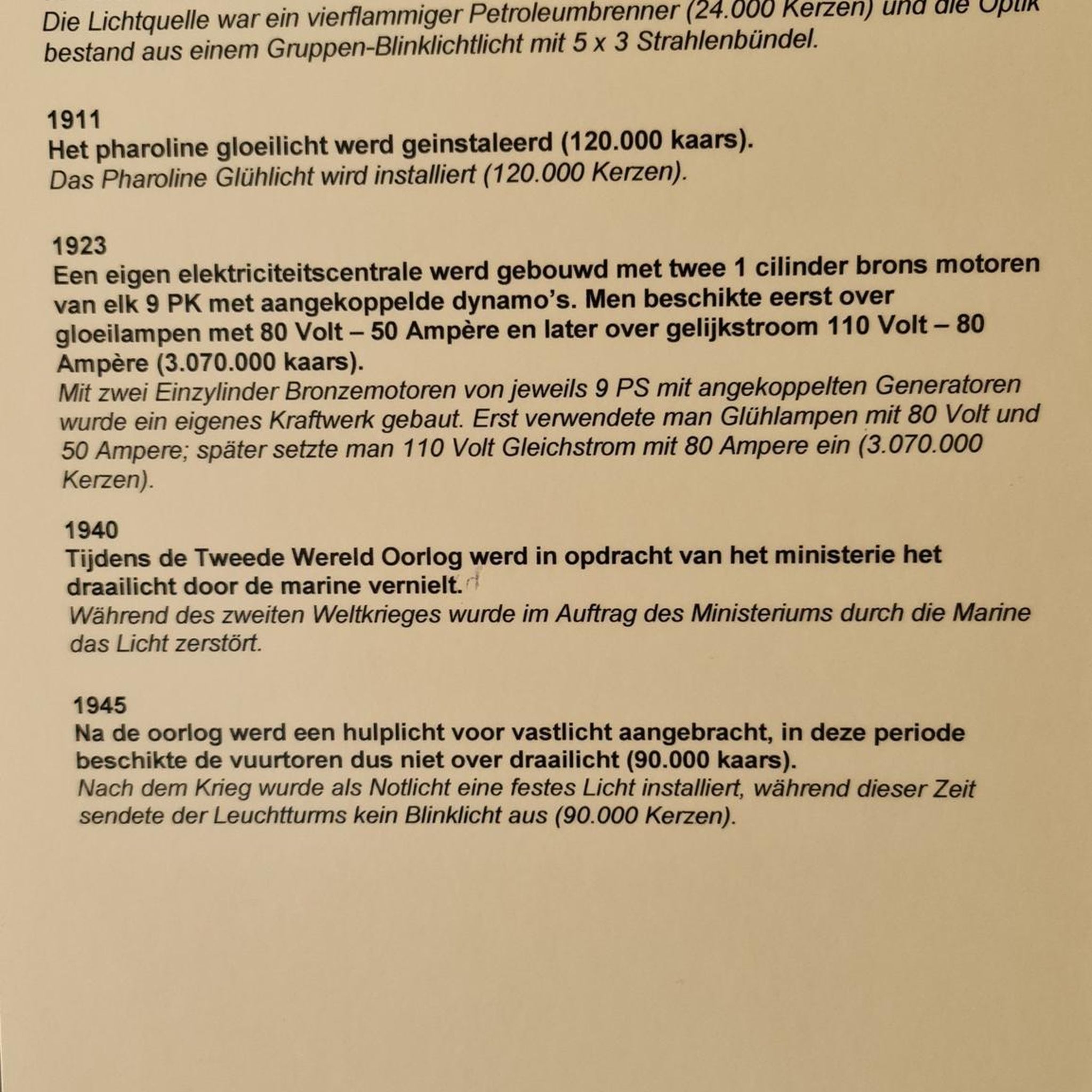
Courcoury is a natural island surrounded by the Charente and Seugne rivers, giving it a unique landscape setting between marshes and waterways, conducive to biodiversity and outdoor activities. It is also the only village in Charente-Maritime to have been awarded 4 stars by the "Villes et villages étoilés" label, recognizing its efforts to reduce light pollution through intelligent and environmentally friendly public lighting.
1
0

It is an absolutely beautiful village.
0
0

Small town with a special charm along the Charente.
0
0

The Abbaye-aux-Dames is built around the church of Sainte-Marie, built in the twelfth century. Famous for its facade and its characteristic "pinecone" bell tower, it is one of the emblematic monuments of Saintonge's Romanesque art. After several wars and fires, the place was restored in the 1970s and 1980s and is now a hotel. When you walk through the long corridors you feel like you have been transported back to the time when the abbey was still alive.
4
0
Like many amphitheaters in the Roman Empire, that of Saintes was built on the outskirts of the city in a place now called "Vallon des Arènes" (Little Valley of the Amphitheater). The LTS builders took advantage of the local topography to build part of the amphitheater. Today, despite the disappearance of its superstructure, the remains give a very good idea of what this amphitheater looked like in its heyday. The site is now open to visitors all year round.
6
0

A former Benedictine abbey created in 1047, Abbaye-aux-Dames was the first women's monastery in Saintonge. These powerful women were nuns, that is to say, nuns living cloistered and having taken a vow of piety, occupying their lives in contemplation. They carried the crosier, in other words the pastoral staff of a bishop, and minted coins. Richly endowed, the abbey carried its influence well beyond the borders of the county and over time it became one of the most powerful women's monasteries in all of South-West France. With up to a hundred nuns at its peak, it was entrusted with the mission of instructing young girls, often from the French nobility, and counted among its most illustrious residents the future Marquise de Montespan, favorite of Louis XIV. The Abbaye-aux-Dames is structured around the Sainte-Marie church, built in the 12th century, famous for its facade and its characteristic “pine cone” bell tower. The premises were restored during the 1970s and 1980s and now house a Cité de la musique in which the Saintes Festival dedicated to classical music takes place each year. You can also stay in a wing of the building, the cells having been converted into hotel rooms, and leave your bike in a secure room.
0
0
Frequently Asked Questions
How many road cycling routes are available around Juicq?
There are over 100 road cycling routes around Juicq listed on komoot. These routes cater to various skill levels, from easy rides through the countryside to more challenging moderate loops.
What kind of terrain can I expect when road cycling near Juicq?
The region around Juicq offers diverse terrain. You'll find mostly paved surfaces, with flat sections particularly around the unique Marais Poitevin wetlands, often referred to as 'Green Venice'. Other areas feature gently rolling hills through vineyards and agricultural landscapes, and routes along the Charente River. This variety ensures options for different preferences and fitness levels.
What is the overall difficulty level of road cycling routes around Juicq?
The road cycling routes around Juicq are predominantly easy to moderate. Approximately 30 routes are classified as easy, ideal for relaxed rides, while nearly 70 routes are moderate, offering a good challenge for experienced cyclists. There are also a few more difficult options for those seeking a greater test.
What historical sites or landmarks can I see along road cycling routes near Juicq?
Many routes pass by significant historical sites. For example, you might encounter the Abbaye aux Dames de Saintes or the Saint-Pierre Cathedral (Saintes). Other notable attractions in the wider area include the Royal Abbey of Saint-Jean-d'Angély and the Gallo-Roman amphitheater in Saintes. The region is rich in Romanesque churches and châteaux.
Are there any scenic viewpoints or natural features to look out for?
Absolutely. Road cycling routes often traverse picturesque vineyards, especially towards the Cognac production area, and pass through various forests like Forêt de Pons. The Marais Poitevin offers unique landscapes with its network of canals and marshes. Many routes also provide waterside views along the Charente River, enhancing the scenic beauty of your ride.
Are there family-friendly road cycling routes in Juicq?
Yes, the flat terrain in certain areas, particularly within the Marais Poitevin, makes for calm and enjoyable rides that are ideal for families. Routes like the easy Roadbike loop from Saint-Vaize offer gentle terrain suitable for a relaxed pace with children.
What do other road cyclists enjoy the most about road cycling in Juicq?
The area is highly rated by the komoot community, with an average score of 4.5 stars from over 50 reviews. Cyclists often praise the varied terrain, from the unique Marais Poitevin to the scenic vineyards, and the opportunity to explore historical sites and charming villages along well-maintained, mostly paved routes.
Are there any circular road cycling routes around Juicq?
Yes, many of the road cycling routes around Juicq are designed as loops, allowing you to start and finish in the same location. Examples include the moderate Abbaye aux Dames de Saintes – View of the Charente River loop from Saint-Hilaire-Brizambourg and the Le Moulin de la Baine – Abbaye aux Dames de Saintes loop from Saint-Hilaire-Brizambourg.
Can I combine road cycling with exploring charming towns or villages?
Definitely. The region is dotted with charming towns and villages that are perfect for a stop. Saintes, just 12 km from Juicq, is rich in history. Other notable places include Saint-Savinien on the Charente River, and Cognac, famous for its brandy. Mornac-sur-Seudre and Talmont are also recognized as some of France's most beautiful villages nearby.
What are some easy road cycling routes for beginners near Juicq?
For beginners or those seeking a relaxed ride, the Roadbike loop from Saint-Vaize is an excellent choice. This easy 17.9 km path features gentle terrain through the countryside. Another easy option is the Saint Saturnin of Séchaud – Saint-Savinien-sur-Charente loop from Annepont, which is about 26 km long.
Are there options for longer distance road cycling routes around Juicq?
Yes, for cyclists looking for longer distances, there are several routes available. The Bourg-Charente Castle – View of the Charente River loop from Saint-Hilaire-Brizambourg is a moderate route spanning over 104 km. Another substantial option is the Abbaye aux Dames de Saintes – View of the Charente River loop from Saint-Hilaire-Brizambourg, which covers nearly 69 km.
What is the best time of year to go road cycling in Juicq?
The Charente-Maritime department, where Juicq is located, generally enjoys a mild climate. Spring and autumn typically offer pleasant temperatures and less crowded routes, making them ideal for road cycling. Summer can also be enjoyable, especially for early morning or late afternoon rides, though it can be warmer.
Most popular attractions around Juicq

Get inspired with the komoot mobile app


Explore more
Browse the best Road cycling routes in other regions.
