The best walks and hikes around Annepont
4.6
(186)
834
hikers
100
hikes
Hiking around Annepont offers access to diverse landscapes within the Charente-Maritime department of France. The region is characterized by its proximity to the Charente River, providing riverside paths and views. Surrounding areas feature extensive woodlands, including the Forêt de Pons, and varied terrain within the Vals de Saintonge, encompassing valleys, fields, and historical routes like "La voie Romaine." This blend of natural features provides a range of hiking experiences.
Best hiking trails around Annepont
- The most popular hiking route is…
Last updated: October 28, 2026
5.0
(4)
50
hikers
6.25km
01:37
30m
30m
Easy hike. Easily walkable paths.
4.8
(10)
19
hikers
9.07km
02:28
130m
130m
Moderate hike. Good fitness required. Easily walkable paths.

4.9
(10)
26
hikers
8.57km
02:13
50m
50m
Moderate hike. Good fitness required. Easily walkable paths.
4.5
(2)
4
hikers
Moderate hike. Good fitness required. Easily walkable paths.
4.3
(3)
7
hikers
8.37km
02:15
110m
100m
Moderate hike. Good fitness required. Easily walkable paths.
Get access to more routes and recommendations from other explorers.
Already have an account?
Our route recommendations are based on thousands of hikes, rides, and runs completed by other people on komoot.
Start today with a free account
Your next adventure awaits.


Tips from the Community

The height of the two pavilions relative to the central body of the castle gave me a hard time identifying this castle. Indeed, the photo was taken from the Charente river, so the perspective is distorted compared to those existing on the WEB, and even AI had some difficulties. However, it was the heritage source that provided a decisive indication: the current main entrance is located to the south, at the end of the park, and opens directly onto the Quai des Fleurs and the Charente river with a gate perfectly aligned with the central body, and which is officially described as having square pillars and wrought iron gates. Note that the castle is private and unfortunately not open to visitors. 1. The estate already existed in the 17th century The Pépinière is therefore not a creation of the late 19th century. In 1660, documents mention Marie de Puyrigaud as "lady of La Pépinière". There was therefore already a noble dwelling at this location. The choice of this location is logical: the property is situated on a hill overlooking the Charente, just above the large shipyard of Saint-Savinien. This shipyard was active for several centuries, from the 13th century until around 1860. The location of La Pépinière thus allowed it to directly overlook the activities of the port and the shipyard. 2. The castle visible on Claude Masse's plan in 1713 In 1713, the military engineer Claude Masse produced a plan of Saint-Savinien and the Charente valley. At the location of La Pépinière, he depicts: a massive construction flanked by three or four towers, preceded by a large garden descending towards the Charente. In other words, the estate then had a much more fortified silhouette than that of the current castle. This also means that the two elements surrounding the central body are part of an ancient architectural tradition of the site, even if the pavilions you see today are not necessarily the old towers. 3. 18th century: outbuildings remain Several buildings around the current castle could be the former outbuildings of the estate. One building located on the other side of the path to La Pépinière notably bears the date 1760, engraved on the keystone of its gate. There were also, towards the Charente, constructions that could have served in the 19th century as housing for employees or the caretaker. 4. 1847: the park is still organized around the old dwelling The eastern boundary wall bears the date 1847. The Napoleonic cadastral map of 1828 still shows the old dwelling surrounded by its park, as well as several annex buildings. We can therefore reconstruct this succession quite precisely: 17th century → old noble dwelling ↓ 1713 → vast house with 3 or 4 towers, according to Claude Masse ↓ 18th century → transformation and development of outbuildings ↓ 1828 → old dwelling still present ↓ 1847 → dated boundary wall ↓ circa 1900 → disappearance of the old dwelling and construction of the current castle 5. The current castle is much more recent as it dates from the very beginning of the 20th century. It was built by J. Lestrade, a contractor from Saint-Savinien, from plans attributed to the architect Georges Naud. The new building was designed with an H-shaped floor plan: -a central body; -two wings forming pavilions; -the pavilions have three levels; -their slate roofs are hipped and very high; -the central body has a Mansart roof. The heritage notice precisely describes these two pavilions as being topped with hipped conical roofs. The two "towers" appear taller than the central body. They are in reality the two side pavilions, which have three levels and whose very high roofs further accentuate this impression.
0
0

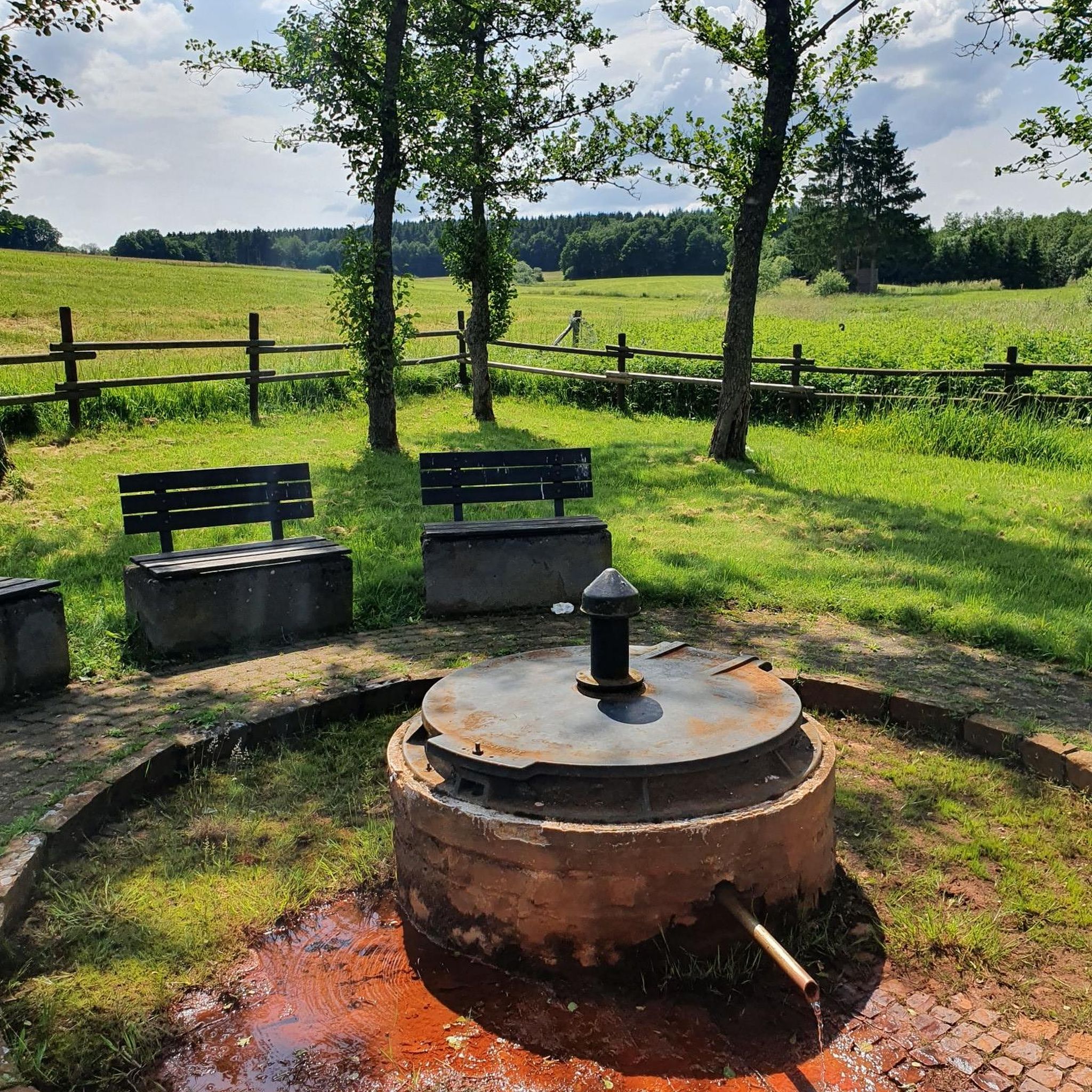
Magnificent forest trail crossing a bamboo forest, explanatory panels, a river, small pontoons and donkeys on the way.
0
0

lovely walk from the Lapidiales to the Standing Stones Galaxy
0
0

One of the masterpieces of Saintonge Romanesque art, the portal and its sculptures deserve a few minutes of attention (at least)!
0
0

Every summer, a select group of sculptors and artists take up creative work in the former quarry, now known as Les Lapidiales, to draw inspiration from their predecessors and put their own stamp on the stone.
1
0

great walk conducive to meditation and reflection with regard to the sculptural works on display. thanks to the artists
2
0


Frequently Asked Questions
How many hiking trails are available around Annepont?
There are over 80 hiking trails around Annepont, offering a wide variety of experiences. These include 37 easy routes, 41 moderate routes, and a few more challenging options, ensuring something for every skill level.
What kind of terrain can I expect on hikes near Annepont?
Hiking around Annepont features diverse terrain. You'll find riverside paths along the Charente, trails winding through local forests like the Forêt de Pons, and routes across the open fields of the Vals de Saintonge. Historic paths like "La voie Romaine" also offer a blend of natural beauty and heritage.
Are there any family-friendly hiking options in Annepont?
Yes, Annepont offers several easy routes suitable for families. These often feature flatter terrain along the Charente River or through gentle woodlands. The area's diverse landscapes provide charming and accessible paths for all ages.
Can I bring my dog on the hiking trails around Annepont?
Many trails around Annepont are suitable for dogs, especially those that traverse open fields and woodlands. It's always recommended to keep your dog on a leash, especially near livestock or in protected natural areas, and to check local regulations for specific routes.
Are there any circular walks available near Annepont?
Yes, many of the hiking routes around Annepont are circular, allowing you to start and end at the same point. An example is the moderate Fenioux loop from Fenioux, which covers 9.2 km with varied terrain.
What historical landmarks or attractions can I see while hiking near Annepont?
The region is rich in history. You can explore sites like Crazannes Castle or the Sainte-Madeleine Church of Crazannes. Further afield, near Saintes, you'll find the Abbaye aux Dames de Saintes and Saint-Pierre Cathedral, which can be integrated into longer excursions.
Are there any routes that pass by the Charente River?
Absolutely. The Charente River is a prominent feature of the landscape around Annepont. Many trails, such as the easy Les Lapidiales loop from Port-d'Envaux, offer picturesque riverside paths and views, providing a tranquil hiking experience.
What do other hikers say about the trails in Annepont?
The hiking trails around Annepont are highly regarded by the komoot community, with an average rating of 4.5 stars from over 130 reviews. Hikers often praise the diverse scenery, from peaceful riverside paths to shaded forest routes, and the well-maintained nature of the trails.
Are there any longer, more challenging hikes available?
While most routes are easy to moderate, there are options for longer hikes. For example, the moderate Château du Chat Botté loop from Port-d'Envaux is 11.4 km long and takes nearly 3 hours to complete, offering a good workout through the local countryside.
Is there parking available at the trailheads?
Many trailheads in the Annepont area, especially those starting from villages like Port-d'Envaux or Fenioux, offer designated parking areas. It's advisable to check specific route details for precise parking information before you set out.
What are some notable natural features to look out for on hikes?
Beyond the Charente River, you'll encounter significant forests such as the Forêt de Pons, Forêt de Suzac, and Forêt de Benon, which provide shaded paths and diverse flora. The varied terrain of the Vals de Saintonge also means you'll experience a mix of valleys, fields, and woodlands.
Most popular attractions around Annepont

Get inspired with the komoot mobile app


Explore more
Browse the best Hikes in other regions.
