Attractions and Places To See around Cottun - Top 20
Best attractions and places to see around Cottun, a commune in the Calvados department of Normandy, France, offer a blend of significant historical sites and natural features. The area serves as a gateway to numerous locations tied to the D-Day landings and the rich history of Normandy. Visitors can explore well-preserved historical landmarks and experience the diverse natural scenery of the Normandy coastline.
Best attractions and places to see around Cottun
- The most popular attractions is Historic Center of Bayeux…
Last updated: August 2, 2026
Batteries des Longues
Highlight • Other
Translated by Google •
Tip by

Port-en-Bessin-Huppain Harbour
Highlight • Settlement
Translated by Google •
Tip by
Sign up now to discover places like this
Get recommendations on the best single tracks, peaks, & plenty of other exciting outdoor places.
Sign up for free
Saint-Siméon Chapel (ruins), Omaha Beach
Highlight • Religious Site
Limestone building was built in the 13th or 14th century. It was rebuilt in the 19th century.
The chapel is mentioned in the …
Translated by Google •
Tip by
Historic Center of Bayeux
Highlight • Historical Site
Translated by Google •
Tip by

Monument to the 5th Engineer Special Brigade
Highlight • Other
The monument of the 5th Engineer Special Brigade honors the US Combat Engineers who fought during the Normandy landings on June 6, …
Showing Translation
Tip by

Sign up for free to discover even more attractions around Cottun.
Sign up for free
Already have an account?
Start today with a free account
Your next adventure awaits.
Login or Signup


Tips from the Community

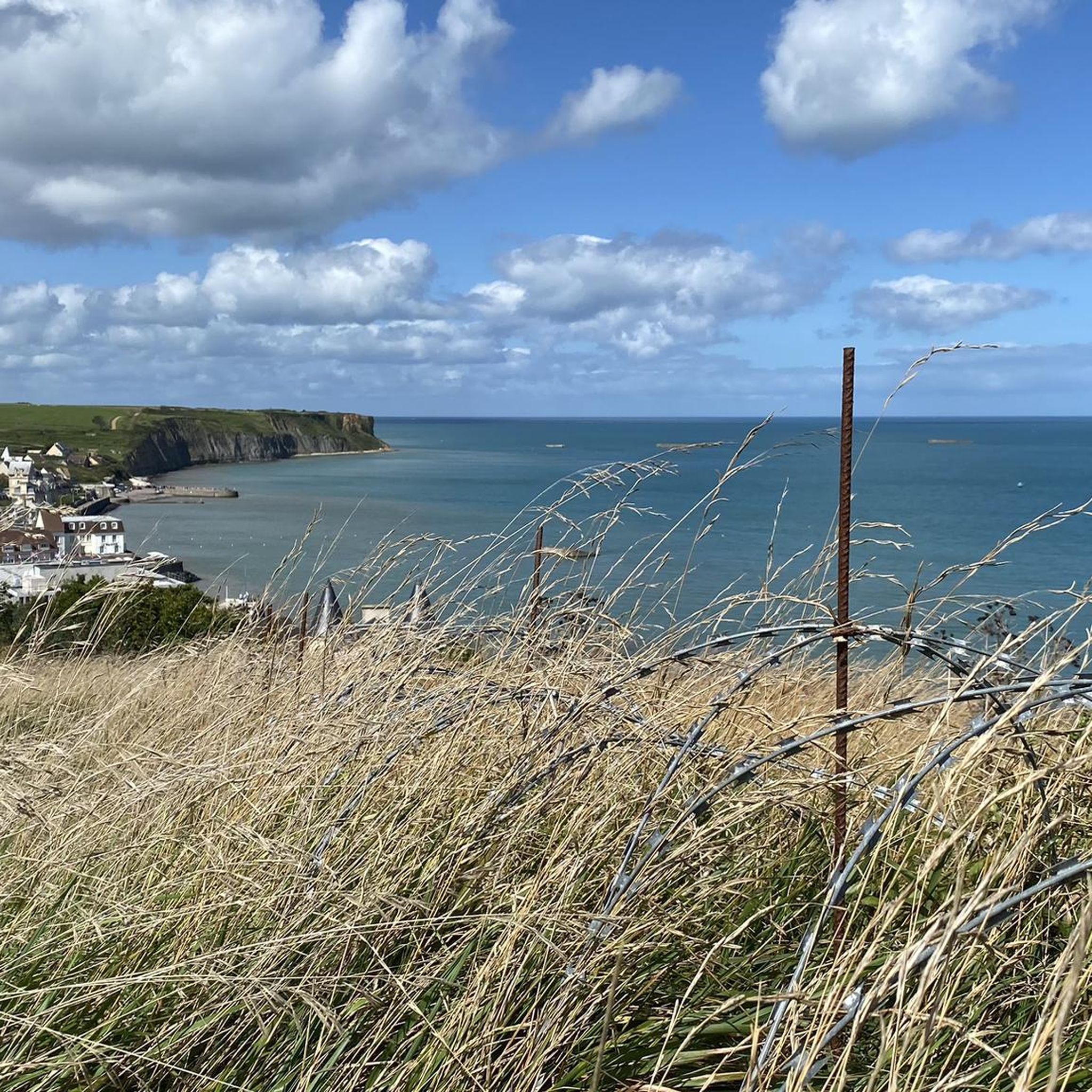
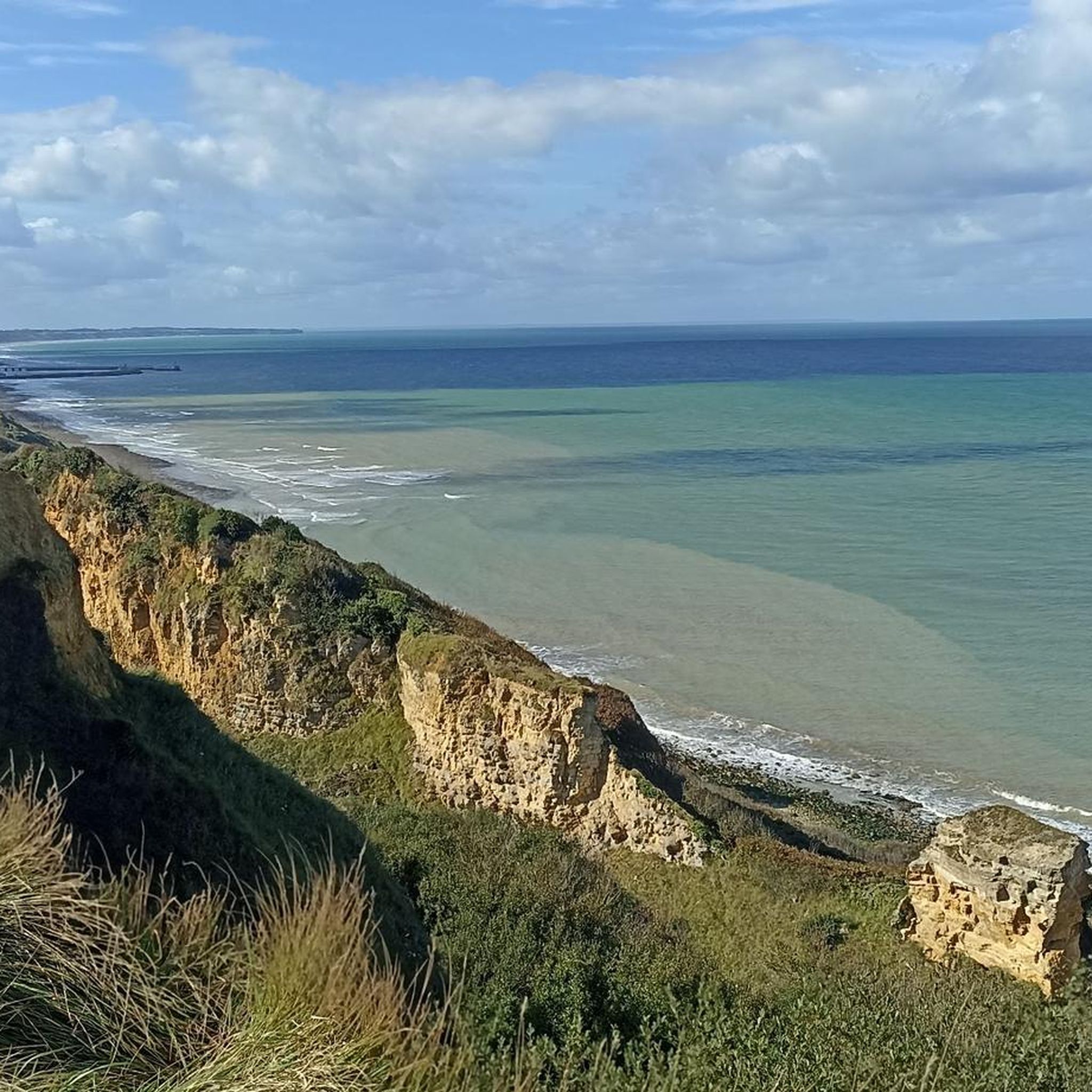
It is not nature – the transition from the mainland to the Atlantic – that is decisive in these beach sections, but rather their role in world history in 1944. Since this month, they have been part of the world heritage. The German UNESCO Commission briefly introduces them with the following words: „The beaches of the Allied landings in Normandy represent a turning point in the Second World War. Here, on June 6, 1944, a new front was opened against Nazi Germany. The site commemorates the great human sacrifices for the liberation of Europe and the close military, logistical, and political cooperation of the Allies. As a place of remembrance, the coast remains inextricably linked to this day with one of the most consequential events of the 20th century, marking the beginning of the end of the war in Western Europe. The World Heritage site encompasses the five landing beaches Utah, Omaha, Gold, Juno, and Sword Beach, as well as the cliff of Pointe du Hoc.“
0
0

The Monument to the 5th Engineer Special Brigade is located on top of a former German fortified position (bunker WN62) in Colleville-sur-Mer, overlooking Omaha Beach. It honors the crucial role of combat engineers who landed on June 6, 1944, under enemy fire to clear mines, demolish obstacles, and create transit routes.
2
0

GPS coordinates: N 49° 21.616, W 0° 50.876 The monument of the 5th Engineer Special Brigade honors the US Combat Engineers who fought during the Normandy landings on June 6, 1944. It stands on the site of a former German strongpoint and consists of a concrete base with granite and bronze plaques, which specifically honor the subunits of the brigade – including the 299th Engineer Combat Battalion. The 5th Engineer Special Brigade was responsible for the Omaha Beach sector. Their main tasks included clearing mines and obstacles, creating lanes for vehicles, rescuing the wounded, and supporting the infantry during the landings. Despite heavy shelling, the brigade succeeded in securing the landing zones, thereby enabling the supply and movement of Allied troops. The monument commemorates their courage and sacrifices.
20
0

How many people lost their lives here. Here, history comes alive.
2
0

The 5th Engineer Special Brigade was a special unit of the U.S. Army that played a crucial role in the Normandy landings on D-Day, June 6, 1944. Their primary task was to remove beach obstacles and create paths for the following troops. Despite heavy losses, they managed to remove enough obstacles and build passable paths to allow American troops and equipment to land and leave the exposed beach.
9
0


The battery in Longues-sur-Mer is considered one of the best-preserved in France. Located on a 60-meter-high cliff between Omaha Beach and Gold Beach, it was positioned directly opposite the Allied fleet. It is the only battery whose guns are still in place. You can move around freely and walk into anything.
0
0

Ironically it stands there, remnants of dark days
1
0
Frequently Asked Questions
What historical sites related to D-Day can I visit near Cottun?
The area around Cottun is rich in D-Day history. You can explore the well-preserved Batteries des Longues, a German coastal battery that played a role in the landings. Other significant sites include the Overlord Museum in Colleville-sur-Mer, the Omaha Beach Memorial, the Normandy American Cemetery and Memorial, and the D-Day Museum in Arromanches-les-Bains, which focuses on the artificial Mulberry Harbors. You can also visit the Saint-Siméon Chapel (ruins) near Omaha Beach and the Monument to the 5th Engineer Special Brigade.
Are there any cultural attractions or museums near Cottun?
Absolutely. The nearby city of Bayeux offers a rich cultural experience. You can visit the famous Bayeux Tapestry Museum (Musée de la Tapisserie de Bayeux), which houses the nearly 70-meter-long tapestry depicting the Norman conquest of England. The Historic Center of Bayeux itself, with its preserved medieval architecture and the impressive Bayeux Cathedral, is a cultural highlight.
What natural features or coastal areas can I explore around Cottun?
Beyond its historical significance, Omaha Beach offers a long stretch of coastline for visitors. The wider Normandy coastline provides diverse natural scenery, including impressive sea cliffs and beaches. You can also visit Port-en-Bessin-Huppain Harbour, a bustling harbor town nestled in a cove between marl cliffs, known for its maritime charm.
What outdoor activities, like cycling or running, are available near Cottun?
The region around Cottun offers various outdoor activities. For cycling, you can explore routes like the 'Port-en-Bessin-Huppain Harbour – Port Panoramic Overlook loop' or the 'Historic Center of Bayeux – Notre-Dame Cathedral loop'. If you prefer running, there are trails such as the 'Château de Barbeville loop'. You can find more details and routes on the Cycling around Cottun and Running Trails around Cottun guide pages.
Are there mountain biking trails near Cottun?
Yes, there are several mountain biking opportunities. You can find routes that take you along the coast, such as the 'Along the coast – Omaha Beach loop from Bayeux', or trails that visit historical sites like the 'Longues-sur-Mer Battery – Batteries des Longues loop'. Discover more options on the MTB Trails around Cottun guide page.
What do visitors enjoy most about the attractions around Cottun?
Visitors frequently appreciate the profound historical significance of the D-Day sites, finding them to be moving experiences. The well-preserved nature of landmarks like the Batteries des Longues and the charming medieval atmosphere of the Historic Center of Bayeux are also highly rated. The picturesque coastal views and the unique architecture of places like Port-en-Bessin-Huppain Harbour also receive positive feedback.
What is the best time of year to visit Cottun and its surrounding attractions?
The best time to visit Cottun and the Normandy region is generally during the spring (April to June) and early autumn (September to October). During these periods, the weather is typically mild and pleasant for exploring historical sites and enjoying outdoor activities, and the crowds are usually smaller than in the peak summer months.
Are there family-friendly attractions or activities near Cottun?
Many of the historical sites, such as the museums and the D-Day beaches, can be educational and engaging for families, especially older children. The Historic Center of Bayeux offers a pleasant environment for family strolls. The coastal areas also provide opportunities for walks and enjoying the natural scenery.
How can I get to the attractions around Cottun using public transport?
While some larger towns like Bayeux and Caen are accessible by train, reaching many of the specific D-Day sites and smaller attractions around Cottun often requires a car. Local bus services connect some towns, but their frequency might be limited, especially to more remote historical landmarks. It's advisable to check local transport schedules in advance or consider guided tours for easier access to multiple sites.
What is the significance of Bayeux in the context of the region's history?
Bayeux holds immense historical significance. It was the first French town to be liberated without destruction during World War II, preserving its medieval charm. It is also famously home to the Bayeux Tapestry, which chronicles the Norman conquest of England in 1066, and features the impressive Bayeux Cathedral, a masterpiece of Norman Romanesque and Gothic architecture.
Can I find viewpoints along the Normandy coast near Cottun?
Yes, the Normandy coastline offers several impressive viewpoints. The cliffs around sites like the Batteries des Longues provide panoramic views of the sea. The area overlooking Omaha Beach, including the Normandy American Cemetery, also offers poignant vistas of the coastline.
Are there any hidden gems or lesser-known spots worth visiting near Cottun?
While many sites are well-known, exploring the smaller coastal villages and their local markets can offer a more intimate experience. The Saint-Siméon Chapel (ruins) near Omaha Beach, though damaged, offers a quiet, reflective spot with beautiful views, often less crowded than the main memorials.

Get inspired with the komoot mobile app


Explore more
Still not found the Highlight you’re looking for? See guides of the top attractions in other regions:
