Attractions and Places To See around Sigloy - Top 20
Best attractions and places to see around Sigloy include a variety of historical sites and natural landscapes. Situated on the left bank of the Loire River in the Loiret department of France, Sigloy offers access to the UNESCO World Heritage-recognized Val de Loire. The area is characterized by its riverine environment, including the Loire and its old arms like Le Rio, and is a key point on the Loire à Vélo cycling route. This region provides opportunities to explore historical…
Last updated: August 2, 2026
Basilica of Saint Benedict at Fleury
Highlight • Other
Translated by Google •
Tip by

Châteauneuf-sur-Loire Castle
Highlight • Castle
Translated by Google •
Tip by

Sign up now to discover places like this
Get recommendations on the best single tracks, peaks, & plenty of other exciting outdoor places.
Sign up for free
La Motte Castle, Vitry-aux-Loges
Highlight • Castle
Translated by Google •
Tip by

Val de Loire Bridge
Highlight • Other
Translated by Google •
Tip by

Courpain Nature Reserve
Highlight • Natural
Translated by Google •
Tip by

Sign up for free to discover even more attractions around Sigloy.
Sign up for free
Already have an account?
Start today with a free account
Your next adventure awaits.
Login or Signup


Tips from the Community

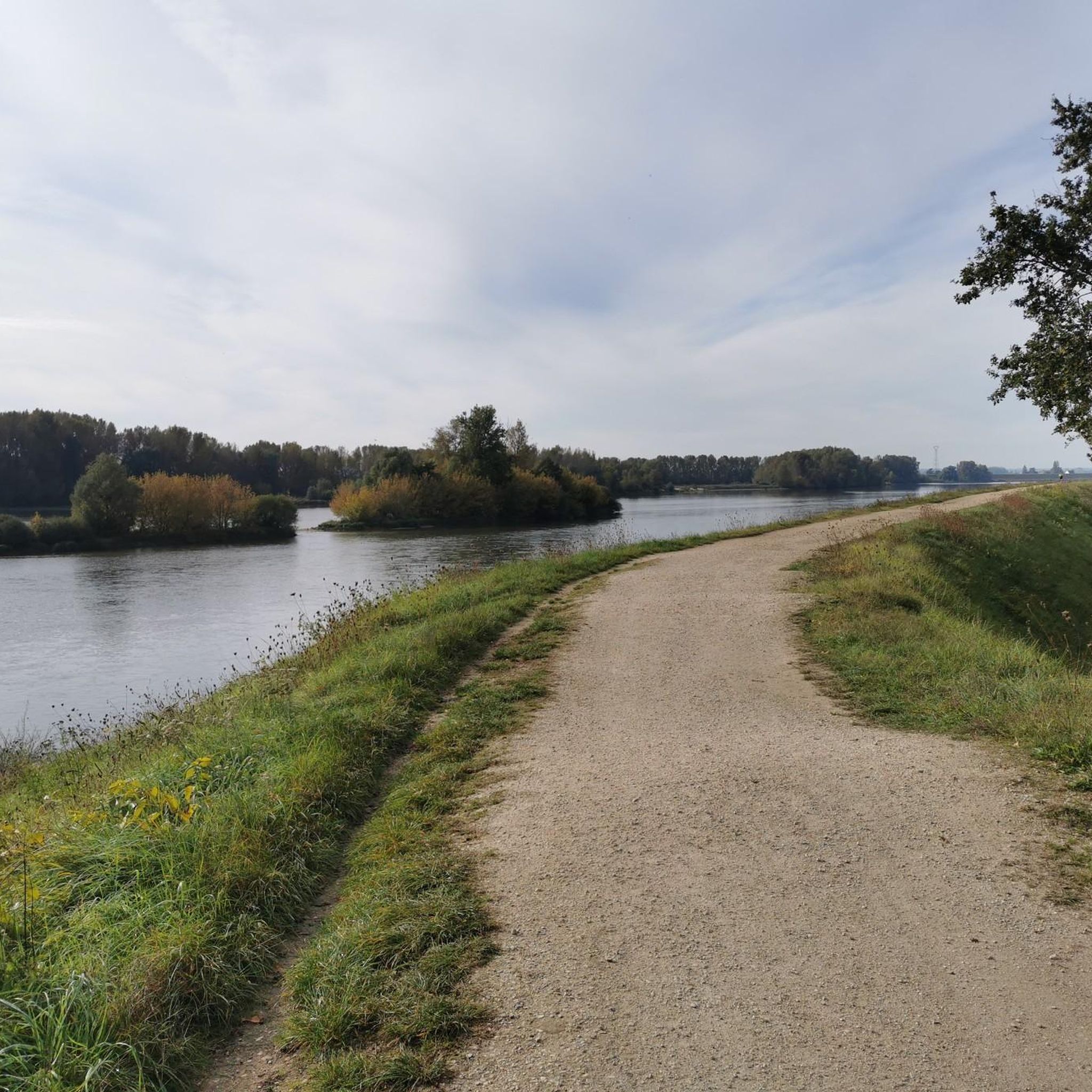
The Val de Loire bridge is a bridge that crosses the Loire River and connects the towns of Mardié and Jargeau, located in the Loiret department in the Centre-Val de Loire region. This bridge is the second bridge in service in Jargeau, along with the one built in 1988, and is located within the perimeter of the Val de Loire natural region, a UNESCO World Heritage site. It was inaugurated on May 10, 2025, and put into service on May 12, 2025.
0
0


New "Val de Loire" Bridge. Connects the banks of Mardié and Darvoy/Jargeau (La Loire à Vélo). A cycle path on each side as well as two viewpoints to stop and admire the Loire
1
0

the temple of love
0
0
Nestled in a meander of the Loire, the town of Saint-Benoît-sur-Loire is home to one of the most beautiful jewels of Romanesque architecture: an 11th and 12th century basilica including the porch tower, decorated with twelve historic capitals. , the monumental portal and the nave constitute the most remarkable elements. Founded around 650 on the grounds of an ancient Gallo-Roman villa, Fleury Abbey has housed the relics of Saint Benedict, founder of Western monasticism and patron saint of Europe, since 672. During the 8th century, the patronage of the Prince of the Apostles was abandoned for that of Saint Benedict. This event is at the origin of the rapid expansion, prosperity and influence of the abbey which became Saint-Benoît de Fleury, while the village later became that of Saint-Benoît-sur-Loire. In the 9th century, after the ordeal of the Norman invasions which pillaged and destroyed the monastery, Fleury Abbey flourished again. The 10th and 11th centuries were the great era of Fleury's spiritual, intellectual and artistic influence. The construction of Fleury was probably completed in 1218. A few centuries later, the Hundred Years' War and the Wars of Religion ruined the monastery and disrupted regular life, the community's numbers collapsed. The French Revolution will end up dispersing the community of Fleury Abbey. But in 1944, a community of around forty monks resettled in the area and undertook the reconstruction of the monastery. A community of thirty-three monks lives there today under the direction of Father Abbot Etienne Ricaud. In 1947, the fourteenth centenary of the death of Saint Benedict led the abbey to be elevated to the status of a basilica. The visitor is invited to admire the fabulous historic capitals present in the porch tower, the nave and the choir; the magnificent paving which extends around the altar as well as the crypt where the relics of the patron saint rest. Not to be missed is the north portal and its monumental lintel carved in high relief.
1
0

Pretty village in Natura 2000 zone.
0
0

We already find traces of a monastery in Fleury in the year 620. In 660, relics of Saint-Benoît were brought there and the abbey became Saint-Benoît de Fleury. Around the year 1000, the abbey experienced a golden age and the construction of the current basilica was launched. It will be consecrated in 1218. From the 16th to the 18th century, wars and the Revolution damaged the monastery. However, a community of 24 monks still lives there today.
0
0
Vitry-aux-Loges was for a long time a royal residence, its castle welcoming the kings who came to hunt in the forest of Orléans already before the year one thousand. Time did its work and after a fire and then a storm, this castle was finally destroyed in 1767. From the 15th century, several lordly residences made of bricks were built around the remains of the royal castle and the castle of Plessis: the castle of La Motte, surrounded by water moats, the castle of Vaux and that of Jarnonces which has now disappeared. The construction of the canal and the arrival of the train would subsequently revitalize Vitry-aux-Loges. Note that the town is now located in a Natura 2000 zone.
1
0
Frequently Asked Questions
What historical and cultural sites can I visit near Sigloy?
Sigloy and its surroundings offer a rich history. You can explore the 11th-century Châteauneuf-sur-Loire Castle, which now houses the town hall, or visit the impressive Basilica of Saint Benedict at Fleury, an 11th-century Romanesque abbey still home to a community of monks. Other notable sites include the Eglise Saint-Martin in Sigloy itself, the grand Cathedral of Sainte-Croix in Orleans, and the exceptional Carolingian Oratory of Germigny-des-Prés.
What natural attractions and outdoor experiences are available around Sigloy?
The region around Sigloy is rich in natural beauty. You can visit the Courpain Nature Reserve, a peaceful 13-hectare space at the confluence of the Loiret and the Loire, known for its diverse flora and birdlife. The Loire River itself offers opportunities for traditional boat trips on 'fûtreaux' to discover local wildlife. Further afield, the Arboretum des Grandes Bruyeres and the extensive Parc Floral de la Source in Orleans provide beautiful natural settings.
Are there family-friendly attractions in the Sigloy area?
Yes, several attractions are suitable for families. The gardens of Châteauneuf-sur-Loire Castle are accessible to the public and offer a pleasant space for a picnic. The Basilica of Saint Benedict at Fleury can be visited outside of services, offering an educational glimpse into Romanesque architecture. Additionally, the Châteauneuf-sur-Loire Bridge is known for its LED lighting, which changes colors seasonally, providing an interesting sight for all ages. The Courpain Nature Reserve is also a great spot for a family outing in nature.
What cycling opportunities are there near Sigloy?
Sigloy is located directly on the renowned Loire à Vélo cycling route, making it an excellent base for cyclists. There are numerous routes for various cycling styles. For road cycling, you can find routes like the 'Oratory of Germigny-des-Prés – Beautiful view of the Loire loop' or the 'Moulin-Rouge Lock loop from Châteauneuf-sur-Loire'. Gravel biking enthusiasts can explore routes such as 'View of the Loire – The Banks of the Loire loop from Saint-Denis-de-l'Hôtel'. You can find more details and specific routes on the Road Cycling Routes around Sigloy and Gravel biking around Sigloy guide pages.
Are there hiking trails near the attractions around Sigloy?
Yes, the area around Sigloy is well-suited for walking and hiking. You can find trails that explore the picturesque towns and villages, as well as the natural landscapes along the Loire. For example, there's the 'Balade des fleurs & jardins' loop in Châteauneuf-sur-Loire, or longer routes like the 'Châteauneuf-sur-Loire – Châteauneuf-sur-Loire Bridge loop'. More hiking options are available on the Hiking around Sigloy guide page.
What is the La Passerelle du Rio?
La Passerelle du Rio is a 135-meter-long wooden footbridge in Sigloy. It is a significant remnant of the former Sologne tramway network, which operated from 1905 to 1934. Originally built for the tram line connecting Tigy to Châteauneuf-sur-Loire via Sigloy, it now serves as a passage, particularly during floods, and offers a unique historical point of interest.
Can I visit other castles in the vicinity of Sigloy?
Beyond the Châteauneuf-sur-Loire Castle, you can explore other impressive châteaux in the region. The moated Château de Sully-sur-Loire is a significant landmark often recommended for visitors to the Loiret. Additionally, the attractive Château de Chamerolles, located about 25 km from Sigloy, features beautiful Renaissance gardens worth visiting. The remains of La Motte Castle in Vitry-aux-Loges also tell a story of royal residences and historical changes.
What is special about the Châteauneuf-sur-Loire Bridge?
The Châteauneuf-sur-Loire Bridge offers scenic views of the Loire River. It is particularly known for its distinctive LED lighting, which changes colors depending on the time of year, creating a beautiful spectacle, especially in the evenings. An application was even created for the occasion, named 'bridge & lights'.
What are some unique local products or experiences in the Loiret region around Sigloy?
The Loiret region offers opportunities to taste local products, including fresh Loire fish, fruits, and vegetables. It is also the birthplace of the Orléans rose, and visitors can explore numerous gardens and meet local producers. Traditional boat trips on the Loire using 'fûtreaux' provide a unique way to experience the river's heritage and wildlife.
What do visitors enjoy most about the attractions around Sigloy?
Visitors particularly appreciate the blend of historical significance and natural beauty. The Châteauneuf-sur-Loire Castle's accessible gardens are enjoyed for picnics, while the Basilica of Saint Benedict at Fleury offers a profound historical and spiritual experience. The scenic views from the Châteauneuf-sur-Loire Bridge and the tranquility of the Courpain Nature Reserve are also highly rated by the komoot community.
Is there parking available at the main attractions?
Yes, for attractions like the Châteauneuf-sur-Loire Castle, parking is available, making it convenient for visitors to access the site and its gardens. For other sites, it is generally advisable to check local signage or specific attraction websites for parking information.
What is the significance of the Loire River in Sigloy?
Sigloy is nestled on the left bank of the Loire River, which is a central feature of the region. The Loire is not only a UNESCO World Heritage site but also provides opportunities for traditional boat trips and is part of the extensive Loire à Vélo cycling route. An old arm of the Loire, known as Le Rio, also adds to the local landscape, acting as a natural overflow during floods.

Get inspired with the komoot mobile app


Explore more
Still not found the Highlight you’re looking for? See guides of the top attractions in other regions:
