Attractions and Places To See around Bévenais - Top 20
Attractions and places to see around Bévenais offer a glimpse into historical rural life and the natural richness of the surrounding Terres Froides de la Bièvre region. This small village in northern Isère features historical architecture, traditional lavoirs, and a communal bread oven, reflecting its heritage. The area serves as a base to explore diverse landscapes and historical sites within the Isère department, including natural features and historic buildings.
Best attractions and places to see around Bévenais
- The most popular…
Last updated: November 6, 2026
Lake Paladru
Highlight • Lake
Translated by Google •
Tip by

Château Louis XI
Highlight • Castle
Translated by Google •
Tip by

Sign up now to discover places like this
Get recommendations on the best single tracks, peaks, & plenty of other exciting outdoor places.
Notre-Dame-du-Mont Chapel
Highlight • Religious Site
Translated by Google •
Tip by

Château de Montgontier
Highlight • Castle
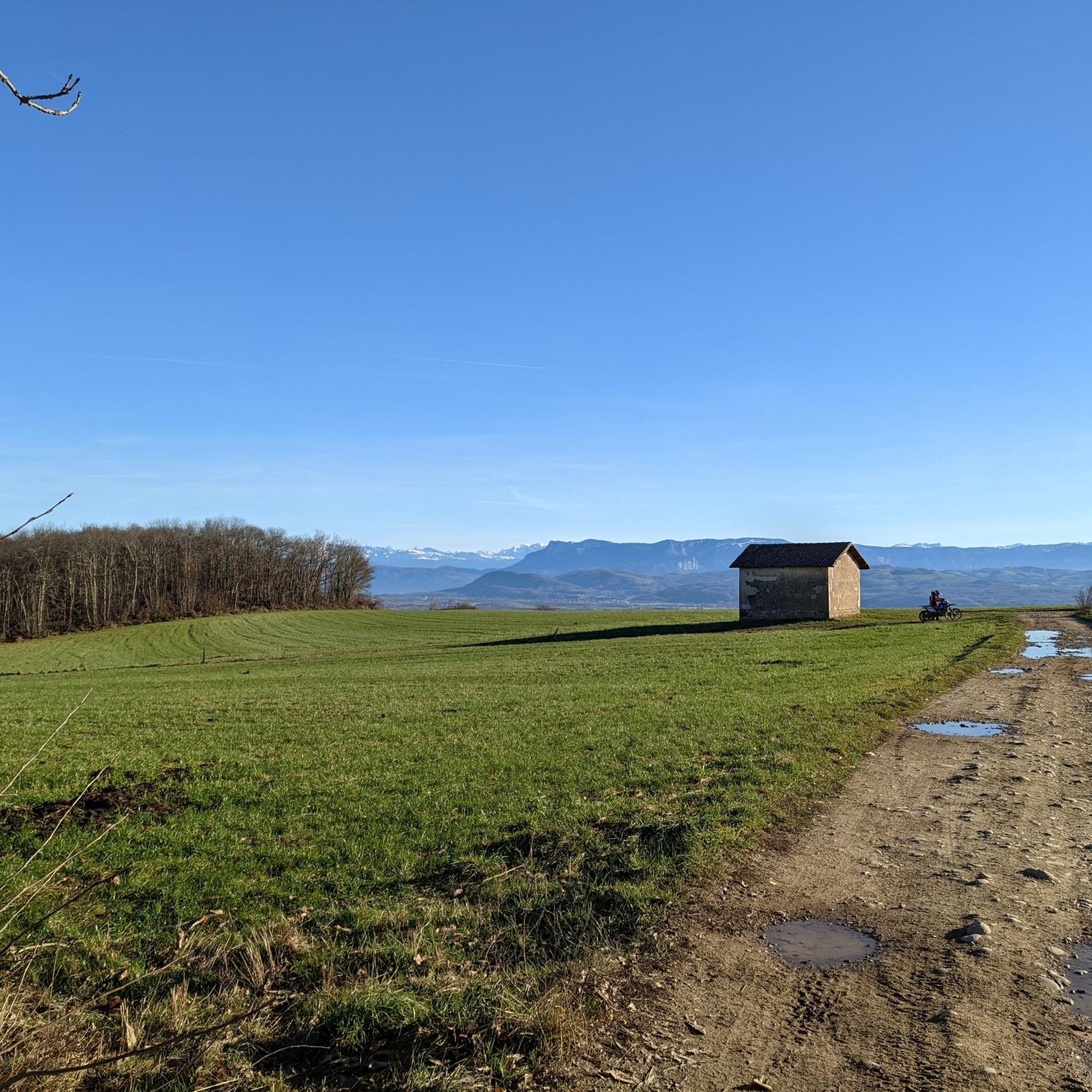
Located on the GR 65, facing south, Espace Montgontier dominates the plain of Bièvre.
A large …
Translated by Google •
Tip by

Église Saint-Christophe du Pin
Highlight • Other
Translated by Google •
Tip by
Sign up for free to discover even more attractions around Bévenais.
Already have an account?
Start today with a free account
Your next adventure awaits.

Tips from the Community

A 14 km greenway allows for walks on the eastern bank. The complete circuit of the lake on foot or by mountain bike is a route of about 29 km through the surrounding hills.
0
0

The faithful trust in the help of the Mother of God – who in France is always venerated under the title “Notre-Dame” (which corresponds to the German name “Our Lady”) – was expressed by the French nun, mystic and Doctor of the Church, Saint Thérèse of Lisieux (religious name Thérèse of the Child Jesus and the Holy Face, 1873 to 1897) as follows: “In trials or difficulties I turn to Mother Mary, whose gaze alone is enough to dispel all fear.”
0
0

Lake Paladru is very popular in the summer, especially on weekends. Swimming is possible; there's a small, well-equipped beach.
0
0
This is a classic bike ride around Grenoble, easy and suitable for the whole family.
0
0

The Church of Saint-Christophe de Le Pin The Church of Saint-Christophe de Le Pin was built in the 18th century (after 1759). Entrance is via a bell tower with a porch, on which a recently restored, painted sundial from 1832 contrasts beautifully with the clock above. The four pillars of the entrance portal support an entablature. The single-aisled nave opens onto a transept with a semicircularly vaulted chancel; the walls are partly made of rammed earth. Inside, there are four paintings in the transept and chancel. They depict a Pietà, the Assumption of the Virgin, the Presentation of the Child, and the Release of Saint Peter from Herod's Prison by an Angel. The last three paintings appear to be by the same artist.
1
0

The Church of Saint-Christophe de Le Pin, a 18th-century creation (after 1759), is entered through a bell tower, where a recently restored painted sundial from 1832 contrasts with the clock above. The four pillars of the entrance portal support an entablature. The single-aisled nave opens onto a transept with its semicircular vaulted choir; the walls are partly built of rammed earth.
5
0
In 1869, the Marist Brothers purchased the castle and its grounds. They raised the body of the central building by one floor. The castle was then acquired by the city in 1906. In 1914, it became a military hospital and from 1940 to 1960, a modern college. The castle now houses a music school and meeting rooms. Many areas are vacant. The Ministry and the public agency for cultural cooperation (aida) conducted a feasibility study for the establishment of a European Cultural Exchange Center in the building. If you take a walk in the park in the afternoon, you can hear the musicians practicing.
6
0
At guests' disposal: reception rooms for 20 to 170 people, accommodation for up to 102 beds and a shared kitchen, a 500 m2 terrace equipped with tables, arbors and parasols with an exceptional view of the Bièvre plain and a large park of approximately 4000 m2 for an outdoor reception.
9
0
Frequently Asked Questions
What types of attractions can I find around Bévenais?
Bévenais and its surroundings offer a diverse range of attractions, including historical sites like castles and traditional architecture, natural beauty spots such as lakes and viewpoints, and cultural landmarks. The region is known for its blend of heritage and scenic landscapes.
Are there any historical sites or castles to visit near Bévenais?
Yes, the area is rich in history. You can visit Château Louis XI, which now houses a music school and offers views of La Côte-Saint-André from its park. Another notable historical site is Château de Montgontier, a historic site dating back to the Knights Templar, which can host events. Within Bévenais itself, you can observe traditional houses with 'pisé' walls, two historic lavoirs, and a communal bread oven. Further afield, you'll find Château de Bressieux, Castle de Pupetieres, and Virieu Castle.
Where can I find natural beauty spots or viewpoints around Bévenais?
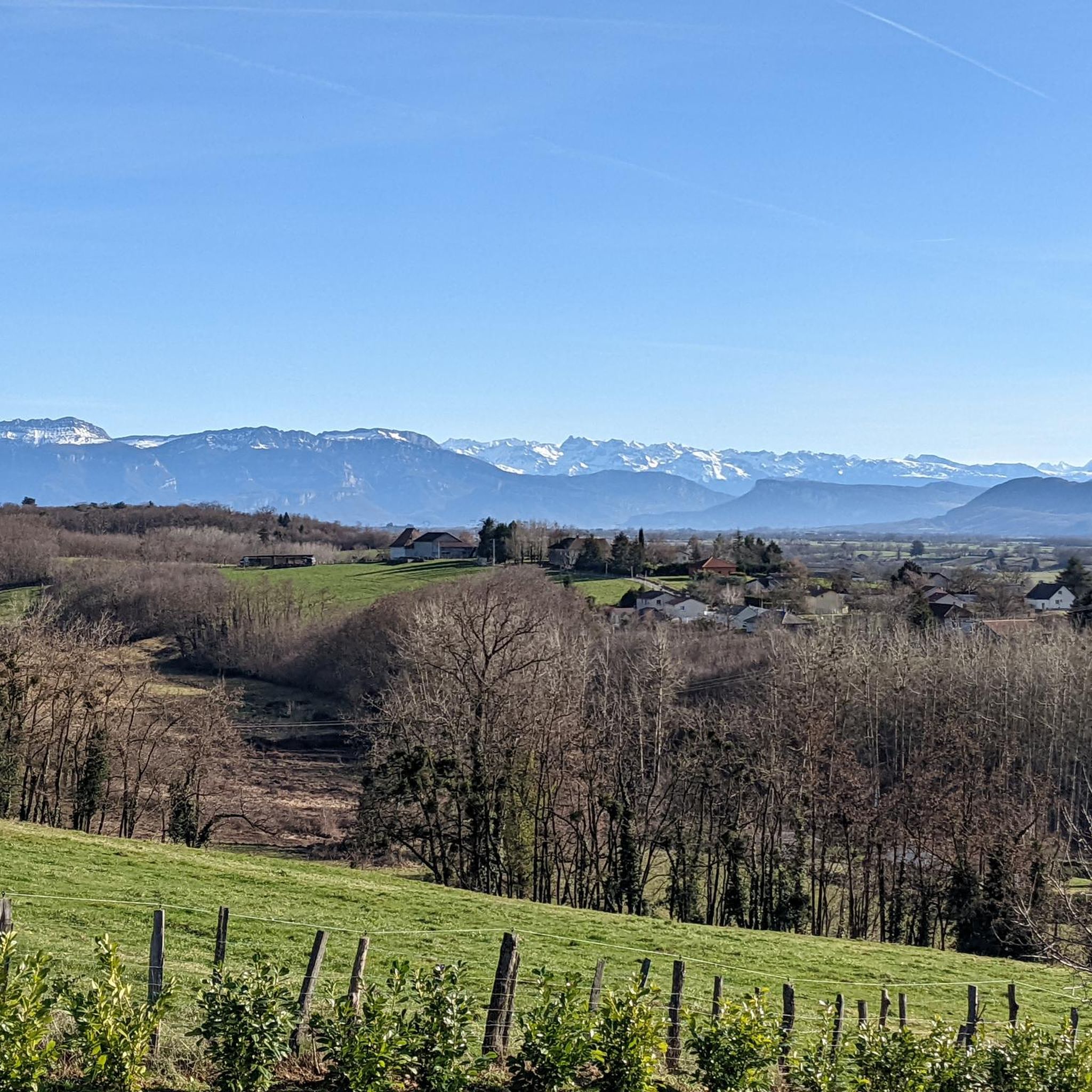
For natural beauty, Lake Paladru is a prominent attraction, offering diverse trails and viewpoints. The Notre-Dame-du-Mont Chapel provides sublime panoramic views of the Chartreuse and Vercors mountains. Other natural features in the wider Isère department include Mont Jalla, the impressive Grottes de Choranche, Gorges de la Bourne, and the Cascade du Moulin-Marquis.
What outdoor activities are available around Bévenais?
The region around Bévenais is excellent for outdoor enthusiasts. You can find numerous routes for hiking, cycling, and mountain biking. For detailed routes and guides, explore the hiking trails around Bévenais, cycling routes, and MTB trails.
Are there easy hiking trails suitable for beginners near Bévenais?
Yes, there are several easy hiking trails available. For example, you can find easy loops like the 'Peat bog loop from Châbons' (5.4 km) or the 'Peat bog loop from Réserve naturelle de l'étang du Grand-Lemps' (4.8 km). These are great options for a relaxed walk. You can find more details in the hiking guide for Bévenais.
Are there family-friendly attractions around Bévenais?
Absolutely! Lake Paladru is a great family-friendly option with trails and a beach. The Notre-Dame-du-Mont Chapel site is also suitable for families, offering picnic tables and charming views. Château de Montgontier is another family-friendly historical site with a large park.
What are some unique cultural or historical insights specific to Bévenais village?
Bévenais offers a glimpse into historical rural life. You can see traditional houses with 'pisé' walls, two well-preserved historic lavoirs (washhouses) in green surroundings, and a communal bread oven that was in operation until recently. The village itself has historical traces dating back to around 1250, with the first reconstructed house after its destruction in that year still standing.
Can I find dog-friendly trails or walks near Bévenais?
While specific dog-friendly trails are not explicitly listed for all attractions, natural areas like Lake Paladru often have paths suitable for walks with dogs, though it's always best to check local regulations regarding leash requirements and access. Many of the general hiking routes around Bévenais would also be suitable for walks with your dog.
When is the best time to visit Bévenais for outdoor activities?
For outdoor activities like hiking, cycling, and enjoying the natural landscapes, the spring, summer, and early autumn months (roughly April to October) generally offer the most pleasant weather. During these seasons, you can fully enjoy the trails, lakes, and viewpoints. Winter can be suitable for specific activities like visiting the Autrans Snow Stadium, which is accessible from Bévenais.
Are there any attractions with panoramic views around Bévenais?
Yes, the Notre-Dame-du-Mont Chapel is renowned for its simply sublime panorama, offering views of the Chartreuse and Vercors mountains. Additionally, the park of Château Louis XI provides beautiful views of the roofs of La Côte-Saint-André.
What are some lesser-known or 'hidden gems' to explore in the area?
Beyond the main highlights, consider exploring the traditional lavoirs and the communal bread oven within Bévenais for a glimpse into local heritage. The Église Saint-Christophe du Pin, an 18th-century church with unique rammed earth walls and historical paintings, offers a quiet cultural experience. Château de Montgontier, with its historical past and beautiful park, is another charming discovery.
Where can I find cafes or restaurants in Bévenais or nearby?
While specific establishments are not detailed, Bévenais, as a charming small village, and the surrounding towns in the Terres Froides de la Bièvre region will offer local cafes and restaurants where you can enjoy regional cuisine and refreshments. It's recommended to check local listings upon arrival for the most current options.
Most popular routes around Bévenais
Most popular attractions around Bévenais

Get inspired with the komoot mobile app


Explore more
Still not found the Highlight you’re looking for? See guides of the top attractions in other regions:
