The best road cycling routes around Neuvy-Sur-Barangeon
45
riders
9
rides
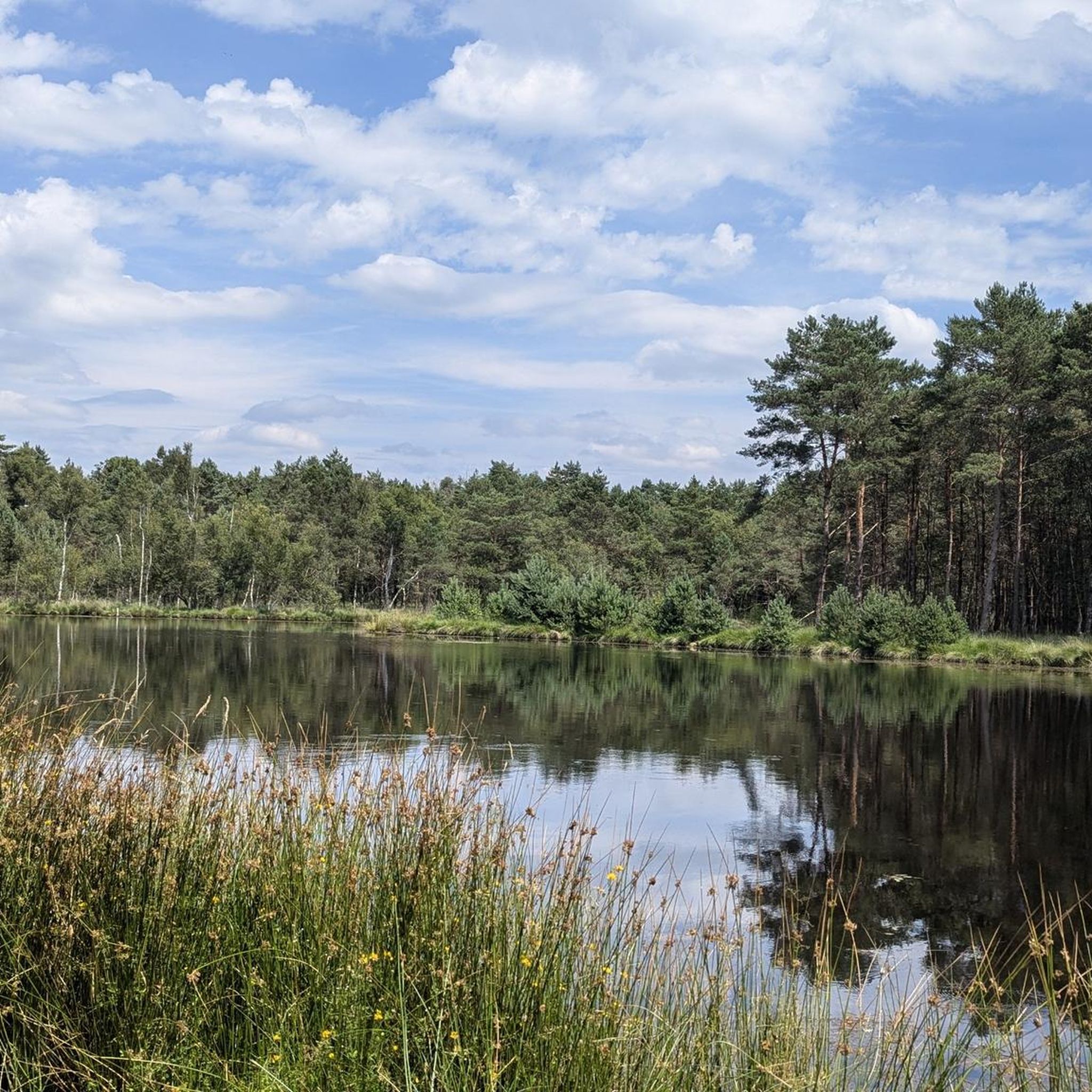
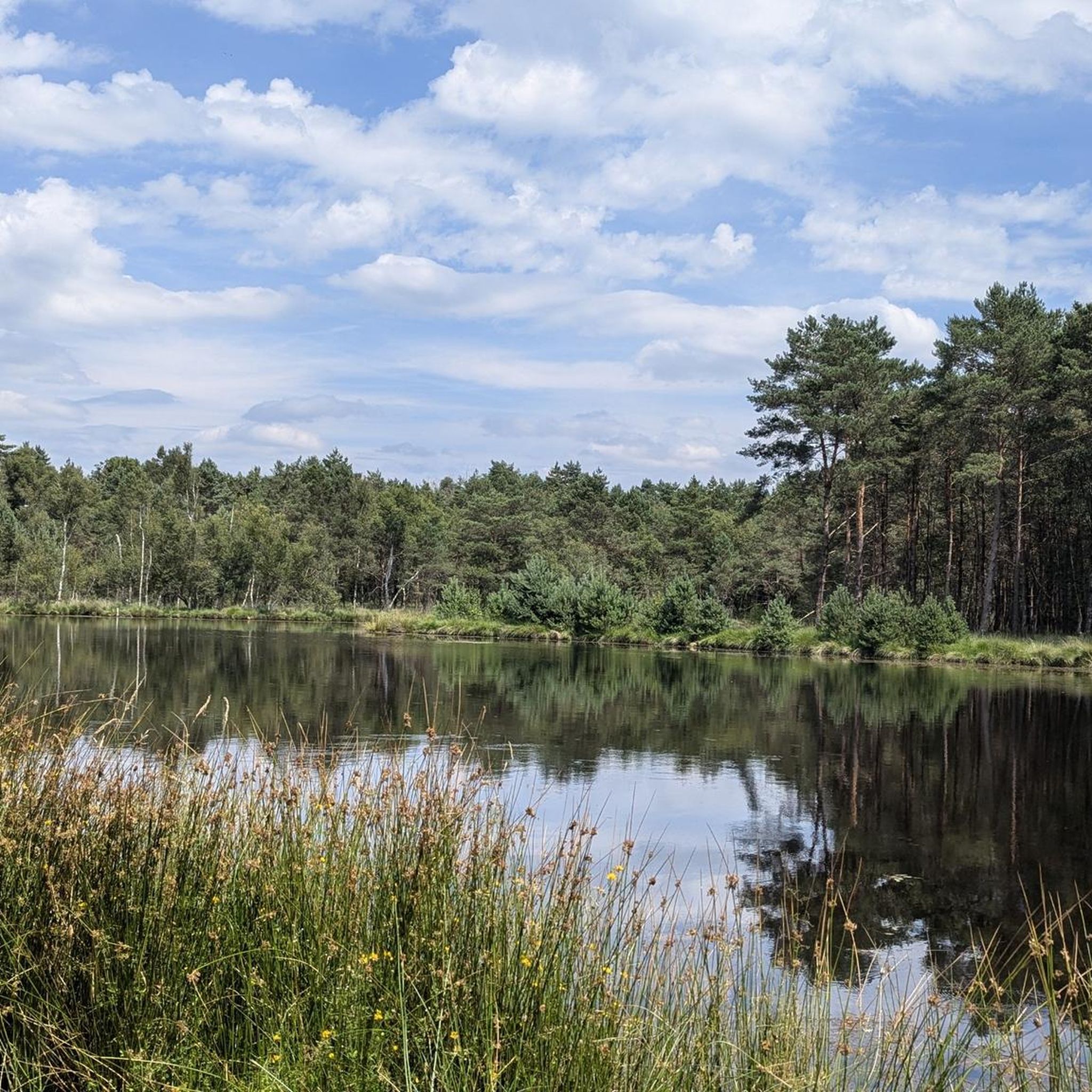
Road cycling routes around Neuvy-Sur-Barangeon traverse the Sologne region, characterized by its generally flat to gently undulating terrain. The landscape features extensive dense forests, numerous ponds, and the Barangeon river, providing a tranquil and scenic environment. Elevation gains are typically minimal, making the area suitable for various fitness levels. Cyclists can expect well-paved surfaces connecting charming villages and natural features.
Best road cycling routes around Neuvy-Sur-Barangeon
- The most popular road cycling route is From the radiotelescope to the twisted steeple…
Last updated: May 22, 2026
99.9km
04:02
450m
450m
Moderate road ride. Good fitness required. Mostly well-paved surfaces and easy to ride.
14
riders
49.9km
02:12
510m
510m
Moderate road ride. Good fitness required. Mostly well-paved surfaces and easy to ride.

Sign up for free
8
riders
46.6km
02:04
280m
280m
Moderate road ride. Good fitness required. Some segments of this route may be unpaved and difficult to ride.
3
riders
49.3km
01:53
130m
130m
Easy road ride. Great for any fitness level. Mostly well-paved surfaces and easy to ride.
3
riders
33.2km
01:35
180m
180m
Easy road ride. Great for any fitness level. Mostly well-paved surfaces and easy to ride.
Get access to more routes and recommendations from other explorers.
Sign up for free
Already have an account?
Our route recommendations are based on thousands of hikes, rides, and runs completed by other people on komoot.
Start today with a free account
Your next adventure awaits.
Login or Signup
Tips from the Community

The church consists of two successive rectangles, formerly covered by a wooden barrel vault with exposed beams. The very prominent buttresses of the nave, doubled at the corners, date the construction to the 12th or 13th centuries. The bell tower is supported by internal timbers near the central gable. A document from 1489 informs us that at that time, the church of Sainte Montaine was in need of extensive repairs. The bell tower had to be rebuilt, perhaps following a fire. The current bell tower therefore dates from this period. The western door is also from the 15th century. Its leaves are adorned with nails of remarkable craftsmanship. The nave was surrounded to the north and west by a wooden porch, similar to that of Brinon, but of more refined and delicate workmanship. This extension, which serves as a hall and narthex, is called a "caquetoire" in the Sologne region. It dated back to the 16th century and was demolished during the years 1918/1919. The furnishings are very important in both quantity and quality. Among the 18th-century liturgical vestments are two dalmatics and an 18th-century pastoral stole. There is also a 16th-century statue of the Virgin Mary and a 17th-century statue of Saint Germain, a 17th-century painting of the miracle of Saint Montaine, and a 17th-century processional cross of Christ on the Cross.
0
0
The church was built in the 13th century and is dedicated to Saint Martin (the same patron saint as the church in Aubigny-sur-Nère). Only the apse and the base of the La Faye family's private chapel remain. The nave and vault date from the 15th century, while the bell tower dates from the 19th century.
0
0
A first building was erected at the end of the 13th century, dedicated to Saint Caprais. This church was built on the initiative of Abbot Pezard (1859-1937), parish priest from 1892 to 1937, to replace the old ruined sanctuary.
0
0
12th century, 16th century, 1733, in the shape of a false Latin cross. Of the 12th-century church, only the three-sided apse remains; everything else was either rebuilt or heavily restored in the 16th century and in 1723. The small bell was christened on October 20, 1710. The large bell was christened on August 31, 1718.
0
0
Souesmes must have had some importance towards the end of the 8th century since during the division of the archbishopric of Bourges into archdeaconries themselves divided into archpriests, the priest of Souesmes received the title and function of archpriest. This archpriesthood included 32 parishes, all located to the east of Souesmes (except Salbris). It extended as far as the Loire to the northeast and to Boisbelle (Henrichemont) to the southeast as recalled by the table drawn up by Canon Augustin Petit, priest of Souesmes from 1892 to 1948, according to documents found in the archbishopric of Bourges. This table is still in place at the entrance to the church. The left side of the choir of the church of Souesmes is placed under the protection of Saint Julien, beheaded in Brioude around the year 304. The original building was no longer sufficient for the development of worship, which is why a larger Romanesque-style church was built on the same site during the Carolingian era. The walls of the nave bear witness to this period, the six windows being very small at the time. Carolingian terracotta modillions found in the walls during work in the 19th century allow us to date the period of construction of the walls. One of the modillions is in the Museum of Religious Art in Blois and two others, owned by SAHAS, are in the Marcel de Marchéville Archaeological Museum in Romorantin-Lanthenay (article by Joëlle Fallot - Jean-Marie Lorain published in the booklet "Souesmes heritage in your commune" produced by the departmental committee for heritage and archaeology in Loir-et-Cher and the municipality of Souesmes with the assistance of the general council of Loir-et-Cher).
0
0

Garden created in the 1930s, on the former grounds of a Benedictine abbey, in an "Art Deco" style by Eugène-Henry Karcher, with the presence of industrial materials of the time, concrete, steel and ceramic, on an area of 6000m² between the Berry canal and the Yèvre.
1
0

It will be impossible for you to miss the Saint-Palais church with its seemingly endless bell tower, unless you don't look up from your handlebars. For the record, it is in the town of Saint-Palais, at a place called Les Combles, that the center of the great big circle that can be drawn in continental France is located. It is therefore the furthest place, precisely 291.3 kilometers, from any border.
0
0

If you are looking for a city with rich history, beautiful environment and vibrant culture, you should visit Vierzon. It is located at the confluence of five rivers, including the Yèvre and the Cher, and is surrounded by a magnificent forest of 7,500 hectares. You can discover the heritage of Vierzon by visiting its museums, such as the Vierzon Museum, which presents the arts of fire and ceramics, or the Museum of Agricultural Machinery and Rurality, which presents agricultural machinery and rural life. You can also enjoy cultural events and festivals that take place throughout the year, such as Flower Power Week in October or the Jazz Festival in June. Vierzon is also an important railway hub, connecting Lyon, Nantes, Paris, Limoges and Toulouse, allowing you to travel to other destinations easily. Vierzon is a town that will surprise you with its charm and diversity.
3
0
Frequently Asked Questions
What kind of terrain can I expect when road cycling around Neuvy-Sur-Barangeon?
The Sologne region, where Neuvy-Sur-Barangeon is located, is characterized by generally flat to gently undulating terrain. You'll find well-paved surfaces connecting charming villages, extensive dense forests, and numerous tranquil ponds. Elevation gains are typically minimal, making for comfortable rides.
Are there easy road cycling routes suitable for beginners or families in Neuvy-Sur-Barangeon?
Yes, the area offers several easy routes perfect for beginners or families. For instance, the Église Saint Caprais – Église Sainte Montaine loop from Presly is an easy 49.3 km route that provides a pleasant ride through the local countryside.
What natural features will I encounter on road cycling routes in this region?
Road cycling routes around Neuvy-Sur-Barangeon often traverse the vast Sologne forests, pass by numerous tranquil ponds (over 3,000 in the Sologne region), and follow the Barangeon river. You might also encounter unique wetlands like the Tourbière de la Guette, a protected peat bog.
Are there any long-distance road cycling routes near Neuvy-Sur-Barangeon?
Yes, the region is well-connected to longer cycling itineraries. The From the radiotelescope to the twisted steeple — Loop from Nançay is a moderate 99.9 km route. Additionally, the Cœur de France à Vélo (Cher à Vélo), which winds through the Cher Valley, offers extensive well-maintained asphalt sections for longer journeys.
What historical landmarks or attractions can I visit along the road cycling routes?
You can incorporate cultural stops into your rides. The Former priory of Bléron, a 12th-century historical monument, is a notable site. The Maison de l'Eau, which includes the 15th-century Moulin de la Biodiversité, also offers cultural and natural exhibits. The Mehun-sur-Yèvre Castle – Mehun-sur-Yèvre Castle loop from Allogny is an example of a route that leads through historical areas.
What is the best time of year for road cycling in Neuvy-Sur-Barangeon?
The Sologne region is generally pleasant for road cycling from spring through early autumn. Spring offers blooming landscapes, while summer provides warm weather for leisurely rides. Autumn brings beautiful foliage. The mild terrain makes it accessible for most of the year, avoiding extreme winter conditions.
Are there circular road cycling routes available in the area?
Yes, many routes around Neuvy-Sur-Barangeon are designed as loops, allowing you to start and finish in the same location. Examples include the From the radiotelescope to the twisted steeple — Loop from Nançay and the Fontaine du Verdier – Fontaine du Verdier loop from Allogny.
Where can I find parking for my car when starting a road cycling tour?
While specific parking areas for cyclists are not always signposted, you can typically find parking in the charming villages along the routes, such as Neuvy-Sur-Barangeon itself or nearby Allogny and Nançay. Look for public parking spaces near village centers or local attractions.
Are there any challenging road cycling routes with significant elevation gain?
The Sologne region is known for its generally flat to gently undulating terrain, so routes with significant elevation gain are rare. Most routes, even moderate ones like the Gibjoncs Landscape Park – Côté des Rousseaux loop from Allogny, feature minimal climbing, making the area more suitable for relaxed to moderate rides rather than strenuous climbs.
Can I find places to eat or drink along the road cycling routes?
Yes, the routes often pass through authentic Solognote villages. These villages typically offer local cafes, bakeries, or small restaurants where you can stop for refreshments and experience local hospitality. Planning your route with village stops in mind is recommended.
What kind of wildlife might I see while cycling through the Sologne forests?
The Sologne forests are rich in biodiversity. While cycling, you might spot various bird species, deer, wild boar, and other small mammals. The unique Tourbière de la Guette peat bog is also home to diverse flora and fauna, offering a glimpse into a sensitive natural ecosystem.
Are there any specific road cycling routes that offer scenic viewpoints?
While the Sologne region is generally flat, the scenic beauty comes from its extensive forests, tranquil ponds, and picturesque riverbanks. Routes like the Gibjoncs Landscape Park – Côté des Rousseaux loop from Allogny offer varied landscapes and serene views of the natural surroundings rather than elevated panoramic viewpoints.
Most popular attractions around Neuvy-Sur-Barangeon

Get inspired with the komoot mobile app


Explore more
Browse the best Road cycling routes in other regions.
