The best road cycling routes around Aubigny-Sur-Nère
4.7
(8)
261
riders
37
rides
Road cycling routes around Aubigny-Sur-Nère are primarily found within the Sologne region, characterized by its generally flat to gently undulating terrain with minimal elevation gains. The landscape features extensive dense forests, tranquil wetlands, and numerous ponds and rivers, creating a serene environment for exploration. Key natural features include the ancient Canal de la Sauldre, offering flat routes along its tree-lined banks, and the vast Étang du Puits, providing scenic loops around its shores. This combination of varied natural settings and historical towns makes the area suitable for road cyclists seeking diverse experiences.
Best road cycling routes around Aubigny-Sur-Nère
- The most popular road cycling route is La Sologne du Cher — Loop from Aubigny-sur-Nère, a 54.8 miles (88.2 km) trail that takes 3 hours 28 minutes to complete. This moderate route traverses the tranquil Sologne region, offering scenic views of forests and waterways.
- Another top favourite among local road cyclists is Stuart Castle – Château de Blancafort loop from Aubigny-sur-Nère, a moderate 25.8 miles (41.5 km) path. This route combines historical landmarks with rides through the Sologne countryside, featuring gentle hills and open landscapes.
- Local road cyclists also love the View of Château de la Verrerie – Château des Stuarts loop from Aubigny-sur-Nère, a 15.6 miles (25.2 km) trail leading through historical sites and the surrounding natural environment, often completed in about 1 hour 3 minutes.
- Road cycling around Aubigny-Sur-Nère is defined by extensive forests, the tranquil Canal de la Sauldre, and the scenic Étang du Puits. The network offers options for different ability levels, from easy, flat paths to moderate routes with gentle elevation changes.
- The routes in Aubigny-Sur-Nère are highly rated by the komoot community with an average score of 4.6 stars from more than 5 reviews. More than 250 road cyclists have used komoot to explore Aubigny-Sur-Nère's varied terrain.
Last updated: July 22, 2026
4
riders
88.2km
03:28
370m
370m
Moderate road ride. Good fitness required. Mostly well-paved surfaces and easy to ride.
14
riders
41.5km
01:47
370m
370m
Moderate road ride. Good fitness required. Mostly well-paved surfaces and easy to ride.

Sign up for free
10
riders
25.2km
01:04
180m
180m
Easy road ride. Great for any fitness level. Mostly well-paved surfaces and easy to ride.
4
riders
38.7km
01:30
100m
100m
Easy road ride. Great for any fitness level. Mostly well-paved surfaces and easy to ride.
5
riders
90.4km
04:07
1,010m
1,010m
Hard road ride. Very good fitness required. Mostly well-paved surfaces and easy to ride.
Get access to more routes and recommendations from other explorers.
Sign up for free
Already have an account?
Our route recommendations are based on thousands of hikes, rides, and runs completed by other people on komoot.
Start today with a free account
Your next adventure awaits.
Login or Signup


Tips from the Community

The church consists of two successive rectangles, formerly covered by a wooden barrel vault with exposed beams. The very prominent buttresses of the nave, doubled at the corners, date the construction to the 12th or 13th centuries. The bell tower is supported by internal timbers near the central gable. A document from 1489 informs us that at that time, the church of Sainte Montaine was in need of extensive repairs. The bell tower had to be rebuilt, perhaps following a fire. The current bell tower therefore dates from this period. The western door is also from the 15th century. Its leaves are adorned with nails of remarkable craftsmanship. The nave was surrounded to the north and west by a wooden porch, similar to that of Brinon, but of more refined and delicate workmanship. This extension, which serves as a hall and narthex, is called a "caquetoire" in the Sologne region. It dated back to the 16th century and was demolished during the years 1918/1919. The furnishings are very important in both quantity and quality. Among the 18th-century liturgical vestments are two dalmatics and an 18th-century pastoral stole. There is also a 16th-century statue of the Virgin Mary and a 17th-century statue of Saint Germain, a 17th-century painting of the miracle of Saint Montaine, and a 17th-century processional cross of Christ on the Cross.
0
0

The Sancerre vineyard covers the hills of 14 communes in the Loire Valley. The paths that cross it allow you to discover this terroir up close, well-suited to growing vines thanks to its exposure and orientation. Here, you'll find peace and quiet, perfect for cycling and admiring the scenery.
0
0
Priory-rectory dependent on the abbey of Saint-Satur. The church was rebuilt from the end of the 15th century, starting with the tower forming a bell tower-porch, which can be attributed to a certain Hélias Ruellé, while the coat of arms appearing on the keystones of the nave vault indicate the participation of Guillaume de Ménipeny, abbot of Saint-Satur attested until 1527. The date of 1533 is shown on a keystone. The renovation of the church was probably completed around 1535. The first church was built in the 13th century, of which some remains and perhaps the bell tower-porch remain. The current construction dates mainly from the 16th century and represents one of the rare Renaissance religious buildings in this department. The renovation of the choir and the chevet (capitals) and the construction of the sacristy date from the 19th century. Keystone dated 1533 with the Rochechouart coat of arms.
0
0
15th century church renovated in the 19th century. This 19th century restoration consisted of the addition of two chapels to the north and south, which thus form two side aisles. The western bay and the bell tower also date from this restoration.
0
0

An idyllic location just a few km from Sancerre, in the heart of the vineyards.
0
0

A barn with typical Pays-Fort architecture was reassembled here so it could be opened to visitors (it's the only one where you can enter freely). The all-wood frame is impressive. A whole collection of agricultural equipment is also on display.
0
0
At the end of this alley, you will see the Château de Blancafort, a 15th century building built in place of an old lordship dating from the 11th century. Covered in bricks, the fortified house is surrounded by a beautiful French garden. The castle is currently private and inhabited but can still be visited.
0
0
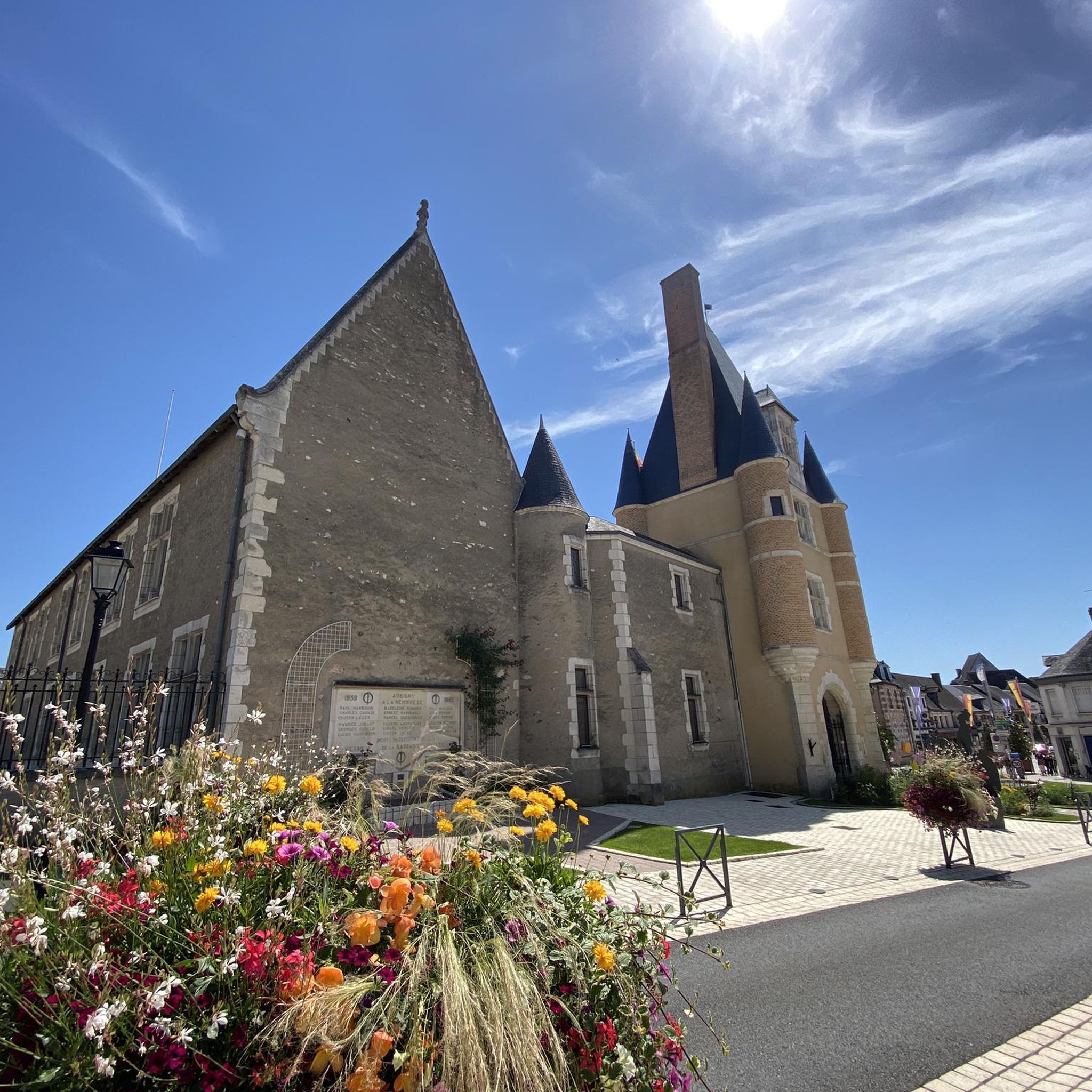
Castle built during the Renaissance by Robert Stuart then Louise de Keroualle, Duchess of Aubigny and Porsmouth. Only the facade and one of the two wings exist today. It is one of the major witnesses to the historical presence of the Scots in this city of character. It can be visited and is worth a look, notably with the ceiling of its large room which is all made of wood, shaped like the hull of an upside-down boat. Good to know: Franco-Scottish festivals take place every year in July.
0
0
Frequently Asked Questions
How many road cycling routes are available around Aubigny-sur-Nère?
There are over 35 road cycling routes around Aubigny-sur-Nère, offering a diverse range of experiences for cyclists. These routes traverse the tranquil Sologne region, known for its forests, wetlands, and waterways.
What kind of terrain can I expect on road cycling routes in this region?
The region around Aubigny-sur-Nère, particularly the Sologne, is characterized by generally flat to gently undulating terrain with minimal elevation gains. You'll find serene routes along the ancient Canal de la Sauldre and scenic loops around the vast Étang du Puits, interspersed with forests, meadows, and vales.
Are there road cycling routes suitable for beginners or families?
Yes, the area offers several easy road cycling routes perfect for beginners or families. These often feature flat paths, such as those along the Canal de la Sauldre, providing a peaceful and accessible cycling experience. For example, the View of Château de la Verrerie – Château des Stuarts loop from Aubigny-sur-Nère is an easy 25.2 km trail.
What historical landmarks can I see while road cycling in Aubigny-sur-Nère?
Many routes integrate historical landmarks into your ride. You can cycle past the impressive Stuart Castle, explore the charming Château de la Verrerie, or discover the unique Franco-Scottish heritage of Aubigny-sur-Nère itself with its half-timbered houses. The Stuart Castle – Château de Blancafort loop from Aubigny-sur-Nère is a great option for combining history with cycling.
Are there any scenic natural attractions along the road cycling routes?
Absolutely. The routes often feature the tranquil waters of the Old Sauldre Canal with its historic locks and bridges, and the expansive Étang du Puits, a large lake known for its birdlife and recreational areas. The Sologne region's dense forests and wetlands also provide beautiful natural scenery.
What is the best time of year for road cycling around Aubigny-sur-Nère?
The region is enjoyable for road cycling through much of the year. Spring and autumn offer pleasant temperatures and beautiful scenery with changing foliage. Summer is also popular, especially for routes that pass by lakes like Étang du Puits where you can cool off. The generally mild climate of the Sologne makes it accessible for cycling outside peak seasons too.
Are there any challenging road cycling routes for experienced riders?
Yes, for more experienced riders seeking a challenge, there are difficult routes available. These routes may feature longer distances and more significant elevation gains compared to the generally flat terrain. An example is the Path through the vineyards – Stuart Castle loop from Aubigny-sur-Nère, which covers nearly 90 km with over 1000 meters of elevation gain.
What do other road cyclists say about the routes in Aubigny-sur-Nère?
The road cycling routes around Aubigny-sur-Nère are highly rated by the komoot community, with an average score of 4.6 stars from numerous reviews. Cyclists often praise the serene environment, the well-maintained paths, and the beautiful blend of natural landscapes and historical sites.
Are there circular road cycling routes available?
Yes, many of the road cycling routes around Aubigny-sur-Nère are designed as loops, allowing you to start and end your ride in the same location. This includes popular options like La Sologne du Cher — Loop from Aubigny-sur-Nère and the Église Sainte Montaine – Stuart Castle loop from Aubigny-sur-Nère.
Can I find amenities like cafes or restaurants along the routes?
While specific cafes on every route are not guaranteed, Aubigny-sur-Nère itself offers various restaurants and cafes where you can refuel. Many routes pass through or near charming villages where you might find local establishments. Planning your route to include stops in towns is recommended for breaks and refreshments.
What are the typical distances of road cycling routes in the area?
Road cycling routes around Aubigny-sur-Nère vary significantly in length, catering to different preferences. You can find shorter, easy loops around 25 km, such as the View of Château de la Verrerie – Château des Stuarts loop from Aubigny-sur-Nère, up to longer, more challenging rides exceeding 80 km, like La Sologne du Cher — Loop from Aubigny-sur-Nère.
Is there good cycling infrastructure, such as dedicated paths or low-traffic roads?
The broader Loire Valley region, which includes Aubigny-sur-Nère, is known for its cycle-friendly infrastructure. You'll find well-signposted routes, often on low-traffic roads or dedicated paths, particularly along waterways like the Canal de la Sauldre. This ensures a safe and pleasant cycling experience through the scenic Sologne.
Most popular attractions around Aubigny-Sur-Nère

Get inspired with the komoot mobile app


Explore more
Browse the best Road cycling routes in other regions.
