Attractions and Places To See around Le Plessis-Brion - Top 20
Best attractions and places to see around Le Plessis-Brion include a blend of historical landmarks, natural features, and cultural sites. This village in the Oise region of France is situated at the edge of the Forêt Domaniale de Laigue and bordered by the "Vieille Oise" river, offering diverse landscapes. Visitors can explore significant historical structures and natural points of interest within the commune and nearby. The area provides opportunities to engage with both local history and natural environments.
Best attractions…
Last updated: June 5, 2026
Château de Compiègne
Highlight • Castle
Translated by Google •
Tip by

Beaux Monts Viewpoint
Highlight • Viewpoint
Translated by Google •
Tip by

Sign up now to discover places like this
Get recommendations on the best single tracks, peaks, & plenty of other exciting outdoor places.
Sign up for free
Vieux-Moulin
Highlight • Religious Site
Armistice Clearing (Clairière de l’Armistice), Compiègne
Highlight • Historical Site
Translated by Google •
Tip by

Compiègne Town Hall
Highlight • Monument
Translated by Google •
Tip by

Sign up for free to discover even more attractions around Le Plessis-Brion.
Sign up for free
Already have an account?
Start today with a free account
Your next adventure awaits.
Login or Signup



Tips from the Community

charming village with a beautiful church and a very reputable old inn!
0
0

A must-see history
0
0

The square itself houses a statue of Joan of Arc, a tribute to the city's historical connection to this iconic figure. The Town Hall, with its rich history and stunning architecture, continues to captivate visitors, offering a glimpse into the past while remaining a vibrant part of Compiègne's present.
2
0
The architecture of the town hall is a true feast for the eyes. The central structure is dominated by a tall bell tower, flanked by two turrets connected by a decorative railing. This imposing façade, 47 meters high and 24 meters wide, is decorated with striking Gothic elements such as pinnacles and basket arches. The large niche now houses a high relief depicting the equestrian statue of Louis XII. It is an original creation from 1869 by the sculptor Henri-Alfred Jacquemart in the realistic style so prevalent at the time. However, contrary to the usual appearance of equestrian statues during the reign of Louis XII, Henri-Alfred Jacquemart chose not to build a horse walking "à l'amble," that is, with both straight legs raised simultaneously. On October 12, 1530, a clock was placed on the summit of the bell tower. From that time on, every quarter of an hour, she animated three wooden jaquemarts with bell hammers. The Compiègneis quickly gave them three nicknames corresponding to the enemies of the time: Langlois for the English, Flandrin for the Flemish, and Lansquenet for the Germans. Even today, they chant the life of the city by "punching the time," that is, by striking their hammer to strike the hours.
2
0


In good weather, the garden is peaceful for relaxing or strolling. The cherry on the cake is inside the castle: beautiful reconstructions and conservations
0
0

The armistice agreement of World War I was signed here on November 11, 1918 in a clearing in the forest of Compiègne in a railway carriage. In June 1940, France's capitulation to the German Reich was also signed here and in the same carriage. For this purpose, the carriage was brought back here from a museum on Hitler's orders. The original carriage no longer exists, but you can admire an identical carriage here in the museum for a fee. Today you can also find a lot of patriotism and commemoration here.
1
0

The old town hall of Compiegne represents the importance of the city's wealthy citizens, it dominates the square almost like a castle and rises high.
1
0
Frequently Asked Questions
What historical landmarks can I explore in and around Le Plessis-Brion?
Le Plessis-Brion is rich in history. You can visit the magnificent Château du Plessis-Brion, a rare 16th-century Renaissance castle. Nearby, explore the Église Notre-Dame with its 15th-century choir and 17th-century nave, or the intriguing Ruin of the Priory of Ste Croix, founded in 1331. A short distance away, the city of Compiègne offers the grand Château de Compiègne and the poignant Armistice Clearing (Clairière de l’Armistice).
Are there natural areas for walking and enjoying nature near Le Plessis-Brion?
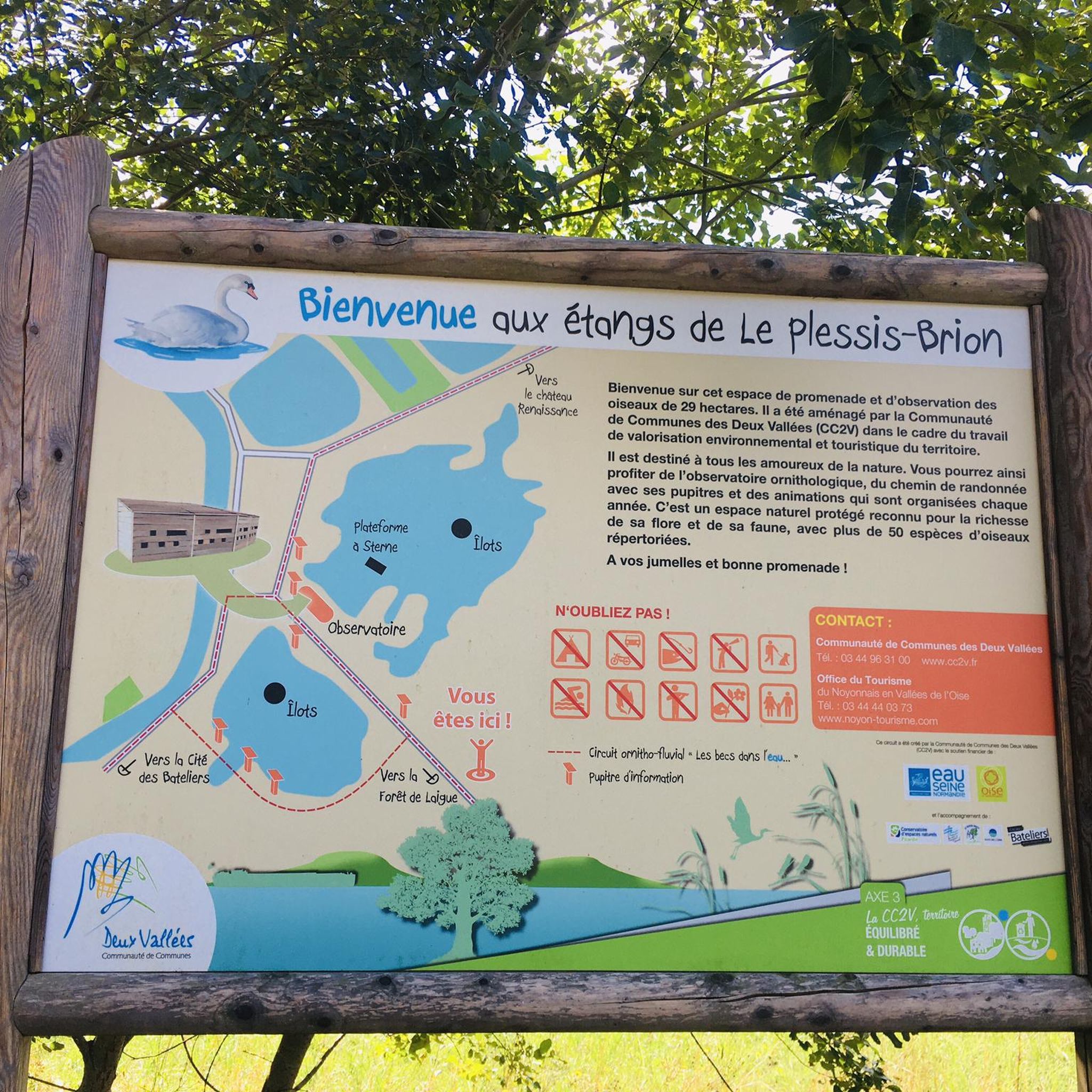
Absolutely. Le Plessis-Brion is nestled at the edge of the extensive Forêt Domaniale de Laigue, offering numerous opportunities for hiking and enjoying the natural environment. You can also visit the Étangs du Plessis-Brion, former gravel pits transformed into an ornithological reserve with observation points and walking trails. The western part of the commune is bordered by the non-canalized "Vieille Oise" river, providing picturesque strolls.
What are some family-friendly attractions in the area?
Many attractions around Le Plessis-Brion are suitable for families. The Beaux Monts Viewpoint in the Compiègne forest offers an impressive perspective and is great for a family walk. Historical sites like the Château de Compiègne and the Armistice Clearing provide educational experiences. The Étangs du Plessis-Brion are also a good spot for families to observe local flora and fauna.
What outdoor activities, like running or cycling, can I do near Le Plessis-Brion?
The region around Le Plessis-Brion is excellent for outdoor activities. You can find various running trails, such as loops starting from Thourotte or Montmacq. For cyclists, there are numerous routes, including gravel biking options through the Compiègne forest or longer cycling tours along the Oise. Explore more options on the Running Trails around Le Plessis-Brion, Gravel biking around Le Plessis-Brion, and Cycling around Le Plessis-Brion guide pages.
Is the Château du Plessis-Brion open to visitors?
Yes, the Château du Plessis-Brion is generally open for guided tours during the summer months. It's advisable to check their official website or local tourism information for specific opening hours and tour availability before planning your visit. You can find more information about the castle at guide-tourisme-france.com.
Are there any viewpoints offering scenic perspectives?
Yes, the Beaux Monts Viewpoint is a highly recommended spot. It offers an exceptional perspective in the heart of the Compiègne forest, looking down a five-kilometer, 60-meter-wide avenue designed by Napoleon I.
What is the Compiègne Town Hall known for?
The Compiègne Town Hall is a stunning municipal building constructed in the 16th century. It's an excellent example of civil architecture in the Louis XII style, featuring a tall bell tower and intricate Gothic elements. Its façade is adorned with a high relief of Louis XII, and its unique 'jaquemarts' (wooden figures that strike the bell) have been chiming the hours since 1530.
Are there any wheelchair-accessible attractions in the area?
While specific accessibility details vary, the Compiègne Town Hall is listed as wheelchair accessible. For other attractions, it's recommended to check directly with the venue or local tourism office for the most up-to-date accessibility information.
What is the significance of the Armistice Clearing in Compiègne?
The Armistice Clearing (Clairière de l’Armistice) is a profoundly historical site. It's where the armistice ending World War I was signed on November 11, 1918. A small museum on site displays a replica of the historic railway wagon where the signing took place, commemorating this pivotal moment in history.
What can I expect to see at the Étangs du Plessis-Brion?
The Étangs du Plessis-Brion are former gravel pits that have been transformed into an ornithological reserve. Two of the ponds are dedicated to ecological purposes, and there's an observation point and walking trails. It's a public site ideal for observing local fauna and flora, particularly various bird species.
Are there any less crowded attractions to visit in the region?
For a quieter experience, consider exploring the walking trails around the Étangs du Plessis-Brion or taking a leisurely stroll through the charming streets of Le Plessis-Brion itself to admire its traditional architecture. The Église Notre-Dame and the Ruin of the Priory of Ste Croix might also offer a more serene visit compared to larger, more popular sites.
What are some day trip ideas from Le Plessis-Brion?
Beyond Le Plessis-Brion, the nearby city of Compiègne makes for an excellent day trip. There, you can visit the Château de Compiègne, the Armistice Clearing, and the impressive Compiègne Town Hall. The extensive Forêt Domaniale de Laigue also offers countless possibilities for longer hikes or bike rides.
Most popular routes around Le Plessis-Brion
Most popular attractions around Le Plessis-Brion

Get inspired with the komoot mobile app


Explore more
Still not found the Highlight you’re looking for? See guides of the top attractions in other regions:
