Attractions and Places To See around Fruncé - Top 17
Best attractions and places to see around Fruncé include historical landmarks, religious buildings, and natural features. This charming village offers a blend of history and natural beauty, with communal walking paths and points of interest like the historic Saint-Martin Church. The area is also frequently associated with the sources of the Loir river, adding to its natural appeal. Visitors can explore various sites that showcase the region's cultural significance and outdoor opportunities.
Best attractions and places to see around Fruncé
…Last updated: October 10, 2026
Saint-Georges Church of Saint-Georges-sur-Eure
Highlight • Religious Site
Translated by Google •
Tip by

Orrouer Church
Highlight • Religious Site
Translated by Google •
Tip by

Sign up now to discover places like this
Get recommendations on the best single tracks, peaks, & plenty of other exciting outdoor places.
Château de Fontaine-la-Guyon
Highlight • Castle
Translated by Google •
Tip by

Bar de la Rivière
Highlight • Cafe
Translated by Google •
Tip by

Église Saint Luperce
Highlight • Other
Translated by Google •
Tip by

Sign up for free to discover even more attractions around Fruncé.
Already have an account?
Start today with a free account
Your next adventure awaits.


Tips from the Community

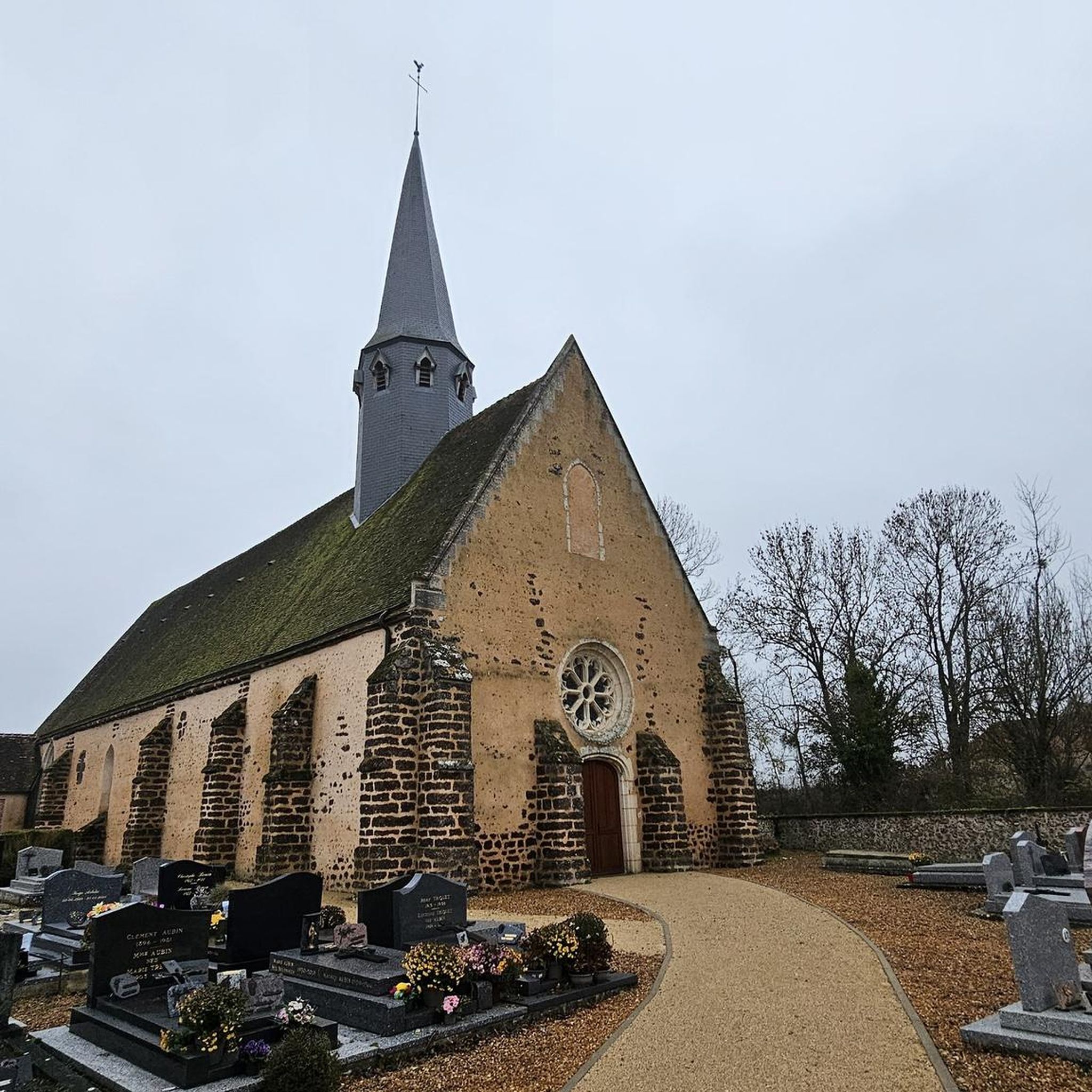
Of Romanesque origin, the church, surrounded by a cemetery, has a curious bell tower supported by machicolations and uprights of sandstone, making it one of the most unique in the region. Perhaps it was originally a bell gable, later augmented by a platform supported by these machicolations? In front of the entrance, a small building called a "caquetoire" (a small meeting place) allows the faithful to gather and converse. Inside the church, the furnishings date from the 18th and 19th centuries: a marble high altar and its gray-painted wooden altarpiece (18th century) – a painted wooden altarpiece of St. Joseph (late 18th or early 19th century) an altarpiece for the altar of the Virgin Mary (19th century) a baptismal font in red-veined marble (19th century) a waxed wooden pew (18th century) a waxed wooden choir stall upholstered in velvet paintings: the Assumption of the Virgin Mary by Octave Hauser (1839) and the Annunciation (18th century) The stained-glass windows date from 1874. The church and the eclipse A bit of history: The parish, established in the 13th century, was part of the deanery of Courville. The church's patron saint, Luperche or Luperchius, gave his name to the village. We must go back to the 4th century to find the first trace of this saint: At that time, Dacius, governor of the part of Spain that included Catalonia, Aragon, and the Kingdom of Valencia, was one of the most cruel ministers of persecution. Incited by the emperors Diocletian and Maximilian, he had eighteen confessors of Jesus Christ executed in the city of Zaragoza. In their honor, the poet Prudentius wrote hymns, and among these confessors, a certain martyr named Luperche became the patron saint of our church.
0
0


A church that stands before you no matter where you come from.
0
0

Magnificent view of the river estate with the Boizard mill and the Château de la Rivière built in the 17th century by the Aligre family. Nice road in the woods, bodies of water and benches for picnicking.
0
0

This discovery began with the old castle of Gougnault from 1300 to 1413 then the rebirth under Louis XIV and the creation of the Eure canal which crossed the park, followed by an 18th and 19th. "In 1780, four-year-old Anne Marie Reviers de Mauny planted a cedar in a kindergarten and the tree still stands in the town hall park" underlined Jacques Charron, the president of the association. This discovery ended with the period of the liberation of the village on August 15, 1944 by the Americans. source: the republican echo
1
0

From a distance coming from Villebon, you can get a "little air" of Mont St Michel
0
0
It was in the 4th century that an oratory in honor of Saint George, martyred around the year 303, was built. Two centuries later, a chapel replacing the oratory was built by the monks of the abbey of Saint-Père-en-Vallée in Chartres. This abbey was located behind the Saint-Pierre church, on the current site of the Lycée Marceau. During the thirteenth century, between 1250 and 1270, the chapel gave way to a church. The parish - which will later become the commune - of Saint-Georges is constituted and becomes the capital of a seigneury of the chapter of Chartres. The church froze its architecture, as we know it today, in the sixteenth century around 1500, when it was enlarged by the construction of the South Chapel. source: wikipedia
1
0

It was in the 4th century that an oratory in honor of Saint George, martyred around the year 303, was built. Two centuries later, a chapel replacing the oratory was built by the monks of the abbey of Saint-Père-en-Vallée in Chartres. This abbey was located behind the Saint-Pierre church, on the current site of the Lycée Marceau. During the thirteenth century, between 1250 and 1270, the chapel gave way to a church. The parish - which will later become the commune - of Saint-Georges is constituted and becomes the capital of a seigneury of the chapter of Chartres. The church froze its architecture, as we know it today, in the sixteenth century around 1500, when it was enlarged by the construction of the South Chapel.
2
0
Frequently Asked Questions
What historical sites can I explore in and around Fruncé?
Fruncé and its surroundings offer a rich history. You can visit the historic Saint-Martin Church in the village, known for its Romanesque nave and Gothic tower. Nearby, the Château de Fontaine-la-Guyon traces its origins back to the 14th century. Don't miss the unique Orrouer Church, which stands alone in the plain, or the Saint-Georges Church of Saint-Georges-sur-Eure, which evolved from a 4th-century oratory.
Are there any notable churches to visit near Fruncé?
Yes, several historic churches are worth visiting. In Fruncé itself, the Saint-Martin Church features a Romanesque nave and a Renaissance door. The Orrouer Church is notable for its isolated setting and historical atmosphere. The Saint-Georges Church of Saint-Georges-sur-Eure showcases architecture largely established around 1500. Further afield, the Saint Bartholomew Church, dating from the 16th century, is a listed historical monument with beautiful stained glass and murals.
Where can I find natural features or walking paths in Fruncé?
Fruncé is associated with the sources of the Loir River, offering a serene natural setting. The village also provides communal walking paths, perfect for enjoying the local scenery. There's a dedicated picnic area available for visitors to relax outdoors.
What outdoor activities are available around Fruncé?
The area around Fruncé is excellent for various outdoor activities. You can explore numerous hiking trails, gravel biking routes, and running paths. For detailed routes and guides, check out the dedicated pages for hiking around Fruncé, gravel biking around Fruncé, and running trails around Fruncé.
Are there hiking trails suitable for different skill levels near Fruncé?
Yes, you'll find a variety of hiking trails. For example, the 'Château de Montireau — loop from Montireau' is a moderate 11 km hike. Other moderate options include loops around the Ponds of Fontenay-sur-Eure. You can find more details and routes on the hiking around Fruncé guide page.
Can I go gravel biking around Fruncé?
Absolutely! There are several gravel biking routes in the vicinity. Options range from moderate, like the 'Chartres – the Guillaume Gate loop from Bailleau-le-Pin' (60 km), to more challenging rides such as the 'Château de Frazé – Nogent-le-Rotrou Castle loop from Pontgouin' (141 km). Discover more routes on the gravel biking around Fruncé guide page.
Are there family-friendly attractions in the Fruncé area?
Yes, several attractions are suitable for families. The Saint-Georges Church of Saint-Georges-sur-Eure and the Château de Fontaine-la-Guyon are both listed as family-friendly. Additionally, the Bar de la Rivière is a cafe with a magnificent view that welcomes families.
Are there places to eat or relax near the attractions?
Yes, you can find spots to relax and eat. The village of Fruncé has a dedicated picnic area. For a cafe experience with a view, consider the Bar de la Rivière, which offers a magnificent view of the river estate and the Boizard mill.
What do visitors particularly enjoy about the attractions near Fruncé?
Visitors appreciate the blend of history and natural beauty. The Orrouer Church is often highlighted for its unique, almost ghostly atmosphere due to the village around it having disappeared. The Château de Fontaine-la-Guyon is admired for its rich history and beautiful grounds, including a cedar planted in 1780. The peaceful rural charm of places like the Saint Bartholomew Church is also highly valued.
What is the best way to experience the local charm of Fruncé?
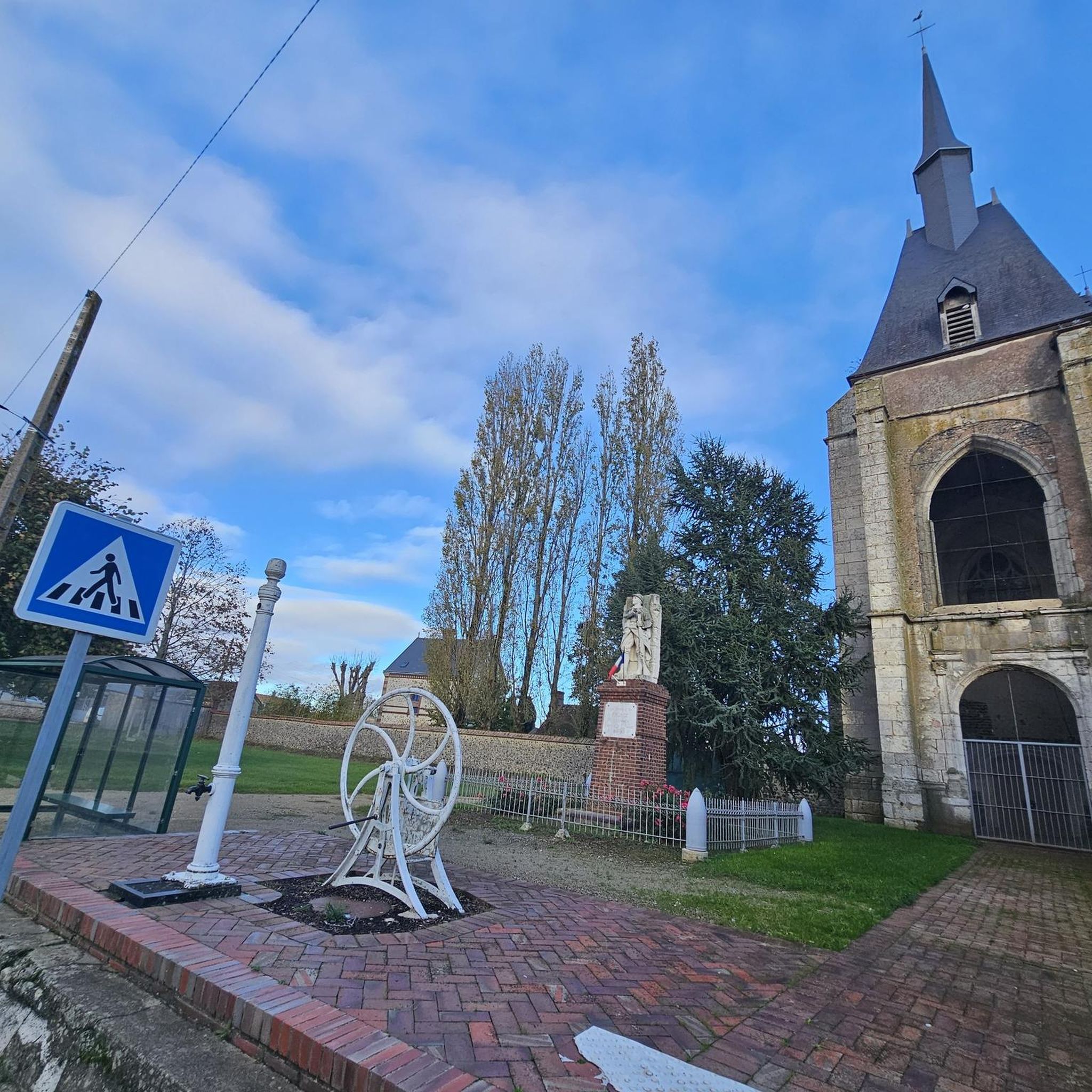
To truly experience Fruncé's charm, take a stroll along its communal walking paths, discover the historic Saint-Martin Church, and observe the ancient water pump. The village's War Memorial also offers a glimpse into its past. These elements combine to showcase the blend of history and natural beauty that defines Fruncé.
Are there any unique historical monuments in Fruncé?
Beyond the Saint-Martin Church, Fruncé features a War Memorial depicting a 'poilu' (French WWI infantryman) with his hand on his weapon. This monument is part of a series created by Félix Charpentier, adding a significant historical touch to the village.

Get inspired with the komoot mobile app


Explore more
Still not found the Highlight you’re looking for? See guides of the top attractions in other regions:
