The best road cycling routes around Orrouer
4.6
(52)
906
riders
271
rides
Road cycling around Orrouer, located in France's Eure-et-Loir department, offers diverse terrain for cyclists. The region features vast agricultural plains, such as the Beauce, providing long, straight roads. To the west, the Perche Regional Natural Park presents rolling hills and woodlands, while the tranquil Eure and Loir river valleys offer gentler gradients. This blend of landscapes provides varied road cycling experiences.
Best road cycling routes around Orrouer
- The most popular road cycling route is Levesville – Church of Saint Stephen…
Last updated: May 24, 2026
37
riders
47.5km
02:02
190m
190m
Moderate road ride. Good fitness required. Mostly well-paved surfaces and easy to ride.
5.0
(3)
17
riders
Easy road ride. Great for any fitness level. Mostly well-paved surfaces and easy to ride.

Sign up for free
9
riders
59.7km
02:22
270m
270m
Moderate road ride. Good fitness required. Mostly well-paved surfaces and easy to ride.
5.0
(1)
19
riders
Easy road ride. Great for any fitness level. Mostly well-paved surfaces and easy to ride.
12
riders
222km
09:14
1,310m
1,310m
Hard road ride. Very good fitness required. Some segments of this route may be unpaved and difficult to ride.
Get access to more routes and recommendations from other explorers.
Sign up for free
Already have an account?
Our route recommendations are based on thousands of hikes, rides, and runs completed by other people on komoot.
Start today with a free account
Your next adventure awaits.
Login or Signup


Tips from the Community

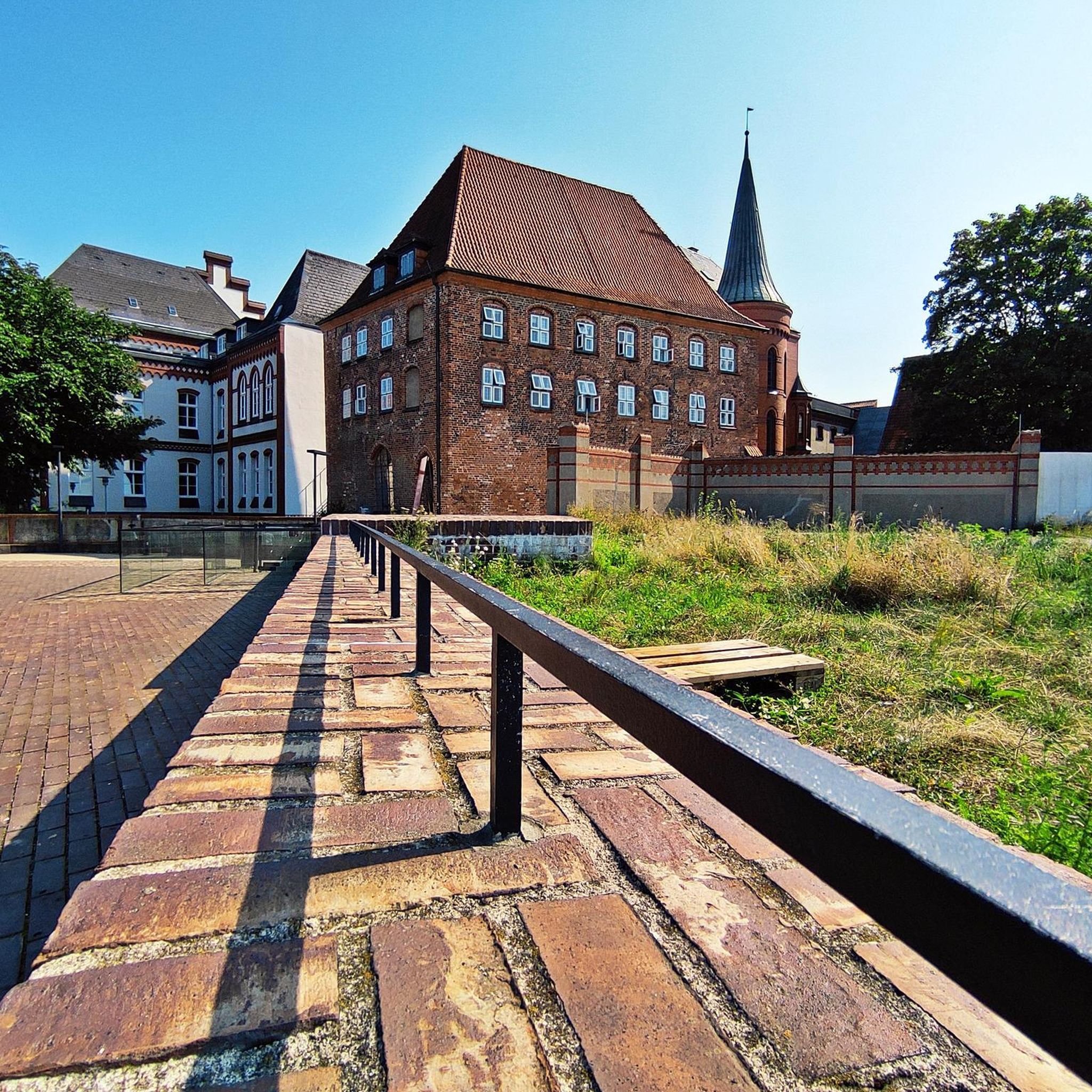
According to tradition, the church choir covers the remains of an older building, possibly dating back to the 6th century, which was built to house the saint's body. According to current knowledge, the commune of Saint-Piat (Sanctus Piatus in Latin) officially appeared in 1087, mentioned in a charter of the Nottonville Priory (Eure-et-Loir), on which it depended. The current building was rebuilt during the time of Francis I, as suggested by the date 1535 engraved on two buttresses of the apse and the date 1542 engraved on a piece of wood from the vault. This is according to a study by the SAEL (Eure-et-Loir Archaeological Society). The three-sided apses, the dripstone towers (horizontal members projecting from a wall), and the sculpted roof structures are a testament to the importance of the reconstructions carried out in the department during the 16th century. The church of Saint-Piat is one of them. While the church has not been officially recognized, it nevertheless contains objects that have attracted attention both for their antiquity and quality, but not always for good reason. Their artistic value, far from attracting only religious or aesthetic interest, has also aroused a covetousness that, unfortunately, remains for some of them. Fortunately, those still in place are carefully cared for and offer the curious a story to discover, a beauty to slowly ponder as they progress toward the choir.
0
0

Many centuries ago, our ancestors discovered the possibility of harnessing the power of the elements—which, while helpful and useful on the one hand, could also be a threat as untamed forces of nature—for various purposes, thus eliminating the need for human or animal muscle power. Mills like these are a good example of the human engineering skills of earlier generations: The heavy millstones used to grind grain or press oil, for example, could be powered by wind or—as in this case—water.
0
0


Rambouillet Castle A former medieval fortress, Rambouillet Castle was gradually transformed into a pleasure residence by its illustrious owners and adorned with elegant decorations.
0
0

An excellent place to take a break and admire the magnificent castle and its park. Whether you are roaming along the Véloscénie or simply strolling through the forest of the estate, you will be seduced by this idyllic view.
1
0

Very nice and ideal for a picnic.
1
0
Thivars is mentioned in 966 in the Chartres cartulary. In the 12th century, the church became the property of Josaphat Abbey. The current church was built in the 16th century: a date of 1545 is engraved on a cherub in the turret. It is a very high construction but very irregular, this comes from the fact that it belongs to several eras: ogival style in the windows, the entrance door is Romanesque (it may be the door of the first Romanesque church) . The choir was formerly separated from the nave by an iron grille which disappeared during the French Revolution. The ceiling has pretty paneling dating from 1645. The two side altars are dedicated: one to Notre Dame des Victoires and the other to Saint Joseph. Among the furniture we can note an interesting painting which represents Our Lord pronouncing on a coin. In 1940, two bombs fell less than 30 m from the church, destroying the stained glass windows on the south side which were replaced by grisailles in 1987. Three pretty stained glass windows light up this church: Nativity stained glass window installed by Mr Campin in 1955 Stained glass windows of the village's patron saints, Saint Radegonde and Saint Hilaire, installed in 1900 and 1987 respectively.
1
0

Of course there is the castle but the rest of the village is really worth a stop (church, wash house, half-timbered house, etc.)
0
0
Frequently Asked Questions
How many road cycling routes are available around Orrouer?
There are over 270 road cycling routes available around Orrouer, offering a wide variety of options for different preferences and skill levels. These include 127 easy routes, 138 moderate routes, and 9 more challenging trails.
What kind of terrain can I expect when road cycling near Orrouer?
The region around Orrouer offers diverse terrain. You'll find vast, open agricultural plains like the Beauce, which are ideal for long, straight rides. To the west, the Perche Regional Natural Park provides more undulating landscapes with rolling hills and woodlands. Additionally, the tranquil Eure and Loir river valleys offer gentler gradients and scenic riverside paths.
What is the best time of year for road cycling in the Orrouer region?
The spring and autumn months generally offer the most pleasant conditions for road cycling around Orrouer, with milder temperatures and beautiful scenery. Summer can also be enjoyable, though it's advisable to cycle earlier in the morning or later in the afternoon to avoid the midday heat. Winter cycling is possible, but be prepared for colder temperatures and potentially wet conditions.
Are there any circular road cycling routes around Orrouer?
Yes, many of the road cycling routes around Orrouer are designed as loops, allowing you to start and finish at the same point. For example, the Levesville – Church of Saint Stephen loop from Saint-Aubin - Saint-Luperce is an easy 31.9 km circular route, and the Moulin de Jouy – Saint-Piat Mill loop from Saint-Aubin - Saint-Luperce offers a moderate 59.8 km circular ride.
Can I find easy road cycling routes suitable for beginners near Orrouer?
Absolutely. The Orrouer area has 127 easy road cycling routes, perfect for beginners or those looking for a relaxed ride. An example is the Roadbike loop from Fruncé, a short and gentle 6.9 km route.
Where can I find more challenging road cycling routes around Orrouer?
For more experienced cyclists seeking a challenge, there are 9 difficult road cycling routes available. A notable long-distance option is the Rambouillet Castle – Eure Riverside Walk loop from Saint-Aubin - Saint-Luperce, which spans 221.9 km and features significant elevation changes.
What amenities are available for cyclists in the Orrouer region?
The Eure-et-Loir department, where Orrouer is located, supports cycling tourism with 'Accueil Vélo' certified services. This means you can find accommodations, bike rentals, and repair shops that cater specifically to cyclists. Many villages and towns along routes will also have cafes and pubs for refreshments.
Are there any historical landmarks or attractions to see along the road cycling routes?
Yes, the region is rich in history. You can cycle past charming churches like the Church of Saint James in Illiers-Combray or the Saint-Georges Church of Saint-Georges-sur-Eure. The Château des Boulard is another historical point of interest. The wider region also offers access to the famous Chartres Cathedral and the Château de Rambouillet.
Are there family-friendly road cycling routes around Orrouer?
Yes, the gentler gradients found in the river valleys and the numerous easy routes make the area suitable for family cycling. Many routes are on quiet country roads, providing a safe and enjoyable experience for all ages. Look for routes marked as 'easy' on komoot for the most family-friendly options.
What natural features or scenic viewpoints can I expect on road cycling routes near Orrouer?
Road cycling routes around Orrouer offer a blend of natural beauty. You'll encounter the vast, open agricultural plains of the Beauce, providing expansive views. To the west, the Perche Regional Natural Park features picturesque rolling hills and dense woodlands. The tranquil valleys of the Eure and Loir rivers offer scenic riverside views, often passing through charming villages and past vineyards.
Is public transport available to access road cycling routes near Orrouer?
While Orrouer itself is a small commune, the broader Eure-et-Loir department has some public transport options, including regional trains and buses, that can connect you to larger towns like Chartres. From these towns, you can often access various cycling routes. It's recommended to check local transport schedules and bike carriage policies in advance.
What do other road cyclists enjoy the most about road cycling in Orrouer?
The area is highly rated by the komoot community, with an average score of 4.4 stars from over 50 reviews. Reviewers often praise the diverse terrain, from the quiet agricultural plains to the scenic river valleys and rolling hills, which cater to various cycling preferences. The blend of natural beauty and charming French countryside is frequently highlighted.
Most popular attractions around Orrouer

Get inspired with the komoot mobile app


Explore more
Browse the best Road cycling routes in other regions.
