The best road cycling routes around Berchères-Les-Pierres
4.5
(192)
4,889
riders
603
rides
Road cycling routes around Berchères-Les-Pierres traverse a landscape characterized by gently rolling agricultural fields, small villages, and river valleys, notably the Eure. The terrain is generally flat to mildly undulating, with modest elevation changes, making it suitable for various fitness levels. The region features a mix of open countryside and occasional wooded sections, providing varied scenery for road cyclists.
Best road cycling routes around Berchères-Les-Pierres
- The most popular road cycling route is Lavoir de Soulaires – Half-timbered house loop from…
Last updated: October 5, 2026
4.3
(3)
9
riders
Easy road ride. Great for any fitness level. Mostly well-paved surfaces and easy to ride.
5.0
(1)
7
riders
61.8km
02:23
190m
190m
Moderate road ride. Good fitness required. Mostly well-paved surfaces and easy to ride.

5.0
(1)
7
riders
56.5km
02:14
200m
200m
Moderate road ride. Good fitness required. Mostly well-paved surfaces and easy to ride.
8
riders
56.5km
02:16
210m
210m
Moderate road ride. Good fitness required. Mostly well-paved surfaces and easy to ride.
6
riders
33.9km
01:22
120m
120m
Easy road ride. Great for any fitness level. Mostly well-paved surfaces and easy to ride.
Get access to more routes and recommendations from other explorers.
Already have an account?
Our route recommendations are based on thousands of hikes, rides, and runs completed by other people on komoot.
Start today with a free account
Your next adventure awaits.




Tips from the Community

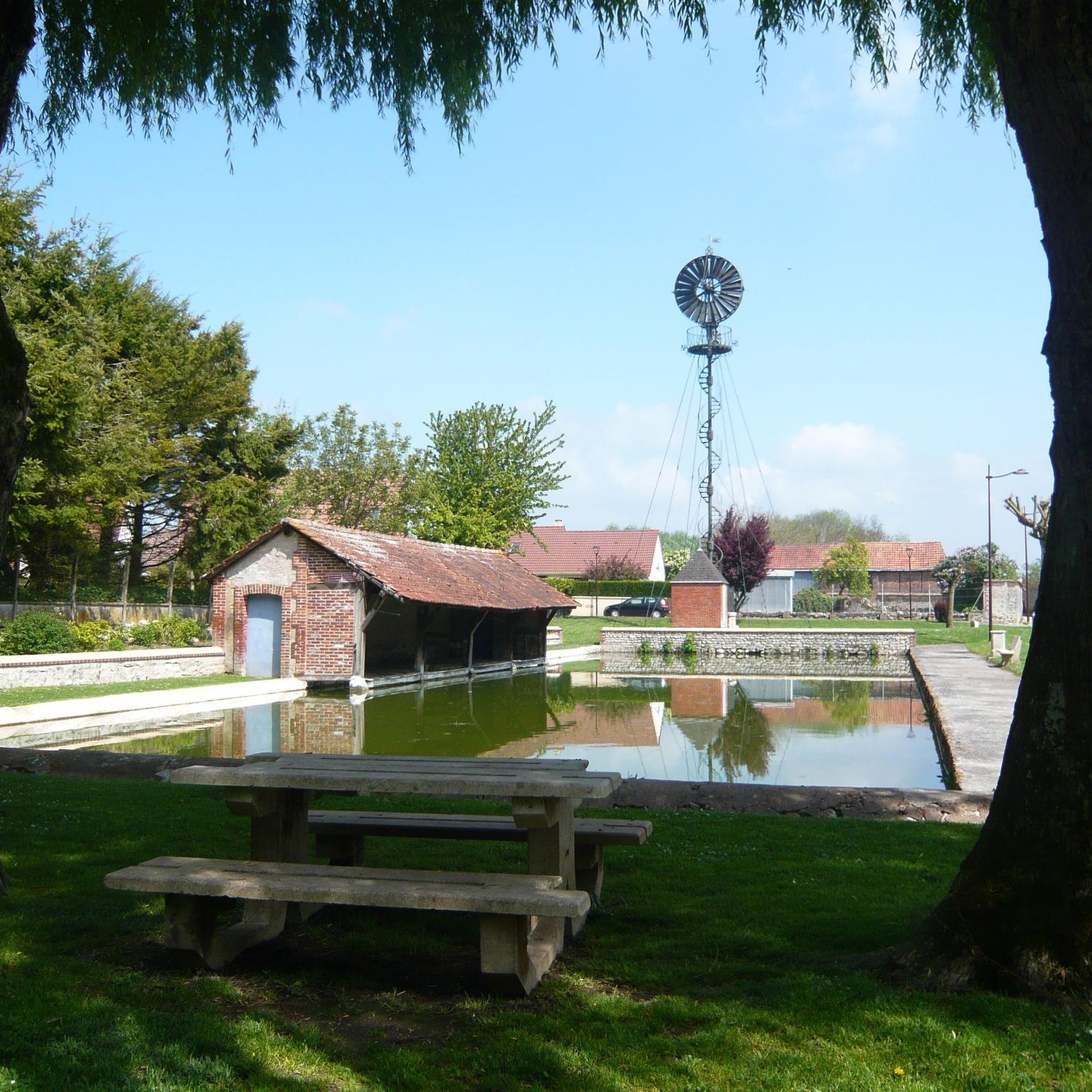
very nice pond to rest
0
0

The main nave, ending in a semicircular apse, is preceded by a timber-framed porch and opens to the north onto a chapel through a wide archway. The timber-framed bell tower, clearly from the same period as the 17th-century wainscoting, rests on a base spanning the nave. A second nave is covered with quadripartite masonry vaults from different periods. Of a dressed stone tower, only the spiral staircase and the first level remain, built between the 11th and 13th centuries. The side aisle was built in the 14th century and enlarged in the 16th. 1660: Supposed collapse of the tower attached to the nave, of which only the first level remains. 1679: Paneling on the nave and probable construction of the small timber-framed spire. 19th century: Supposed construction of the timber-framed chapel. The church was under the jurisdiction of the chapter of Notre-Dame de Chartres (the chapter's name can be seen on the lock of the small door on the right and is painted on the walls of the capital with stars and the date 1733 L.M.M.P.).
0
0
According to tradition, the church choir covers the remains of an older building, possibly dating back to the 6th century, which was built to house the saint's body. According to current knowledge, the commune of Saint-Piat (Sanctus Piatus in Latin) officially appeared in 1087, mentioned in a charter of the Nottonville Priory (Eure-et-Loir), on which it depended. The current building was rebuilt during the time of Francis I, as suggested by the date 1535 engraved on two buttresses of the apse and the date 1542 engraved on a piece of wood from the vault. This is according to a study by the SAEL (Eure-et-Loir Archaeological Society). The three-sided apses, the dripstone towers (horizontal members projecting from a wall), and the sculpted roof structures are a testament to the importance of the reconstructions carried out in the department during the 16th century. The church of Saint-Piat is one of them. While the church has not been officially recognized, it nevertheless contains objects that have attracted attention both for their antiquity and quality, but not always for good reason. Their artistic value, far from attracting only religious or aesthetic interest, has also aroused a covetousness that, unfortunately, remains for some of them. Fortunately, those still in place are carefully cared for and offer the curious a story to discover, a beauty to slowly ponder as they progress toward the choir.
0
0
Before 528, the village of Saint-Prest was called Saint-Jean-sur-Eure. At that time, the Bishop of Chartres, Ethère, had a building built adjoining the southern flank of the parish church, including a "martyrium" to house the remains of holy martyrs (the legend of Saint-Prest), which were placed in ten sarcophagi. The most honored relics were those of a certain Priscus; following numerous miracles, the parish took the name of Saint-Prest. The current church's crypt is the apse of the 9th-century Carolingian church, which replaced a 6th-century sanctuary. Access to the 12th-century nave, on the west side, is through a beautiful Romanesque portal, carved from beautiful limestone, surmounted by a triple saw-tooth archivolt and framed by two small columns with capitals. On the right, a face would be that of Eve, and on the left would appear the tempting serpent.
0
0

This church in Meslay-Le-Vidame, whose architecture reflects the formal language of antiquity, was dedicated to the patron saint of Saint Etienne. He was one of the first seven deacons of the original Jerusalem church and, according to the biblical accounts in the New Testament, the first martyr (martyr) of early Christianity. The church commemorates his death on Boxing Day, December 26th. As the Acts of the Apostles recounts: When Stephen recounted his vision of the open heavens, "And he, full of the Holy Spirit, looked up into heaven and saw the glory of God, and Jesus standing at the right hand of God" (Chapter 7, Verse 55), the people were so outraged that they drove him out of the city and stoned him.
0
0

Unfortunately, the church was not accessible when I visited (mid-September 2024). You could only look in through a gate and the dance of death depictions on the left side were not really visible. In front of them were transparencies with skeleton drawings. Maybe those were the depictions...
0
0
Thivars is mentioned in 966 in the Chartres cartulary. In the 12th century, the church became the property of Josaphat Abbey. The current church was built in the 16th century: a date of 1545 is engraved on a cherub in the turret. It is a very high construction but very irregular, this comes from the fact that it belongs to several eras: ogival style in the windows, the entrance door is Romanesque (it may be the door of the first Romanesque church) . The choir was formerly separated from the nave by an iron grille which disappeared during the French Revolution. The ceiling has pretty paneling dating from 1645. The two side altars are dedicated: one to Notre Dame des Victoires and the other to Saint Joseph. Among the furniture we can note an interesting painting which represents Our Lord pronouncing on a coin. In 1940, two bombs fell less than 30 m from the church, destroying the stained glass windows on the south side which were replaced by grisailles in 1987. Three pretty stained glass windows light up this church: Nativity stained glass window installed by Mr Campin in 1955 Stained glass windows of the village's patron saints, Saint Radegonde and Saint Hilaire, installed in 1900 and 1987 respectively.
1
0

Porte de Boisville Its ogival portal opens into a thick quadrangular massif where there was a room for operating the portcullis. We can still see the groove in the thickness of the walls. On the left and right two small funnel-shaped spaces allowed the defenders to observe and repel the enemies who appeared on the bridge. The gate was topped by a building serving as a guardhouse which was demolished in 1761. The guarding of these doors and their keys was in the troubled times of the Hundred Years' War the subject of concern for the inhabitants and also a source of quarrels and trials between the city and the abbey. This gate is preceded by a bridge of 5 stone arches, the one adjoining the gate was built in 1774 and replaced a drawbridge which defended the entrance.
0
0
Frequently Asked Questions
How many road cycling routes are available around Berchères-Les-Pierres?
There are over 600 road cycling routes documented around Berchères-Les-Pierres on komoot, offering a wide variety of options for all skill levels.
What is the terrain like for road cycling in Berchères-Les-Pierres?
The region is characterized by gently rolling agricultural fields, small villages, and river valleys, particularly along the Eure. The terrain is generally flat to mildly undulating, with modest elevation changes, making it suitable for various fitness levels.
Are there easy road cycling routes suitable for beginners or families?
Yes, Berchères-Les-Pierres offers a good selection of easy routes. For instance, La fondation d'Aligre loop from Ver-lès-Chartres is an easy 26.9-mile (43.3 km) trail that leads through open countryside. Another easy option is Fontenay-sur-Eure Church – Ponds of Fontenay sur Eure loop from Gellainville, which is 29.7 miles (47.8 km) long and offers serene pond views.
Are there more challenging road cycling routes for experienced riders?
While the region is generally mild, there are routes with slightly more demanding sections. For example, the Parc du Château de Laval – Saint Stephen's Church loop from Sours is rated as difficult, covering 31.5 miles (50.8 km) with some elevation changes.
What are the typical distances and durations for road cycling routes in this area?
Routes vary significantly. You can find shorter rides like the 18-mile (29.1 km) Queen Berthe's Staircase – The Eure at Ver les Chartre loop from Ver-lès-Chartres, which takes around 1 hour 12 minutes. Longer routes, such as the Lavoir de Soulaires – Half-timbered house loop from Gellainville, span 47.3 miles (76.2 km) and typically take nearly 3 hours to complete.
What kind of scenery can I expect on road cycling routes around Berchères-Les-Pierres?
You can expect a mix of open countryside, agricultural fields, and occasional wooded sections. Many routes pass through charming small villages and offer views of historic architecture, such as the half-timbered houses on the Lavoir de Soulaires – Half-timbered house loop from Gellainville route, or local churches and ponds as seen on the Fontenay-sur-Eure Church – Ponds of Fontenay sur Eure loop from Gellainville.
Are there any notable landmarks or attractions to see along the routes?
Yes, the region is rich in historical and cultural points of interest. While cycling, you might pass by significant sites such as Chartres Cathedral, the historic Guillaume Gate, or explore the charming town of Chartres itself. These highlights offer opportunities to pause and explore.
What is the best time of year for road cycling in Berchères-Les-Pierres?
The spring and autumn months generally offer the most pleasant conditions for road cycling, with mild temperatures and beautiful scenery. Summer can also be enjoyable, though it's advisable to ride earlier in the morning or later in the afternoon to avoid the midday heat. Winter cycling is possible, but be prepared for colder temperatures and potentially wet conditions.
Are most road cycling routes in Berchères-Les-Pierres circular?
Many of the popular road cycling routes in the Berchères-Les-Pierres area are designed as loops, allowing you to start and finish at the same point. This is convenient for those traveling by car, as it simplifies parking arrangements.
What do other road cyclists enjoy most about road cycling in Berchères-Les-Pierres?
The area is highly rated by the komoot community, with an average score of 4.3 stars from over 160 reviews. Reviewers often praise the quiet rural roads, the charming villages, and the varied, yet generally accessible, terrain that makes for enjoyable rides.
Are there options for finding less-trafficked or 'hidden gem' routes?
With over 600 routes available, komoot allows you to filter and explore less-trafficked paths. Many local cyclists use the platform to discover quieter country lanes that wind through the agricultural landscape and connect small, picturesque hamlets, offering a more serene cycling experience away from main roads.
Most popular routes around Berchères-Les-Pierres
Most popular attractions around Berchères-Les-Pierres

Get inspired with the komoot mobile app


Explore more
Browse the best Road cycling routes in other regions.
