The best road cycling routes around Fontaine-La-Guyon
4.4
(58)
792
riders
19
rides
Road cycling around Fontaine-La-Guyon features routes through the Eure-et-Loir department, characterized by gently rolling terrain and open countryside. The region offers a network of paved roads that connect small villages, historic châteaux, and agricultural landscapes. Elevation changes are generally modest, making it suitable for various fitness levels.
Best road cycling routes around Fontaine-La-Guyon
- The most popular road cycling route is Château de Fontaine-la-Guyon loop from Fontaine-la-Guyon, a 15.7 miles (25.3 km) trail that takes 1 hour to complete. This…
Last updated: October 5, 2026
16
riders
Easy road ride. Great for any fitness level. Mostly well-paved surfaces and easy to ride.
3.0
(1)
9
riders
44.9km
01:51
240m
240m
Easy road ride. Great for any fitness level. Mostly well-paved surfaces and easy to ride.

5
riders
Easy road ride. Great for any fitness level. Mostly well-paved surfaces and easy to ride.
4.0
(1)
5
riders
Easy road ride. Great for any fitness level. Mostly well-paved surfaces and easy to ride.
5
riders
Easy road ride. Great for any fitness level. Mostly well-paved surfaces and easy to ride.
Get access to more routes and recommendations from other explorers.
Already have an account?
Our route recommendations are based on thousands of hikes, rides, and runs completed by other people on komoot.
Start today with a free account
Your next adventure awaits.


Tips from the Community

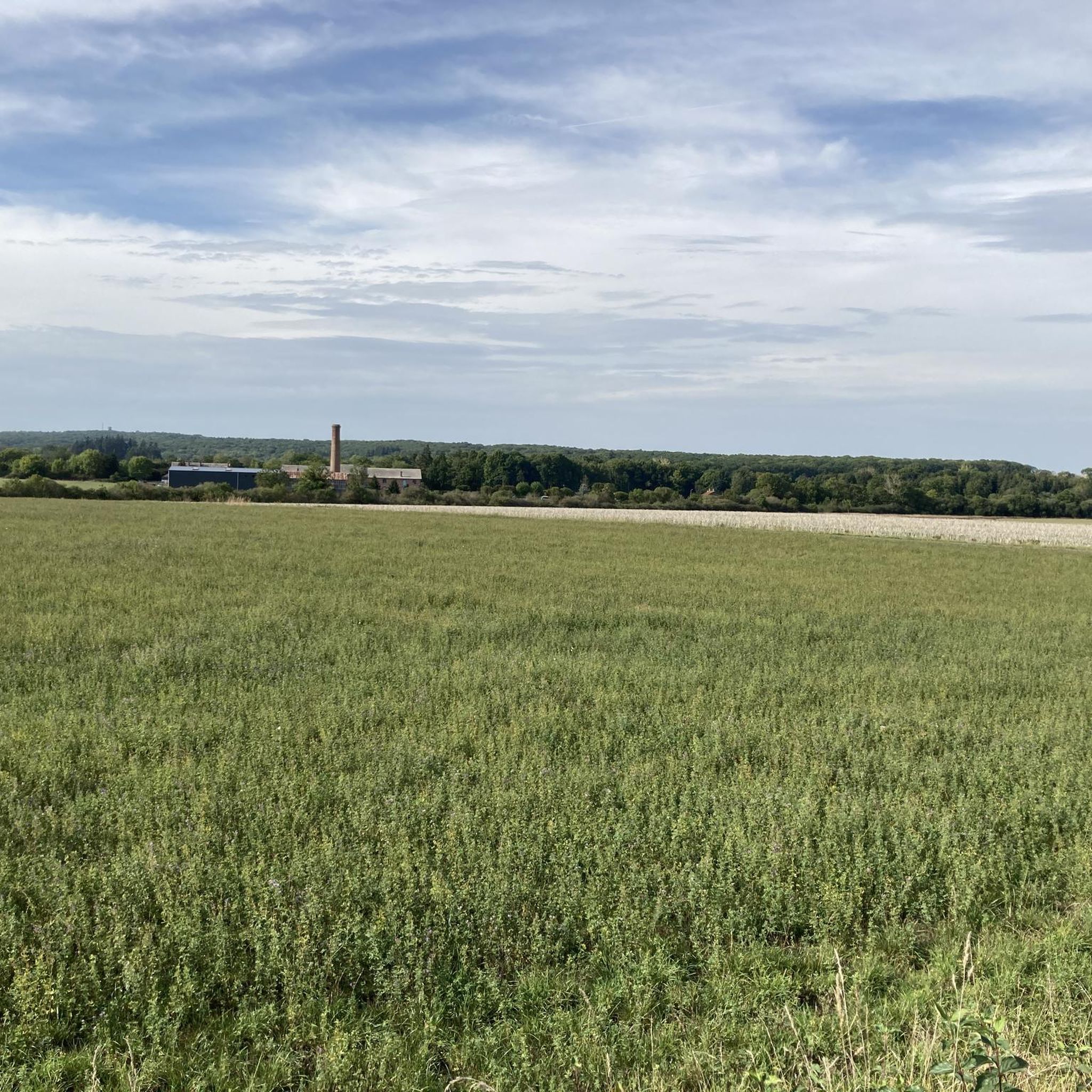
very nice pond to rest
0
0

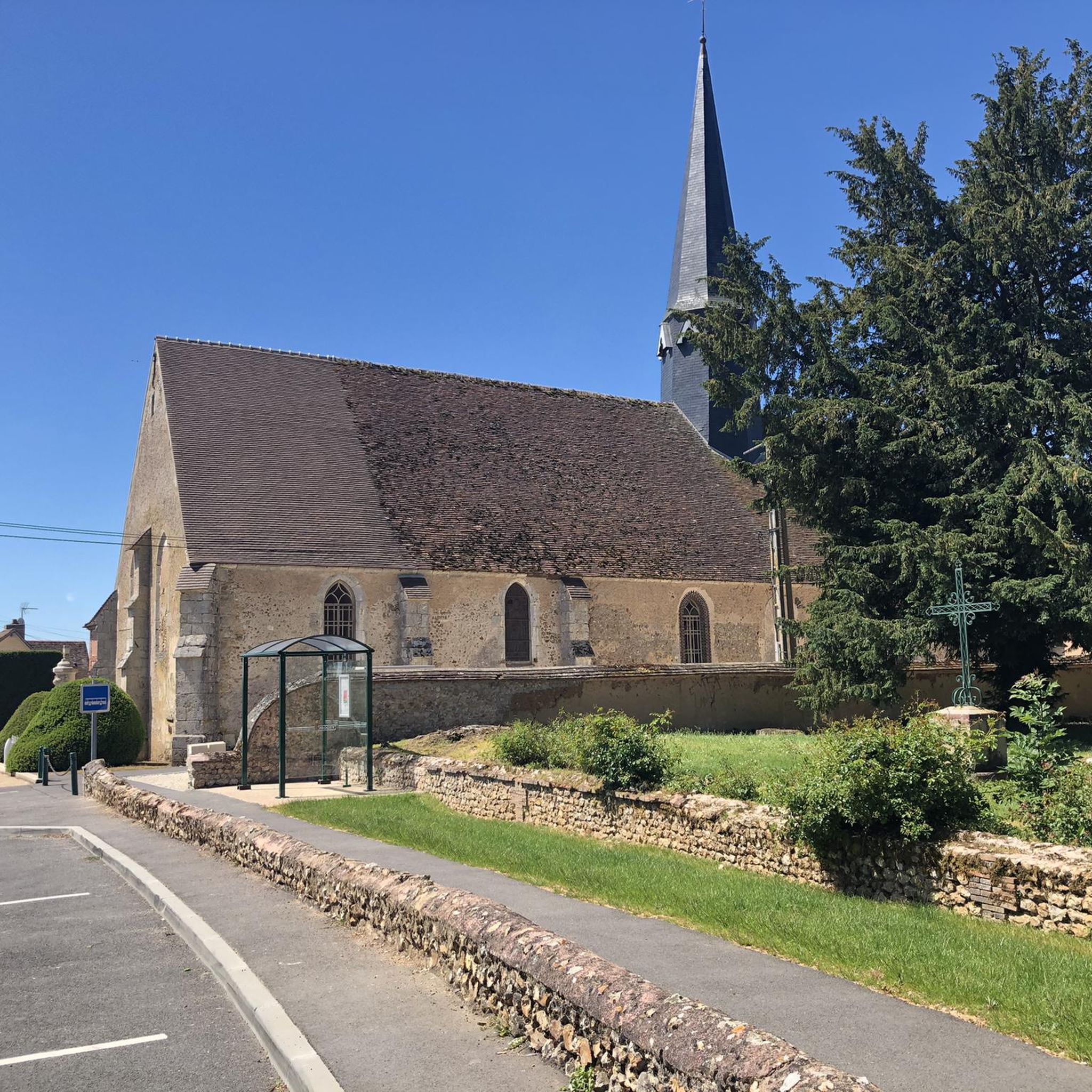
The church appears as the figurehead of the village. It dates back to the 12th century, with modifications in the 16th century, then in the 19th century. It is dedicated to Saint Aubin, a bishop who is said to have died on March 1, 550, and to whom, among other things, the power to cure whooping cough and meningitis was attributed. The building, now a municipal building, measures 34.60 meters in length (20.20 m for the nave, 7.70 m for the choir, 3.70 m for the sanctuary with the altar, and 3.00 m for the sacristy) by 8.40 meters wide. The walls are made of flint, the vault of wood, and there are uncarved old wood panelings. The bell tower rises to 111 feet, or nearly 34 m in height. Since the law on the separation of Church and State in 1905, churches have belonged to the municipalities as buildings. Therefore, they are responsible for the maintenance and conservation of these buildings. To help them, special loans are made available to municipalities. What happens inside is a matter of religion.
0
0
Of Romanesque origin, the church, surrounded by a cemetery, has a curious bell tower supported by machicolations and uprights of sandstone, making it one of the most unique in the region. Perhaps it was originally a bell gable, later augmented by a platform supported by these machicolations? In front of the entrance, a small building called a "caquetoire" (a small meeting place) allows the faithful to gather and converse. Inside the church, the furnishings date from the 18th and 19th centuries: a marble high altar and its gray-painted wooden altarpiece (18th century) – a painted wooden altarpiece of St. Joseph (late 18th or early 19th century) an altarpiece for the altar of the Virgin Mary (19th century) a baptismal font in red-veined marble (19th century) a waxed wooden pew (18th century) a waxed wooden choir stall upholstered in velvet paintings: the Assumption of the Virgin Mary by Octave Hauser (1839) and the Annunciation (18th century) The stained-glass windows date from 1874. The church and the eclipse A bit of history: The parish, established in the 13th century, was part of the deanery of Courville. The church's patron saint, Luperche or Luperchius, gave his name to the village. We must go back to the 4th century to find the first trace of this saint: At that time, Dacius, governor of the part of Spain that included Catalonia, Aragon, and the Kingdom of Valencia, was one of the most cruel ministers of persecution. Incited by the emperors Diocletian and Maximilian, he had eighteen confessors of Jesus Christ executed in the city of Zaragoza. In their honor, the poet Prudentius wrote hymns, and among these confessors, a certain martyr named Luperche became the patron saint of our church.
0
0

Unfortunately, the church was not accessible when I visited (mid-September 2024). You could only look in through a gate and the dance of death depictions on the left side were not really visible. In front of them were transparencies with skeleton drawings. Maybe those were the depictions...
0
0
The parish church of Saint-Remy de Vérigny, located in the current new commune of Mittainvilliers-Vérigny, has been documented in the archives since 1126 as being dependent on the abbey of Saint-Père in Chartres. Its construction probably followed shortly after this date, as evidenced by the use of grison for both the buttresses and the frames of certain bays and the large west portal with a grison roller. The proximity of the manor and then the castle of Vérigny, owned by the prestigious families of O and Vieuville until the early years of the 18th century, encouraged donations and legacies in favor of the parish church. It is to Charles II of O that we owe the construction of the north aisle as well as the family chapel in the right bay of the choir, on the north side. The ribbed vaults and the hanging keystones sculpted with little angels evoke the creations of the second quarter of the 16th century such as those of the church of Bérou-la-Mulotière. If the only vestiges of stained glass windows preserved date from the
0
0
Historically, our small medieval Romanesque church, dedicated to Saint Silvanus, was an integral part of a lordship. We can, still today, guess the vestiges of the seigniorial coat of arms on the liter (the banner) located just below the windows on the north face. Located near the old castle moat, the cemetery flanked it, on the north side in place of the current car park and the multi-purpose room, on the south side at the level of the green space currently planted with lime trees. Originally only the central building existed and the bell tower topped it in its center. This is the reason why at the beginning of the 1980s, the framework began to collapse, weakened by the weight and the marks of time left by the old bell tower. This renovation proved, if necessary, through the design of the framework, the existence of the central bell tower. The time when the bell tower was moved off-center is at the end of the 16th century, beginning of the 17th century. Concerning the creation of the sacristy and the side chapels, the departmental archives hold a plan of the church, dated August 19, 1853 which clearly indicates the existence of the sacristy and only the north chapel, the construction of the South chapel was therefore not concomitant. In the masonry, the small Romanesque windows can still be seen, the only one remaining, unwalled, opens to the east and still today offers a light entrance into the apse. Around the church we notice two types of buttresses, the first, the narrower ones date from the creation of the building, the more massive ones date from the 18th century, placed as reinforcements Neo-classicism at the end of the 18th century and the beginning of the 19th century left its mark on this building. Outside, as we have seen, by the addition of the sacristy as well as the small side chapels now forming a transept.
0
0

Very beautiful church and the public toilets next to it are perfect, even for filling water bottles too large for the classic sinks.
0
0
Composed of a Romanesque nave with flat buttresses placed symmetrically on each side (typical of the end of the 11th century or the first half of the 12th century), it was completely remodeled in the 16th century and the end of the 20th century. The bays of the nave are from the 15th century, in flamboyant Gothic style, as is the rose window. The span of the bell tower and the choir, with ribbed vaults, date from the end of the 15th or beginning of the 16th century. As early as the 16th century, the bell tower had a clock, quite rare and expensive for the time. The pillars of the central bay are richly molded and crowned with thin bands of foliage serving as capitals. The windows are decorated with flamboyant tracery of varied designs. The Romanesque portal was also remodeled in the 16th century. The powerful central bell tower with buttresses [formerly had three bells named PIC DAN JON. There will only be one left after the Revolution, the other two having been melted down to make cannons and ammunition.
0
0
Frequently Asked Questions
How many road cycling routes can I find around Fontaine-La-Guyon?
There are over 20 road cycling routes available around Fontaine-La-Guyon, offering a variety of options for different skill levels. The region is particularly well-suited for easy rides, with 21 out of 22 routes classified as easy.
Are there many easy road cycling routes suitable for beginners or families in Fontaine-La-Guyon?
Yes, Fontaine-La-Guyon is an excellent area for easy road cycling. The majority of routes, 21 out of 22, are classified as easy, featuring gentle elevation changes and pleasant countryside. A good option for a relaxed ride is the Château de Fontaine-la-Guyon loop from Fontaine-la-Guyon, which is 15.7 miles (25.3 km) long.
What kind of terrain can I expect on road cycling routes in Fontaine-La-Guyon?
Road cycling routes around Fontaine-La-Guyon are characterized by gently rolling terrain and open countryside within the Eure-et-Loir department. You'll find a network of paved roads connecting small villages, historic châteaux, and agricultural landscapes. Elevation changes are generally modest, making it suitable for various fitness levels.
Are there any challenging road cycling routes for experienced cyclists?
While most routes in Fontaine-La-Guyon are easy, there is one moderate route available for those seeking a bit more challenge. The region's terrain is generally gently rolling, so truly difficult climbs are not typical here.
What are some notable landmarks or attractions I can see while road cycling in the area?
Many routes pass by historical landmarks. For instance, the Château de Fontaine-la-Guyon – Vérigny Castle loop from Fontaine-la-Guyon takes you past the historic Vérigny Castle. Other points of interest in the vicinity include Château de Fontaine-la-Guyon and Orrouer Church, which can be explored on routes like the Orrouer Church – Château de Fontaine-la-Guyon loop from Fontaine-la-Guyon.
Are there circular road cycling routes available around Fontaine-La-Guyon?
Yes, many of the road cycling routes in Fontaine-La-Guyon are designed as loops, allowing you to start and finish in the same location. Examples include the Château de Fontaine-la-Guyon loop from Fontaine-la-Guyon and The banks of the Eure – Château de Fontaine-la-Guyon loop from Fontaine-la-Guyon.
What is the best time of year for road cycling in Fontaine-La-Guyon?
The Eure-et-Loir region, including Fontaine-La-Guyon, generally offers pleasant cycling conditions from spring through early autumn. Spring brings blooming landscapes, while autumn provides cooler temperatures and beautiful foliage, making both seasons ideal for exploring the open countryside.
What do other road cyclists say about the routes in Fontaine-La-Guyon?
The road cycling routes in Fontaine-La-Guyon are highly rated by the komoot community, with an average score of 4.0 stars from over 40 reviews. Cyclists often praise the quiet roads, scenic agricultural landscapes, and the opportunity to discover historic villages and châteaux.
Are there routes that follow riverbanks or offer water views?
Yes, you can find routes that incorporate river views. The The banks of the Eure – Château de Fontaine-la-Guyon loop from Fontaine-la-Guyon is a great option for cycling alongside the Eure River, offering a different scenic perspective.
How long do the road cycling routes typically take to complete?
The duration of routes varies depending on their length and your cycling pace. For example, the 15.7 miles (25.3 km) Château de Fontaine-la-Guyon loop from Fontaine-la-Guyon typically takes about 1 hour, while the longer 27.9 miles (44.9 km) Château de Fontaine-la-Guyon – Vérigny Castle loop from Fontaine-la-Guyon might take closer to 1 hour 50 minutes.
Are there less crowded road cycling options around Fontaine-La-Guyon?
Given the rural nature of the Eure-et-Loir department, most road cycling routes around Fontaine-La-Guyon tend to be less crowded than those in more urbanized areas. The network of small country roads connecting villages offers a peaceful cycling experience through agricultural landscapes.
Is public transport available to reach the road cycling trailheads in Fontaine-La-Guyon?
Fontaine-La-Guyon is a small commune, and public transport options directly to specific trailheads might be limited. It's generally recommended to arrive by car, or cycle from a larger nearby town with better public transport connections if you plan to use it.
Most popular attractions around Fontaine-La-Guyon

Get inspired with the komoot mobile app


Explore more
Browse the best Road cycling routes in other regions.
