Attractions and Places To See around Senantes - Top 20
Best attractions and places to see around Senantes include historical sites and natural features within the Oise department of France. The area offers a glimpse into French heritage, with its commune being the source of the Avelon River. Visitors can explore sites that reflect centuries of history and natural beauty.
Best attractions and places to see around Senantes
- The most popular attractions is Château de Mormoulins, a castle with origins dating back to the 10th century, situated amidst former marshes. It features canals dug in the 18th century and was rebuilt after earlier structures were damaged by floods.
- Another must-see spot is Pont Rouge on the Louis XIV Canal, a historic bridge originally constructed between 1685 and 1686 under the orders of Louis XIV. It was part of the ambitious project to build the Maintenon aqueduct to transport water to the Palace of Versailles.
- Visitors also love Saint-Sulpice Church of Châteaudun, an impressive religious building constructed between the 15th and 17th centuries. This church boasts a flamboyant Gothic style and preserves a collection of 16th-century stained-glass windows.
- Senantes is known for its historical bridges, castles, and religious buildings. The region offers a variety of attractions to see and explore, from ancient structures to natural monuments.
- The attractions around Senantes are appreciated by the komoot community, with more than 70 upvotes and 6 photos shared by visitors.
Last updated: May 9, 2026
Pont Rouge on the Louis XIV Canal
Highlight • Bridge
Maintenon was still to this day an intermittent residence of the king's court, and major work was undertaken, such as the digging of the grand canal passing under the aqueduct, the planting of the banks or the drawing of the castle park by Le Nôtre. .
You should know that until 1838, it is by this bridge that the entry into Maintenon was made. The legend attributes its name to the color of the uniform of the soldiers in charge of its guard.
Translated by Google •
Tip by

Château de Mormoulins
Highlight • Castle
Translated by Google •
Tip by

Sign up now to discover places like this
Get recommendations on the best single tracks, peaks, & plenty of other exciting outdoor places.
Sign up for free
Saint-Sulpice Church of Châteaudun
Highlight • Religious Site
Translated by Google •
Tip by
Guiperreux Toad Crossing
Highlight • Natural Monument
Each year, during the thaw (roughly from February to April), a "toadstool" is installed on the road that runs along the pond.
But what is a toaddrome exactly? So, it is not a place where one could indulge in clandestine bets on toad races, but a device intended to prevent these poor beasts from being crushed by cars in crossing the road to breed and lay their eggs in the pond on the other side of the road.
Indeed, thousands of common toads, but also frogs and newts, begin their long prenuptial migrations around March each year. They go to the nearest pond or pond to breed. Once their duty is done, they leave the aquatic environment to return to their summering areas where they will spend most of their time feeding.
In order to avoid a carnage of amphibians on the road, a tarpaulin is planted 600m on each side of the road to block their passage. In various places a hole has been made in which a bucket is buried. By looking for a passage all along the tarpaulin, the toad will inevitably end up at the bottom of a bucket. Every morning, volunteers come to collect toads and other frogs and drop them off on the other side of the road.
Translated by Google •
Tip by

the beautiful church of Prouais
Highlight • Other
Translated by Google •
Tip by
Sign up for free to discover even more attractions around Senantes.
Sign up for free
Already have an account?
Start today with a free account
Your next adventure awaits.
Login or Signup

Tips from the Community

The Moulin de Mormoulins is a watermill located on the Eure River in the hamlet of Mormoulins. This mill dates back to the 18th and 19th centuries and is a listed historical monument. You can admire the old stone building, the wooden wheel, and the canal that diverts water from the river as you pass in front of the mill. The mill is surrounded by green fields and trees, creating a peaceful and relaxing atmosphere.
0
0

Church of Saint Peter and Saint Paul The construction of the church is said to have been initiated by Don Roger, abbot of the very powerful Benedictine abbey of Coulombs from 1115 to 1174. At that time, the abbey stood near Nogent-le-Roi, a former fortified town located twelve kilometers away on the banks of the Eure. Spread over more than 80 parishes, it had a considerable influence in the region until the Revolution, whether from a religious, economic or social point of view. The Romanesque style that it had adopted since its original construction was reworked in the 16th century by the opening of tall Gothic windows around the choir. Finally, in the following century, during the Wars of Religion, the church suffered serious damage. When peace returned, the entrance porch was finally rebuilt in the elegant Renaissance style. In 1950, a fire destroyed the church and all its furniture; it was restored at the end of the 20th century.
0
0

With its curiously crowned square tower, this charming church boasts a flamboyant Gothic style. Built between the 15th and 17th centuries, it preserves a remarkable collection of 16th-century stained-glass windows dedicated to Eucharistic miracles.
0
0
The Saint-Sulpice church in Nogent-Le-Roi is an impressive church built in the 15th century and which was part of the defensive wall which protected the entrance to the town. You can admire its beautiful stained glass windows and its wrought iron choir inside, as well as its original tower outside. The church is located in the heart of Nogent-Le-Roi, a charming town with old half-timbered houses and a castle.
2
0
The Church of Saint-Sulpice in Nogent-Le-Roi is an impressive church built in the 15th century and which formed part of the defensive wall that protected the entrance to the town. You can admire its beautiful stained glass windows and its wrought iron choir screen inside, as well as its original tower outside. The church is located in the heart of Nogent-Le-Roi, a charming town with old half-timbered houses and a castle.
2
0

At the edge of this road a pond which forms with the forest which surrounds it a protected natural area. Each year, during the thaw (roughly from February to April), a "toadstool" is installed on the road that runs along the pond. But what is a toaddrome exactly? So, it is not a place where one could indulge in clandestine bets on toad races, but a device intended to prevent these poor beasts from being crushed by cars in crossing the road to breed and lay their eggs in the pond on the other side of the road. Indeed, thousands of common toads, but also frogs and newts, begin their long prenuptial migrations around March each year. They go to the nearest pond or pond to breed. Once their duty is done, they leave the aquatic environment to return to their summering areas where they will spend most of their time feeding. In order to avoid a carnage of amphibians on the road, a tarpaulin is planted 600m on each side of the road to block their passage. In various places a hole has been made in which a bucket is buried. By looking for a passage all along the tarpaulin, the toad will inevitably end up at the bottom of a bucket. Every morning, volunteers come to collect toads and other frogs and drop them off on the other side of the road.
1
0

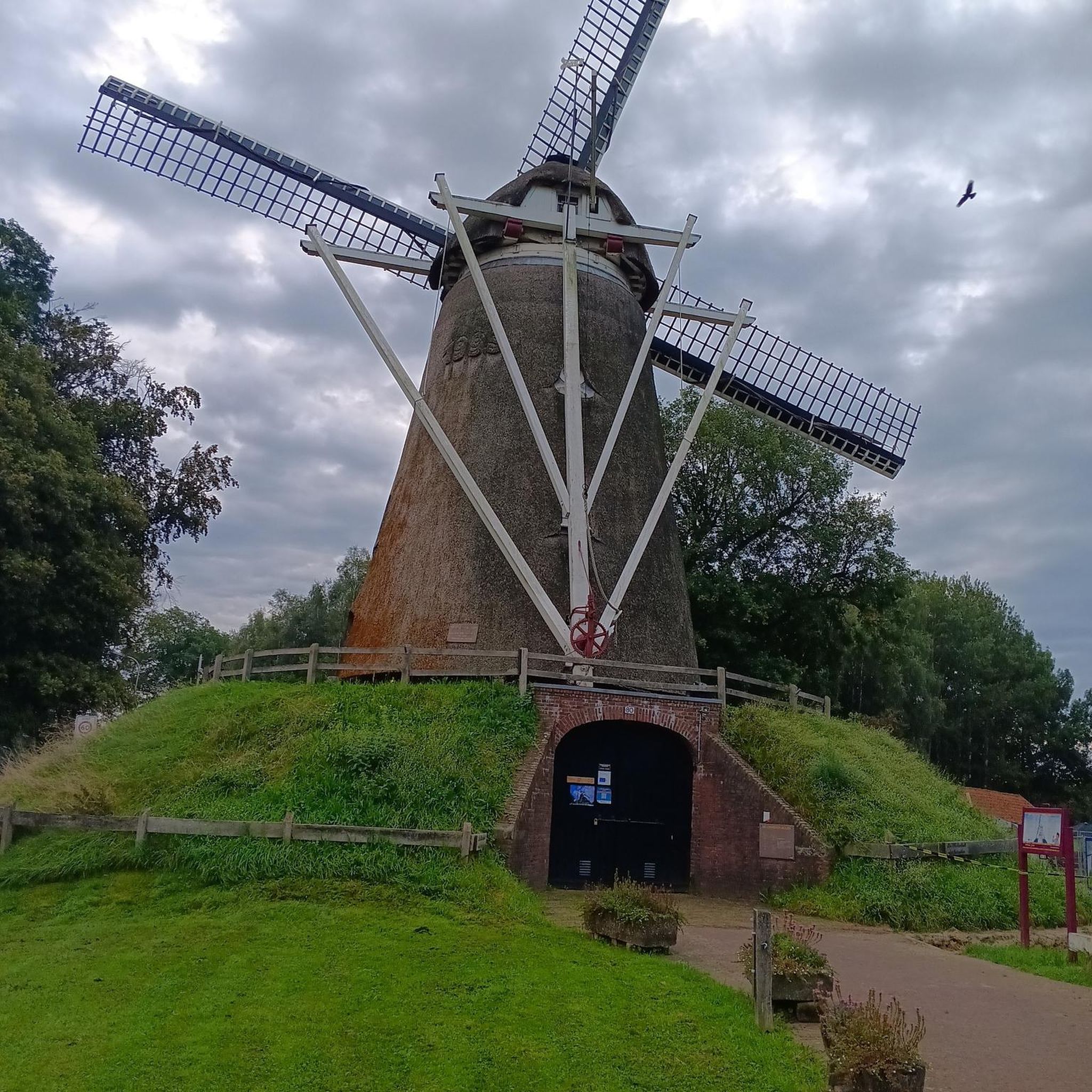
Very nice windmill, especially in good weather!
0
0

Around the 10th century, Mormoulins Castle stood in the middle of the marshes. Access from Chaudon was via a sandstone causeway, the foundations of which still exist. The marshes filled in over the centuries, becoming the meadows bordering the current picturesque Mormoulins road. Legend has it that one of its owners was killed in a duel the day after his wedding, and a son was born nine months later. Another legend claims that a captain of the guards charged with defending the castle was killed along with a hundred men the day before his wedding. In 1774, the Receiver General of Finance of Picardy, brother-in-law of the Pompadour family, purchased it. It was he who had the canals dug, which are still visible today. In 1781, the owner was Mr. Fergeol, from Villers, whose widow sold the castle ruins in 1817 to Mr. du Temple de Chevrigny. Source: mormoulins.fr
2
0
Frequently Asked Questions
What historical sites can I explore around Senantes?
The area around Senantes is rich in history. You can visit the Pont Rouge on the Louis XIV Canal, a historic bridge built in the late 17th century as part of the Maintenon aqueduct project to supply water to Versailles. Another significant site is the Château de Mormoulins, a castle with origins dating back to the 10th century, rebuilt after earlier structures were damaged by floods. The nearby Moulin de Mormoulins, an 18th-century watermill, is also a recognized historical monument.
Are there any notable religious buildings in the vicinity?
Yes, several impressive religious buildings are located near Senantes. The Saint-Sulpice Church of Châteaudun, constructed between the 15th and 17th centuries, showcases a flamboyant Gothic style and features remarkable 16th-century stained-glass windows. Additionally, the Church of Saint Peter and Saint Paul in Prouais, believed to have been initiated by Don Roger in the 12th century, is another historical church to discover. An 11th-century church classified as a historical monument can also be found in the nearby commune of Aux Marais.
What natural features can I discover around Senantes?
Senantes is notable as the source of the Avelon River, which stretches for 23 kilometers before flowing into the Rivière de Saint-Just. For a unique natural experience, consider visiting the Guiperreux Toad Crossing, a protected natural area with a pond and forest. During specific times of the year, this site is managed to protect migrating amphibians.
Are there family-friendly attractions near Senantes?
Many attractions around Senantes are suitable for families. The Pont Rouge on the Louis XIV Canal offers an interesting historical stop. The Guiperreux Toad Crossing, with its pond and forest, provides an opportunity to observe nature and learn about local wildlife conservation efforts. Exploring the grounds of the Château de Mormoulins can also be an engaging experience for all ages.
What outdoor activities can I do near these attractions?
The region around Senantes offers various outdoor activities, particularly cycling and mountain biking. You can find numerous routes for touring bicycles, mountain bikes, and gravel biking. For example, there are easy cycling loops like the 'Château de Mormoulins – Plan d'eau d'Ecluzelles loop from Coulombs' or moderate mountain bike trails such as the 'Plan d'eau d'Ecluzelles – Moulin de Mormoulins loop from Nogent-le-Roi'. You can explore more options on the dedicated guides for Cycling around Senantes, MTB Trails around Senantes, and Gravel biking around Senantes.
Are there hiking trails near the attractions?
While specific hiking trails are not detailed in the provided data, the presence of various cycling and mountain biking routes suggests that the area offers scenic paths suitable for walking and exploring on foot. Many of these routes pass by the mentioned attractions and natural features, providing opportunities for leisurely walks. Check the cycling and MTB guides for routes that might suit a walking pace.
What is the best time to visit Senantes attractions?
The region's natural beauty, including green fields and trees, suggests that spring and summer offer pleasant weather for exploring historical sites and engaging in outdoor activities. The Guiperreux Toad Crossing is particularly active during the thaw, roughly from February to April, for those interested in amphibian migrations.
Where can I find parking for attractions around Senantes?
While specific parking information for each attraction is not provided, most historical sites and natural areas in rural French communes typically have designated parking areas nearby or in the closest village centers. It is advisable to check local signage upon arrival or consult online maps for parking options at your specific destination.
What do visitors enjoy most about the attractions near Senantes?
Visitors appreciate the rich history and tranquil natural settings. The Pont Rouge is noted for its historical significance and picturesque setting. The Château de Mormoulins is valued for its ancient origins and the visible canals dug in the 18th century. The Saint-Sulpice Church of Châteaudun is admired for its flamboyant Gothic architecture and preserved stained-glass windows.
Are there any hidden gems or lesser-known spots to visit?
Beyond the main highlights, the traditional Moulin de Mormoulins, an 18th-century watermill nestled amidst green fields, offers a peaceful and less-frequented experience. The source of the Avelon River in Senantes itself is a significant natural feature that might appeal to those seeking unique local points of interest.
Can I find places for wildlife spotting?
Yes, the Guiperreux Toad Crossing is an excellent spot for wildlife observation, particularly for amphibians like common toads, frogs, and newts during their migration season (roughly February to April). The surrounding forest and pond create a protected natural habitat that supports various local species.
Is public transport available to reach these attractions?
Information on specific public transport routes directly to each attraction is not detailed. Given the rural nature of Senantes and its surrounding communes, public transport options might be limited. It is generally recommended to use a car or bicycle for greater flexibility when exploring these sites. Check local transport services for the Oise department for more specific details if needed.
Most popular routes around Senantes
Most popular attractions around Senantes

Get inspired with the komoot mobile app


Explore more
Still not found the Highlight you’re looking for? See guides of the top attractions in other regions:
