The best road cycling routes around Le Boullay-Thierry
4.5
(30)
461
riders
149
rides
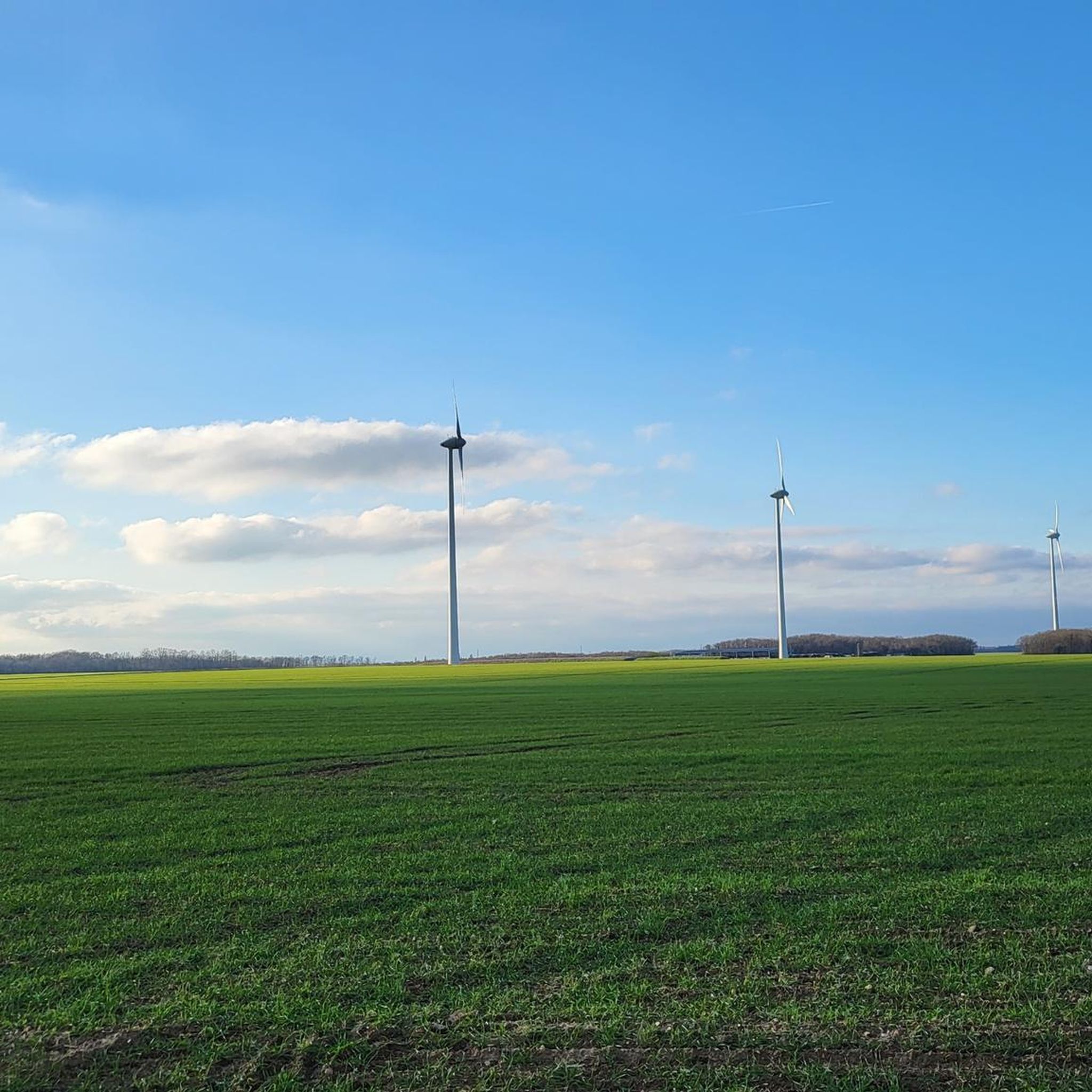
Road cycling routes around Le Boullay-Thierry are set within the Eure-et-Loir department, offering diverse terrain from the flat plains of the Beauce to the undulating Perche hills. The region features picturesque landscapes, including tranquil sections along the River Eure. Cyclists can expect mostly paved surfaces, making the area well-suited for road bikes. The elevation changes are generally moderate, with hills under 200 meters.
Best road cycling routes around Le Boullay-Thierry
- The most popular road cycling route is Cocherelle Dolmen –…
Last updated: May 26, 2026
8
riders
59.1km
02:18
210m
210m
Moderate road ride. Good fitness required. Mostly well-paved surfaces and easy to ride.
3.0
(3)
7
riders
49.9km
01:57
190m
190m
Easy road ride. Great for any fitness level. Mostly well-paved surfaces and easy to ride.

Sign up for free
6
riders
83.9km
03:18
340m
340m
Moderate road ride. Good fitness required. Mostly well-paved surfaces and easy to ride.
3.0
(1)
5
riders
32.1km
01:19
200m
200m
Easy road ride. Great for any fitness level. Mostly well-paved surfaces and easy to ride.
5.0
(2)
5
riders
20.3km
00:50
130m
130m
Easy road ride. Great for any fitness level. Mostly well-paved surfaces and easy to ride.
Get access to more routes and recommendations from other explorers.
Sign up for free
Already have an account?
Our route recommendations are based on thousands of hikes, rides, and runs completed by other people on komoot.
Start today with a free account
Your next adventure awaits.
Login or Signup


Tips from the Community

Built in the 16th century, with a lovely crafted portal; ogival wooden vault, with sandboxes, as in Brittany.
0
0


The Moulin de Mormoulins is a watermill located on the Eure River in the hamlet of Mormoulins. This mill dates back to the 18th and 19th centuries and is a listed historical monument. You can admire the old stone building, the wooden wheel, and the canal that diverts water from the river as you pass in front of the mill. The mill is surrounded by green fields and trees, creating a peaceful and relaxing atmosphere.
0
0
There were once two parishes in Maintenon: "St. Nicholas," a parish serving the castle and its dependent houses. The church of St. Nicholas, adjoining the castle, now deconsecrated, still stands on Maintenon's main square. "St. Peter," a parish covered by the surveys in this table, is a current parish in the commune. In addition, there was a priory, founded in 1220 under the name of the Priory of Our Lady of Maintenon. The church of Saint-Pierre in Maintenon is mentioned at the beginning of the 12th century, but nothing appears to have survived from this period. Indeed, the Count of Montgomery, a Huguenot, passed through Maintenon in 1567 and ruined the church. In 1692, Madame de Maintenon rebuilt the church of Saint-Pierre, which had fallen into ruin and had become too small for a population that had grown from 700 to 1,100 with the arrival of labor for the construction of the aqueduct. However, there is no evidence that the new church was built on the site of the old one. The foundation stone of the new church of Saint-Pierre was laid on June 4, 1692, by the Vicar General. The blessing took place on July 17, 1694. Bishop Godet des Marais subsequently consecrated the building. In 1736, the large "Henriette" bell was blessed by Mr. Jean François DEREYROLES, parish priest, in the presence of "the Most High and Most Powerful Lord, Monsignor Jean Paul François de NOAILLES, Count of AYEN" and by "the Most High and Most Powerful Lady, Madame Henriette Louise DAGUESSEAU de FRESNE, Countess of AYEN." From 1805 to 1813, Duke Jean-Paul de NOAILLES and his wife refurnished and decorated the Saint-Pierre church (the woodwork, credenzas, and pews were redone). The church's embellishment continued until 1899. The church's architecture is unremarkable. However, it is listed as one of the few Baroque churches in the department. The choir is flanked on one side by a sacristy and on the other by a room called "the vault." This is because, until the 1990s, it contained the bodies of some members of the Noailles family, who were buried there in stacked boxes that are still visible, but disused. The organ, installed in the gallery, is no longer in use. It had been partially dismantled for a renovation that proved too expensive, and some of the pipes were stolen. During the 1939-1945 war, almost all of the old stained-glass windows were destroyed and replaced with modern ones, the work of a master glassmaker from the region: Victor Cot-Dezan.
0
0
According to tradition, the church choir covers the remains of an older building, possibly dating back to the 6th century, which was built to house the saint's body. According to current knowledge, the commune of Saint-Piat (Sanctus Piatus in Latin) officially appeared in 1087, mentioned in a charter of the Nottonville Priory (Eure-et-Loir), on which it depended. The current building was rebuilt during the time of Francis I, as suggested by the date 1535 engraved on two buttresses of the apse and the date 1542 engraved on a piece of wood from the vault. This is according to a study by the SAEL (Eure-et-Loir Archaeological Society). The three-sided apses, the dripstone towers (horizontal members projecting from a wall), and the sculpted roof structures are a testament to the importance of the reconstructions carried out in the department during the 16th century. The church of Saint-Piat is one of them. While the church has not been officially recognized, it nevertheless contains objects that have attracted attention both for their antiquity and quality, but not always for good reason. Their artistic value, far from attracting only religious or aesthetic interest, has also aroused a covetousness that, unfortunately, remains for some of them. Fortunately, those still in place are carefully cared for and offer the curious a story to discover, a beauty to slowly ponder as they progress toward the choir.
0
0

A short stroll through fields, suitable for a walk of about two hours for all levels, pleasant, but nothing more, quite "flat". The visit to the park and the castle of Maintenon deserve more attention than this walk.
0
0

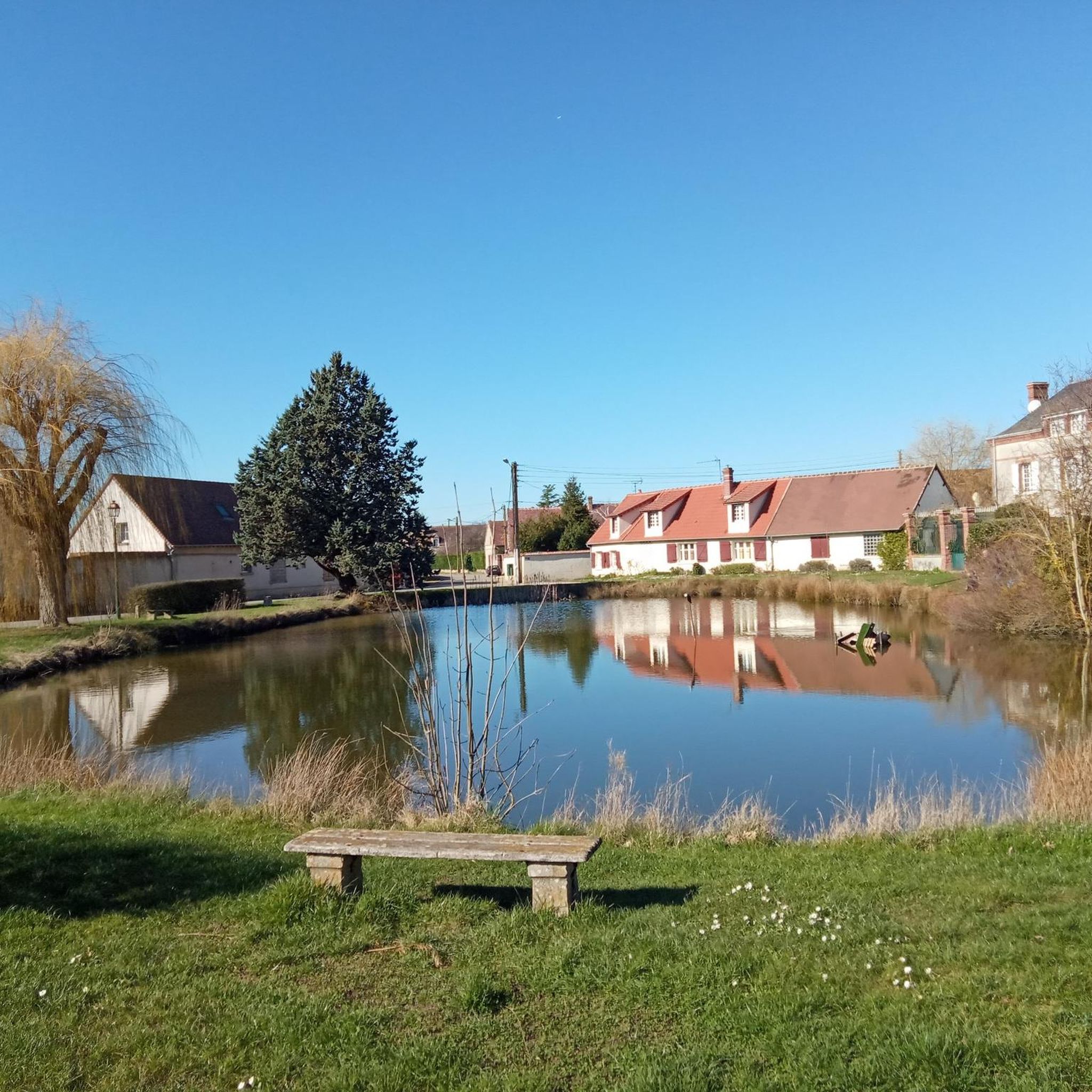
Very beautiful pond
0
0
Mentioned in 1159 as a possession of the chapter of Chartres, the oldest parts of the church of Saint-Léger, the nave and western façade, must date back to the 11th century. The nave, 15 m long and 7 m wide, is built from small rubble stones embedded in mortar. Only the corner quoins of the façade and the semicircular arch of the entrance door are made of dressed stone. In 1514, a larger choir (10 m X 10 m) finished by a flat wall, was added to the east. Some of its pointed arched bays have retained their beautiful tracery. The entire choir and nave are covered by a beautiful framework in the shape of an inverted hull. A significant decoration, created in the 18th century, woodwork, stalls, work bench, glory arch, lectern, and communion railing have been fortunately preserved. Traces of medieval wall paintings and a coat of arms were spotted on the walls, as well as ancient graffiti on the exterior. A 12th-century stone baptismal font and a 15th-century stone statue of Saint Léger are listed as Historic Monuments. A slate bell tower, topped with a slate spire, rises above the slightly recessed gable of the western façade. The Sauvegarde de l'Art Français (French Art Protection Agency) granted aid of 100,000 francs in 1992 and then 40,000 francs in 1993 for essential work on the framework and roof.
0
0
Frequently Asked Questions
How many road cycling routes are available around Le Boullay-Thierry?
There are over 150 road cycling routes available around Le Boullay-Thierry, offering a wide range of options for different skill levels. You'll find routes catering to both easy rides and more challenging ascents.
What kind of terrain can I expect when road cycling near Le Boullay-Thierry?
The region around Le Boullay-Thierry offers diverse terrain. You'll encounter the flat plains of the Beauce, as well as the undulating hills of the Perche, providing a mix of gentle stretches and more vigorous climbs. Routes often follow the tranquil banks of the River Eure, and surfaces are mostly paved, ideal for road bikes.
Are there any family-friendly road cycling routes in the area?
Yes, the area offers several easy routes suitable for families. For instance, the Avre Aqueduct – Cocherelle Dolmen loop from Villemeux-sur-Eure is an easy 31.0-mile (49.9 km) path that provides scenic views without excessive difficulty. Many routes feature moderate elevation changes, making them accessible for various fitness levels.
What historical landmarks or natural features can I see along the cycling routes?
Road cycling routes around Le Boullay-Thierry are rich in historical and natural sights. You can pass by the historic Château de Mormoulins, or explore the charming village of Le Boullay-Thierry itself, which features a 12th-century church and the 17th-century Château du Boullay-Thierry. The region also boasts picturesque landscapes, including a 'joli plan d'eau' (pretty body of water) within the village.
Are there any circular road cycling routes available?
Yes, many routes in the area are designed as loops. A popular option is the Cocherelle Dolmen – Avre Aqueduct loop from Villemeux-sur-Eure, a moderate 36.7-mile (59.1 km) trail that takes you past historical landmarks. Another easy loop is the Saint-Piat Mill – Château de Maintenon loop from Ormoy, leading through charming villages.
What is the best time of year for road cycling in Le Boullay-Thierry?
The Eure-et-Loir region generally offers pleasant cycling conditions from spring through early autumn. These seasons provide mild temperatures and vibrant landscapes, making for enjoyable rides. Always check local weather forecasts before heading out.
What do other road cyclists enjoy most about cycling in Le Boullay-Thierry?
The road cycling routes around Le Boullay-Thierry are highly rated by the komoot community, with an average score of 4.5 stars from over 30 reviews. Cyclists often praise the diverse terrain, from flat plains to rolling hills, and the scenic routes that showcase the natural beauty and cultural heritage of the Eure-et-Loir region.
Are there any longer, more challenging road cycling routes?
For those seeking a longer ride, the The Donjon of Gilles – Nonancourt, historic center loop from Le Boullay-Mivoye covers nearly 60 miles (97 km) and features more significant elevation changes, offering a moderate challenge for experienced road cyclists.
Can I find routes that are part of a larger cycling network?
Yes, a notable route in the vicinity is the Royal Eure Valley by bike, which forms a section of the longer La Véloscénie. This allows cyclists to explore the Drouette Valley and the royal Eure Valley, passing by significant landmarks like the grand Château de Maintenon. More information on regional cycling networks can be found on France Vélo Tourisme.
Are there any easy road cycling routes for beginners?
Absolutely. The area provides several easy routes perfect for beginners or those looking for a relaxed ride. The Château de Boullay-Thierry – Château de Mormoulins loop from Le Boullay-Thierry is a shorter, easy option at 13 miles (20.9 km), offering gentle terrain and scenic views of local châteaux.
Where can I find more information about cycling in the Eure-et-Loir department?
For broader information about cycling opportunities and networks within the Eure-et-Loir department, you can consult the local tourism resources. The Tourisme28 website provides details on various cycling paths and routes across the region.
Most popular attractions around Le Boullay-Thierry

Get inspired with the komoot mobile app


Explore more
Browse the best Road cycling routes in other regions.
