The best walks and hikes around Bœsenbiesen
4.5
(777)
3,332
hikers
159
hikes
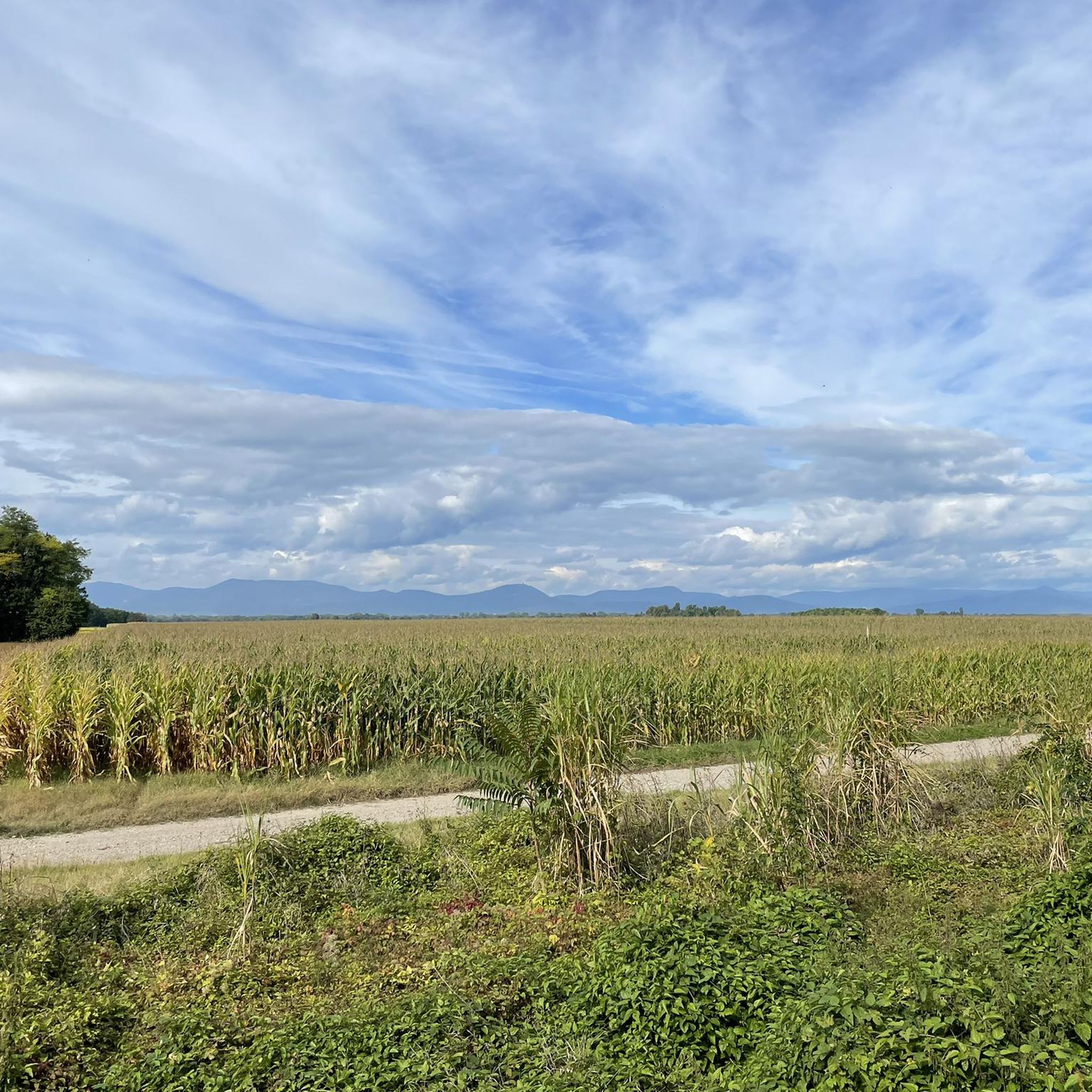
Hiking around Bœsenbiesen offers exploration within the diverse natural landscape of Alsace, France. The region is characterized by the expansive Plain of Alsace, featuring winding waterways such as the Canal Rhin-Rhône and the Taubergießen River, which is part of a significant nature reserve. This area provides access to extensive forests and the wide-open spaces of the Ried, creating a varied environment for outdoor activities. Its strategic location allows for easy access to diverse natural settings, including riverine landscapes and extensive trail networks.
Best hiking trails around Bœsenbiesen
- The most popular hiking route is Jewish Cemetery loop from Bootzheim, a 1.4 miles (2.3 km) trail that takes 34 minutes to complete. This easy route offers a short and accessible walk through the local landscape.
- Another top favourite among local hikers is The Ill near Ehnwihr – SensoRied loop from Muttersholtz, an easy 1.5 miles (2.4 km) path. This trail provides views of the Ill river and passes through the SensoRied nature area.
- Local hikers also love the SensoRied loop from Muttersholtz, a 4.2 miles (6.7 km) trail leading through the SensoRied nature reserve, often completed in about 1 hour 42 minutes.
- Hiking around Bœsenbiesen is defined by the waterways of the Rhine, the Taubergießen Nature Reserve, and the extensive forests of the Ried. The network offers options for different ability levels.
- The routes in Bœsenbiesen are highly rated by the komoot community with an average score of 4.5 stars from over 700 reviews. More than 3000 hikers have used komoot to explore Bœsenbiesen's varied terrain.
Last updated: June 4, 2026
4.5
(2)
12
hikers
8.88km
02:14
10m
10m
Moderate hike. Good fitness required. Easily-accessible paths. Suitable for all skill levels.
7
hikers
2.27km
00:35
0m
0m
Easy hike. Great for any fitness level. Easily-accessible paths. Suitable for all skill levels.

Sign up for free
2
hikers
6.74km
01:42
10m
10m
Easy hike. Great for any fitness level. Easily-accessible paths. Suitable for all skill levels.
5.0
(2)
2
hikers
8.11km
02:02
10m
10m
Moderate hike. Good fitness required. Easily-accessible paths. Suitable for all skill levels.
2
hikers
5.14km
01:18
10m
10m
Easy hike. Great for any fitness level. Easily-accessible paths. Suitable for all skill levels.
Get access to more routes and recommendations from other explorers.
Sign up for free
Already have an account?
Our route recommendations are based on thousands of hikes, rides, and runs completed by other people on komoot.
Start today with a free account
Your next adventure awaits.
Login or Signup
Tips from the Community


The Jewish cemetery in Mackenheim was established in the 16th century or earlier; it was first mentioned on September 25, 1608, in connection with a legal dispute over the use of the community forest. Regarding the location of the cemetery in a remote spot in the Rheinwald, the historian Günter Boll refers to a Torah saying, which states: “You shall not act as the other nations do: they bury their dead everywhere, and they even bury them in their houses. But you shall choose distant places in your land where you shall bury the dead; between four cities a place shall be chosen where the dead shall be buried.” The resting place was used for a long time as a central cemetery by several Jewish communities in the area. Jewish communities from the area east of the Rhine (especially Breisach until 1755) also brought their dead to Mackenheim. In the old part of the cemetery there are gravestones from 1669 to 1850. The new part of the cemetery has been used up to the present day. The inscription on the memorial stone erected in 2009 on the edge of the new part records the names of the members of the exterminated Jewish communities of Mackenheim and Marckolsheim who fell victim to the Nazi persecution of the Jews. The cemetery building and the cemetery have been listed as "monuments historiques" since 2001. Sources (and detailed further information): https://www.alemannia-judaica.de/mackenheim_cimetiere.htm • https://israelite.webcimetiere.net/67/Mackenheim • Günter Boll: Der jüdische Friedhof von Mackenheim im Unterelsass (2011) [https://d-nb.info/1261799666/34]
1
0

Video in French: https://youtu.be/V2kctHh3EiI Nestled in the municipal forest of Mackenheim, away from the village, this small Judengarten (“Jewish garden”) preserves moving steles, the oldest of which dates back to 1669. Some, with their rich floral decorations, are small heads -baroque works, others, more stripped down, evoke the concern for sobriety and humility specific to Jewish funeral rites. Until the middle of the 18th century, the site received the bodies of the deceased from the surrounding communes (on both banks of the Rhine), who did not have authorization to open a cemetery and the coffins were transported by boat. The oldest unearthed stele dates from 1669; it keeps the memory of Abraham ben Eléazar, buried on 3 Tamouz 429 of the small comput (July 2, 1669). From this first period, we still find the steles of Rabbi Jérémie, son of Rabbi Jeduha who, after having been president of the Tribunal Rabbinic and director of the Talmudic school in Gunzenhausen (Bavaria), became rabbi of the Jews of Haute-Alsace in 1684. He died in 1685 in the town of Saint-Louis les Breisach, an ephemeral city nicknamed "town of straw" where the Jews of Vieux Breisach had to settle down. Some ideas for deciphering the steles: http://israelite.webcimetiere.net/67/Mackenheim https://www.juedische-friedhoefe.info/friedhoefe-nach-regionen/frankreich/juedische-friedhoefe-im-elsass/mackenheim/der-juedische-friedhof-von-mackenheim.html#/4
0
0
Video in French: https://youtu.be/V2kctHh3EiI Nestled in the municipal forest of Mackenheim, away from the village, this small Judengarten (“Jewish garden”) preserves moving steles, the oldest of which dates back to 1669. Some, with their rich floral decorations, are small heads -baroque works, others, more stripped down, evoke the concern for sobriety and humility specific to Jewish funeral rites. Until the middle of the 18th century, the site received the bodies of the deceased from the surrounding municipalities (on both banks of the Rhine), who did not have authorization to open a cemetery and the coffins were transported by boat. The oldest unearthed stele dates from 1669; it keeps the memory of Abraham ben Eléazar, buried on 3 Tamouz 429 of the small comput (July 2, 1669). From this first period, we still find the steles of Rabbi Jérémie, son of Rabbi Jeduha who, after having been president of the Tribunal Rabbinic and director of the Talmudic school in Gunzenhausen (Bavaria), became rabbi of the Jews of Haute-Alsace in 1684. He died in 1685 in the town of Saint-Louis les Breisach, an ephemeral city nicknamed "town of straw" where the Jews of Vieux Breisach had to settle down. Some ideas for deciphering the steles: http://israelite.webcimetiere.net/67/Mackenheim https://www.juedische-friedhoefe.info/friedhoefe-nach-regionen/frankreich/juedische-friedhoefe-im-elsass/mackenheim/der-juedische-friedhof-von-mackenheim.html#/4
0
0
Video in French: https://youtu.be/V2kctHh3EiI Nestled in the municipal forest of Mackenheim, away from the village, this small Judengarten (“Jewish garden”) preserves moving steles, the oldest of which dates back to 1669. Some, with their rich floral decorations, are small heads -baroque works, others, more stripped down, evoke the concern for sobriety and humility specific to Jewish funeral rites. Until the middle of the 18th century, the site received the bodies of the deceased from the surrounding communes (on both banks of the Rhine), who did not have authorization to open a cemetery and the coffins were transported by boat. The oldest unearthed stele dates from 1669; it keeps the memory of Abraham ben Eléazar, buried on 3 Tamouz 429 of the small comput (July 2, 1669). From this first period, we still find the steles of Rabbi Jérémie, son of Rabbi Jeduha who, after having been president of the Tribunal Rabbinic and director of the Talmudic school in Gunzenhausen (Bavaria), became rabbi of the Jews of Haute-Alsace in 1684. He died in 1685 in the town of Saint-Louis les Breisach, an ephemeral city nicknamed "town of straw" where the Jews of Vieux Breisach had to settle down. The western part, the oldest, was originally an intercommunal cemetery where Jews from both banks of the Rhine, mainly from the town of Breisach, were buried (around thirty graves). In fact, the Jewish community of Breisach had to wait until 1755 to obtain authorization to open its cemetery; until this date, the deceased from this community were buried in the Mackenheim cemetery. This was also the case for the communities on the right bank of the Rhine: Biesheim, Riedwihr, Grussenheim, Marckolsheim, Muttersholtz, Diebolsheim... whose cemeteries were only authorized at the very beginning of the 19th century. Some ideas for deciphering the steles: http://israelite.webcimetiere.net/67/Mackenheim https://www.juedische-friedhoefe.info/friedhoefe-nach-regionen/frankreich/juedische-friedhoefe-im-elsass/mackenheim/der-juedische-friedhof-von-mackenheim.html#/4
1
0


This Jewish cemetery is completely hidden in the middle of the forest.
2
0

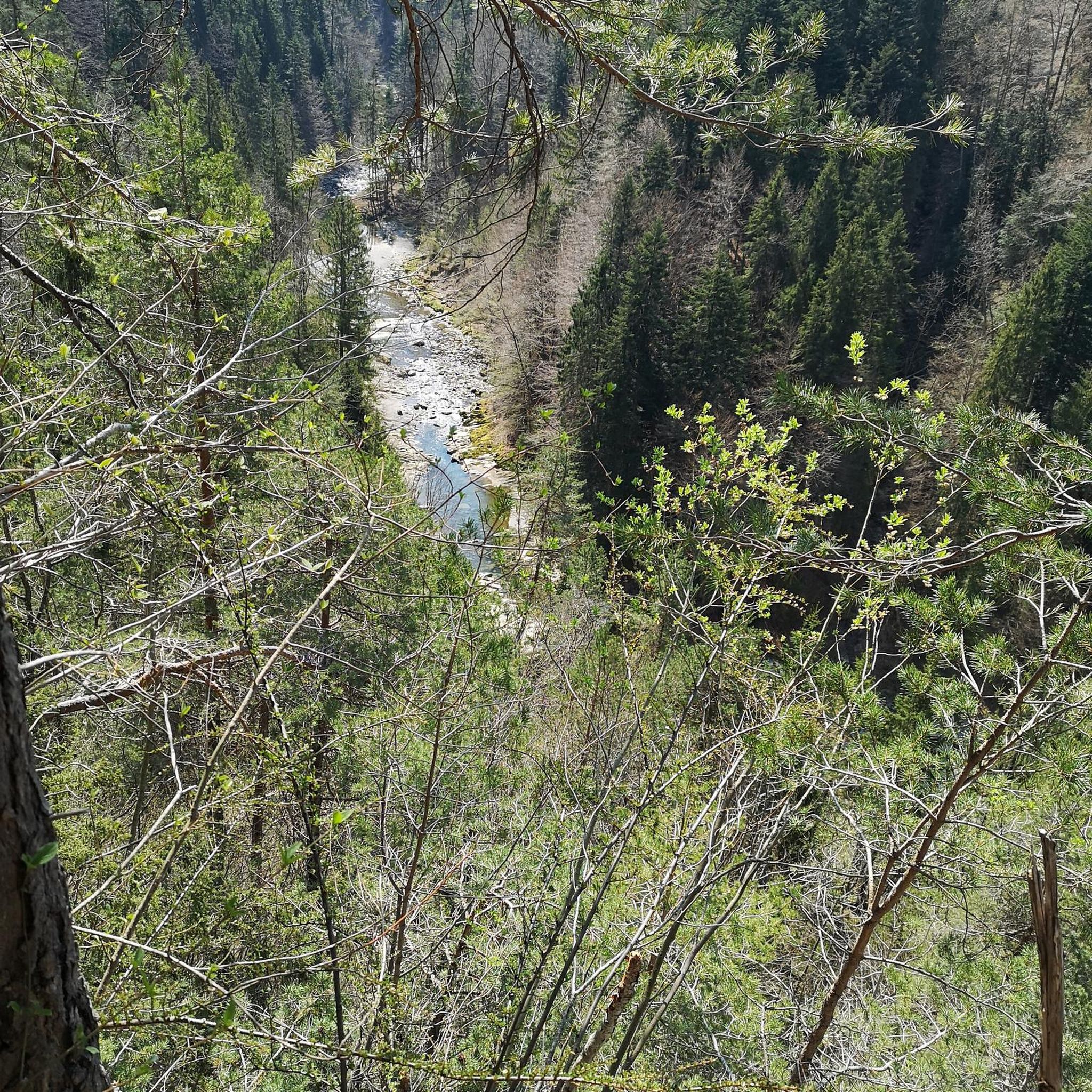
Beautiful landscape on the Ill near Ehnwihr. More information: https://de.wikipedia.org/wiki/Ehnwihr
1
0
Frequently Asked Questions
How many hiking trails are available around Bœsenbiesen?
There are over 150 hiking trails around Bœsenbiesen, catering to various skill levels. This includes more than 100 easy routes, 45 moderate trails, and a few challenging options for experienced hikers.
Are there any easy or beginner-friendly hikes in the Bœsenbiesen area?
Yes, Bœsenbiesen offers numerous easy hikes perfect for beginners or those seeking a relaxed stroll. For example, the Jewish Cemetery loop from Bootzheim is a short and accessible 1.4-mile trail. Another great option is The Ill near Ehnwihr – SensoRied loop from Muttersholtz, which offers pleasant views along the Ill river.
What kind of natural landscapes can I expect to see while hiking near Bœsenbiesen?
Hiking around Bœsenbiesen offers a diverse experience within the Plain of Alsace. You'll encounter winding waterways like the Canal Rhin-Rhône and the Taubergießen River, which is part of a significant nature reserve. The region also features extensive forests and the wide-open spaces of the Ried, providing a rich mosaic of natural beauty.
Are there any circular walks available in the Bœsenbiesen region?
Yes, many routes in the Bœsenbiesen area are designed as circular walks. For instance, the SensoRied loop from Muttersholtz is a popular 4.2-mile circular trail that takes you through the SensoRied nature reserve.
What are some interesting natural attractions or viewpoints to explore on a hike?
The region around Bœsenbiesen is rich in natural attractions. You can find scenic spots like the View of the Rhine weir, offering tranquil water views. The Fish Ladder at the Taubergießen Weir is another unique point of interest along the Taubergießen River, part of the large nature reserve.
Are there any challenging hikes for experienced trekkers?
While the majority of trails are easy to moderate, there are 3 routes classified as difficult for those seeking a greater challenge. These trails typically involve longer distances or more varied terrain, offering a more strenuous experience within the region's diverse landscapes.
What do other hikers say about the trails in Bœsenbiesen?
The hiking trails in Bœsenbiesen are highly regarded by the komoot community, with an average rating of 4.5 stars from over 700 reviews. Hikers often praise the diverse natural environment, from tranquil waterways to expansive forests, and the variety of routes suitable for different abilities.
Are the hiking trails around Bœsenbiesen suitable for families with children?
Many of the trails around Bœsenbiesen are family-friendly, especially the numerous easy routes. The flat terrain and well-maintained paths along waterways and through the Ried make them ideal for walks with children. Consider shorter loops like the Jewish Cemetery loop from Bootzheim for a pleasant family outing.
Can I bring my dog on the hiking trails in Bœsenbiesen?
Yes, the natural environment around Bœsenbiesen, with its extensive forests and open spaces, is generally welcoming for dogs. Most trails are suitable for walking with your canine companion, but always ensure your dog is under control and check for any specific local regulations or protected areas where leashes might be required.
What is the best time of year to go hiking in Bœsenbiesen?
The Plain of Alsace, where Bœsenbiesen is located, transforms with the seasons, offering unique hiking experiences year-round. Spring brings blooming flora, summer provides lush greenery along the waterways, and autumn showcases vibrant colors in the forests. Even winter can offer serene, crisp walks, though some paths might be muddy or require appropriate footwear.
Are there any longer, moderate hikes available?
Yes, for those looking for a longer walk, there are 45 moderate trails. An example is the Baldenheim–Mussig Farmland loop from Baldenheim, an 8.1-mile route that takes you through the local farmland and offers a good balance of distance and scenery.
Where can I find amenities like cafes or accommodation near the hiking trails?
While Bœsenbiesen itself is a smaller locality, nearby towns like Sélestat and Marckolsheim offer a wider range of amenities, including cafes, restaurants, and accommodation options. Many trails are accessible from these areas, allowing you to combine your hike with local refreshments or an overnight stay.
Are there any trails that follow canals or rivers?
Absolutely. The region is characterized by its waterways. You can find pleasant trails along the Canal Rhin-Rhône, such as the Path Along the Rhône-Rhine Canal. The Taubergießen River also offers trails through its significant nature reserve, providing opportunities to experience diverse flora and fauna.
Most popular routes around Bœsenbiesen
Most popular attractions around Bœsenbiesen

Get inspired with the komoot mobile app


Explore more
Browse the best Hikes in other regions.
