Attractions and Places To See around Soumont-Saint-Quentin - Top 10
Best attractions and places to see around Soumont-Saint-Quentin include a mix of historical sites, cultural landmarks, and natural features. This commune in Normandy, France, is characterized by its tranquil rural setting and verdant landscapes. Visitors can explore ancient churches, former mining complexes, and megalithic standing stones. The area also offers natural sites like protected valleys and scenic promontories.
Best attractions and places to see around Soumont-Saint-Quentin
- The most popular attractions is Devil's Gap, a natural area known for its…
Last updated: July 16, 2026
William the Conqueror's Castle
Highlight • Castle
Translated by Google •
Tip by

Porte des Cordeliers
Highlight • Monument
Translated by Google •
Tip by

Sign up now to discover places like this
Get recommendations on the best single tracks, peaks, & plenty of other exciting outdoor places.
Sign up for free
Tomb of Marie Joly
Highlight • Monument
Translated by Google •
Tip by
Devil's Gap
Highlight • Other
Translated by Google •
Tip by
Château de La Fresnaye
Highlight • Castle
Translated by Google •
Tip by
Sign up for free to discover even more attractions around Soumont-Saint-Quentin.
Sign up for free
Already have an account?
Start today with a free account
Your next adventure awaits.
Login or Signup




Tips from the Community

Please note that to enjoy this must-see, plan a hike between 2:30 p.m. and 6:00 p.m. only on Sundays in season.
0
0


Be careful, part of the route is no longer accessible because of a private road (fence), which requires you to turn around. Very pretty route but very quickly muddy in wet weather.
0
0

Ancient fortifications which protected the town of Falaise, mainly known as the birthplace of William the Conqueror. Very beautiful and impressive building!
0
0
Castle at Falaise, which is best known for being the birthplace of William the Conqueror
0
0

The Porte des Cordeliers is a medieval gate and one of the remains of the fortified enclosure which surrounded the town of Falaise, birthplace of William the Conqueror. The gate was built in the 13th century and was guarded by Franciscan monks, also known as Cordeliers. You can admire the architecture of the gate and its neighboring tower, as well as the view of the countryside and the Château de Falaise.
2
0

The house was built around 1750. At that time, a beautiful English park with gardens was created. It no longer exists today, but the green space that one crosses to access the house is still a peaceful part of nature to enjoy.
2
0
Frequently Asked Questions
What historical sites can I explore around Soumont-Saint-Quentin?
The region is rich in history. You can visit the impressive William the Conqueror's Castle, a site of significant historical importance as his birthplace. Another notable historical landmark is the Porte des Cordeliers, a medieval gate that was part of Falaise's fortified enclosure. Additionally, explore the Gothic architecture of the Église Saint-Quentin, the 17th-century Chapelle de Saint-Quentin de la Roche, and the late 12th-century Église d'Aizy, all showcasing the area's rich past.
Are there any natural attractions or scenic viewpoints in the area?
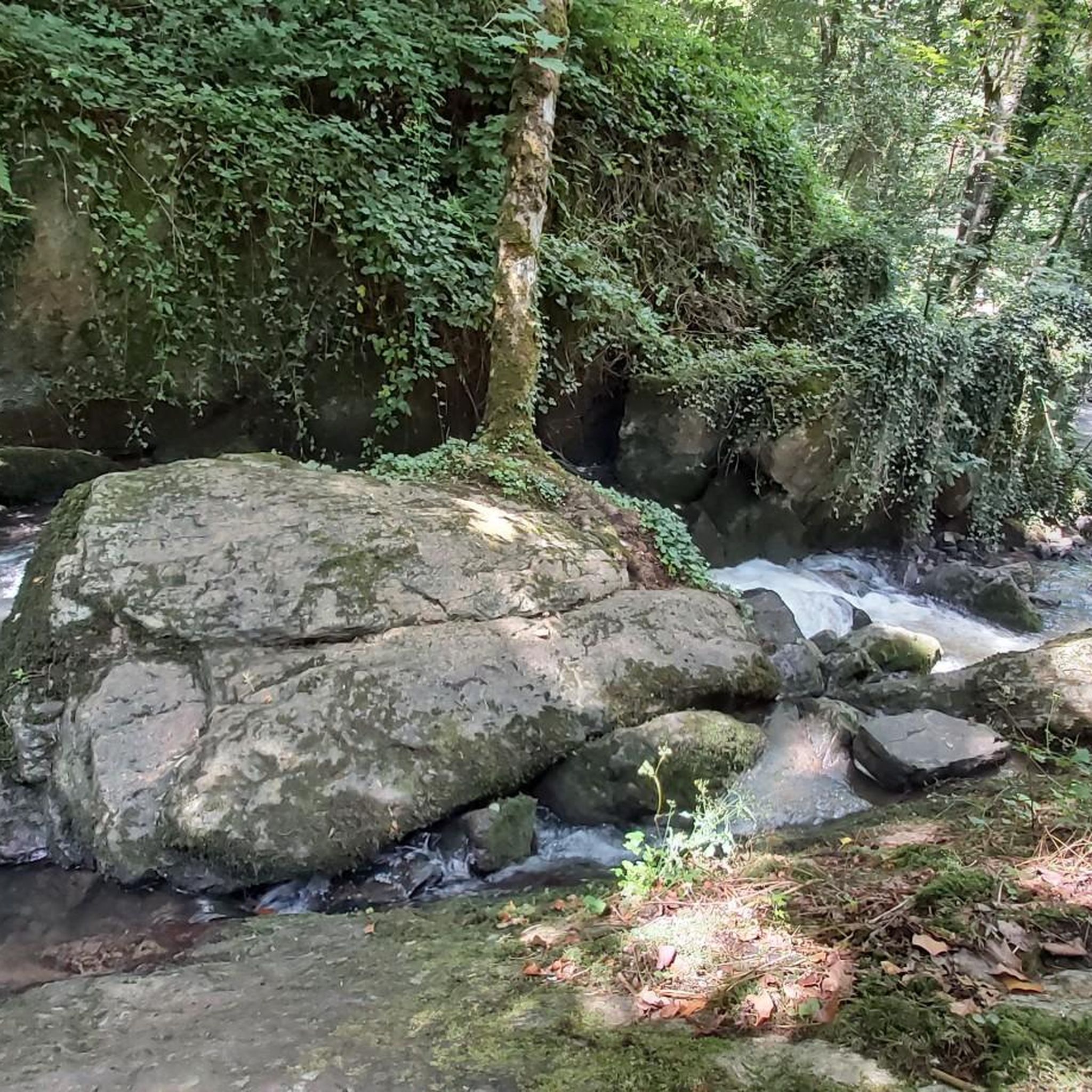
Absolutely. The most prominent natural attraction is Devil's Gap (La Brèche au Diable), a protected natural area at the base of Mont-Joly. It features a shaded forest, a distinctive waterfall, and unique rock formations along the Laizon river. Mont Joly itself offers scenic vistas over the Laizon gorges. You can also find ancient stone polishers, known as Polissoirs de Poussendre, within the Devil's Gap site.
What outdoor activities can I do near these attractions?
The area's wild and unspoiled nature makes it ideal for outdoor activities. You can find various routes for running, road cycling, and general cycling. For instance, there are several running loops around Devil's Gap, and cycling routes that take you past historical sites like the Porte des Cordeliers and Château de La Fresnaye. Explore more options on the Running Trails around Soumont-Saint-Quentin, Road Cycling Routes around Soumont-Saint-Quentin, and Cycling around Soumont-Saint-Quentin guide pages.
Are there any family-friendly attractions around Soumont-Saint-Quentin?
Yes, several attractions are suitable for families. William the Conqueror's Castle offers an engaging historical experience, combining reconstructed ruins with original elements. The Porte des Cordeliers, a medieval gate, is also considered family-friendly, allowing visitors to explore ancient fortifications. The natural setting of Devil's Gap provides opportunities for walks and enjoying nature with children.
What are some lesser-known historical gems in the region?
Beyond the main highlights, you can discover several intriguing historical gems. The Trois menhirs dits Menhirs des Longrais are megalithic standing stones designated as historical monuments. You can also visit the Anciens Grands Bureaux de la Mine, imposing red brick buildings that served as the headquarters for the Soumont Mine until its closure in 1989, and the nearby Le Carreau d'Aisy and Carreau de Soumont, which mark parts of the former mining complex.
Can I find any ancient religious sites in Soumont-Saint-Quentin?
Yes, the commune features several ancient religious sites. The Église Saint-Quentin in the village center boasts Gothic architecture with Romanesque elements dating back to the late 12th century. The Chapelle de Saint-Quentin de la Roche, a 17th-century chapel on Mont Joly, was historically a pilgrimage destination. Additionally, the Église d'Aizy, with its late 12th-century design, is a classified historical monument.
What is the Tomb of Marie Joly?
The Tomb of Marie Joly is an 18th-century tomb located at the edge of the Mont-Joly promontory. Marie Joly was a renowned actress who passed away in 1798. Her tomb is a classified historical monument and is often visited as part of a hike, offering a poignant historical stop.
What do visitors enjoy most about the attractions around Soumont-Saint-Quentin?
Visitors particularly appreciate the blend of historical depth and natural beauty. For instance, the William the Conqueror's Castle is highly recommended for its well-done reconstruction that helps visualize its past. The Devil's Gap is praised for its relaxing atmosphere and scenic valley walks. The overall tranquility and unspoiled nature of the region are also frequently highlighted.
Is there a castle other than William the Conqueror's Castle nearby?
Yes, you can also visit the Château de La Fresnaye. Built in the 17th century and transformed in the 18th, this castle is located in Falaise. While its beautiful English park no longer exists, the surrounding green space still offers a peaceful natural setting to enjoy.
Can I learn about the mining history of Soumont-Saint-Quentin?
Yes, the region has a significant mining past. You can explore the Anciens Grands Bureaux de la Mine, the former headquarters of the Soumont Mine, which operated until 1989. The inscription 'Mine de Soumont' is still visible on the facade. Nearby, Le Carreau d'Aisy marks the location of the mine's central shaft, a massive excavation crucial for transporting iron ore, and the Carreau de Soumont represents another key part of the former mining complex.
Are there any unique archaeological features to see?
Beyond the megalithic standing stones, the area around Devil's Gap also features ancient rock shelters and flint polishers ('abri sous roche et polissoirs à silex'), offering a glimpse into prehistoric human activity in the region.
Most popular routes around Soumont-Saint-Quentin

Get inspired with the komoot mobile app


Explore more
Still not found the Highlight you’re looking for? See guides of the top attractions in other regions:
