The best road cycling routes around Pfalzburg
4.3
(143)
3,440
riders
17
rides
Road cycling routes around Pfalzburg are situated on the western slopes of the Vosges Mountains in northeastern France. The region offers varied terrain, from rolling hills to more challenging climbs, with mostly well-paved surfaces suitable for road biking. It is part of a low-mountain region, providing access to extensive woods and natural park areas. This landscape features diverse elevation changes and scenic views.
Best road cycling routes around Pfalzburg
- The most popular road cycling route is Port of Lutzelbourg –…
Last updated: May 25, 2026
5.0
(1)
41
riders
52.1km
02:53
890m
890m
Moderate road ride. Good fitness required. Mostly well-paved surfaces and easy to ride.
5.0
(1)
16
riders
55.2km
02:49
760m
760m
Moderate road ride. Good fitness required. Some segments of this route may be unpaved and difficult to ride.

Sign up for free
10
riders
40.0km
01:46
340m
340m
Moderate road ride. Good fitness required. Mostly well-paved surfaces and easy to ride.
15
riders
48.9km
02:27
680m
680m
Moderate road ride. Good fitness required. Some segments of this route may be unpaved and difficult to ride.
5.0
(1)
20
riders
58.1km
02:29
410m
410m
Moderate road ride. Good fitness required. Mostly well-paved surfaces and easy to ride.
Get access to more routes and recommendations from other explorers.
Sign up for free
Already have an account?
Our route recommendations are based on thousands of hikes, rides, and runs completed by other people on komoot.
Start today with a free account
Your next adventure awaits.
Login or Signup

Other adventures around Pfalzburg

Tips from the Community

This lock is precision work. Shortly afterward, it's best to cross to the opposite side of the canal to safely backtrack a bit and view the boat lift from below. This way, you can avoid the road.
0
0

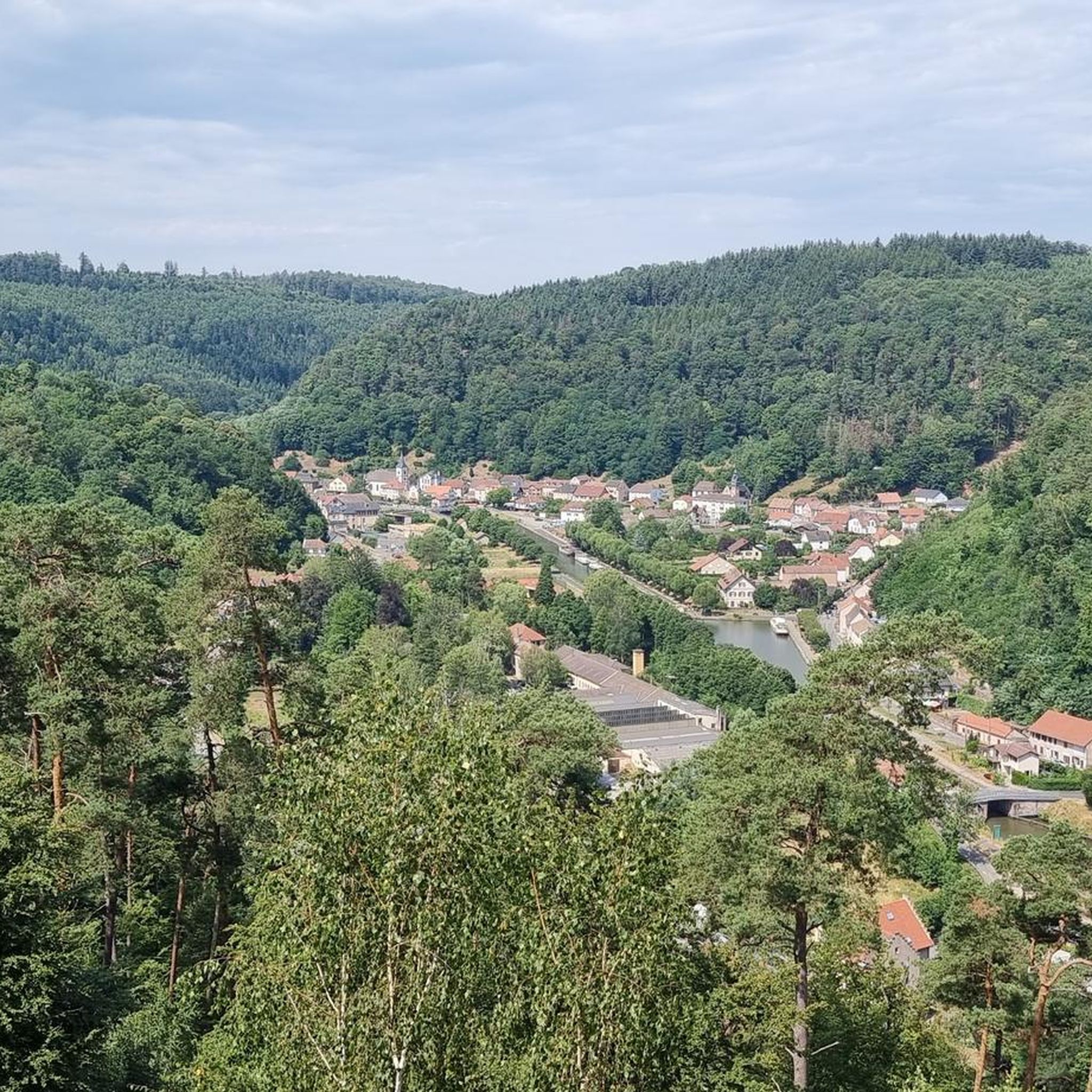
A very beautiful cycle path along an impressive monument to the history of technology. To overcome the difference in elevation, 17 locks were built into the canal. Each of these 17 locks had its own lockkeeper. The charming lockkeeper's houses that line the canal give an idea of the comfortable, prosperous lives the lockkeepers led.
0
0
Saverne was already a Roman military post in the 4th century. From the 15th century until the French Revolution, Saverne was the residence of the powerful bishops of Strasbourg. The Château de Rohan, which boasts the longest neoclassical façade of any building in France, still bears witness to this.
1
0

Georges Mouton was a French general under Napoleon and lived from 1770-1838.
0
0
Memorial to the fallen of the war of 1870 and the First World War.
0
0


Lock for ships still in operation
0
0

Sights: The former abbey church of St. Peter and Paul, founded around 720, belonged to one of the oldest monasteries on the Upper Rhine. In its early years, this was led by Saint Pirminius, among others. The church is one of the most artistically valuable and stylistically diverse in Alsace. It has a Carolingian crypt (8th century), Romanesque chapels (11th century), a choir and a transept in the transitional style to Gothic (late 12th century), a purely Gothic nave (13th century) and a classicist façade with a tower (1768). The remains of the monastery building (chapter house, one wing of the cloister) are of Gothic style (13th century). The furnishings are very rich (medieval gravestones and the Adelphus carpets from around 1470 with depictions of the life and miraculous work of St. Adelphus of Metz in the chapels; baptismal font, pulpit, Adelphus shrine, organ, Holy Sepulchre in the nave). The portals and rose windows are also remarkably designed and decorated. Archaeological remains of other buildings of the monastery complex can be seen to the north of the church. The now Protestant church of St. Adelphus was built between 1200 and 1225 in the transitional style from Romanesque to Gothic. It impresses with its powerful west facade and its simple interior. The choir of the church, which until then contained the reliquary and the Adelphus carpets depicting the life of St. Adelphus of Metz, was demolished in the 19th century and replaced by a flat wall. The Herrenstein Castle (ruin) was built at the beginning of the 13th century by the Counts of Dagsburg. In the 16th century it was converted into a fortress by the Alsatian military architect Daniel Specklin. Former synagogue, built in 1875, and Jewish cemetery, established in 1877
2
0
Frequently Asked Questions
What kind of terrain can I expect on road cycling routes around Pfalzburg?
Pfalzburg is situated on the western slopes of the Vosges Mountains, offering varied terrain from rolling hills to more challenging climbs. You'll find mostly well-paved surfaces, ideal for road biking, with routes winding through extensive woods and natural park areas, providing diverse elevation changes and scenic views.
Are there road cycling routes suitable for beginners or those seeking an easier ride?
Yes, Pfalzburg offers routes for various fitness levels. For an easier ride with moderate elevation changes, consider the Port of Lutzelbourg – Papar Hasard Creperie loop from Phalsbourg. This 29.7 km path is rated as easy and is suitable for those new to road cycling or looking for a more relaxed experience.
What historical landmarks can I see along the road cycling routes near Pfalzburg?
Many routes pass by significant historical sites. You can encounter fortifications of Vauban, such as the Porte de France and Porte d'Allemagne. The Haut-Barr Castle, a large castle ruin, offers panoramic views over the Vosges and Rhine Valley. Additionally, the Old Lock Staircase and Lock Keeper's House along the old canal provide a glimpse into the region's past.
Are there any scenic viewpoints or natural features to look out for while cycling?
Absolutely. The region is part of the Vosges du Nord Regional Natural Park and the Palatinate Forest-North Vosges Biosphere Reserve, known for its scenic views, extensive woods, and distinctive pink sandstone formations. The Valley of the Lock Keepers cycle path along the Marne-Rhine Canal is particularly picturesque, dotted with disused locks and charming old lock-keepers' houses. You might also spot impressive sandstone formations like the Rocher du Corbeau (Krappenfels) near Lutzelbourg.
What do other road cyclists enjoy most about road cycling in Pfalzburg?
The road cycling routes in Pfalzburg are highly rated by the komoot community, with an average score of 4.2 stars from 7 reviews. Cyclists often praise the diverse terrain, from challenging climbs to easier paths, and the well-maintained roads that wind through both natural beauty and historical sites. The region's blend of scenic Vosges foothills and cultural landmarks makes for a rewarding experience.
Can I find loop routes for road cycling in Pfalzburg?
Yes, many of the road cycling routes around Pfalzburg are designed as loops, allowing you to start and end in the same location. For example, the La Petite-Pierre – Saverne loop from Phalsbourg is a popular choice, covering 55.2 km through varied terrain.
Are there any road cycling routes that pass by unique natural monuments or caves?
Yes, some routes offer access to unique natural features. For instance, the area features highlights like the Brotsch Cave and the Grotte d'Amour, both natural monuments that add an interesting dimension to your ride. You might also encounter the Prince Charles' Leap Rock.
What is the best time of year for road cycling in Pfalzburg?
The region is generally pleasant for road cycling from spring through autumn. Spring brings fresh greenery, while autumn offers vibrant foliage. Summer provides warm weather, but it's always advisable to check local weather conditions, especially in the low-mountain region of the Vosges, as conditions can vary.
Are there any road cycling routes that include interesting villages or settlements?
Yes, routes often connect to charming local settlements. For example, the La Petite Pierre – Graufthal Troglodyte Caves loop from Phalsbourg takes you past La Petite-Pierre, a notable settlement, and the unique Graufthal Troglodyte Houses.
How many road cycling routes are available around Pfalzburg?
There are over 20 road cycling routes available around Pfalzburg, catering to various skill levels. This includes 1 easy route, 18 moderate routes, and 2 difficult routes, ensuring options for everyone from beginners to experienced cyclists.
Are there any routes that feature canals or waterways?
Yes, the region is known for its picturesque waterways. The Valley of the Lock Keepers, an 8.5-kilometer cycle path along the Marne-Rhine Canal, is a highlight. You can also find routes like the Port of Lutzelbourg – St. Louis boat lift loop from Phalsbourg, which incorporates canal-side riding and historical engineering marvels.
Most popular attractions around Pfalzburg

Get inspired with the komoot mobile app


Explore more
Browse the best Road cycling routes in other regions.
