Attractions and Places To See around La Landec - Top 20
Best attractions and places to see around La Landec include a variety of notable landmarks, natural features, and cultural sites within the Côtes-d'Armor department of Brittany, France. The region is characterized by its diverse coastline, freshwater features, and historic towns. Many points of interest are located a short distance from La Landec, particularly in the nearby medieval town of Dinan. This area offers opportunities to explore historical architecture and scenic landscapes.
Best attractions and places to see around La Landec
…Last updated: August 2, 2026
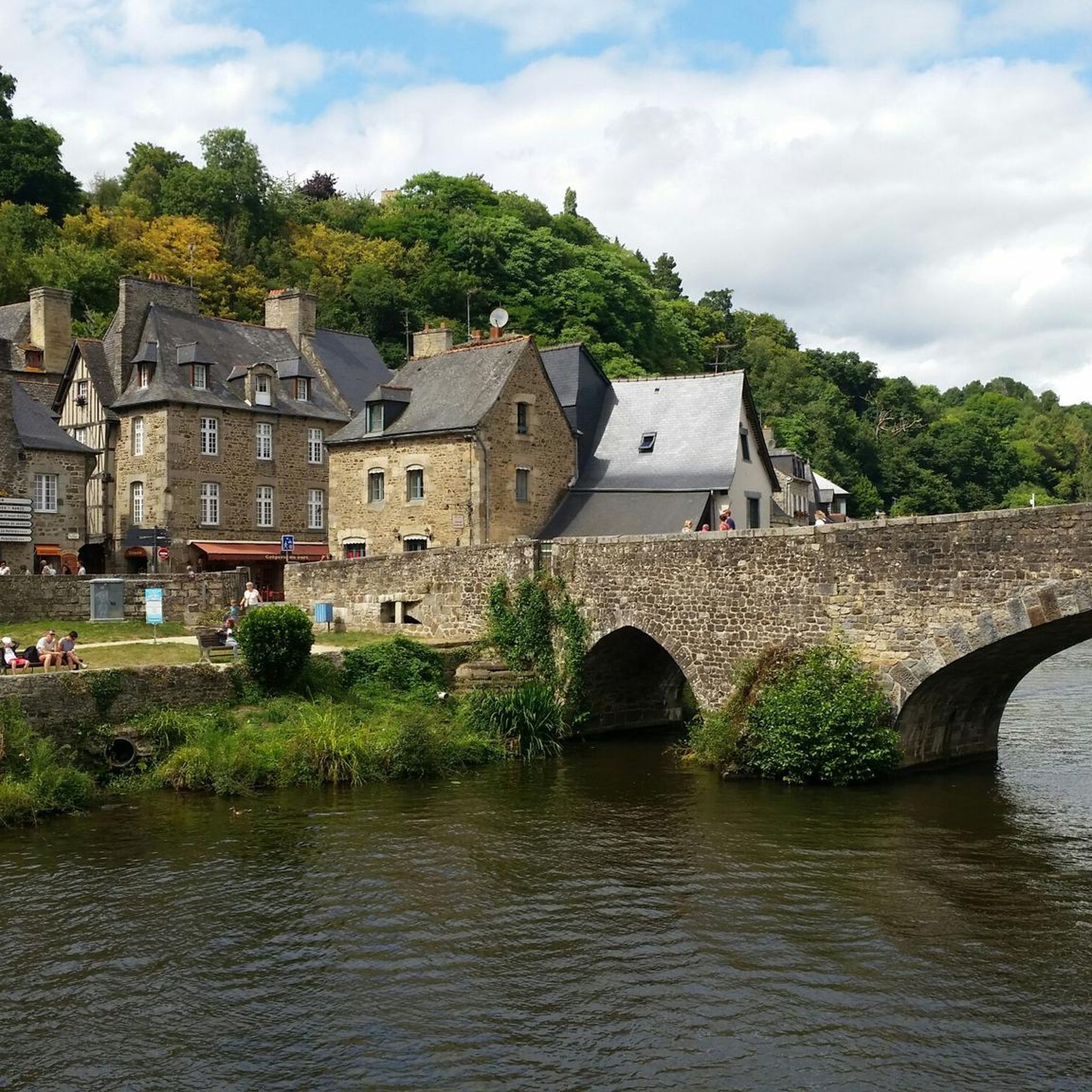
The Port of Dinan
Highlight • Settlement
Tip by

Dinan
Highlight • Other
Translated by Google •
Tip by

Sign up now to discover places like this
Get recommendations on the best single tracks, peaks, & plenty of other exciting outdoor places.
Sign up for free
Saint-Sauveur Basilica
Highlight • Other
Translated by Google •
Tip by
Saint-Malo Church, Dinan
Highlight • Religious Site
Translated by Google •
Tip by
Dinan Ramparts
Highlight • Other
Showing Translation
Tip by
Sign up for free to discover even more attractions around La Landec.
Sign up for free
Already have an account?
Start today with a free account
Your next adventure awaits.
Login or Signup
Tips from the Community

From the popular piety of earlier centuries, it was part of life in Brittany that everyone who could in any way do so undertook a great pilgrimage to the seven cathedrals of Brittany, the so-called “founding saints”. This was called “Tro Breiz” (Tour through Brittany) in Breton. Estimates suggest that in the 14th century, up to 40,000 people had to cover a distance of almost 700 kilometers for this purpose. It is said that if one did not complete the Tro Breiz during their lifetime, the pilgrimage would be continued, if necessary, in the coffin. Some years before the turn of the millennium, the “Tro Breiz” – albeit in a different form – was revived. In the modern variant, the route is spread over seven years, with one of the pilgrimage destinations visited each year. The prominent seven saints are: + Saint Maclovius: Founder of the diocese of Saint-Malo and patron saint of the city. + Saint Samson: Founder of the diocese of Dol-de-Bretagne and one of the most famous Breton saints. + Saint Briocus: Founder of the diocese of Saint-Brieuc and its monastery. + Saint Tugdual: Founder of the diocese of Tréguier and one of the most important saints in Breton history. + Saint Paul-Aurelianus: Founder of the diocese of Saint-Pol-de-Léon and an important missionary. + Saint Corentin: Founder of the diocese of Quimper and one of the most important Breton saints. + Saint Hervé: A saint of Brittany mentioned in the Vita Hervei.
2
1

The city walls are among the most impressive medieval fortifications in Brittany. Their origins date back to the Middle Ages; over the centuries, they were expanded and strengthened to protect the strategically important trading town on the Rance. The almost completely preserved complex includes several towers, gates, and a walkable rampart. With a length of around three kilometers, it still encloses large parts of the historic old town today.
11
0

Dinan is almost completely surrounded by a city wall that can be largely walked.
0
0
Very beautiful church. I especially liked the windows.
0
0

I was particularly impressed by the church windows.
0
0
Dinan was founded in the 11th century at a strategic location on the Rance River. It developed into a fortified trading and market town during the Middle Ages. In the 14th century, Dinan played an important role in the Hundred Years' War and was repeatedly contested. The town is known for its well-preserved medieval old town with half-timbered houses, city walls, and the Saint-Sauveur Basilica.
13
0
The Basilica of Saint-Sauveur was founded around 1112 and combines Romanesque and Gothic architecture. It is famous as the burial place of the hero Bertrand du Guesclin. It has been a historic monument since 1862 and was elevated to a minor basilica in 1954. Noteworthy are the Romanesque west portal, the Gothic chapels, and the relief of the Assumption of the Virgin Mary.
14
0
The Église Saint-Malo de Dinan is a late Gothic church in the historic center. Construction began around 1490 and continued into the 19th century. Built in the Flamboyant Gothic style, it is made of Breton granite and measures approximately 76.5 meters long, 44.1 meters wide, and 21 meters high. The choir rests on eight pillars, surrounded by side chapels with ornate gables. Particularly noteworthy are the early 20th-century stained-glass windows and the historic organ. The church is dedicated to Saint Malo and is one of the most important Gothic buildings in Brittany.
26
0
Frequently Asked Questions
What historical sites can I explore around La Landec?
The region around La Landec is rich in history, particularly the nearby medieval town of Dinan. You can visit the well-preserved Dinan Old Town, which features numerous half-timbered houses and defensive walls. Other significant historical sites include the Saint-Sauveur Basilica, known for its blend of Romanesque-Byzantine and Gothic styles, and the 15th-century Saint-Malo Church, Dinan. Just outside Dinan, the Saint-Magloire Abbey Church, Léhon, with its beautiful cloister, is also a notable historical landmark.
Are there family-friendly attractions near La Landec?
Yes, several attractions around La Landec are suitable for families. The Saint-Malo Church, Dinan and the Saint-Magloire Abbey Church, Léhon are both categorized as family-friendly. Exploring the medieval streets of Dinan Old Town and its picturesque Jerzual Street can also be an engaging experience for all ages.
What natural features can I discover in the area?
The Côtes-d'Armor department offers diverse natural beauty. You can explore the wild, unspoilt nature and breathtaking landscapes of Cap Fréhel, located about 29 km away. The Estuaire de la Rance, 21 km distant, is another significant natural site. The region also features various islets like Îlot de la Colombière and Îlots Notre-Dame et Chevret, as well as expansive coastal areas such as Baie de Lancieux and the archipel de Saint-Malo et Dinard.
What outdoor activities are available near La Landec?
The area around La Landec is excellent for outdoor activities. You can find numerous routes for cycling, hiking, and gravel biking. For example, there are moderate to difficult cycling routes like the 'Temple of Mars loop from Corseul' and the 'Port of Dinan loop from Dinan'. Hiking options include easy to moderate trails such as the 'Parc du Val Drouet loop from Trélivan' and the 'Aucaleuc church loop from Dinan'. You can find more details on these activities in the Cycling around La Landec, Hiking around La Landec, and Gravel biking around La Landec guides.
Are there any notable religious buildings to visit?
Yes, the region features several impressive religious buildings. In Dinan, you can visit the Saint-Sauveur Basilica, which houses the cenotaph of Bertrand Duguesclin, and the grand Saint-Malo Church, a fine example of Breton Gothic style. Nearby, the Saint-Magloire Abbey Church, Léhon, offers a beautiful cloister and often hosts exhibitions. Within La Landec itself, the Église Saint-Pierre et Sainte-Agnès is a local landmark.
What do visitors enjoy most about the attractions around La Landec?
Visitors particularly appreciate the historical charm and scenic beauty of the area. The medieval atmosphere of Dinan Old Town, with its half-timbered houses and fortified walls, is a highlight. Many enjoy walking along the ramparts and exploring the cobbled Jerzual Street. The architectural details of the Saint-Sauveur Basilica and the peaceful cloister of Saint-Magloire Abbey Church are also frequently praised.
Are there any picturesque streets or viewpoints worth seeing?
Absolutely. Jerzual Street in Dinan is renowned for its picturesque medieval charm, connecting the upper town to the port with its historic half-timbered houses. For viewpoints, the ramparts of Dinan Old Town offer lovely perspectives over the city and the Rance river. Additionally, the Château de Dinan provides imposing views across the town.
Where can I find local markets near La Landec?
Several nearby towns host vibrant local markets where you can experience local life and products. Dinan hosts a market on Thursdays, Plancoët on Saturdays, Broons on Wednesdays, and Saint-Jacut-de-la-Mer on Fridays. These markets are a great way to discover regional specialties and crafts.
Are there any gardens or floral displays to visit?
Yes, the Jardins de Montmarin, located about 18 km from La Landec, are remarkable gardens worth visiting. Additionally, several nearby towns are recognized for their beautiful floral displays as 'Villages in bloom' (Villes fleuries 4*), including Saint-Juvat, Saint-Malo, Le Rheu, Cesson-Sevigne, and Chartres-de-Bretagne.
What coastal areas or seaside resorts are accessible from La Landec?
The region offers access to various coastal areas and charming seaside resorts. You can visit Saint-Jacut-de-la-Mer, Saint-Briac-sur-Mer, Saint-Cast-le-Guildo, and Saint-Lunaire, all within a short drive (18-23 km). These towns provide coastal attractions and beaches, perfect for a day trip.
What is the best time to visit the attractions around La Landec?
The best time to visit is generally during the warmer months, from spring to early autumn (May to September), when the weather is pleasant for exploring historical towns, natural sites, and enjoying outdoor activities. During this period, gardens are in bloom, and coastal areas are particularly inviting. Local markets are also in full swing.
Most popular routes around La Landec
Most popular attractions around La Landec

Get inspired with the komoot mobile app


Explore more
Still not found the Highlight you’re looking for? See guides of the top attractions in other regions:
