The best cycling routes around Willer
4.5
(271)
2,499
riders
246
rides
Touring cycling routes around Willer traverse a landscape characterized by the Ill River, expansive wheat fields, and a mix of small villages. The region offers varied terrain, from mostly paved surfaces suitable for moderate rides to routes with unpaved segments and significant elevation gains. Altkirch's elevated position provides views towards the Vosges, while areas like Oltingen feature historical churches and cultural points of interest.
Best touring cycling routes around Willer
- The most popular touring cycling route is The Ill in…
Last updated: October 1, 2026
4.6
(5)
54
riders
22.9km
01:23
110m
120m
Easy bike ride. Great for any fitness level. Mostly paved surfaces. Suitable for all skill levels.
1.0
(1)
22
riders
36.5km
02:56
610m
610m
Hard bike ride. Very good fitness required. Mostly paved surfaces. Suitable for all skill levels.

5.0
(1)
12
riders
21.5km
01:20
180m
170m
Moderate bike ride. Good fitness required. Mostly paved surfaces. Suitable for all skill levels.
5.0
(1)
15
riders
Moderate bike ride. Good fitness required. Mostly paved surfaces. Suitable for all skill levels.
13
riders
20.1km
01:14
170m
170m
Moderate bike ride. Good fitness required. Mostly paved surfaces. Suitable for all skill levels.
Get access to more routes and recommendations from other explorers.
Already have an account?
Our route recommendations are based on thousands of hikes, rides, and runs completed by other people on komoot.
Start today with a free account
Your next adventure awaits.

Tips from the Community

Altkirch Altkirch is the historic capital of the Sundgau and lies on a striking rocky spur above the valley of the Ill. The town's origins date back to the Middle Ages. The Counts of Ferrette built Altkirch into a fortified town; from 1215 onwards, it was protected by town walls and towers. The characteristic layout, narrow streets, and remnants of the fortifications have been preserved from this medieval town plan to this day. Particularly worth seeing is the Vieille Porte, a former town gate from around 1245. For centuries, Altkirch was an important administrative and commercial center of the Sundgau. After the destructions of the Thirty Years' War, numerous buildings were newly erected. The representative town hall dates from the 18th century, built in 1778 according to plans by the Swabian architect Jean Nissler. In the 19th century, the town continued to develop: alongside its traditional importance as a market and trading place, industrial enterprises emerged, including the well-known Gilardoni brickworks. The 20th century also left its mark. After the First World War, Altkirch became part of the re-Frenchified Alsace. The memory of this period is evident, among other things, at the Vieille Porte, where a Borne Vauthier commemorates the former front line of 1918. The original Altkirch war memorial from 1927 was destroyed during the German occupation in the Second World War; preserved parts were later integrated into a new memorial. Today, Altkirch, with around 6,000 inhabitants, is an important center of the Sundgau. The historic upper town with its old houses, remnants of fortifications, the town hall, and the Sundgau Museum continues to shape the townscape. Source: Ville d’Altkirch – History of the town
0
0

Altkirch is definitely worth a visit. The small town in Sundgau boasts a diverse architectural heritage that reflects its medieval and religious history. The Priory of Saint-Morand, the church Notre-Dame, the old city walls, and various medieval ruins bear witness to this richness.
0
0

Typical village of Sundgau with its half-timbered houses which are becoming rare these days.
0
0

Small regional museum in a restored farmhouse in the centre of Oltingue. The museum shows the daily life of farmers in the Sundgau in the 19th and early 20th century. The collection includes utensils, tools, religious objects and furniture, spread over several rooms and an old barn. The original faience stove, a ‘Chunscht’ bench and a baroque outdoor pulpit are striking. Visits are possible from March to November, usually on Tuesdays, Thursdays, Saturdays and Sundays from 15:00 to 18:00.
10
0
The current parish church of Oltingue was built between 1827 and 1831 in late classicist style. Striking features include the triangular pediment above the round-arched portal and the Callinet organ from 1843, which is still in use. Together with the presbytery and the former school, the church forms a well-preserved village ensemble from the Louis-Philippe period. The church replaced an older mother church outside the village.
11
0
Oltingue is a quiet village in the Sundgau with a late-classical village ensemble around the church of Saint-Martin (1827–1831), the rectory and the former school. The Callinet organ (1843), the double staircase of the rectory and the facade details are striking. There are several historic houses in the village, including half-timbered houses from 1695 and a farm from the 16th century. To the east lies the chapel of Saint-Brice, a former place of pilgrimage with a baroque altar and an outdoor pulpit.
10
0
Small, flower-decorated highlight along the way
1
0

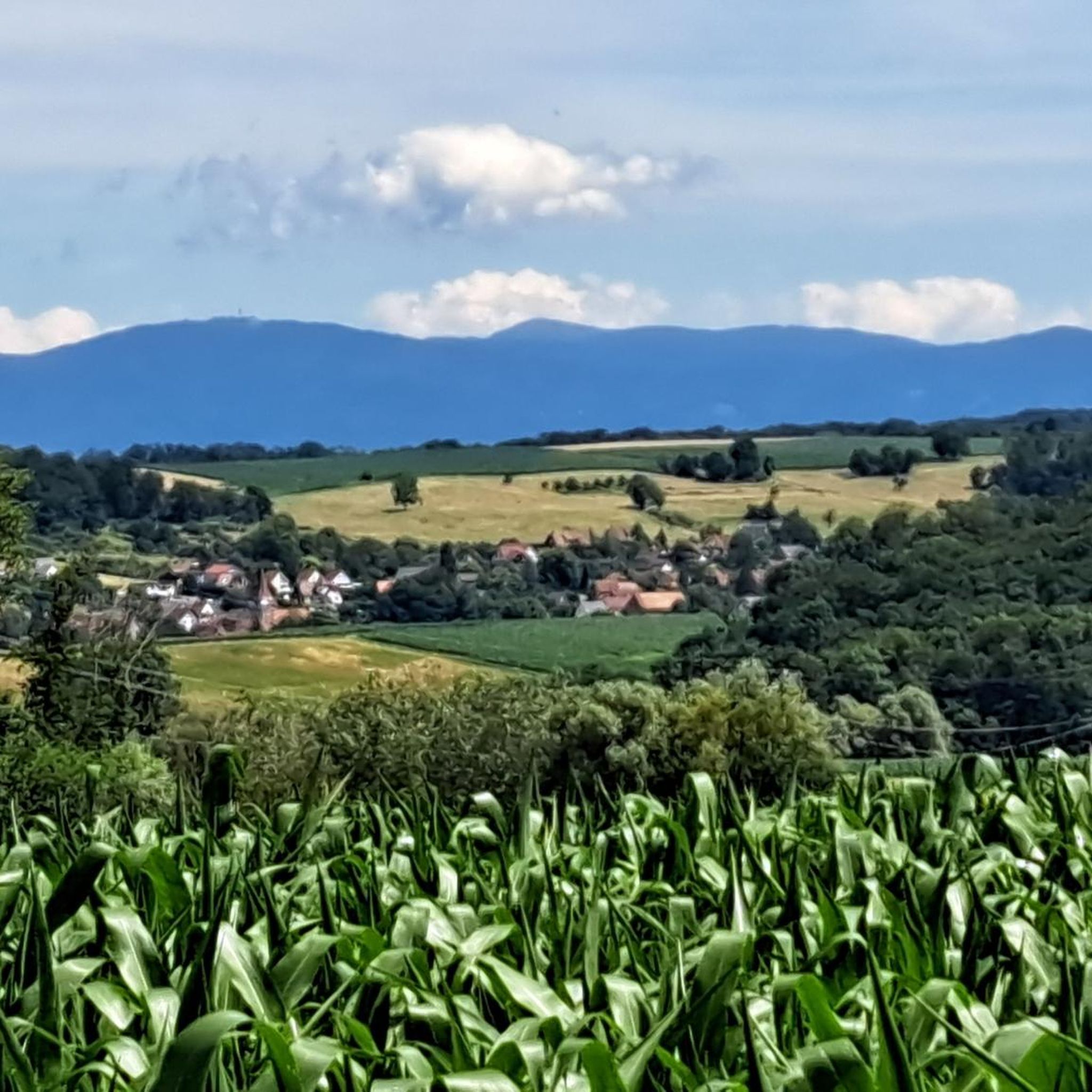
Altkirch forms a hub for cycling, where various routes converge. The route down from Folgensbourg. From the valley of Oltingen / Waldighoffen. Coming from Mulhouse / Illfurth as well as heading towards Dannemarie / Belfort. And finally from the north from the Vosges from the Cernay / Thann area. Furthermore, the Rhine-Rhone Canal passes nearby. Altkirch itself, situated on a hill, has retained the charm of many somewhat forgotten provincial towns with a past of industrialization. There are a few cafes as well as the view over the plain towards the Vosges.
0
0
Frequently Asked Questions
How many touring cycling routes are available around Willer?
There are over 250 touring cycling routes available around Willer, offering a wide variety of options for different skill levels and preferences.
What is the general difficulty level of touring cycling routes in Willer?
The routes around Willer offer a mix of difficulties. You'll find approximately 26 easy routes, 139 moderate routes, and 86 more challenging options, ensuring there's something for every touring cyclist.
What do other cyclists say about touring cycling in Willer?
The touring cycling routes in Willer are highly rated by the komoot community, with an average score of 4.5 stars from over 200 reviews. Cyclists often praise the varied terrain, charming villages, and scenic natural features like the Ill River and wheat fields.
What kind of terrain can I expect on touring cycling routes around Willer?
The terrain around Willer is quite varied. You can expect a mix of mostly paved surfaces, suitable for moderate rides, as well as routes with unpaved segments and significant elevation gains. The region features river valleys, agricultural landscapes, and rolling hills.
Are there any easy touring cycling routes suitable for beginners or families?
Yes, there are several easy routes perfect for beginners or families. For example, The Ill in Hirsingue – Porte de Belfort loop from Bettendorf is an easy 14-mile route that follows the Ill River, offering a gentle ride through scenic areas.
What natural features or landmarks can I see along the touring cycling routes?
While cycling around Willer, you can encounter various natural features and landmarks. Highlights include the Dwarves' Grotto, the impressive Le Gros Chêne de Sondersdorf, and the Loechle Rock viewpoint. The routes also often follow the scenic Ill River and pass through expansive wheat fields.
Are there any historical sites to explore while cycling?
Absolutely. The region is rich in history. You can cycle past the historic Motte Castrale de Willer, visit the beautiful St. Martin im Felde Church in Oltingue, or explore the impressive Ferrette Castle. Some routes, like Wheat Field Near Waldighoffen – Roman road loop from Waldighoffen, even incorporate ancient Roman roads.
Are there any circular touring cycling routes in the Willer area?
Yes, many touring cycling routes around Willer are designed as loops, allowing you to start and end in the same location. Examples include Bridge and fountain in Oltingen – Farm Museum loop from Waldighoffen, which takes you through charming villages, and Pretty village center 🏘 – Roman road loop from Hausgauen.
What are some longer touring cycling options for experienced riders?
For experienced riders seeking a longer and more challenging ride, consider routes with significant elevation gains. An example is The Ill in Hirsingue – Saint-Brice Chapel loop from Hausgauen, which is a difficult 22.7-mile route with over 600 meters of elevation gain.
What is the best time of year for touring cycling in Willer?
While specific seasonal data isn't provided, the varied terrain and agricultural landscapes suggest that spring, summer, and early autumn would be ideal. These seasons typically offer pleasant weather for exploring the region's villages, river paths, and wheat fields.
Can I find places to eat or drink along the cycling routes?
The region around Willer is dotted with small villages like Oltingen and Waldighoffen. These villages often feature local cafes, bakeries, or small restaurants where you can stop for refreshments. Altkirch, a larger hub, also offers more options for dining.
Is public transport available to access touring cycling routes in Willer?
Altkirch is noted as a cycling hub where various routes converge, suggesting it has good connectivity. While specific public transport details for Willer itself are not provided, larger towns in the vicinity like Altkirch likely offer public transport options that could facilitate access to the wider cycling network.
Where can I park my car when starting a touring cycling route?
Many touring cycling routes in the Willer area start from villages such as Waldighoffen, Bettendorf, or Hausgauen. These villages typically offer public parking facilities, often near community centers or local attractions, where you can leave your car before beginning your ride.
Most popular attractions around Willer

Get inspired with the komoot mobile app


Explore more
Browse the best Cycling routes in other regions.
