Attractions and Places To See around Saint-Hippolyte-Du-Fort - Top 20
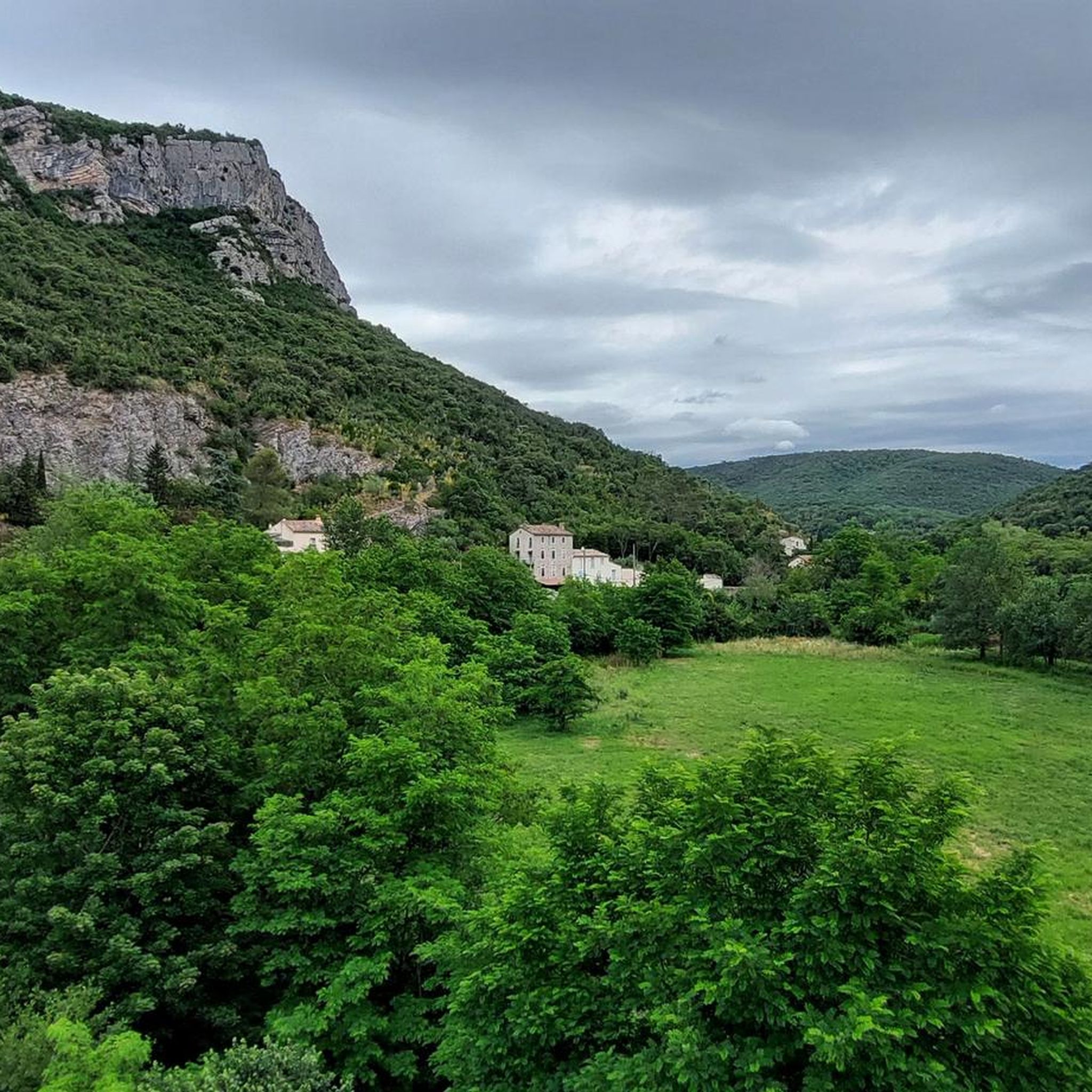
Best attractions and places to see around Saint-Hippolyte-Du-Fort are situated at the foothills of the Cévennes mountains, with the Vidourle River flowing through the town. This region offers a combination of historical landmarks, cultural sites, and natural features. Visitors can explore ancient fountains, historical buildings, and the largest Reformed Protestant temple in France. The area also provides access to the Vidourle River and the surrounding Cévennes landscape.
Best attractions and places to see around Saint-Hippolyte-Du-Fort
- The most popular attractions is Mer des Rochers, a rocky chaos where visitors can explore the ruins of the castle of Roquevaire. This location is known for its unique geological formations.
- Another must-see spot is Illuminated tunnel, a cycle way tunnel. This 250-meter-long tunnel provides a cool passage along a greenway.
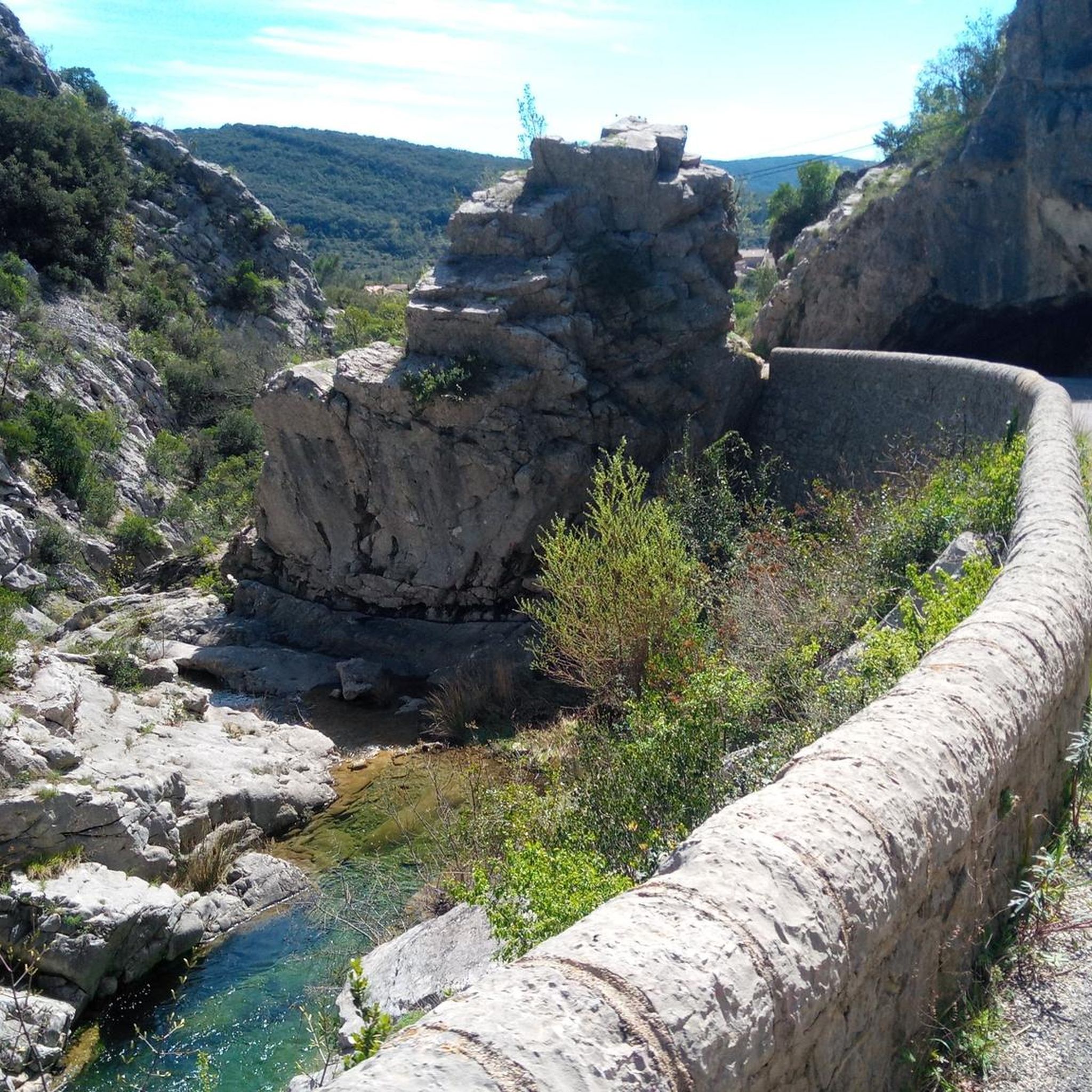
- Visitors also love View of the Gornies spring, a river with clear water. From a gravel track, visitors can access or view the Gornies spring.
- Saint-Hippolyte-Du-Fort is known for its historical architecture, natural landscapes, and cultural sites. The area offers a variety of attractions to see and explore, from ancient fountains to the Vidourle River.
- The attractions around Saint-Hippolyte-Du-Fort are appreciated by the komoot community, with 96 upvotes and 48 photos shared by visitors.
Last updated: September 25, 2026
Mer des Rochers
Highlight • Other
Translated by Google •
Tip by

View of the Gornies spring
Highlight • River
Translated by Google •
Tip by

Sign up now to discover places like this
Get recommendations on the best single tracks, peaks, & plenty of other exciting outdoor places.
Notre-Dame du Château Chapel
Highlight • Religious Site
The landscape is sublime, especially towards the cliff opposite.
Before, there was a rope that was used to ring the bell when we arrived, but it has disappeared since my last visit.
A clean place, and of course, a place to respect.
Translated by Google •
Tip by

Illuminated tunnel
Highlight (Segment) • Cycleway
Translated by Google •
Tip by

Aven of Sauve
Highlight • Cave
I was able to go down there several times.
Be careful, there is no barrier!
Watch where you put your feet, children and animals!
At the bottom is a cave that is not very big, with two parts.
First lower part, which overlooks a well, then where you have to crawl quite a bit to end up on "nothing".
On the other side, you fall quite quickly above a LAKE, with a height of about 15m.
The water from this LAKE flows into the Sauve resurgence, located at the bottom of the village, after the stone bridge, towards the children's park.
This one spits with all its power during the rains.
Translated by Google •
Tip by
Sign up for free to discover even more attractions around Saint-Hippolyte-Du-Fort.
Already have an account?
Start today with a free account
Your next adventure awaits.

Tips from the Community

A beautiful waterfall, even if it's not very active. However, when the nearby spring and vent get going, it can quickly become quite a waterfall! A lovely spot, but one that does present some dangers, especially if you have children. There's a safer path than others, which avoids walking along a very narrow cliff! The spring and vent, as well as the few caves nearby, are worth seeing, but be careful not to get too curious!
1
0

Many churches in France, including this chapel, are dedicated to the Virgin Mary under the widely used title "Notre-Dame" (in German: "Our Dear Lady"). A brief reflection on the Mother of God from Albino Luciani (Pope John Paul I): "Mary is truly our sister, as Saint Ambrose says. She lived a life very similar to ours. It is, of course, beautiful to venerate Mary as the Virgin and Mother of God, as the one conceived immaculately from original sin and assumed into heaven; but she is also the Madonna of plates, brooms, and cooking pots..." Visitors to this small but highly prominent Marian shrine can decide for themselves which "Notre-Dame" they wish to venerate here.
0
0

A pleasant hike in a karst landscape (for the initiated) but also imbued with a certain magic. The loop from the center of the village took us about two with a picnic among the rocks, in a place once planted with cherry trees and other fruit trees. Note the presence of an original sundial... in perfect working order! The sinkhole, at the beginning of the trail, is hardly visible because it is overgrown with vegetation. But the ruins of the castle for their part allow for beautiful photos. The trail is quite shaded regardless of the season, we did it in 28 degrees without any discomfort (but we are from the South!). However, be sure to wear proper footwear because the route is very stony!
0
0

A very nice walk, pleasant and not too difficult. I had my daughter with me, who was very brave for her first time after major health problems. Bravo, my darling.
0
0
Nice for walks, especially in summer, when you can cool off a bit by hiding from the sun!
1
0

Superb viewpoint at the summit
0
0
Avoid doing the sea of rocks the day after rain, it is dangerously slippery and spoils a lot of the fun.
1
0
Be careful of particularly slippery surroundings on rainy days or after rain.
1
0
Frequently Asked Questions
What natural features can I explore around Saint-Hippolyte-Du-Fort?
Saint-Hippolyte-Du-Fort is nestled at the foothills of the Cévennes mountains and is traversed by the Vidourle River, offering opportunities for strolls along its banks. You can also discover the View of the Gornies spring, a pretty stream with very clear water. The area also features Puech de Mar, a tabletop mountain, and Le Cengle mountain with dramatic cliffs and caves, including the historic Grotte des Camisards.
Are there historical landmarks to visit in Saint-Hippolyte-Du-Fort?
Yes, the town boasts several historical landmarks. You can see the Fort (Fort Vauban), built in the 17th century, and numerous ancient fountains, some dating back to the 17th century. The Casern Building, a former military barracks, now houses the Silk Museum. Other notable structures include the Communal Belfry and the Saint-Jean Tower, a former defensive structure. Many 17th and 18th-century houses line the streets, particularly along Rue de l'Amiral Sap.
What cultural sites are available in Saint-Hippolyte-Du-Fort?
The primary cultural site is the Silk Museum (Musée de la Soie), located within the historic Casern building. It details the history of the silk industry in the Cévennes. Additionally, the Maison de Saint-Hippolyte-du-Fort (Fondation Dugas), a Renaissance house from 1470, holds historical significance and houses the Roure-Sarran library.
Can I find family-friendly attractions in the area?
Yes, several attractions are suitable for families. Strolling along the Vidourle River banks is a pleasant activity. The View of the Gornies spring is noted as family-friendly, offering a beautiful stream. The Silk Museum also provides an engaging educational experience for all ages, recounting the history of silk production.
Are there opportunities for hiking near Saint-Hippolyte-Du-Fort?
Absolutely. The region, being at the foot of the Cévennes, offers various hiking opportunities. You can find routes like the 'Dolmen de la Galaberte – Dolmen loop from Saint-Hippolyte-du-Fort' which is an easy 6.3 km hike. For more options, explore the Hiking around Saint-Hippolyte-Du-Fort guide.
What cycling routes are available around Saint-Hippolyte-Du-Fort?
Cyclists can enjoy several routes, including the 'Illuminated tunnel – Col de la Pierre Plantée loop' for mountain biking, or the 'green way from Saint-Hippolyte-du-Fort to Quissac' for touring bicycles. The Illuminated tunnel itself is a 250-meter-long cycle way tunnel providing a cool passage. For a comprehensive list, refer to the Cycling around Saint-Hippolyte-Du-Fort guide.
Where can I find unique architectural features in Saint-Hippolyte-Du-Fort?
The town's narrow streets are rich with 17th and 18th-century houses, featuring original doorways and vaulted passageways. The largest Reformed Protestant temple in France, built in a neoclassical style, showcases a monumental colonnade. You can also embark on a 'Sundials Tour' to discover about two dozen 20th-century sundials scattered around the village.
What is the significance of the Protestant heritage in Saint-Hippolyte-Du-Fort?
Saint-Hippolyte-Du-Fort has a strong Protestant heritage. The Fort Vauban was originally built to monitor Protestants in the Cévennes. The town is home to significant Protestant churches, including the largest Reformed Protestant temple in France, built between 1820 and 1822, and another Evangelical Reformed Church from the 19th century.
Are there any unique natural formations or viewpoints to discover?
Yes, the Mer des Rochers is an unmissable rocky chaos where you can explore unique geological formations and the ruins of the castle of Roquevaire. For stunning views, the Notre-Dame du Château Chapel, built on a promontory, offers magnificent panoramic vistas.
What are the best times to visit Saint-Hippolyte-Du-Fort for outdoor activities?
The location at the foothills of the Cévennes makes it an ideal starting point for outdoor activities. Spring and autumn generally offer pleasant temperatures for hiking, cycling, and exploring natural features like the Vidourle River. Summer can be warm, but the Illuminated tunnel provides a cool respite for cyclists.
Can I explore the Vidourle River in Saint-Hippolyte-Du-Fort?
Yes, the Vidourle River flows through the town, offering pleasant opportunities for strolls along its banks. Historically, the river and its tributary, the Argentesse, supported mills and tanneries, adding to the town's heritage. It's a great spot for a relaxing walk and enjoying the natural setting.
Are there any local markets to experience in Saint-Hippolyte-Du-Fort?
Yes, Saint-Hippolyte-Du-Fort hosts weekly markets on Tuesday and Friday mornings. These markets are an excellent way to experience local life, discover regional products, and immerse yourself in the town's vibrant atmosphere.
What is the 'Mer des Rochers' and how can I visit it?
The Mer des Rochers is a unique rocky chaos located near Sauve, where visitors can explore distinctive geological formations and the ruins of the castle of Roquevaire. It's a popular spot for strolling and discovering the natural landscape. Access details and specific paths can be found on its highlight page.
Most popular routes around Saint-Hippolyte-Du-Fort
Most popular attractions around Saint-Hippolyte-Du-Fort

Get inspired with the komoot mobile app


Explore more
Still not found the Highlight you’re looking for? See guides of the top attractions in other regions:
