Attractions and Places To See around Saint-Amant-De-Nouère - Top 20
Best attractions and places to see around Saint-Amant-De-Nouère include historical, cultural, and natural sites within the Charente department of southwestern France. This commune offers access to a landscape suitable for outdoor activities. The region features Romanesque churches and abbeys, reflecting centuries of history. Proximity to the Charente River provides a picturesque setting.
Best attractions and places to see around Saint-Amant-De-Nouère
- The most popular attractions is Church of Notre-Dame de Trois-Palis, a religious building. This 12th-century Romanesque church is located in the heart of the village and is accessible by paths near the Charente River. It was listed as a historical monument in 1886.
- Another must-see spot is Abbaye de Bassac, a thousand-year-old religious building and historical site. Visitors can explore its courtyard, gardens, and vaulted gallery, offering a journey through centuries of history.
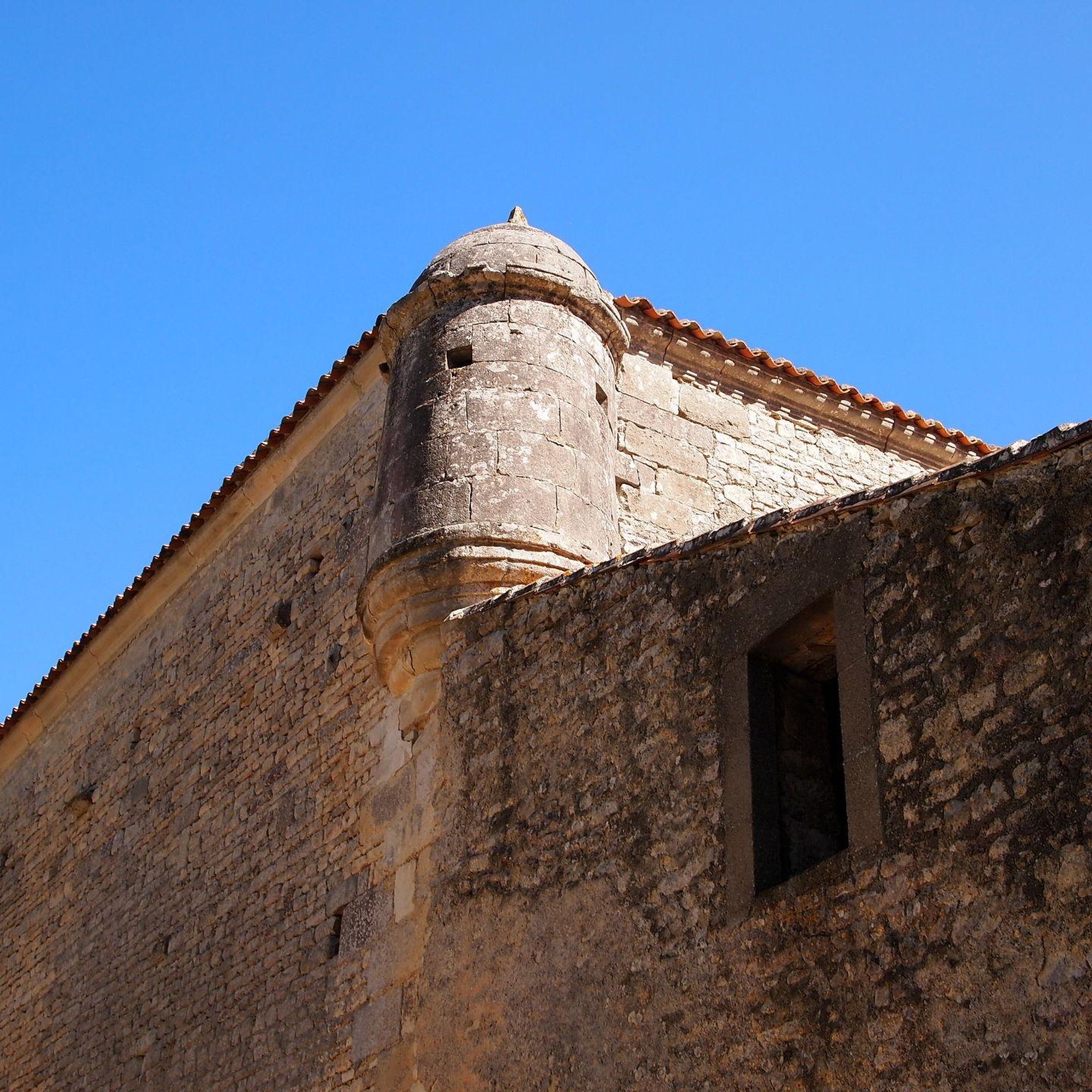
- Visitors also love Saint-Vincent Church, Champmillon, a fortified Romanesque church. Its main door is framed by blind arches, and the buttresses once supported defensive battlements.
- Saint-Amant-De-Nouère is known for its historical churches, abbeys, and natural landscapes. The area offers a variety of attractions to see and explore, including cultural sites and opportunities for outdoor activities.
- The attractions around Saint-Amant-De-Nouère are appreciated by the komoot community, with more than 100 upvotes and 37 photos shared.
Last updated: May 9, 2026
Church of Notre-Dame de Trois-Palis
Highlight • Religious Site
Translated by Google •
Tip by

Abbaye de Bassac
Highlight • Religious Site
Translated by Google •
Tip by
Sign up now to discover places like this
Get recommendations on the best single tracks, peaks, & plenty of other exciting outdoor places.
Sign up for free
Saint-Vincent Church, Champmillon
Highlight • Other
Translated by Google •
Tip by

Frescoes of the 15th Century, Romanesque Church of Saint-Cybard
Highlight • Religious Site
The surprise is revealed inside with murals dating from the 15th century. They develop in a frieze along the entire length of the south wall of the nave of the 2nd bay up to the backsplashes, while a piece is preserved on the western part of the south backsplash at 1.50m from the ground.
This painting had its counterpart on the north wall of the same span and continued on the wall of the right span.
It represents scenes of martyrdom of saints and an isolated fragment which represents a monk holding a kind of club.
The fragment isolated on the western part of the backsplash represents a monk, dressed in a crude habit simply indicated by a thick black outline, who holds in his right hand a sort of yellow club at the end of which stands thorns. The face has retained its flesh color and we can clearly see the nose, the arches and the ears indicated by a thin red line.
The frieze of characters represents 3 women wearing blue dresses for 2 of them and red for the other, and in the 2nd plan 2 men dressed in high breeches, all standing on a red ground delimited by a thick black line, and on a background of rosettes with red petals.
Further on the 1st martyr undergoes his ordeal between 2 men. A large fitted column separates this scene from the previous one. Then a martyr, attached to a green column whose capital bears an angel, is scratched by an instrument handled by one of the 2 men who surround him.
The 3rd martyr, suspended by the feet from a wooden gibbet, is about to be plunged into a tank containing, no doubt, a liquid. He is framed by 2 executioners.
The 4th martyr is attached to a blue column with an angel at the top. 2 men also flank him.
The 5th martyr, lying down, is held in suspension by 2 torturers who subject him to the ordeal of the grill or the fire.
With the exception of the 1st, the martyrs stand out against a background composed of intersecting yellow, red and blue lines. The 5th is martyred in a room where 5 semicircular arches stand out.
Although the colors have retained a beautiful tint, the whole has suffered until the complete obliteration of details which might have made it possible to better identify the martyrs of the mural.
Translated by Google •
Tip by

One of the few sculted spandrels in Angoumois
Highlight • Other
Peter is from Bethsaida, a city near the mouth of the Jordan. His real name, Simon, is of Greek origin. Pierre was certainly bilingual in Aramaic and Greek like most people in the region. His nickname of Peter (Kephas in Aramaic and Petros in Greek) means rock. It was then only a nickname which, after him, will become a name.
According to tradition, Saint Peter has two keys: one in gold, heavenly, the other in silver, earthly. He thus has the ability to open and close Paradise. He is always represented holding these two keys in his hand.
The Saint Pierre de Linars church was built in the 13th century. Several campaigns of works and restorations followed one another from the 12th to the 19th centuries. The church was largely destroyed during the religious wars.
Its arcaded façade is characteristic of Romanesque art in the region. It is divided vertically by 4 columns supporting bust lion heads and horizontally by 3 levels of elevation separated by cornices supported by sculpted corbels. One of the corbels represents a goat's head with horns...
The gable wall (triangular in shape) at the top of the facade has a flat surface decorated with a carved cord forming a miter arch supported by three heads.
Above the front door, in a semi-circular space called the tympanum, you can see one of the rare tympanums carved in Angoumois. We see Christ blessing with one hand and the other seems to hold the globe of the world. Christ is not inscribed in a mandorla or a glory but here in a large circle on which he is seated. Fairly frequent image of the sky in miniatures of the same period. Two angels come towards him, their hands open in a gesture of adoration. Everything recalls the false eardrums of the cathedral and the eardrums of the abbey church of Saint Amant-de-Boixe
The bell tower, of original shape, attached to the north side evokes a watchtower to monitor the surroundings! The bell was cast in 1752.
This Romanesque church has been listed as a historic monument since June 13, 1913, in particular for its arcaded facade decorated with animal busts and sculpted corbels.
Translated by Google •
Tip by
Sign up for free to discover even more attractions around Saint-Amant-De-Nouère.
Sign up for free
Already have an account?
Start today with a free account
Your next adventure awaits.
Login or Signup




Tips from the Community

Beautiful little town center
0
0

The parish church of Notre-Dame is Romanesque and dates from the 12th century. It has a Romanesque bell tower with two floors of arched bays and a conical spire. A dome is at the crossing and the capitals are decorated with sculptures. On the gable of the façade, bas-reliefs depict Christ between evangelical symbols. Its façade was damaged during the Revolution, and heavily restored in the 19th century10. It was classified as a historic monument on July 12, 1886 https://www.angouleme-tourisme.com/patrimoine-culturel/eglise-notre-dame-de-trois-palis/ A little history of the town of Trois Palis by following this link: http://trois-palis.fr/histoire-et-patrimoine/
0
0
Notre Dame de Trois-Palis is a small church located in the center of the town of Trois-Palis. From the Romanesque period, it was listed as a historic monument in 1886. The conical spire covered with pine cone scales that rises above the square bell tower can be seen from afar. It dominates a small Romanesque building located in the heart of the town. Its façade is divided into three floors: At the top, in the triangular gable wall, Christ in Majesty is surrounded by the tetramorph (set of four symbolic representations of the evangelists: the bull of Saint Luke; the eagle of Saint John; the lion of Saint Mark; the angel of Saint Matthew). This theme is directly inspired by the Saint-Pierre cathedral in Angoulême. The central space, between the gable and the portal, is occupied by modern high reliefs representing Christ surrounded by the Virgin and Saint John. On the ground floor, the sculpture made of foliage and animals is present on the arches of the portal. Restored in 1891 century, the small church of Notre-Dame has undergone major modifications. A semicircular apse replaced a flat chevet and the nave was vaulted. Inside, the building consists of a single nave, split into three bays. The walls of the nave are clad with large pointed arches. The south wall of the nave is pierced by three bays, while the north wall is blind. In the extension of the nave, a bay under a bell tower deserves attention. The columns arranged in this space are all endowed with a rich sculpted program that develops in the capitals. They are all historiated and represent the themes frequently deployed near the sanctuary: original sin and the fight between Good and Evil. The semicircular apse replaced a flat chevet in the 19th century. It has a cul-de-four vault. Listed as a Historic Monument in 1886. Open every day from 9 a.m. to 5:30 p.m.
1
0
Notre Dame de Trois-Palis is a small church located in the center of the town of Trois-Palis. From the Romanesque period, it was listed as a historic monument in 1886. The conical spire covered with pine cone scales that rises above the square bell tower can be seen from afar. It dominates a small Romanesque building located in the heart of the town. Its façade is divided into three floors: At the top, in the triangular gable wall, Christ in Majesty is surrounded by the tetramorph (set of four symbolic representations of the evangelists: the bull of Saint Luke; the eagle of Saint John; the lion of Saint Mark; the angel of Saint Matthew). This theme is directly inspired by the Saint-Pierre cathedral in Angoulême. The central space, between the gable and the portal, is occupied by modern high reliefs representing Christ surrounded by the Virgin and Saint John. On the ground floor, the sculpture made of foliage and animals is present on the arches of the portal. Restored in 1891 century, the small church of Notre-Dame has undergone major modifications. A semicircular apse replaced a flat chevet and the nave was vaulted. Inside, the building consists of a single nave, split into three bays. The walls of the nave are clad with large pointed arches. The south wall of the nave is pierced by three bays, while the north wall is blind. In the extension of the nave, a bay under a bell tower deserves attention. The columns arranged in this space are all endowed with a rich sculpted program that develops in the capitals. They are all historiated and represent the themes frequently deployed near the sanctuary: original sin and the fight between Good and Evil. The semicircular apse replaced a flat chevet in the 19th century. It has a cul-de-four vault. Listed as a Historic Monument in 1886. Open every day from 9 a.m. to 5:30 p.m.
0
0

The church is dedicated to Saint Peter the Apostle, who is said to be the prince of the apostles. He is the first of the 12 disciples, leader and missionary of the primitive Church and, according to tradition, first bishop of Rome and first pope. Peter is from Bethsaida, a city near the mouth of the Jordan. His real name, Simon, is of Greek origin. Pierre was certainly bilingual in Aramaic and Greek like most people in the region. His nickname of Peter (Kephas in Aramaic and Petros in Greek) means rock. It was then only a nickname which, after him, will become a name. According to tradition, Saint Peter has two keys: one in gold, heavenly, the other in silver, earthly. He thus has the ability to open and close Paradise. He is always represented holding these two keys in his hand. The Saint Pierre de Linars church was built in the 13th century. Several campaigns of works and restorations followed one another from the 12th to the 19th centuries. The church was largely destroyed during the religious wars. Its arcaded façade is characteristic of Romanesque art in the region. It is divided vertically by 4 columns supporting bust lion heads and horizontally by 3 levels of elevation separated by cornices supported by sculpted corbels. One of the corbels represents a goat's head with horns... The gable wall (triangular in shape) at the top of the facade has a flat surface decorated with a carved cord forming a miter arch supported by three heads. Above the front door, in a semi-circular space called the tympanum, you can see one of the rare tympanums carved in Angoumois. We see Christ blessing with one hand and the other seems to hold the globe of the world. Christ is not inscribed in a mandorla or a glory but here in a large circle on which he is seated. Fairly frequent image of the sky in miniatures of the same period. Two angels come towards him, their hands open in a gesture of adoration. Everything recalls the false eardrums of the cathedral and the eardrums of the abbey church of Saint Amant-de-Boixe The bell tower, of original shape, attached to the north side evokes a watchtower to monitor the surroundings! The bell was cast in 1752. This Romanesque church has been listed as a historic monument since June 13, 1913, in particular for its arcaded facade decorated with animal busts and sculpted corbels.
0
0
First placed under the authority of the Benedictine abbey of St-Cybard d'Angoulême, then that of the cathedral chapter from 1110, this Romanesque church adopted the vaulting in a row of domes on pendentives for the nave and the false square placed under the steeple. The surprise is revealed inside with murals dating from the 15th century. They develop in a frieze along the entire length of the south wall of the nave of the 2nd bay up to the backsplashes, while a piece is preserved on the western part of the south backsplash at 1.50m from the ground. This painting had its counterpart on the north wall of the same span and continued on the wall of the right span. It represents scenes of martyrdom of saints and an isolated fragment which represents a monk holding a kind of club. The fragment isolated on the western part of the backsplash represents a monk, dressed in a crude habit simply indicated by a thick black outline, who holds in his right hand a sort of yellow club at the end of which stands thorns. The face has retained its flesh color and we can clearly see the nose, the arches and the ears indicated by a thin red line. The frieze of characters represents 3 women wearing blue dresses for 2 of them and red for the other, and in the 2nd plan 2 men dressed in high breeches, all standing on a red ground delimited by a thick black line, and on a background of rosettes with red petals. Further on the 1st martyr undergoes his ordeal between 2 men. A large fitted column separates this scene from the previous one. Then a martyr, attached to a green column whose capital bears an angel, is scratched by an instrument handled by one of the 2 men who surround him. The 3rd martyr, suspended by the feet from a wooden gibbet, is about to be plunged into a tank containing, no doubt, a liquid. He is framed by 2 executioners. The 4th martyr is attached to a blue column with an angel at the top. 2 men also flank him. The 5th martyr, lying down, is held in suspension by 2 torturers who subject him to the ordeal of the grill or the fire. With the exception of the 1st, the martyrs stand out against a background composed of intersecting yellow, red and blue lines. The 5th is martyred in a room where 5 semicircular arches stand out. Although the colors have retained a beautiful tint, the whole has suffered until the complete obliteration of details which might have made it possible to better identify the martyrs of the mural.
0
0
The conical spire covered with pine cone scales which rises above the square bell tower can be seen from afar. It dominates a small Romanesque building located in the heart of the town. Its facade is divided into three floors: At the top, in the triangular gable wall, Christ in majesty is surrounded by the tetramorph (set of four symbolic representations of the evangelists: the bull of Saint Luke; the eagle of Saint John; the lion of Saint Mark; the angel of Saint Matthew). This theme is directly inspired by Saint-Pierre Cathedral in Angoulême. The central space, between the gable and the portal, is occupied by high modern reliefs representing Christ surrounded by the Virgin and Saint John. On the ground floor, the sculpture made of scrolls and animals is present on the arches of the portal. Restored in 1891 century, the small Notre-Dame church was subject to profound modifications. A semicircular apse replaced a flat apse and the nave was vaulted. Inside, the building consists of a single nave, divided into three bays. The walls of the nave are covered with large broken arcades. The south wall of the nave has three bays, while the north wall is blind. In the extension of the nave, a bay under the bell tower is worth paying attention to. The columns arranged in this space all feature a rich sculpted program which develops into the capitals. They are all historical and represent the themes frequently deployed near the sanctuary: original sin and the struggle between Good and Evil. The semicircular apse replaced a flat apse in the 19th century. It is vaulted like a furnace. Listed as a Historic Monument in 1886. Open every day from 9 a.m. to 5:30 p.m.
1
0
Abbey of Saint-Étienne de Bassac, (Sancti Stephani de Bassaco vel Bassacensis, Bassacum): Monks of the order of Saint-Benoît, united in 1666 to the Congregation of Saint-Maur. It was founded at the beginning of the 11th century by one of the Princes of Angoulême, called Guadardus de Lorichis, in honor of St-Etienne, the first martyr, according to what is reported in the acts of the life of Grimourd (bishop of 'Angoulême), but in the history of Angoulême it is said that it was founded by Wardrard de Jarnac, and his wife Rixende. Be that as it may, the church and the regular places having been destroyed by the heretics, the Benedictines of the congregation of St Maur who were introduced there, restored everything, and had a beautiful church built. The Abbot has the collation of a few simple priories, and the appointment to a few parishes. • Foundation in the 11th century. Church rebuilt from 1247 to 1286. • Defensive works at the end of the 14th century. • Abbey burnt down by the Anglo-Saxons in 1434. • Reconstruction in the second half of the 15th century. • Abbey plundered by the Protestants between 1564 and 1569. • Maurist reform introduced in 1666 after the abbey had been abandoned for nearly a century: rehabilitation and restoration until 1746 (conventual building, guest room, etc.). • Abbey sold as national property during the Revolution. • Destruction of the Gothic cloister in 1820. • Major restoration work on the church and abbey buildings during the 19th and 20th centuries. Many times transformed over the course of congregations and historical events, it mixes Romanesque, Gothic, Baroque and Classical styles. Listed as a Historic Monument, the Saint-Étienne de Bassac abbey today unveils a rectangular abbey church consisting of 4 bays and a flat chevet. Gothic in style, it has however retained the bases of the original walls and has domed rib vaults. Romanesque, the bell tower is not lacking in charm, just like the apse and the 13th century chapel pierced by a bay and covered with a ribbed vault. The 17th century convent buildings are also still visible. Like several other religious sites around the world, the abbey of Saint-Étienne de Bassac had a “Gate of Mercy” in 2015-2016; door which, on the margins of the Holy Doors open every 25 years or according to the exceptions fixed by the pope during the course of the holy years or Jubilees, was established at the abbey of Saint-Étienne de Bassac following the desire of Pope Francis to see the Jubilee of Mercy spread all over the world. In short, this Door, like all the other doors of Mercy, supports the Holy Doors in their roles in the Jubilee of Mercy proclaimed by Pope Francis from December 8, 2015 to November 20, 2016 In addition, the Saint-Étienne abbey now hosts retreats, and also has an approval to receive green classes. Opening hours: Monday: 09:00 – 18:30 • Tuesday: 09:00 – 18:30 • Wednesday: 09:00 – 18:30 • Thursday: 09:00 – 18:30 • Friday: 09:00 – 6:30 p.m. • Saturday: 9:00 a.m. – 6:30 p.m. • Sunday: 9:00 a.m. -6:30 p.m.
0
0
Frequently Asked Questions
What historical churches can I visit around Saint-Amant-De-Nouère?
The region is rich in historical churches. You can explore the 12th-century Romanesque Church of Notre-Dame de Trois-Palis, known for its charming village setting. Another notable site is the fortified Romanesque Saint-Vincent Church, Champmillon, featuring distinctive blind arches and buttresses. Don't miss the Saint Pierre de Linars Church, a 13th-century structure with an arcaded Romanesque façade and 15th-century murals, listed as a historic monument since 1913. L'Eglise Saint Amant, dating back to the Romanesque period, also retains significant architectural elements despite historical damage.
Are there any abbeys or other significant historical sites to explore in the region?
Yes, a short distance from Saint-Amant-De-Nouère, you can visit Abbaye de Bassac, a thousand-year-old abbey. It's a significant cultural, spiritual, and historical site where you can explore its courtyard, gardens, and vaulted gallery. Additionally, the historic Castle of Fontguyon is listed as a monument within Saint-Amant-de-Nouère.
What natural features define the landscape around Saint-Amant-De-Nouère?
The region around Saint-Amant-De-Nouère is characterized by its proximity to the picturesque Charente River, which offers a beautiful setting. The area is also known for its natural landscapes, providing numerous hidden gems for outdoor enthusiasts to discover through hiking or cycling.
What outdoor activities are available near Saint-Amant-De-Nouère?
The area is well-suited for outdoor enthusiasts. You can find opportunities for gravel biking, running, and road cycling. For detailed routes, explore guides like Gravel biking around Saint-Amant-De-Nouère, Running Trails around Saint-Amant-De-Nouère, and Road Cycling Routes around Saint-Amant-De-Nouère.
Are there family-friendly attractions in Saint-Amant-De-Nouère?
Many of the historical sites, such as the Church of Notre-Dame de Trois-Palis and Abbaye de Bassac, are considered family-friendly, offering educational and engaging experiences for all ages. The natural setting near the Charente River also provides opportunities for family walks and exploration.
Can I go cycling or hiking near Saint-Amant-De-Nouère?
Absolutely! The region offers numerous routes for both cycling and hiking. You can find various trails for gravel biking, road cycling, and running. For specific cycling routes, check out the Gravel biking around Saint-Amant-De-Nouère and Road Cycling Routes around Saint-Amant-De-Nouère guides. For hiking and running, the Running Trails around Saint-Amant-De-Nouère guide provides options, and the area's 'white paths' near the Charente River are ideal for walks.
What do visitors enjoy the most about the attractions in Saint-Amant-De-Nouère?
Visitors particularly appreciate the historical depth and architectural beauty of the churches and abbeys. For instance, the Church of Notre-Dame de Trois-Palis is loved for its charming setting and eye-catching facade sculptures. The Abbaye de Bassac is valued as a place for cultural, spiritual, and historical immersion, with its courtyard, gardens, and vaulted gallery offering a journey through centuries. The overall appeal lies in the blend of rich history and picturesque natural surroundings.
Are there any specific churches known for their artistic or architectural details?
Yes, the Saint Pierre de Linars Church is notable for its arcaded Romanesque façade adorned with sculpted corbels and lion heads, and it houses 15th-century murals. Its bell tower uniquely evokes a watchtower. Additionally, the Romanesque Church of Saint-Cybard features impressive 15th-century frescoes depicting scenes of martyrdom, offering a glimpse into medieval artistry.
What is the significance of the Charente River to the region?
The Charente River is a central natural feature, providing a picturesque backdrop to the region around Saint-Amant-De-Nouère. It offers opportunities for activities like canoeing and kayaking in the wider area and its banks are home to 'white paths' that are easily accessible for walks and cycling, connecting various villages and attractions.
What is the best time to visit Saint-Amant-De-Nouère for outdoor activities?
While specific seasonal advice isn't provided, regions like Charente generally offer pleasant weather for outdoor activities during spring (April-June) and early autumn (September-October), when temperatures are mild and the natural scenery is vibrant. Summer months can also be enjoyable, though it may be warmer.
Are there any hidden gems or less-known outdoor spots to discover?
The region around Saint-Amant-De-Nouère is described as having numerous hidden gems for outdoor enthusiasts. Exploring the 'white paths' near the Charente River or venturing into the various cycling and running routes can lead you to serene and less-traveled spots, offering a more intimate connection with the local landscape.
Most popular routes around Saint-Amant-De-Nouère

Get inspired with the komoot mobile app


Explore more
Still not found the Highlight you’re looking for? See guides of the top attractions in other regions:
