The best road cycling routes around Maillé
4.1
(52)
1,001
riders
28
rides
Road cycling around Maillé, situated within the Marais Poitevin Regional Natural Park, is characterized by predominantly flat terrain and an extensive network of cycle paths. The region, often referred to as "Green Venice," features a labyrinth of canals, shaded waterways, and diverse marsh landscapes. Cyclists can navigate small paved roads and "white roads" that traverse wet marshes, green dry marshes with agricultural fields, and maritime marshes. The Sèvre Niortaise River is a prominent feature along many routes, offering varied scenery.
…Last updated: May 6, 2026
3.0
(2)
104
riders
23.8km
01:10
160m
160m
Easy road ride. Great for any fitness level. Mostly well-paved surfaces and easy to ride.
46
riders
55.4km
02:12
190m
190m
Moderate road ride. Good fitness required. Mostly well-paved surfaces and easy to ride.

Sign up for free
11
riders
42.4km
01:43
100m
100m
Easy road ride. Great for any fitness level. Mostly well-paved surfaces and easy to ride.
7
riders
85.4km
03:37
510m
510m
Moderate road ride. Good fitness required. Mostly well-paved surfaces and easy to ride.
6
riders
58.4km
02:22
260m
260m
Moderate road ride. Good fitness required. Mostly well-paved surfaces and easy to ride.
Get access to more routes and recommendations from other explorers.
Sign up for free
Already have an account?
Our route recommendations are based on thousands of hikes, rides, and runs completed by other people on komoot.
Start today with a free account
Your next adventure awaits.
Login or Signup



Tips from the Community


LES Ormes is known for its unique architectural ensemble of an unavoidable historical richness.
16
0
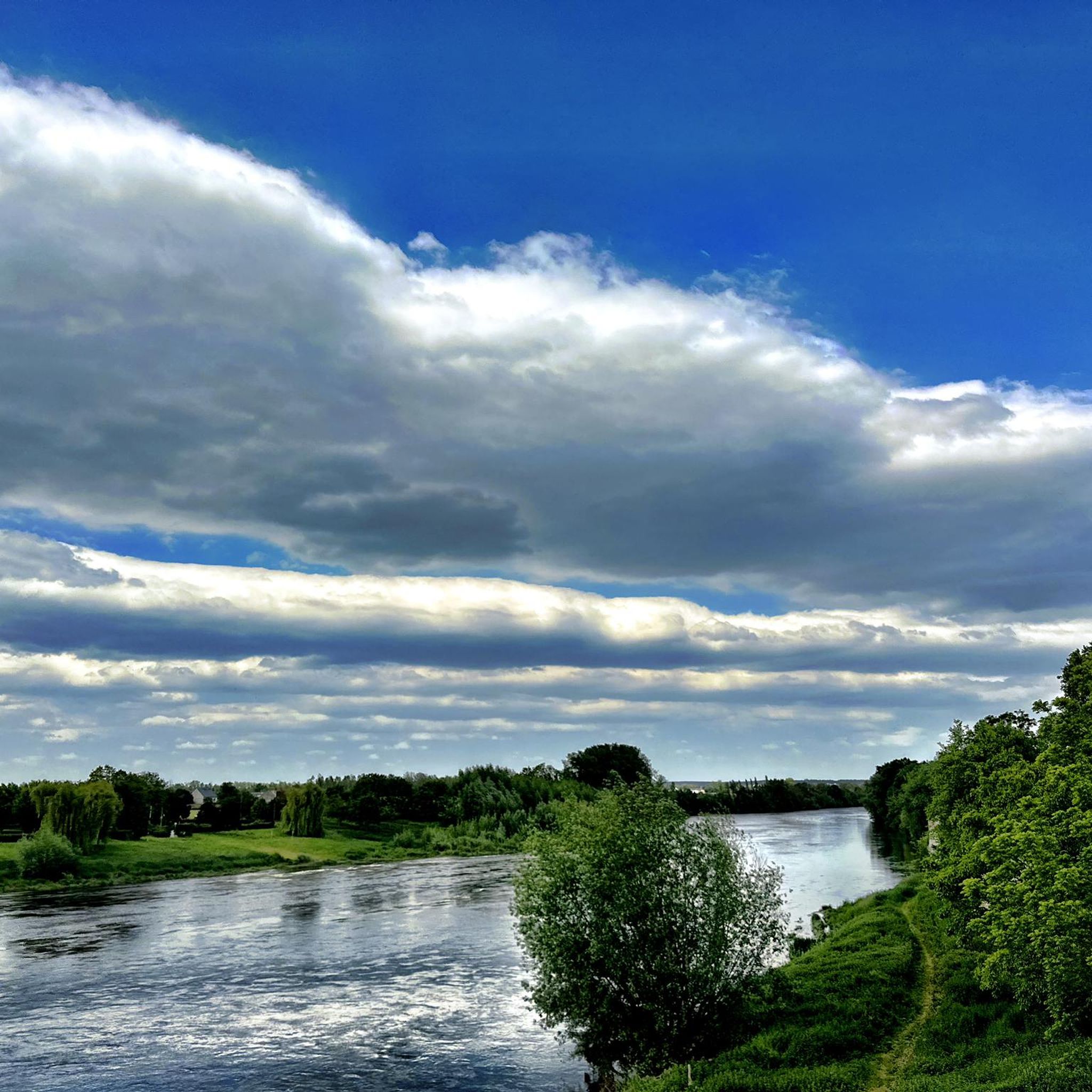
View from the bridge on Les Ormes.
16
0
This church was built in the 11th century, expanded in the 15th and 16th centuries, restored in the 20th century, and its porch dates from the 18th century. The porch, with its pediment, gives visitors no clue that they are entering a thousand-year-old Romanesque nave. The two western bays are vaulted, like the entire building in the 15th and 16th centuries, with ribbed vaults.
0
0


In 1631, to thank his minister, Cardinal Richelieu, for his eminent services, King Louis XIII did him the favor of erecting "a town enclosed by walls and moats and building a market hall" and establishing four annual fairs and two markets per week. Thus emerged from nothing, an "ideal city" according to the precepts of the time which would bear the name of the Cardinal. Richelieu entrusted Jacques Lemercier, architect of the king, author of the Sorbonne and the Palais-Royal, with the task of building, on the site of the family property, a vast castle, a reflection of his grandeur and a new city, nearby. Nearly 2000 workers would work on the site. Inside the walls, the Cardinal gave the land to whoever agreed to build a pavilion within two years according to the plans filed with the city registry. The inhabitants will be exempt from tax and gabelle until there are 100 houses built. 4/5 of the project will be completed between 1632 and 1642, the year of the Cardinal's death. Contrary to the words of Jean de la Fontaine (who also ironically described the town as "the most beautiful village in the universe"), far from being deserted, the town had 4,000 inhabitants in 1690, compared to less than 2,000 today. This innovative project, which linked the construction of a castle and a town in the same program, foreshadowed the Versailles construction site that would open 30 years after the completion of the city walls of Richelieu. Adjacent to the walls, Richelieu Park, with an area of 475 ha, housed the vast estate of the castle of the du Plessis family (original surname of Cardinal Richelieu), of which only a few vestiges remain today. Richelieu is now a somewhat unusual town in the French landscape, with its three access gates and its two large symmetrical squares. Organized in quadrilaterals and perpendicular streets in the manner of American cities, it offers a unique testimony to urban planning of the Grand Siècle.
0
0
Private castle built in the 16th century on 15th century foundations.
0
0

L'Île-Bouchard is a commune made up of two suburbs, Saint Maurice and Saint Gilles, each on opposite sides of the Vienne. The two suburbs are connected by a bridge and separated by the island which gives its name to the city - Île-Bouchard.
1
0
Frequently Asked Questions
What is the general terrain like for road cycling around Maillé?
Road cycling around Maillé, located within the Marais Poitevin Regional Natural Park, is characterized by predominantly flat terrain. The region, often called "Green Venice," features an extensive network of cycle paths on small paved roads and "white roads" that traverse wet marshes, green dry marshes, and maritime marshes. This makes it suitable for cyclists of all levels.
How many road cycling routes are available in the Maillé area?
There are over 30 road cycling routes around Maillé, offering a variety of experiences for different skill levels. These routes are highly rated by the komoot community, with an average score of 4.0 stars.
Are there road cycling routes suitable for beginners or families in Maillé?
Yes, Maillé offers several routes suitable for beginners and families due to its flat terrain. For example, the View of the dovecote loop from Maillé is an easy 42.4 km (26.3 miles) trail, perfect for a more relaxed ride through the marshlands.
What kind of landmarks or viewpoints can I expect to see along the road cycling routes?
Road cycling routes around Maillé offer views of diverse marsh landscapes, the Sèvre Niortaise River, and picturesque vineyards like those near Vix. You can also spot historical sites such as the gate at Maillé church, a Romanesque art masterpiece, and distant views of historical sites like the Château de Bagneux on routes such as the Lieu dit la Falaise – View of the Château de Bagneux loop from Maillé. For specific attractions, consider visiting the Courtineau Valley and Troglodyte Houses or the Saint-Sulpice Church.
Are there any long-distance cycling routes that pass through Maillé?
Yes, Maillé is part of several notable long-distance cycling routes. The famous La Vélodyssée® runs along the Atlantic coast and passes through the Marais Poitevin for 75 kilometers. The Vélo Francette® also offers stages that wind through the marsh, guiding cyclists through typical marsh villages and alongside the Sèvre Niortaise River. Additionally, a stage of the Vendée Vélo Tour leads directly through Maillé.
What is the best time of year to go road cycling in Maillé?
The Marais Poitevin, including Maillé, is generally pleasant for cycling from spring to autumn. The region's waterways are often shaded by trees, providing relief during warmer months. Spring and early autumn offer comfortable temperatures and beautiful scenery, while summer can be ideal for enjoying the full 'Green Venice' experience.
Are there circular road cycling routes available around Maillé?
Yes, many road cycling routes around Maillé are designed as loops, allowing you to start and end in the same location. An example is the Château de la Motte – Henri IV Bridge loop from Maillé, which is a moderate 85.3 km (53.0 miles) trail offering views of historical landmarks and the Sèvre Niortaise.
What amenities can I find along the road cycling routes in Maillé?
The Marais Poitevin region is dotted with charming marsh villages and hamlets where you can discover local products. Many routes will pass through or near these villages, offering opportunities for cafes, pubs, and accommodation. Exploring the local heritage is part of the cycling experience in this area.
What are the options for more challenging road cycling routes near Maillé?
While the terrain is predominantly flat, longer routes can offer a greater challenge. The Château de Dissay – Château de Dissay loop from Maillé is a difficult 191.8 km (119.2 miles) path that explores the wider region, passing through varied landscapes including agricultural areas and marshlands, making it suitable for experienced cyclists seeking a longer ride.
What do other road cyclists enjoy most about cycling in Maillé?
The area is highly rated by the komoot community, with an average score of 4.0 stars from over 26 reviews. Cyclists often praise the quiet country roads, the extensive canal networks, and the unique natural beauty of the 'Green Venice' marshlands.
Is it possible to combine road cycling with other activities in the Marais Poitevin?
Absolutely. The Marais Poitevin is known for its boat trips through the labyrinth of canals, often shaded by alleys of trees. You can explore the unique wetlands by boat from various points, including the quays of Maillezais Abbey, which is also a significant historical attraction that can be visited during cycling tours.
Are there specific areas with low traffic for road cycling around Maillé?
The region's extensive network of cycle paths often utilizes small paved roads and 'white roads' that are specifically designed for cycling or have very low vehicle traffic. This allows for a serene and safe cycling experience, particularly within the heart of the Marais Poitevin.
Most popular attractions around Maillé

Get inspired with the komoot mobile app


Explore more
Browse the best Road cycling routes in other regions.
