Attractions and Places To See around Loperhet - Top 20
Best attractions and places to see around Loperhet, a commune in the Finistère department of Brittany, France, offers a diverse landscape characterized by its coastal proximity and historical significance. The area features a mix of natural sites, impressive engineering marvels, and cultural points of interest. Visitors can explore various Loperhet outdoor activities, from historical structures to botanical gardens, providing a range of Loperhet tourist attractions.
Best attractions and places to see around Loperhet
- The most popular attractions is Albert Louppe…
Last updated: October 9, 2026
Albert Louppe Bridge
Highlight • Bridge
Translated by Google •
Tip by

Iroise Bridge
Highlight • Bridge
Translated by Google •
Tip by

Sign up now to discover places like this
Get recommendations on the best single tracks, peaks, & plenty of other exciting outdoor places.
National Botanical Conservatory of Vallon du Stang-Alar
Highlight • Forest
The park is about 22 ha in size and was built in a former quarry in 1970.
Translated by Google •
Tip by

Landévennec Abbey
Highlight • Other
Translated by Google •
Tip by

Pont de Térénez
Highlight • Bridge
Translated by Google •
Tip by

Sign up for free to discover even more attractions around Loperhet.
Already have an account?
Start today with a free account
Your next adventure awaits.
Tips from the Community

The Abbey of Saint-Guénolé of Landévennec is impressively located at the mouth of the Aulne river on the Crozon Peninsula in Brittany. According to tradition, the monastery was founded around 485 by Saint Guénolé; archaeological finds confirm in any case a monastic settlement as early as the turn of the 5th to the 6th century. In 818, Emperor Louis the Pious ordered the community to adopt the Benedictine rule. In the 9th century, Landévennec developed into an important cultural center with its own scriptorium. In 913, the abbey was plundered by Vikings, and the monks fled with relics and manuscripts to Montreuil-sur-Mer. They returned around 940; at the beginning of the 11th century, a large Romanesque monastic complex was built. In 1636, Landévennec joined the reform-oriented Benedictine Congregation of Saint Maur. During the French Revolution, the monastery was abolished in 1789 and subsequently sold as national property. The impressive ruins of the medieval abbey are preserved today and have been archaeologically excavated. Immediately next to it, a new Benedictine monastery was built in the 20th century, whose church and convent buildings were consecrated in 1958. An active monastic community still lives there today according to the Rule of Saint Benedict. Landévennec is particularly charming in that it allows one to trace around 1,500 years of Breton monastic and cultural history in one place.
1
0

A magnificent landscape on both sides!!!
0
0


My recommendation would be to definitely visit the museum - it's very interesting from a historical perspective.
2
0


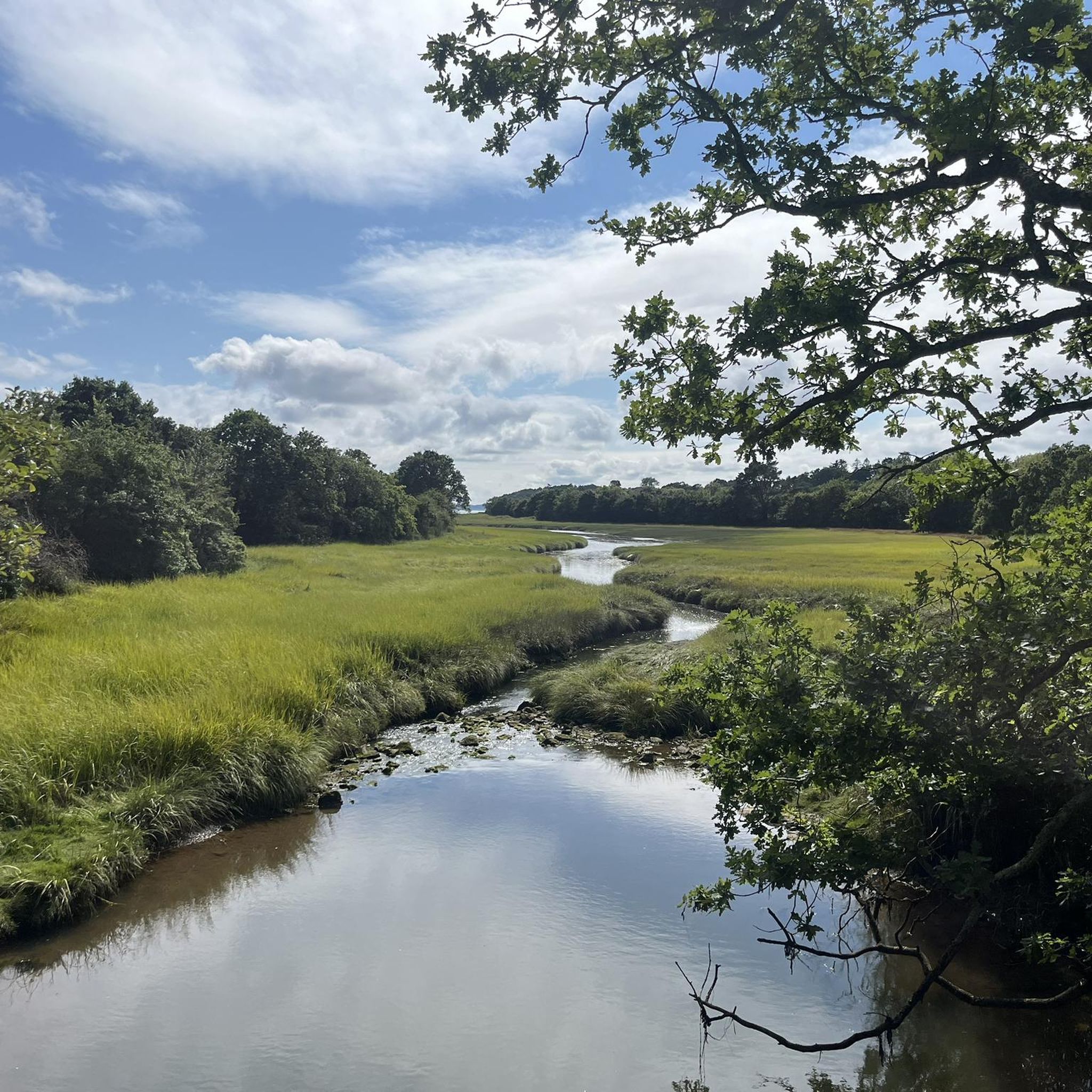
In the hollow of the valley, a small stream meanders, feeding many ponds and a waterfall. Perfect for recharging your batteries. This arboretum is sumptuous. You will find incredible tree species, sequoias, eucalyptus, magnolias, giant bamboos and an alley planted with absolutely remarkable tree ferns. On the water, a beautiful diversity of birds, cormorants, herons, egrets, ducks, and kingfishers among others. Good walk a stone's throw from the beach and the marina of the marina.
0
0

In the heart of the Vallon du Stang-Alar, the Botanical Conservatory garden is nestled in a former quarry. The 30-hectare site was chosen for its mild climate, steep slopes and the presence of water, which make it an exceptional place where plants from all over the world can be grown. The site is crossed by wide and narrow, stabilized paths, as well as forest trails. Opening hours Conservative garden: open every day from 9:00 a.m. to 6:00 p.m., until 8:00 p.m. in summer.
2
0
Frequently Asked Questions
What are some notable engineering marvels to see near Loperhet?
The region is home to impressive bridges. You can visit the Albert Louppe Bridge, which was once recognized for having the world's longest span for concrete arch bridges and is now accessible for pedestrians and cyclists. Another significant structure is the Iroise Bridge, a cable-stayed bridge offering panoramic views of the Elorn river, particularly appealing to cyclists. Further afield, the Pont de Térénez, an imposing curved bridge, provides crucial access to the Crozon peninsula and features a separate cycling path.
Are there any botanical gardens or natural parks to explore near Loperhet?
Yes, the National Botanical Conservatory of Vallon du Stang-Alar is a 30-hectare botanical garden located in a former quarry, focusing on re-establishing threatened plant species. It features diverse plants from around the world, ponds, and a waterfall. Additionally, the vast Armorique Regional Park is about 8 km from Loperhet, offering a beautiful setting for nature enthusiasts.
What historical or cultural sites can I visit in the Loperhet area?
You can explore the historic Cemetery (in the movie), which is associated with a local church and a famous novel. Nearby, Daoulas Abbey is a historic building worth visiting. The region is also known for its distinctive Parish Closes, with examples in towns like Plougastel-Daoulas and Guimiliau, which often feature intricate calvaries and chapels.
Are there family-friendly attractions around Loperhet?
Absolutely. The National Botanical Conservatory of Vallon du Stang-Alar is a great option for families, offering wide and narrow paths suitable for exploration, and even a creperie. The Iroise Bridge and Pont de Térénez also offer scenic views and dedicated cycling paths, making them enjoyable for family outings. For a larger attraction, Océanopolis in Brest is a major oceanographic center considered a must-see for visitors to the region.
What kind of outdoor activities, like cycling or running, are available near Loperhet?
Loperhet and its surroundings offer numerous opportunities for outdoor activities. For cycling, you can explore routes like the 'Port of Auberlac'h – View of quiet harbor loop' or the 'Albert Louppe Bridge – Le Faou loop'. If you're interested in running, trails such as the 'Moulin de Penfoul – Pors Donn loop' or the 'Albert Louppe Bridge loop' are popular. You can find more detailed routes and guides for Cycling around Loperhet, Gravel biking around Loperhet, and Running Trails around Loperhet.
Where can I find picturesque villages near Loperhet?
The region boasts several charming villages. Le Faou, about 13 km away, is recognized as one of France's 'Most Beautiful Villages' and features an attractive harbor and traditional wooden houses. Locronan, approximately 32 km from Loperhet, is another 'Most Beautiful Village in France' known for its historical charm. Landerneau, about 9 km away, is also notable for its medieval houses, especially near the water.
Are there any viewpoints offering scenic vistas around Loperhet?
Yes, several locations provide excellent views. Both the Iroise Bridge and the Pont de Térénez offer panoramic views of the Elorn river and the surrounding landscape. Additionally, natural sites like Menez-Hom (about 18 km away) and Pointe de Penhir (about 27 km away) are known for their striking scenery and viewpoints.
What do visitors enjoy most about the attractions around Loperhet?
Visitors frequently appreciate the blend of natural beauty and impressive engineering. The bridges, like the Albert Louppe Bridge, are praised for their historical significance and the easy access they provide for pedestrians and cyclists, offering nice views of the bay. The National Botanical Conservatory of Vallon du Stang-Alar is valued as a relaxed place to take a deep breath, with its diverse plant collections and free admission.
Can I go hiking near Loperhet?
Yes, the area around Loperhet is suitable for hiking. While specific hiking trails are not detailed in the highlights, the Armorique Regional Park and the National Botanical Conservatory of Vallon du Stang-Alar offer paths and trails for walking. For more structured routes, you can explore the Running Trails around Loperhet guide, which includes various loops and distances that can also be enjoyed as hikes.
Are there any unique local historical monuments in Loperhet itself?
Within Loperhet, you can find historical monuments such as the Tumulus du Roc'hellou, offering a glimpse into the area's ancient past. The local heritage also includes several religious buildings and chapels, some of which, like Notre-Dame de Lorette in nearby Irvillac, offer guided visits.
What are some water-based activities or sights near Loperhet?
The region's coastal proximity offers several water-related attractions. The bridges, such as the Albert Louppe Bridge and Iroise Bridge, span the Élorn river, providing views of the water. You can also find opportunities for boat trips on the Élorn river from nearby Landerneau or Brest. The Baie de Douarnenez, about 27 km away, is known for its natural beauty and coastal scenery.
Most popular routes around Loperhet

Get inspired with the komoot mobile app


Explore more
Still not found the Highlight you’re looking for? See guides of the top attractions in other regions:
