The best walks and hikes around La Bloutière
4.2
(82)
351
hikers
52
hikes
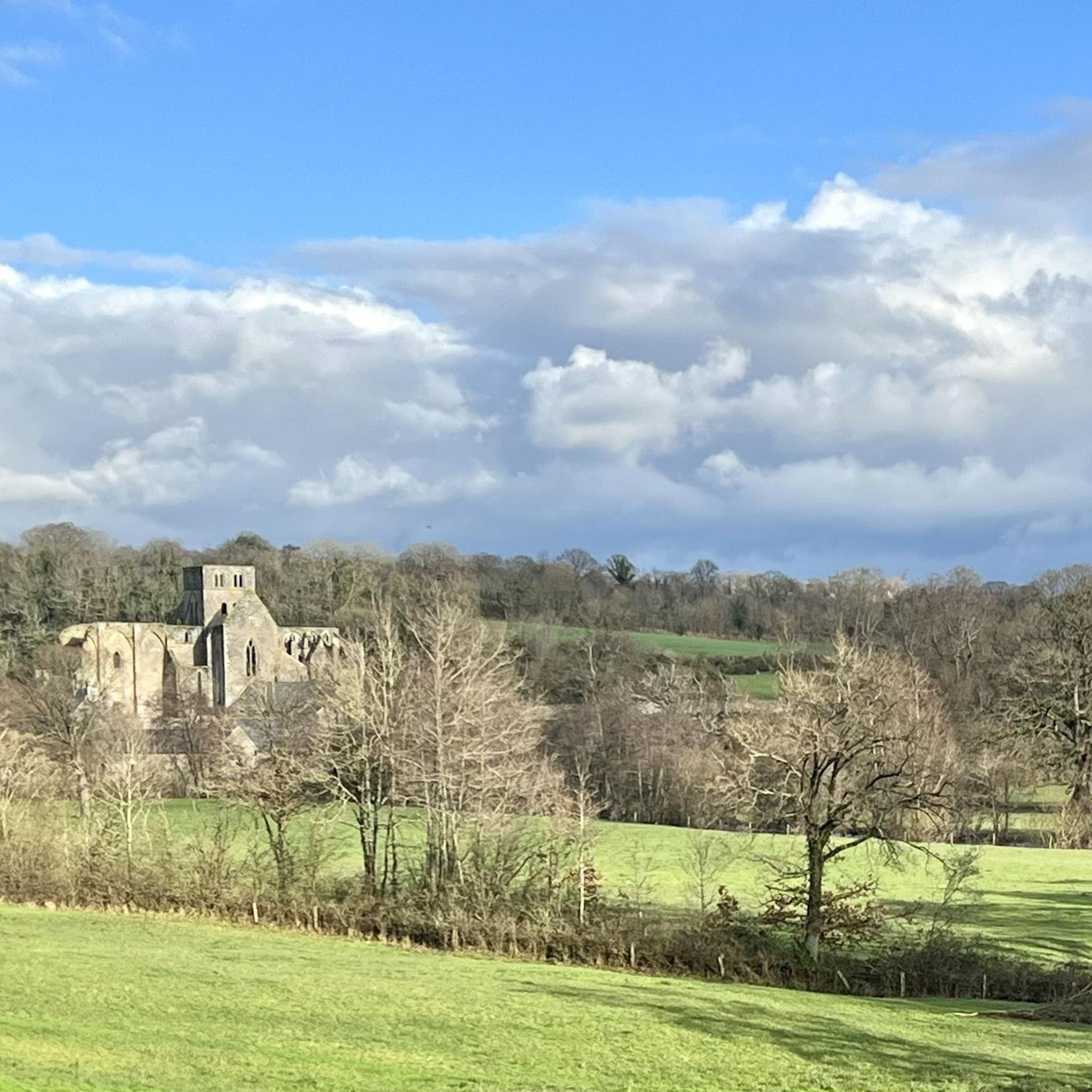
Hiking around La Bloutière offers routes through the distinctive Norman bocage, a landscape characterized by irregular fields, meadows, and hedgerows. The region features prominent river valleys, particularly along the Sienne River, with trails following forest paths and ascending to hills overlooking the water. These areas are rich in woodlands, including beech trees, and prairies. This terrain provides varied environments for outdoor activities.
Best hiking trails around La Bloutière
- The most popular hiking route is Saint Anthony – Schlupp Gargoyle loop…
Last updated: May 8, 2026
4.0
(2)
23
hikers
12.3km
03:22
200m
200m
Moderate hike. Good fitness required. Easily-accessible paths. Suitable for all skill levels.
2.0
(1)
6
hikers
6.70km
01:50
110m
110m
Easy hike. Great for any fitness level. Easily-accessible paths. Suitable for all skill levels.

Sign up for free
4.8
(5)
14
hikers
11.3km
03:04
150m
150m
Moderate hike. Good fitness required. Easily-accessible paths. Suitable for all skill levels.
6
hikers
Easy hike. Great for any fitness level. Easily-accessible paths. Suitable for all skill levels.
3.0
(3)
4
hikers
7.70km
02:07
120m
120m
Moderate hike. Good fitness required. Easily-accessible paths. Suitable for all skill levels.
Get access to more routes and recommendations from other explorers.
Sign up for free
Already have an account?
Our route recommendations are based on thousands of hikes, rides, and runs completed by other people on komoot.
Start today with a free account
Your next adventure awaits.
Login or Signup

Tips from the Community

The city was formerly known for its copper processing.
0
0

Beautiful church in the middle of a pretty little town. Great for a break.
0
0

In addition to the magnificent Baroque fountain, whose water falls over magnificent basins, there is a fountain gem on the Place de la République: a classicist fountain with a golden vase on top. A particularly beautiful example of historical drinking water supply.
2
0
A beautiful gargoyle addition to the special, happy statue of Saint Anthony in the church: Saint Anthony is often depicted with a little pig (Sly Pig). Less well known is his faithful dog Schlupp, whose name has been preserved in artistic circles with the color name "schluppfarben" for a cream-colored and brown mélange. Particularly in his role as a popular Schlamperltoni, as a specialist in finding lost objects, the resourceful Schlupp was an excellent and important addition to the saint. Here we find Schlupp immortalized as a stone gargoyle.
1
0
Saint Anthony is particularly important in our (Protestant) family. In professional circles he is revered as an eloquent church teacher or for his record-breaking canonization. In popular belief he is known as a Franciscan fish preacher. We have revered him for at least three generations as Schlamperltoni: a specialist for lost objects. My (Protestant) grandmother, who comes from Allgäu, passed down the saying "Saint Anthony, you brave man, I've lost something, lead me close to it." And now the saying still works reliably, especially with our (Protestant) eldest daughter, who is quite needy in this regard. It should be noted in passing that Anthony's writings deal with the explanation of Christian principles, but do not contain any polemics against heretics; he is obviously also open to Protestants and thus makes an effective contribution to ecumenism. Here in the church we find a more recent Saint Anthony who stands out for his cheerfulness. A remarkably good-humored saint with a happy baby Jesus. This is what one would like the church to be like.
2
0
Opposite the church begins the Rue Gambetta, flanked by old stone houses. After a few steps it leads over the La Sienne, a small river. The old stone bridge is lovingly planted with colorful flowers and opens up a green panorama of the water lined with old buildings.
1
0
You've heard of them: the famous French copper pots that you can get in Germany at bargain prices from Manufactum. There is a specialty copper shop here that offers all kinds of decorative items as well as a wide selection of pots for the ambitious amateur cook. And all this in a tiny town with only about 3,000 inhabitants.
2
0
A real artisan baker with a wonderful range of products that are worth a detour. Crispy baguette, finely wrapped croissants and simply fantastic dark baked bread with a crispy crust, nuts and raisins. Hardly to find in Germany, the land of bread, in the era of pre-baked bakeries; as a Wuppertal resident, you occasionally make a pilgrimage to Karlsplatz in Düsseldorf. Highly recommended.
2
0
Frequently Asked Questions
What kind of landscape can I expect when hiking around La Bloutière?
La Bloutière is characterized by its distinctive Norman bocage, a traditional landscape of irregular fields and meadows enclosed by live hedges and sunken paths. You'll also find prominent river valleys, particularly along the Sienne River, with trails following forest paths and ascending to hills overlooking the water. The area is rich in woodlands, including beech trees, and prairies.
How many hiking trails are available in the La Bloutière area?
There are over 50 hiking trails around La Bloutière, offering a wide range of options for different skill levels and preferences. These include 22 easy routes, 32 moderate routes, and 1 difficult trail.
Are there any family-friendly hiking options in La Bloutière?
Yes, La Bloutière offers several easy trails suitable for families. For instance, the Notre-Dame Church – Schlupp Gargoyle loop from Villedieu-les-Poêles-Rouffigny is an easy 3.5-mile (5.7 km) path that explores the Sienne valley, offering pleasant views without significant difficulty.
What are the typical elevation gains on hikes in La Bloutière?
The elevation gains vary depending on the trail. Many routes feature gentle ascents through the bocage and along river valleys. For example, the moderate Saint Anthony – Schlupp Gargoyle loop from Villedieu-les-Poêles has an elevation gain of around 192 meters over its 12.1 km distance, while easier routes like the Notre-Dame Church – Schlupp Gargoyle loop have a more modest gain of about 72 meters.
Are there any circular walks available in La Bloutière?
Many of the trails around La Bloutière are designed as circular routes, allowing you to start and end at the same point. An example is the Saint Anthony – La Fée Sourdine loop from Villedieu-les-Poêles, a moderate 10.2 km hike that takes you through varied terrain.
What do other hikers say about the trails in La Bloutière?
The routes in La Bloutière are highly rated by the komoot community, with an average score of 4.3 stars from over 80 reviews. Hikers often praise the tranquil and green environment, the characteristic hedgerows of the bocage, and the scenic paths along the Sienne River.
Are there any historical or natural attractions to see while hiking?
Yes, the region offers several points of interest. You can explore the ruins of Abbaye de Hambye, set amidst a well-developed bocage landscape, or visit the Notre-Dame Church. Some trails also offer viewpoints, such as the Viewpoint over Gavray.
What is the best time of year to go hiking in La Bloutière?
The region is enjoyable for hiking throughout much of the year. Spring and autumn offer pleasant temperatures and beautiful scenery with blooming flora or vibrant fall colors. Summer is also suitable, though some paths might be more exposed. Winter hikes can be tranquil, especially through the woodlands, but be prepared for cooler, potentially wetter conditions.
Is there parking available near the trailheads?
While specific parking details vary by trailhead, many routes in the La Bloutière area, especially those starting from villages like Villedieu-les-Poêles, typically have designated parking areas nearby. It's advisable to check the route details on komoot for specific parking information for your chosen trail.
Are dogs allowed on the hiking trails in La Bloutière?
Generally, dogs are welcome on many hiking trails in the Norman bocage, provided they are kept under control, especially in areas with livestock or wildlife. It's always best to check local signage or specific route information for any restrictions, particularly in nature reserves or protected areas.
Are there places to eat or stay near the hiking areas?
Yes, nearby towns like Villedieu-les-Poêles offer various amenities including cafes, pubs, and restaurants where you can refuel after your hike. You'll also find accommodation options such as hotels, gites, and campsites in the vicinity for longer stays.
Do I need a permit to hike in the La Bloutière area?
No, generally, you do not need a permit to hike on the public trails and paths around La Bloutière. The trails are freely accessible, allowing you to explore the bocage and river valleys at your leisure.
What is the longest moderate hike in the area?
The Saint Anthony – Schlupp Gargoyle loop from Villedieu-les-Poêles is one of the longer moderate options, covering 12.1 km (7.5 miles) and typically taking around 3 hours and 19 minutes to complete. It offers a comprehensive experience of the local bocage landscape.
Most popular attractions around La Bloutière

Get inspired with the komoot mobile app


Explore more
Browse the best Hikes in other regions.
