Attractions and Places To See around Le Heaulme - Top 20
Best attractions and places to see around Le Heaulme include historical sites and natural landscapes within the Val-d'Oise department of Île-de-France. The village is situated within the French Vexin Regional Natural Park, offering a blend of rural character and ecological importance. Le Heaulme lies at the foot of the Buttes de Rosne, which are prominent isolated hills and the highest point of the Vexin plateau. The area provides opportunities to explore historical monuments and preserved natural environments.
Best attractions and…
Last updated: June 4, 2026
Moussy Castle
Highlight • Castle
Translated by Google •
Tip by

Notre-Dame-de-l'Assomption Church of Frémécourt
Highlight • Religious Site
Translated by Google •
Tip by

Sign up now to discover places like this
Get recommendations on the best single tracks, peaks, & plenty of other exciting outdoor places.
Sign up for free
Monument to Admiral Peyron
Highlight • Other
The statue of Admiral Peyron was sculpted by Henri Georget in 1904. It was placed in the center of the town hall square on July …
Translated by Google •
Tip by
Saint-Rémi Church
Highlight • Religious Site
Translated by Google •
Tip by
Church of the Nativity of the Virgin in Us
Highlight • Religious Site
Translated by Google •
Tip by

Sign up for free to discover even more attractions around Le Heaulme.
Sign up for free
Already have an account?
Start today with a free account
Your next adventure awaits.
Login or Signup

Tips from the Community


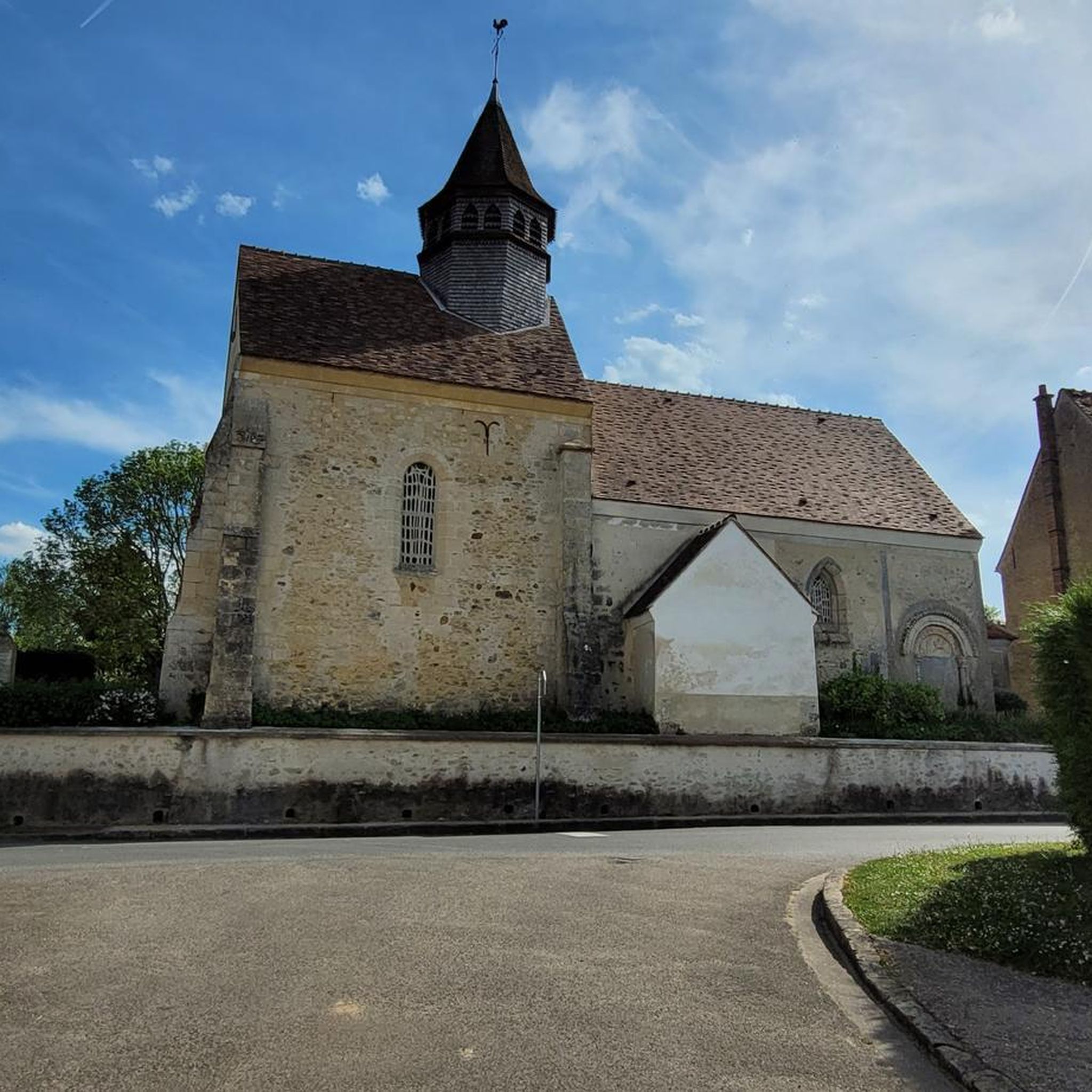
Church of Us, mixing Roman and Gothic style. While most churches in the region have a standard cruciform shape, this one is said to be asymmetrical. This means that where the South brace should be located (symmetrical to the North brace), there is a chapel. It is likely that the original southern brace was considered too narrow...while the current chapel is, on the contrary, too wide. Indeed, it is supported by 'only' the two original vaults, while it requires, by its shape and size, four. The result is a somewhat surprising architecture, with fairly random proportions and (very) sharp angles.
0
0

Mansion dating from the 16th century, which retains external signs of the feudalism of the previous period with the presence of towers, closed perimeter walls. The two pepperbox-capped towers frame a cart gate and a pedestrian gate. The whole is affirmed by a dominating and defensive side. The Château de Moussy housed the German general staff in 1943 and was damaged, like the neighboring church, by a bombardment in 1944. above the main entrance is a characteristic addition. The property listed in the Inventory is private and cannot be visited.
0
0

Manor, called priory, rue de l'Eglise / rue du Moulin-Neuf (listed as a historical monument in 1927). The seigniorial manor was built for the Aumont family between the end of the 15th century and the beginning of the 16th century. While the manor was the property of the writer Henri Béraud, the manor was requisitioned by the German general staff in 1943. Badly damaged by a bombardment in 1944, it has since been extensively restored.
0
0

Notre-Dame-de-l'Assomption Church is a parish Catholic church located in Frémécourt, Val-d'Oise, France. It combines a small Renaissance choir, which does not lack appeal, with a partly Romanesque transept and nave, which have lost all character during successive alterations. The bell tower is also Romanesque, and is distinguished by the passage to an octagonal plan above the belfry floor, but it is otherwise an ordinary construction. The portal of the nave is placed under the influence of Classicism, and seems to date from around 1700, when the church risked collapse and had to be repaired. Inside, the most remarkable element is the richly carved 14th century baptismal font. The sculpture of the capitals and keystones of the choir is distinguished by its distance from the conventions of the Renaissance, and the originality of its motifs. The church is listed as a historic monument by order of June 28, 19742. It is still awaiting restoration. With only two Sunday Masses a year and a few special celebrations, the spiritual life has practically died out.
0
0
The Saint-Rémi Church is dedicated to Saint Rémi in honor of the Bishop of Reims who around 496 baptized Clovis des Francs. It was rebuilt twice, first in 1538 and then in 1562. It is distinguished by its mixture of "flamboyant Gothic" and Renaissance. The nave and the porch are the work of Nicolas le Mercier. The Saint Roch chapel at the end of the aisle was built in 1620 at the expense of Nicolas Brûlart de Sillery, Keeper of the Seals of Henri IV. This octagonal building is topped with a ten-sided stone dome. The corner shields of the octagon bear the papal coat of arms (except two with the effigies of two hearts which were added in the 19th century). Under the chapel, note the presence of a crypt which contained the tombs and the “Priants” of the Brûlart de Sillery, as for the Villeroy in Magny-en-Vexin (destroyed in 1793). It is now empty.
0
0
The statue of Admiral Peyron The statue of Admiral Peyron was sculpted by Henri Georget in 1904. It was placed in the center of the town hall square on July 17, 1904. The base (the base) is oblique. The four sides represent the waves of the sea. At the four angles, the sterns of ancient ships can be seen. The pyramid decorated with a capital supports the bust of Admiral Peyron. All these elements are significant of Admiral Peyron's career in the navy. Thus, the homage is paid to the “glorious son of Marines”. Admiral Peyron was born in Marines in 1823. Son of Alexandre Peyron, doctor and Mayor of Marines, he entered the naval school in November 1839. First maneuver officer, then lieutenant, commander, chief of staff, vice-admiral, maritime prefect and senator. An accomplished career from which he climbed all the ranks of the Navy until becoming its minister. He died in Paris on January 9, 1892.
0
0
magnificent architecture, with these two red doors that make our imagination work!
1
0
Frequently Asked Questions
What natural features can I explore around Le Heaulme?
Le Heaulme is situated at the foot of the Buttes de Rosne, which are prominent isolated hills and the highest point of the Vexin plateau. The village is also nestled within the French Vexin Regional Natural Park, offering a preserved natural environment. The Buttes de Rosne area is recognized for its ecological importance as a Zone Naturelle d'Intérêt Écologique, Faunistique et Floristique (ZNIEFF).
Are there hiking opportunities near Le Heaulme?
Yes, Le Heaulme serves as an excellent base for hiking and exploring the Buttes de Rosne and the wider French Vexin countryside. While specific hiking routes are not detailed in the guide, the natural park offers numerous trails for various skill levels. You can also find many cycling routes that traverse the scenic landscapes, which can often be adapted for walking.
What historical sites can I visit in and around Le Heaulme?
Le Heaulme itself features the historic Église Saint-Georges, known for its 12th-century portal and Romanesque tympanum depicting Saint George. Nearby, you can explore Moussy Castle with its strong entrance and two round towers, or the Saint-Rémi Church, which showcases a blend of "flamboyant Gothic" and Renaissance styles. Another notable site is the Notre-Dame-de-l'Assomption Church of Frémécourt, featuring a small Renaissance choir and a richly carved 14th-century baptismal font.
Are there any unique architectural sites to see?
Absolutely. The Église Saint-Georges in Le Heaulme boasts a remarkable 12th-century Romanesque tympanum. The Church of the Nativity of the Virgin in Us is particularly unique for its asymmetrical design, mixing Roman and Gothic styles, which is uncommon for churches in the region. Additionally, the Saint-Rémi Church is distinguished by its blend of "flamboyant Gothic" and Renaissance architecture.
What kind of cycling routes are available around Le Heaulme?
The area around Le Heaulme offers a variety of cycling routes. You can find numerous options for road cycling, gravel biking, and general touring. For example, there are moderate road cycling loops like the 'Moussy Castle – Saint-Martin Church of Commeny loop' (46.15 km) or easier touring routes such as the 'Ferme des Belles Vues – Disused Vexin Station loop' (13.02 km). Explore more routes on the dedicated guides for Road Cycling, Gravel Biking, and Cycling around Le Heaulme.
Are there family-friendly attractions around Le Heaulme?
The Church of the Nativity of the Virgin in Us is noted as family-friendly. Beyond specific sites, the natural environment of the French Vexin Regional Natural Park provides ample opportunities for family outings, including easy walks and exploring the rural charm of the village and its surroundings.
What is the best time to visit Le Heaulme for outdoor activities?
The French Vexin Regional Natural Park is generally pleasant for outdoor activities from spring through early autumn (April to October). During these months, the weather is typically mild, making it ideal for hiking, cycling, and exploring the natural landscapes. Summer offers longer daylight hours, while spring and autumn provide beautiful scenery with blooming flowers or changing foliage.
What do visitors appreciate most about the attractions near Le Heaulme?
Visitors particularly enjoy the unique architecture and historical significance of the churches and castles. For instance, Moussy Castle is admired for its strong entrance and 'magnificent architecture.' The Church of the Nativity of the Virgin in Us is appreciated for its unusual asymmetrical design. The blend of historical monuments and preserved natural environments within the French Vexin Regional Natural Park is also a major draw.
Can I find local produce or experience traditional rural life in Le Heaulme?
Yes, Le Heaulme has preserved interesting remnants of its past peasant life, such as an old watering trough and crosses, adding to its rustic appeal. Visitors may also find local producers like Ferme du Gros Poirier, which offers organic milk, yogurts, and honey, reflecting the agricultural heritage of the area.
Is Le Heaulme a good starting point for exploring the Vexin Regional Natural Park?
Absolutely. Le Heaulme's location within the Vexin français Regional Natural Park makes it an excellent base for exploring the park's scenic landscapes, historical sites, and diverse outdoor activities. Its proximity to the Buttes de Rosne also offers a natural gateway to some of the region's highest points and ecological zones.
Are there any less-known historical points of interest or 'hidden gems'?
Beyond the main churches and castles, Le Heaulme itself holds charm with its traditional vestiges of peasant life, including an old watering trough and crosses. The Notre-Dame-de-l'Assomption Church of Frémécourt, while awaiting restoration, features a richly carved 14th-century baptismal font and unique capital sculptures that are worth discovering for those interested in medieval artistry.
What kind of wildlife can be spotted in the area?
Given its location within the French Vexin Regional Natural Park and the Buttes de Rosne being a designated Zone Naturelle d'Intérêt Écologique, Faunistique et Floristique (ZNIEFF), the area is rich in biodiversity. While specific species are not listed, visitors can expect to observe various local flora and fauna typical of preserved rural and forested environments in the Île-de-France region.

Get inspired with the komoot mobile app


Explore more
Still not found the Highlight you’re looking for? See guides of the top attractions in other regions:
