The best road cycling routes around Le Sel-De-Bretagne
4.3
(66)
1,640
riders
206
rides
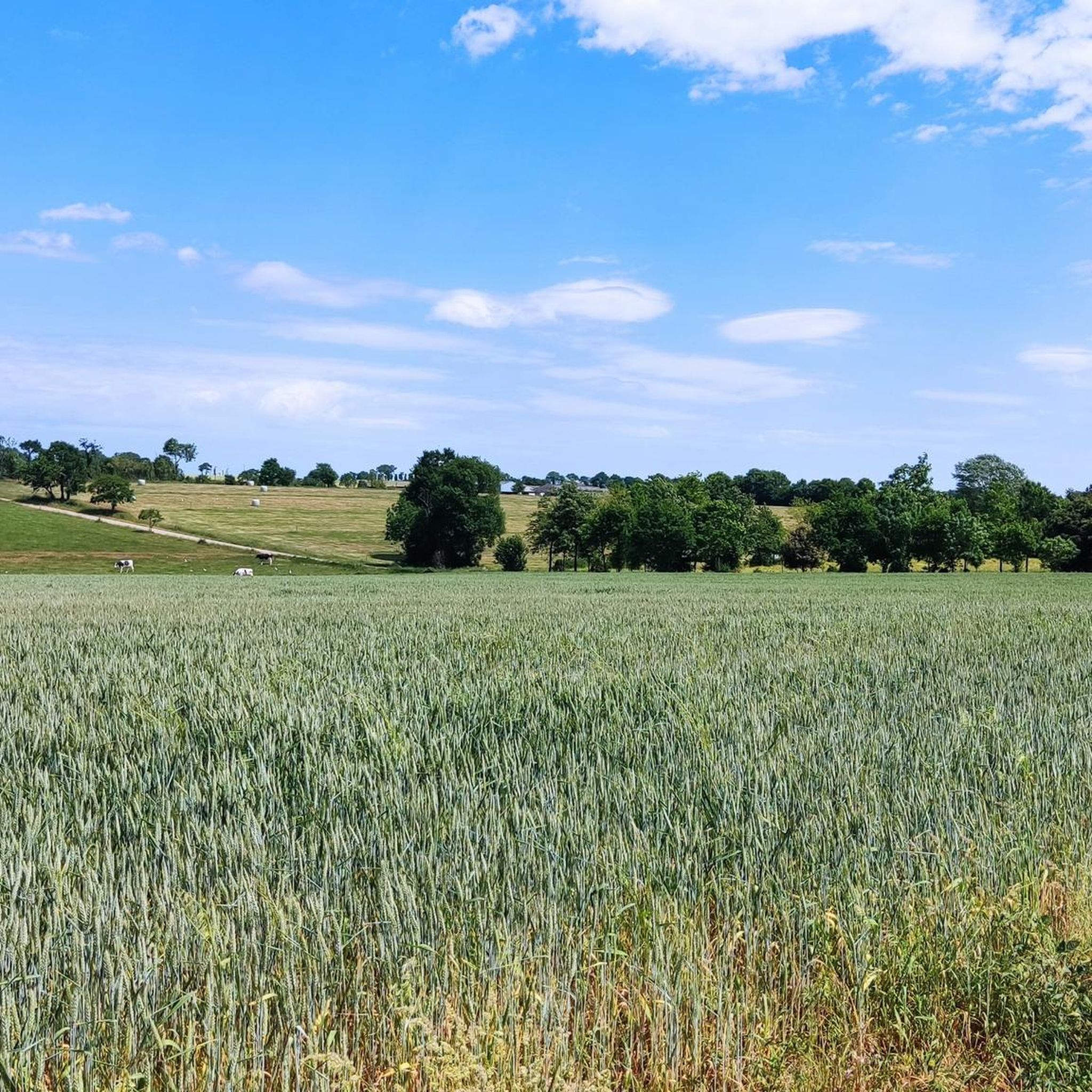
Road cycling around Le Sel-De-Bretagne offers routes through the rolling countryside of Brittany, characterized by quiet secondary roads and varied inland scenery. The region provides a network of paths that traverse charming villages and natural landscapes. Cyclists can expect to encounter forests and rivers, typical of the Ille-et-Vilaine department. This area serves as a base for exploring Brittany's extensive cycling infrastructure.
Best road cycling routes around Le Sel-De-Bretagne
- The most popular road cycling route is La Halte – Pont-Réan loop…
Last updated: October 9, 2026
19
riders
40.3km
01:52
470m
470m
Moderate road ride. Good fitness required. Mostly well-paved surfaces and easy to ride.
14
riders
71.4km
03:03
570m
570m
Moderate road ride. Good fitness required. Mostly well-paved surfaces and easy to ride.

6
riders
41.7km
02:02
420m
420m
Moderate road ride. Good fitness required. Some segments of this route may be unpaved and difficult to ride.
3
riders
36.9km
01:47
390m
390m
Moderate road ride. Good fitness required. Some segments of this route may be unpaved and difficult to ride.
5
riders
35.0km
01:31
320m
320m
Moderate road ride. Good fitness required. Mostly well-paved surfaces and easy to ride.
Get access to more routes and recommendations from other explorers.
Already have an account?
Our route recommendations are based on thousands of hikes, rides, and runs completed by other people on komoot.
Start today with a free account
Your next adventure awaits.


Tips from the Community

Magnificent greenway, rolling and shaded. Less flat than I expected.
0
0

Located at the confluence of the Vilaine and Semnon rivers, this picturesque little village is surrounded by valley landscapes in a verdant setting. The village boasts a charming local heritage with its old houses and its bridge over the river.
1
0


The church, which consists of a large nave and two six-bay aisles, a transept, and a three-bay choir without an ambulatory, is 65 meters long. The transept is 26.50 m long, and the naves are 17.5 m wide. The bell tower is 65 meters high without the cross. It has a set of five bells made in 1895 by the Bollée foundry in Le Mans: Saint-Nicolas (the bourdon), weighing 4027 kg, playing the A of octave 2 Anne, weighing 1552 kg, playing the D of octave 3 Marie, weighing 1067 kg, playing the M of octave 3 Joséphine-Jeanne, weighing 726 kg, playing the F sharp of octave 3 Henriette-Victorienne, weighing 450 kg, playing the A of octave 3
0
0
The original chapel, initially dedicated to Notre-Dame, was built by Geoffroy IV, Baron of Châteaubriant, on the site where the cattle market was held from May to October until 1763. A text attests to its existence in 1263. [Threatening to fall into ruin, it was demolished in 1518, leaving only the choir of the old chapel standing. The place of worship was immediately rebuilt in a more spacious form using Châteaubriant schist (Nozay stone), based on the plans of Jean Delorme, brother of Philibert Delorme, thanks to the demolition of a neighboring house and the financial support of Jean de Laval. However, the latter's poor financial situation meant that by 1530, only the nave of the building had been built. At the death of Françoise de Foix in 1537 and Jean de Laval in 1543, the Notre-Dame chapel still lacked a framework. It was not until 1551 that the final work was undertaken by Baron Anne de Montmorency. The dedication of the new place of worship took place ten years later, on November 5, 1561, in the presence of the coadjutor of the Bishop of Nantes, and the name of Notre-Dame was changed to Saint-Nicolas, for an unknown reason. On the same day, the body of Jean de Laval, then encased in a lead reliquary, was transported from the castle chapel to the new building. Jean de Laval had wished to see the chapel erected as a collegiate church, but this wish was not granted. However, the building, as vast as a church, shared the honors of worship with the Church of Saint-Jean de Béré, which was then the parish church of the town, until the Revolution. Indeed, the Saint-Nicolas chapel, although of undeniable architectural value, was not suitable for worship in a parish as large as that of Châteaubriant. Nevertheless, in the 15th and 16th centuries, masses, vespers, and many ceremonies were held in the chapel for reasons of convenience, as it was closer to the town of Châteaubriant, while baptisms were all celebrated at Saint-Jean de Béré. At the end of the 19th century, the church, which became the parish seat in 1801, was completely rebuilt. The architect Eugène Boismen drew up the plans, inspired by those of the Saint-Nicolas basilica in Nantes, one of the first neo-Gothic projects in France, which was beginning to inspire architects throughout the west of the country. The foundation stone was blessed on April 25, 1875, by Bishop Fournier of Nantes. The choir, sacristies, transept, and five bays were only completed at the time of the consecration, which was performed by his successor, Bishop Le Coq, on February 1, 1881. The foundations of the bell tower and the remaining bay began in June 1892, based on plans by architect François Bougoüin. The tower and spire were completed in August 1894.
0
0
This recently built church (end of the 19th century) is visible from afar with its 65 meters in height.
0
0

Very nice bump and very hard
0
0

Frequently Asked Questions
How many road cycling routes are available around Le Sel-De-Bretagne?
You'll find a wide selection of road cycling routes around Le Sel-De-Bretagne, with over 200 options available. These routes cater to various preferences and fitness levels, offering diverse experiences through the region's landscapes.
What kind of terrain can I expect when road cycling in Le Sel-De-Bretagne?
Road cycling in Le Sel-De-Bretagne primarily features rolling countryside and quiet secondary roads. The region, part of Brittany's Ille-et-Vilaine department, offers varied inland scenery, including charming villages, forests, and rivers. While not directly coastal, the area provides access to a rich tapestry of landscapes, from open moorlands to canal towpaths, making for diverse rides.
Are there road cycling routes suitable for different skill levels?
Yes, the routes around Le Sel-De-Bretagne accommodate various skill levels. You can find easy, moderate, and difficult options. There are 37 easy routes, 174 moderate routes, and 5 more challenging routes, ensuring there's something for everyone from beginners to advanced cyclists.
What are some interesting landmarks or points of interest I can see along the routes?
Many routes pass by cultural and natural points of interest. For example, the Allée du Meslier – Saint-Maximilien-Kolbé Church loop from Crevin includes the Saint-Maximilien-Kolbé Church. Other notable attractions in the wider area include the Pléchâtel Embankment and Our Lady of La Salette, and the Hidden Chapel. The Chateau de Chateaubriant – Torche Pond loop from La Bosse-de-Bretagne also offers varied landscapes including a chateau and a pond.
What do other road cyclists enjoy most about the routes in Le Sel-De-Bretagne?
The road cycling routes in Le Sel-De-Bretagne are highly rated by the komoot community, with an average score of 4.1 stars from over 40 reviews. Cyclists often praise the quiet secondary roads, the charming villages, and the varied inland scenery that defines the region. Over 1,400 road cyclists have used komoot to explore the area's diverse terrain.
Are there any long-distance cycling routes or networks accessible from Le Sel-De-Bretagne?
While Le Sel-De-Bretagne offers local routes, its location in Ille-et-Vilaine provides access to Brittany's extensive cycling infrastructure. Brittany is renowned for its network of greenways and routes along canal towpaths and disused railway lines, offering 2,700 km of marked routes. For more information on long-distance options, you can explore resources like Brittany Tourism or France Vélo Tourisme.
Are there circular road bike routes available?
Yes, many of the road cycling routes around Le Sel-De-Bretagne are designed as loops, allowing you to start and finish in the same location. An example is the The Bend 🛶⛵️ – Bourg des Comptes Town Hall loop from Crevin, which offers a scenic circular ride.
What is the best time of year for road cycling in Le Sel-De-Bretagne?
Brittany generally offers pleasant conditions for cycling from spring through autumn. The region's climate is mild, making it enjoyable for outdoor activities. Checking local weather forecasts closer to your visit will help you prepare for the best conditions.
Are there family-friendly road cycling options in the area?
Yes, with 37 easy routes available, there are several family-friendly road cycling options around Le Sel-De-Bretagne. These routes typically feature gentler terrain and quieter roads, suitable for a more relaxed pace with children.
Where can cyclists find cafes, pubs, or accommodation in the area?
The region is dotted with charming villages where you can often find local cafes and pubs for a break. For accommodation, you'll find options in and around Le Sel-De-Bretagne and nearby towns. Many routes pass through these settlements, making it convenient to plan stops.
Is public transport available for cyclists with bikes in Le Sel-De-Bretagne?
While local public transport options may vary, Brittany as a whole is increasingly cyclist-friendly. For specific information on bringing bikes on public transport, it's best to check with local transport providers or regional tourism offices, especially if planning to connect to larger towns or cities.
Are there routes with significant elevation gain for a more challenging ride?
Yes, while much of the terrain is rolling, some routes offer more significant elevation gain for those seeking a challenge. The region's varied inland scenery includes ascents that will test your fitness. For example, the La Halte – Pont-Réan loop from Crevin includes over 450 meters of elevation gain.
Most popular routes around Le Sel-De-Bretagne
Most popular attractions around Le Sel-De-Bretagne

Get inspired with the komoot mobile app


Explore more
Browse the best Road cycling routes in other regions.
