The best cycling routes around Luzy-Saint-Martin
4.5
(91)
662
riders
59
rides
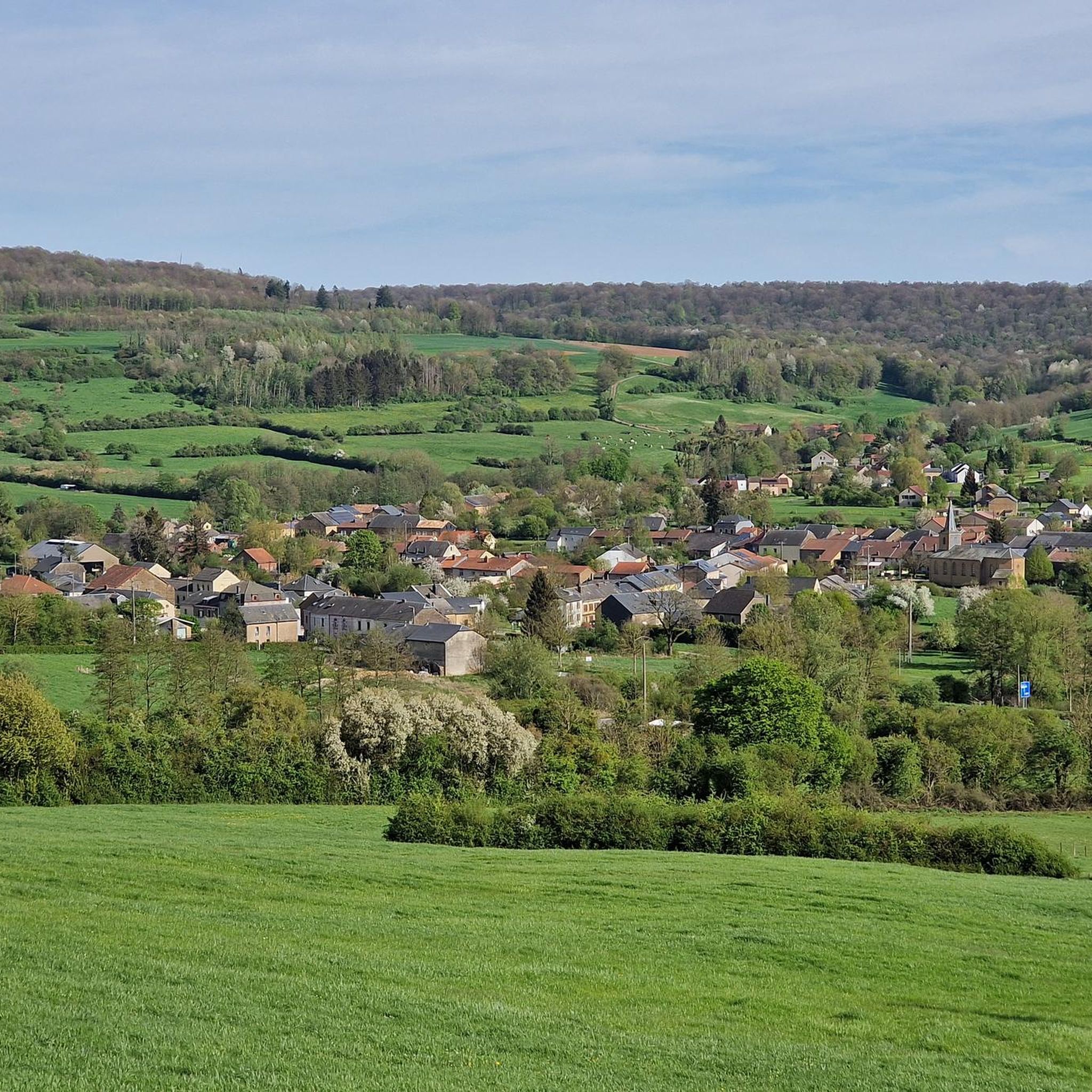
Touring cycling around Luzy-Saint-Martin offers routes through the Meuse river valley, characterized by rolling hills and historical landmarks. The landscape includes rural roads, agricultural areas, and sections alongside the Meuse River. Elevation changes are present, with some routes featuring moderate climbs and descents.
Best touring cycling routes around Luzy-Saint-Martin
- The most popular touring cycling route is Beer Museum – Cumières-le-Mort-Homme loop from Stenay, a 54.3 miles (87.3 km) trail that takes 5 hours 6 minutes to complete. This route…
Last updated: May 4, 2026
4.0
(4)
46
riders
100km
05:51
530m
530m
Hard bike ride. Very good fitness required. Mostly paved surfaces. Suitable for all skill levels.
3.7
(3)
18
riders
38.5km
02:14
150m
150m
Moderate bike ride. Good fitness required. Mostly paved surfaces. Suitable for all skill levels.

Sign up for free
5.0
(3)
14
riders
85.5km
05:07
550m
550m
Hard bike ride. Very good fitness required. Mostly paved surfaces. Suitable for all skill levels.
5.0
(1)
9
riders
46.1km
02:50
390m
400m
Moderate bike ride. Good fitness required. Mostly paved surfaces. Suitable for all skill levels.
3.0
(1)
7
riders
42.4km
02:37
410m
410m
Moderate bike ride. Good fitness required. Mostly paved surfaces. Suitable for all skill levels.
Get access to more routes and recommendations from other explorers.
Sign up for free
Already have an account?
Our route recommendations are based on thousands of hikes, rides, and runs completed by other people on komoot.
Start today with a free account
Your next adventure awaits.
Login or Signup


Tips from the Community

From the tomb we have a superb view of its park
0
0

This rest area just above the main road offers a beautiful view of the Meuse and the opposite side of the river
1
0

Among the thousands of fallen soldiers who rest here is Caporal Louis Micol, a soldier of the 19th Battalion of Chasseurs à Pied. He was not only a soldier, but also the founder of one of the first French front newspapers: Le Son du Cor, a trench newspaper written by and for soldiers. Micol died on 18 September 1915 in Brabant-en-Argonne and is buried in grave no. 390. His story is a reminder that even in the midst of the violence of war, soldiers sought ways to make their voices heard, share experiences and preserve their humanity.
7
1
Military cemetery created in 1916 during the Battle of Verdun. It contains the remains of 6,537 French soldiers, including 2,000 in ossuaries. Most of them died in 1916 on the right bank of the Meuse, near strategic points such as Côte 344 and Thiaumont. In 1961, 151 soldiers who died in the Second World War were also buried there. The necropolis covers 3.2 hectares and was set up between 1919 and 1934
7
1
This church, dedicated to Saint-Baudel, originally dates from the 11th century, as evidenced by the use of the typical opus spicatum masonry in the north wall. Over the centuries, the building has been modified and restored several times, resulting in a striking mix of architectural styles. Inside, you will find wooden seating boxes for the faithful and a 19th-century pulpit – silent witnesses to religious life in this village on the Meuse. Note the symbolic animal figures at the ends of the roof beams.
7
0

The national necropolis of Bras-sur-Meuse contains the remains of 6,537 soldiers who died for France. During the First World War, 6,386 French soldiers were gathered here, 2,000 of whom are in two ossuaries. It was created in 1916 during the Battle of Verdun (February-November 1916) and was gradually expanded from 1919 to 1934. It is a cemetery for the regrouping of bodies exhumed from military cemeteries on the right bank of the Meuse, in particular those of soldiers who died in the first aid post or in the ambulances stationed at La Fourche, the crossroads of the roads to Louvemont and Douaumont. The ossuaries contain the remains of unknown and unidentified soldiers who fell on hill 344, Haudromont, Froideterre, Cote du Poivre, Thiaumont, Louvemont, etc. In 1961, the remains of 151 soldiers who died during the fighting in June 1940 and were buried in various villages along the Meuse during the Second World War were collected here. Among the soldiers is Corporal Louis Micol, of the 19th Chasseurs Battalion, founder of one of the first newspapers on the front, Le son du cor , a trench newspaper of the chasseurs, who died in Brabant on 18 September 1915 (grave no. 390). Want to know more? Click on https://www.cheminsdememoire.gouv.fr/fr/bras-sur-meuse
5
1
The Saint Martin's Church was destroyed during the Battle of Verdun. After the Great War, the Saint Martin's Church was restored. The opening took place in the presence of Bishop Jean-Paul Gusching, Bishop of Verdun. Note that the church, before it was destroyed in 14-18, originally stood in the old village. Triggered to the full story? You can read it here on the large information board.
6
0
Villages détruits, Cumières-le-Mort-Homme is one of the nine villages that were destroyed during the Battle of Verdun. Historical context: Nine villages: Beaumont-en-Verdunois, Bezonvaux, Cumières-le-Mort-Homme, Douaumont, Fleury-devant-Douaumont, Haumont-près-Samogneux, Louvemont-Côte-du-poivre, Ornes and Vaux-devant-Damloup. They were all in the “Red Zone” of the front line in the Battle of Verdun. The villages were wiped off the map and never rebuilt. Erected chapels remind passers-by of this war horror. Triggered to the disappeared villages? Click through to https://www.landofmemory.eu/nl/sites-historiques/vernielde-dorpen/#:~:text=Vernielde%20dorpen,-In%20de%20Maasstreek&text=Deze%20dorpen%20zijn%20Beaumont%2Den,geveegd%20en%20never%20weer%20opopbouw.
4
1
Frequently Asked Questions
How many touring cycling routes are available around Luzy-Saint-Martin?
There are over 50 touring cycling routes documented on komoot for the Luzy-Saint-Martin area, offering a wide range of options for different skill levels and preferences.
Are there any easy touring cycling routes suitable for beginners or families?
Yes, Luzy-Saint-Martin offers several easy routes. For a pleasant ride, consider the Pershing Bridge of Dun-sur-Meuse – Menhir known as the Devil’s Hood loop from Laneuville-sur-Meuse, which is 20.9 miles (33.7 km) long and takes about 1 hour 57 minutes, leading through the Meuse valley and past ancient monuments.
What are some longer touring cycling routes for experienced riders?
For a more challenging and longer ride, the Beer Museum – Cumières-le-Mort-Homme loop from Stenay is a difficult 54.3 miles (87.3 km) trail that connects cultural sites with historical battlefields and features significant elevation changes.
Are there circular touring cycling routes in the Luzy-Saint-Martin area?
Many of the touring cycling routes around Luzy-Saint-Martin are designed as loops, allowing you to start and finish at the same point. Examples include the World War I Memorial – Pershing Bridge of Dun-sur-Meuse loop from Stenay, which is a moderate 27.1 miles (43.7 km) path featuring memorials and river crossings.
What kind of terrain can I expect on touring cycling routes in Luzy-Saint-Martin?
The routes primarily traverse the Meuse river valley, characterized by rolling hills, rural roads, agricultural areas, and sections alongside the Meuse River. You'll encounter both flat stretches and moderate climbs and descents.
What historical sites or attractions can I see along the touring cycling routes?
The region is rich in history. You can explore sites like the Abbatiale Notre-Dame de Mouzon, or visit the Beer Museum. Many routes, such as the Beer Museum – World War I Memorial loop from Stenay, incorporate significant historical landmarks.
Are there any scenic viewpoints accessible by touring bike?
Yes, the area offers beautiful vistas. The Mont Saint-Walfroy is a notable viewpoint that can be incorporated into your cycling adventures, offering panoramic views of the surrounding landscape.
What is the best time of year for touring cycling in Luzy-Saint-Martin?
Spring and autumn generally offer the most pleasant conditions for touring cycling, with milder temperatures and beautiful scenery. Summer can also be enjoyable, but be prepared for warmer weather, especially in July and August.
Are there places to stop for refreshments or food along the routes?
Many routes pass through or near small towns and villages where you can find local cafes, bakeries, and restaurants. The town of Mouzon, for instance, offers options for a break. The region is also known for its local produce and traditional cuisine.
What do other touring cyclists say about the routes in Luzy-Saint-Martin?
The touring cycling routes in Luzy-Saint-Martin are highly rated by the komoot community, with an average score of 4.5 stars from over 91 reviews. Cyclists often praise the diverse landscapes, historical points of interest, and the well-maintained rural roads.
Is there public transport access to the touring cycling routes?
While specific public transport options directly to trailheads might be limited in some rural areas, regional bus services and train lines connect larger towns like Stenay. It's advisable to check local transport schedules for bicycle carriage policies.
Where can I find parking for touring cycling routes in Luzy-Saint-Martin?
Parking is typically available in the towns and villages that serve as starting points for many routes, such as Stenay or Laneuville-sur-Meuse. Look for public parking areas or designated spots near local amenities.
Are there any moderate touring cycling routes that offer a good balance of challenge and scenery?
Absolutely. The Murvaux – Pershing Bridge of Dun-sur-Meuse loop from Stenay is a moderate 30.4 miles (48.9 km) route that provides a good workout with varied landscapes, including river views and historical elements.
Most popular attractions around Luzy-Saint-Martin

Get inspired with the komoot mobile app


Explore more
Browse the best Cycling routes in other regions.
