The best road cycling routes around Ville-Devant-Chaumont
4.1
(9)
189
riders
20
rides
Road cycling routes around Ville-Devant-Chaumont traverse a diverse landscape within the Meuse department of France. The region features rolling countryside, pretty hills, and deep forests, offering varied terrain for road cyclists. The Meuse River is a central natural feature, with routes often passing through meadows and wooded cliffs. Hilly sections, particularly around Verdun, provide elevation gains for more challenging rides.
Best road cycling routes around Ville-Devant-Chaumont
- The most popular road cycling route is Verdun Memorial – Douaumont Ossuary loop from…
Last updated: November 9, 2026
41
riders
54.7km
02:21
460m
460m
Moderate road ride. Good fitness required. Mostly well-paved surfaces and easy to ride.
16
riders
63.6km
02:52
620m
620m
Moderate road ride. Good fitness required. Mostly well-paved surfaces and easy to ride.

11
riders
35.7km
01:34
310m
310m
Moderate road ride. Good fitness required. Mostly well-paved surfaces and easy to ride.
8
riders
38.3km
01:40
290m
290m
Easy road ride. Mostly well-paved surfaces and easy to ride.
9
riders
Hard road ride. Very good fitness required. Mostly well-paved surfaces and easy to ride.
Get access to more routes and recommendations from other explorers.
Already have an account?
Our route recommendations are based on thousands of hikes, rides, and runs completed by other people on komoot.
Start today with a free account
Your next adventure awaits.




Tips from the Community

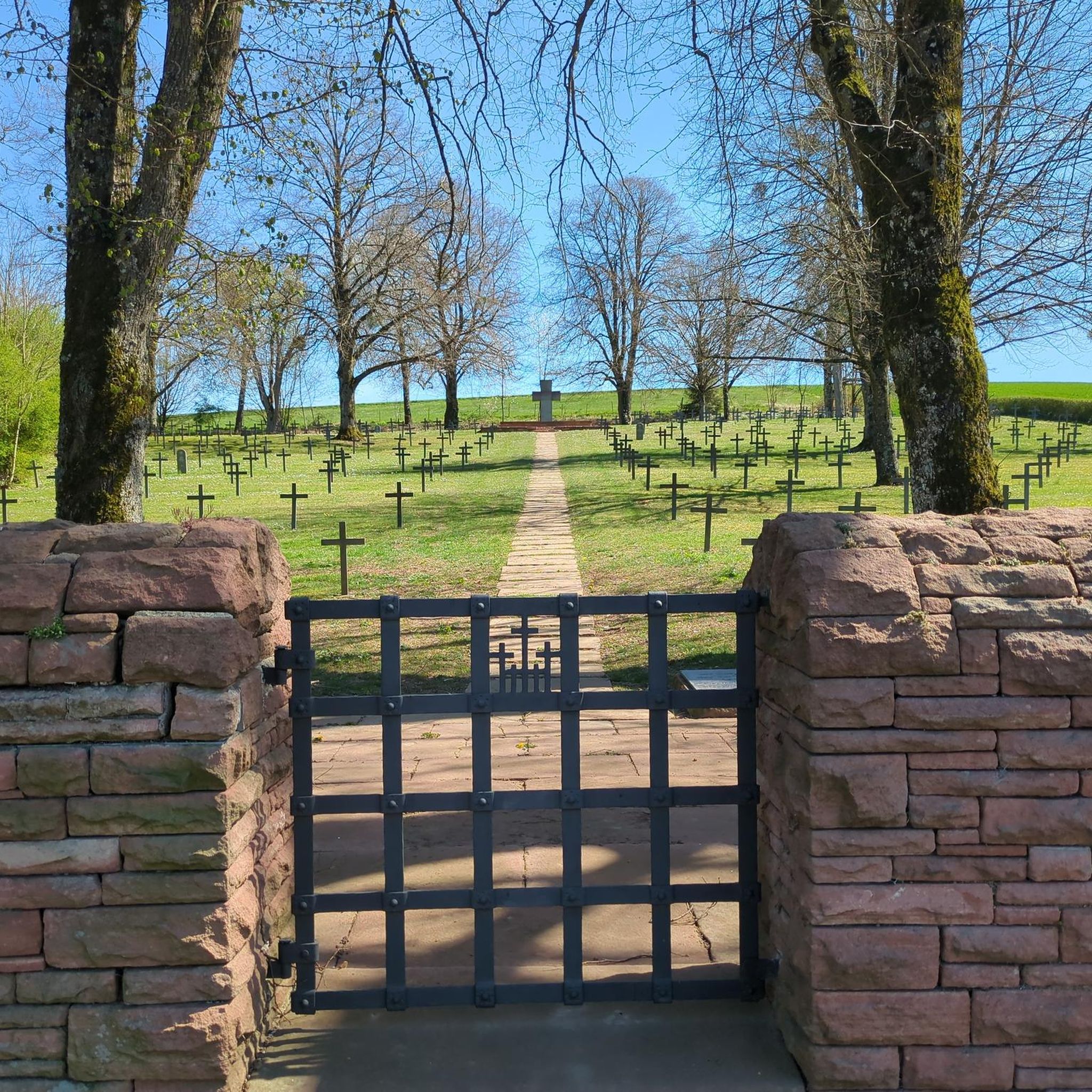
The Ossuary of Douaumont is an impressive memorial that holds the remains of more than 130,000 unknown French and German soldiers who died during the Battle of Verdun (1916). The bones are visible through small windows in the base – a confronting reminder of the horrors of war. In front of the ossuary is the Nécropole nationale de Douaumont, the largest French military cemetery of the First World War, with 16,142 graves, including a Muslim and Jewish plot. The complex was recognized as a UNESCO World Heritage Site in 2023.
8
0
The Mémorial de Verdun, located near the ruined village of Fleury-devant-Douaumont, is a leading museum and commemoration site for the Battle of Verdun (1916). The museum displays more than 2,000 objects and uses authentic objects, photographs and audiovisual installations to show how French and German soldiers experienced this battle – in the exact same place where they fought.
8
3

The memorial commemorating the rural population of Verdun in World War I.
3
0

Silent witnesses to the destructive madness
1
0
For enthusiasts who want to marvel at this impressive hall. Here you come face to face with a war machine.
6
0
The monument consists of five figures representing the five corps of the army involved in the 1916 battle: a horseman, an engineer, a territorial man, an infantryman and an artilleryman.
5
0
The monument to the dead and children of Verdun, built in 1928, rests on the crescent-shaped road built in the 17th century by order of Marshal Vauban. It stands on the site of the military butchery that was destroyed in 1916.
6
0
The War Memorial in Honour of the Citizens of Verdun, erected in 1928, is built in the La Chaussée demi-lune, part of the fortifications built in the 17th century by Marshal Vauban. The monument stands on the site of the former military slaughterhouse that was destroyed in 1916. The statues represent the five weapons of the French army that were involved in the battle of 1916. From left to right we can see: a cavalryman, a sapper-engineer, an infantryman, also known as a "poilu", an artilleryman and a reservist. These five soldiers form a human wall that symbolises the motto of the city: "They shall not pass". The names of the soldiers of Verdun who died in the First and Second World Wars are inscribed on the base of the monument. See also: A statue of General Sarrail opposite the monument and a bust of General Mangin on the wall of the city wall on the right. NOTE: Verdun's patriotic calendar is full and the commemorative ceremonies of 1 and 11 November take place in front of this monument. Be sure to visit in the evening, when the War Memorial Verdun is illuminated in the French national tricolour. Source: Tourism Verdun
6
0
Frequently Asked Questions
What kind of terrain can I expect on road cycling routes around Ville-Devant-Chaumont?
The region offers a diverse landscape for road cyclists. You'll find rolling countryside and pretty hills, especially around Verdun, which provide elevation gains for more challenging rides. Routes also traverse meadows, wooded cliffs, and deep forests, with the Meuse River often featuring prominently, offering scenic riverside paths.
Are there road cycling routes suitable for beginners or those looking for an easier ride?
Yes, the area caters to various skill levels. Out of the 28 available road cycling routes, 10 are classified as easy. While specific easy routes are not detailed here, the region's diverse terrain includes flatter sections, particularly along the Meuse River, which are ideal for relaxed rides.
Where can I find more challenging road cycling routes in the Ville-Devant-Chaumont area?
For experienced road cyclists seeking elevation gains, the hilly terrain around Verdun offers more challenging routes. There are 5 routes classified as difficult in the region. One such challenging route is the Torgny Village – RAVeL Ruette–Chenois Path loop from Verdun, which covers 60.5 miles (97.4 km) with significant elevation changes.
What historical landmarks can I visit while road cycling in this region?
The area is rich in World War I history. Many routes incorporate visits to poignant sites. You can cycle past the Douaumont Ossuary, the Verdun Memorial, and Fort de Vaux. The historic town of Verdun, a central point for many routes, also offers opportunities to explore battlefields and memorials.
Are there any natural features or scenic viewpoints along the road cycling routes?
Absolutely. The Meuse River is a central natural feature, offering scenic riverside paths and peaceful meanders. Routes often traverse meadows, wooded cliffs, and deep forests, providing constantly changing panoramas. You might spot local wildlife like herons and cormorants along the river.
Are there any loop or circular road cycling routes available?
Yes, many of the road cycling routes in the area are designed as loops. For example, the popular Verdun Memorial – Douaumont Ossuary loop from Ornes is a 34.0-mile (54.7 km) circular route connecting significant historical sites. Another option is the Douaumont Ossuary – Douaumont Ossuary loop from Damvillers.
What is the best time of year to go road cycling around Ville-Devant-Chaumont?
The region is generally pleasant for cycling during spring, summer, and early autumn. These seasons offer milder weather and lush landscapes. While specific seasonal considerations are not detailed, avoiding the colder winter months is advisable for optimal road cycling conditions.
What do other road cyclists think about the routes in Ville-Devant-Chaumont?
The road cycling routes in Ville-Devant-Chaumont are highly rated by the komoot community, with an average score of 4.8 stars from more than 5 reviews. Cyclists often praise the varied terrain, the historical significance of the landmarks, and the well-maintained paths.
Are there options for longer road cycling tours in the area?
Yes, the region offers several longer routes for endurance cyclists. The Torgny Village – RAVeL Ruette–Chenois Path loop from Verdun is a difficult 60.5-mile (97.4 km) path. Another long option is the Scenic Country Road – Caure wood loop from Damvillers, which spans over 111 km.
Is the EuroVelo 19 (Meuse by Bike) accessible from this area?
Yes, the EuroVelo 19, also known as 'La Meuse à vélo', is a major cycling route that passes through the Meuse department. It offers predominantly flat routes along the Meuse River, ideal for relaxed rides. You can find more information about this route on France Vélo Tourisme.
Are there any family-friendly road cycling options?
While specific 'family-friendly' road cycling routes are not explicitly listed, the predominantly flat sections of the EuroVelo 19 along the Meuse River are generally considered ideal for relaxed rides and families. These paths offer a safer and less strenuous experience.
What are the typical durations for road cycling routes in Ville-Devant-Chaumont?
Route durations vary significantly based on distance and difficulty. For example, a moderate route like the Verdun Memorial – Douaumont Ossuary loop from Ornes typically takes around 2 hours 20 minutes. Longer, more difficult routes can take 4-6 hours or more, such as the Scenic Country Road – Caure wood loop from Damvillers, which can take over 6 hours.
Most popular routes around Ville-Devant-Chaumont
Most popular attractions around Ville-Devant-Chaumont

Get inspired with the komoot mobile app


Explore more
Browse the best Road cycling routes in other regions.
