Attractions and Places To See around Plombières-Les-Bains - Top 20
Best attractions and places to see around Plombières-Les-Bains, a historic spa town in the Vosges department of eastern France, offers a blend of architectural beauty, natural tranquility, and cultural experiences. Known as the "city of a thousand balconies," it features unique charm and a rich history, particularly its association with thermal waters since Roman times. The region is characterized by its terraced streets, natural parks, and the surrounding Vosges landscape.
Best attractions and places to see around Plombières-Les-Bains
- The most popular attractions is Fort du Parmont, a historical site that was built between 1874 and 1876. It served as part of the "barrier de fer" on the border with Germany, predating the Maginot Line.
- Another must-see spot is Saint-Pierre Abbey of Remiremont, a religious building constructed from the 11th century. This historical monument showcases a blend of Romanesque and Gothic architectural styles, with an underground church featuring 14th and 15th-century wall paintings.
- Visitors also love Hérival Priory, a former monastery. This site, where a hermit settled in 1090, has seen a community of monks and is now recognized for its ecological value within the Sensitive Natural Spaces of the Vosges Department.
- Plombières-Les-Bains is known for its historical landmarks, thermal baths, and natural features like parks and cycle paths. The area offers a variety of attractions to see and explore, from architectural heritage to outdoor activities.
- The attractions around Plombières-Les-Bains are appreciated by the komoot community, with 10 highlights featuring 24 photos and receiving 53 upvotes.
Last updated: July 16, 2026
Intersection of the Voie Verte des Hautes-Vosges
Highlight • Cycleway
More information: de.wikipedia.org/wiki/Bahnzeile_%C3%89pinal%E2%80%93Bussang, fr.wikipedia.org/wiki/Ligne_de_Remiremont_%C3%A0_Cornimont and www .paysderemiremont.fr/voieverte/
Translated by Google •
Tip by

Fort du Parmont
Highlight • Historical Site
And thus a forerunner of the built in 1930 Maginot Line.
Translated by Google •
Tip by

Sign up now to discover places like this
Get recommendations on the best single tracks, peaks, & plenty of other exciting outdoor places.
Sign up for free
Saint-Pierre Abbey of Remiremont
Highlight • Religious Site
The history of the abbey church is closely linked, until the Revolution, to that of the Chapter of Ladies Canonesses. This building, built mainly in the 13th century in its upper part, presents a contrast between the sobriety of the Gothic style nave and the richness of the choir in marble and plasterwork. The underground church, made up of three chapels, dates from the 11th century and presents wall paintings from the 14th and 15th centuries.
Thanks to major renovation work from 1988 until the year 2000, the church is in an excellent state of conservation, exterior (roofs redone, facades renovated, etc.) and interior with original colors and simple and simple shapes. purified found.
This former church of the Chapter of the Noble Ladies of Remiremont, which became a parish church during the French Revolution, constitutes the center of the canonical district made up of the houses of the canonesses and the abbey palace which today houses the town hall.
Its renovation made it possible to highlight wall frescoes from the 14th and 15th centuries in the crypt, as well as original keystones representing magnificent painted suns dated 1495 in the upper part. Excavations have shown the existence, below the Romanesque level, of an earlier construction which would be the Carolingian chapel of the royal domain of Louis the Pious.
The building houses many notable elements including one of the city's treasures: the “Statue Notre Dame du Trésor” whose originality is linked to a mixture of Byzantine and Romanesque art. It also houses a 15th century statue of Saint Nicholas carved from Meuse limestone, a copy of a painting by Velázquez “Christ Crucified” as well as a monumental altarpiece in black marble and white limestone which houses the relics. of the saints founder of the Saint-Mont…
Built in Vosges sandstone, the Saint-Pierre church has a sober tower with a bulbous bell tower which gives it a characteristic silhouette and the north transept houses a Renaissance-style portal with quality decorations.
tourisme.vosges.fr/decouvre/sites-monuments/885000541-leglise-abbatiale-saint-pierre-remiremont
Translated by Google •
Tip by

Hérival Priory
Highlight • Other
Translated by Google •
Tip by

Former railway bridge over the Moselle near Remiremont
Highlight • River
Former railway lines and beautiful cycle paths.
More information: de.wikipedia.org/wiki/Bahnzeile_%C3%89pinal%E2%80%93Bussang, de.wikipedia.org/wiki/Remiremont and paysderemiremont.fr /voieverte/
Translated by Google •
Tip by
Sign up for free to discover even more attractions around Plombières-Les-Bains.
Sign up for free
Already have an account?
Start today with a free account
Your next adventure awaits.
Login or Signup

Tips from the Community

This is the first bicycle roundabout I've ever seen. But it makes sense.
0
0

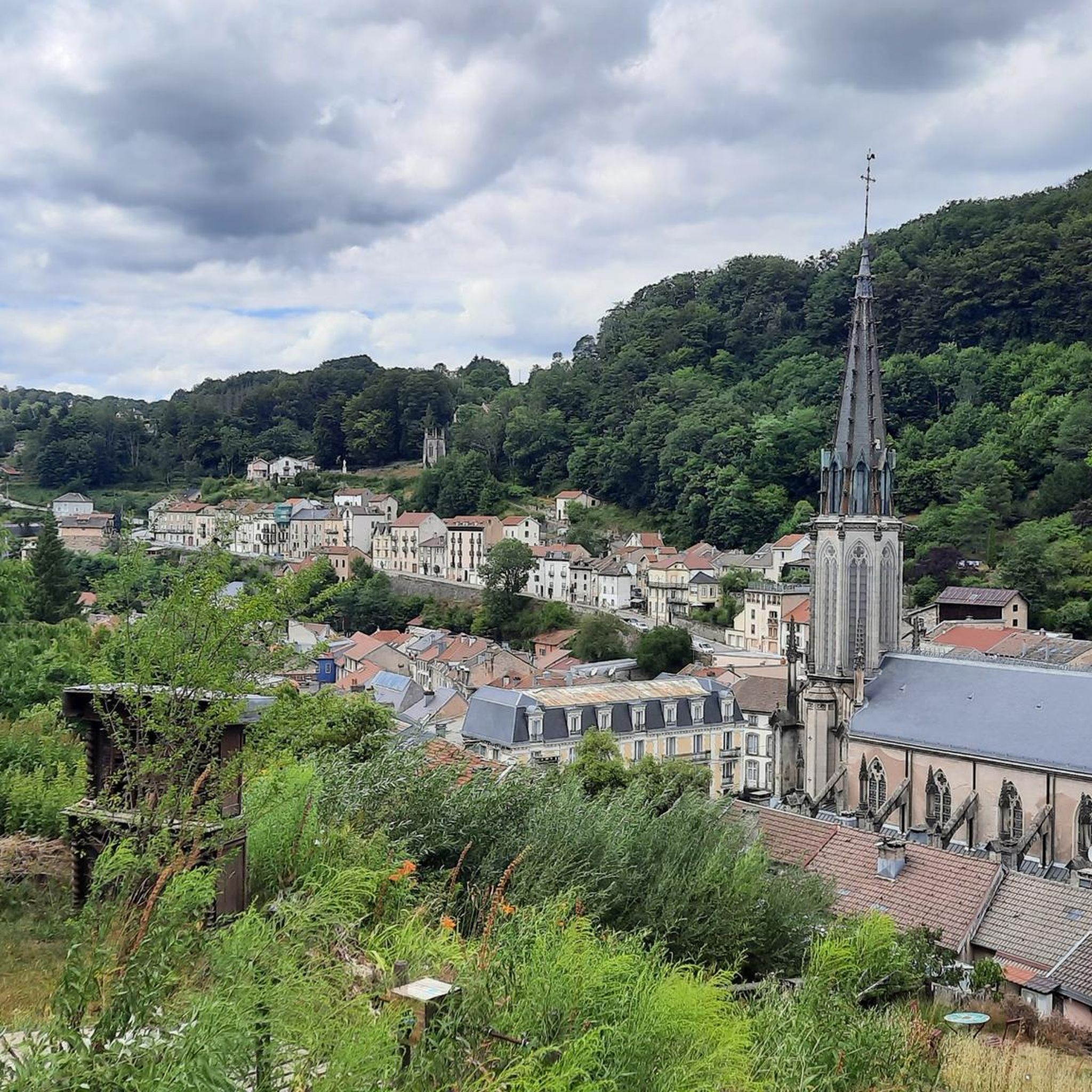
High place in Romarimontan history, the Saint Pierre de Remiremont Abbey Church - built from the 11th century - is the result of the superposition of 2 Romanesque and Gothic churches which are classified as monuments historical records since 1983. The history of the abbey church is closely linked, until the Revolution, to that of the Chapter of Ladies Canonesses. This building, built mainly in the 13th century in its upper part, presents a contrast between the sobriety of the Gothic style nave and the richness of the choir in marble and plasterwork. The underground church, made up of three chapels, dates from the 11th century and presents wall paintings from the 14th and 15th centuries. Thanks to major renovation work from 1988 until the year 2000, the church is in an excellent state of conservation, exterior (roofs redone, facades renovated, etc.) and interior with original colors and simple and simple shapes. purified found. This former church of the Chapter of the Noble Ladies of Remiremont, which became a parish church during the French Revolution, constitutes the center of the canonical district made up of the houses of the canonesses and the abbey palace which today houses the town hall. Its renovation made it possible to highlight wall frescoes from the 14th and 15th centuries in the crypt, as well as original keystones representing magnificent painted suns dated 1495 in the upper part. Excavations have shown the existence, below the Romanesque level, of an earlier construction which would be the Carolingian chapel of the royal domain of Louis the Pious. The building houses many notable elements including one of the city's treasures: the “Statue Notre Dame du Trésor” whose originality is linked to a mixture of Byzantine and Romanesque art. It also houses a 15th century statue of Saint Nicholas carved from Meuse limestone, a copy of a painting by Velázquez “Christ Crucified” as well as a monumental altarpiece in black marble and white limestone which houses the relics. of the saints founder of the Saint-Mont… Built in Vosges sandstone, the Saint-Pierre church has a sober tower with a bulbous bell tower which gives it a characteristic silhouette and the north transept houses a Renaissance-style portal with quality decorations. https://www.tourisme.vosges.fr/decouvre/sites-monuments/885000541-leglise-abbatiale-saint-pierre-remiremont
1
0

The Fort du Parmont was built between 1874 and 1876. It is a structure that is part of the fortifications of eastern France of the Séré de Rivières type. It is located in the municipality of Remiremont and is part of the defensive curtain of the Upper Moselle (Wikipedia). Unfortunately, the fort was closed and we were unable to visit it.
2
0

Here the railway line was expanded to two tracks. This bridge over the Moselle is a witness to this time. One half of the bridge is very well developed as a voie verte, the other half has been left in its original state.
1
0

For the simple reason that we need to know the stories that concern us close to home. THANKS
0
0

A roundabout for cyclists only. . . where else is this? The junction of the Voie Verte des Hautes Vosges railway cycle path was designed very beautifully and lovingly. One branch leads into the valley of the Moselotte to Cornimont, the other in the valley of the young Moselle to its source at Bussang
1
0

A roundabout for cyclists.
1
0

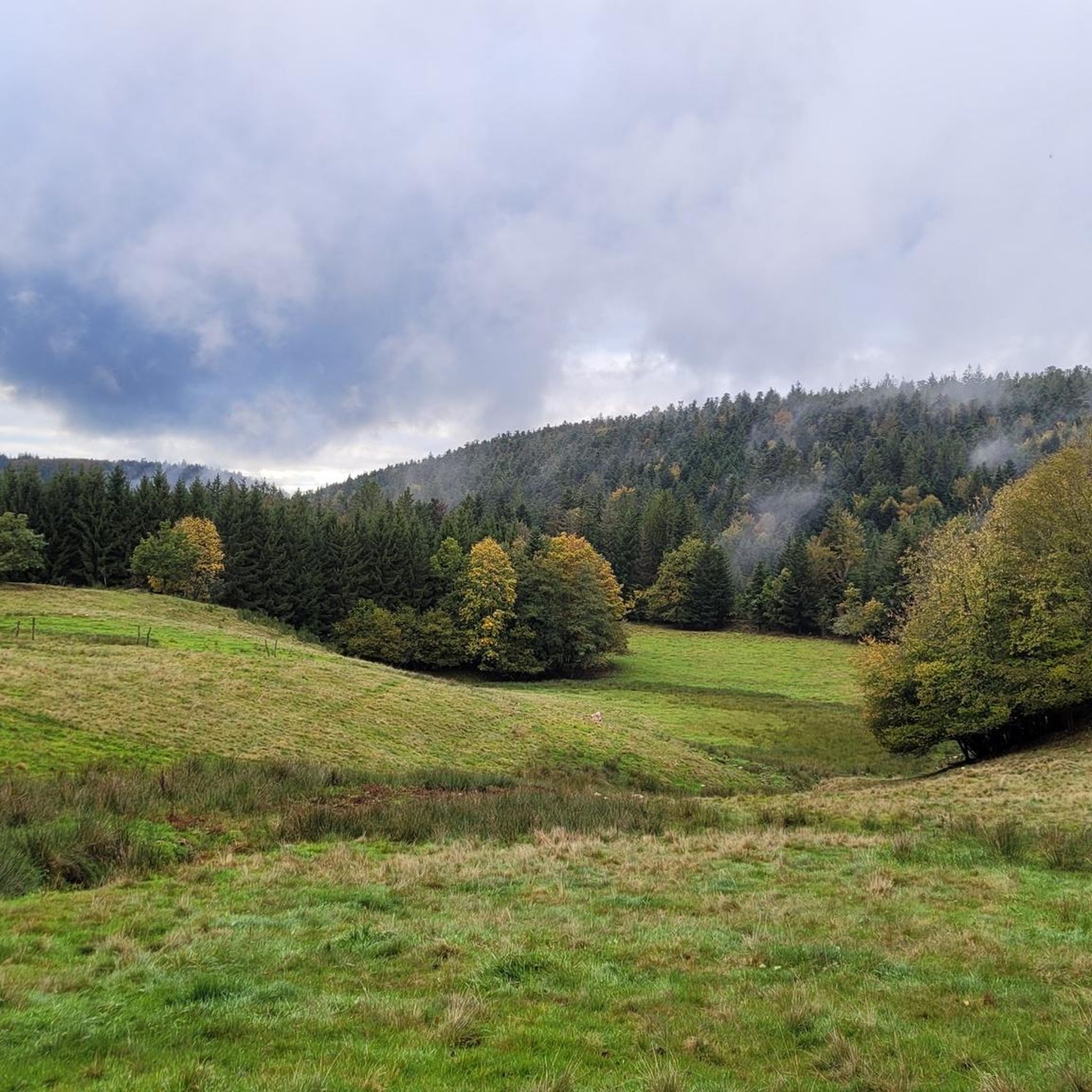
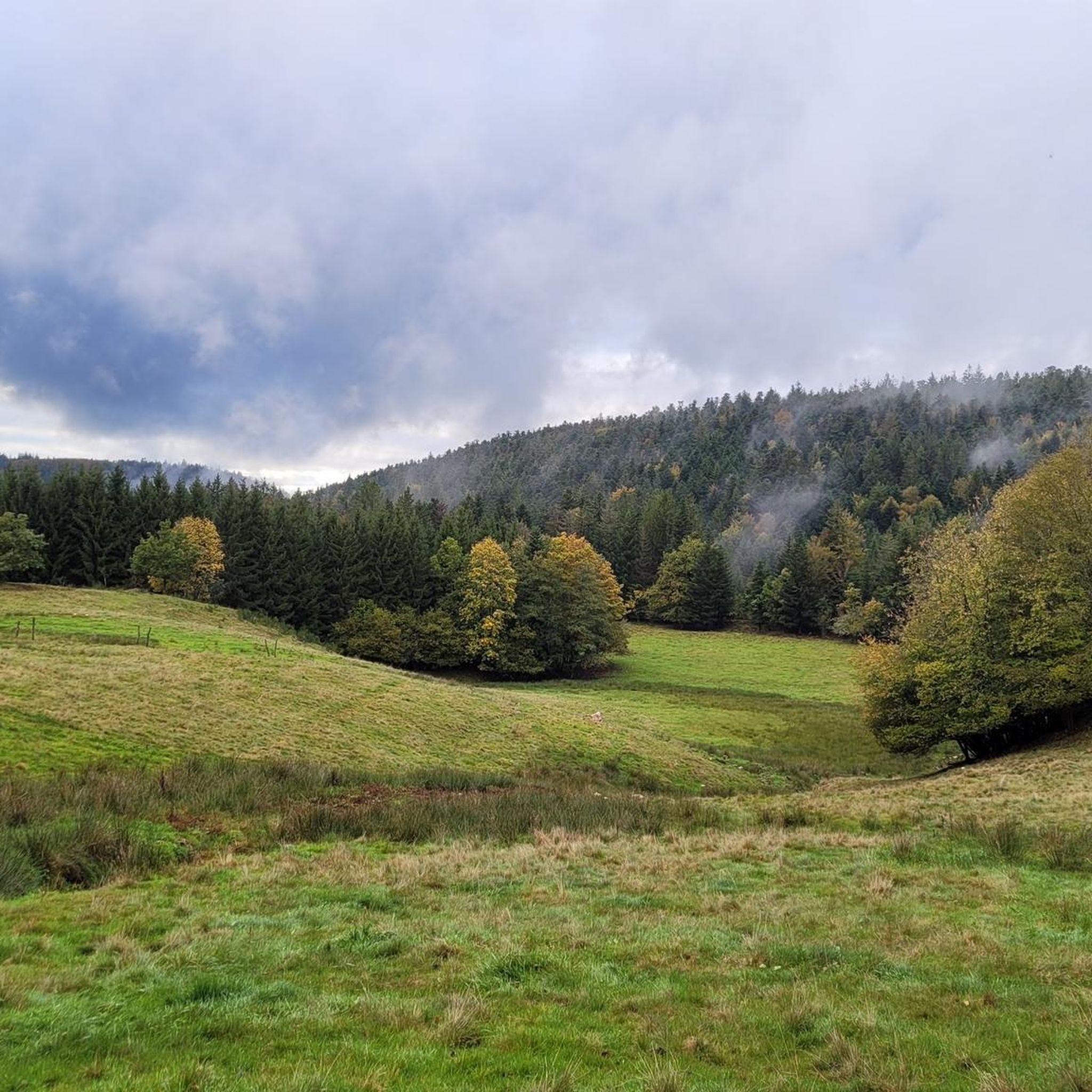
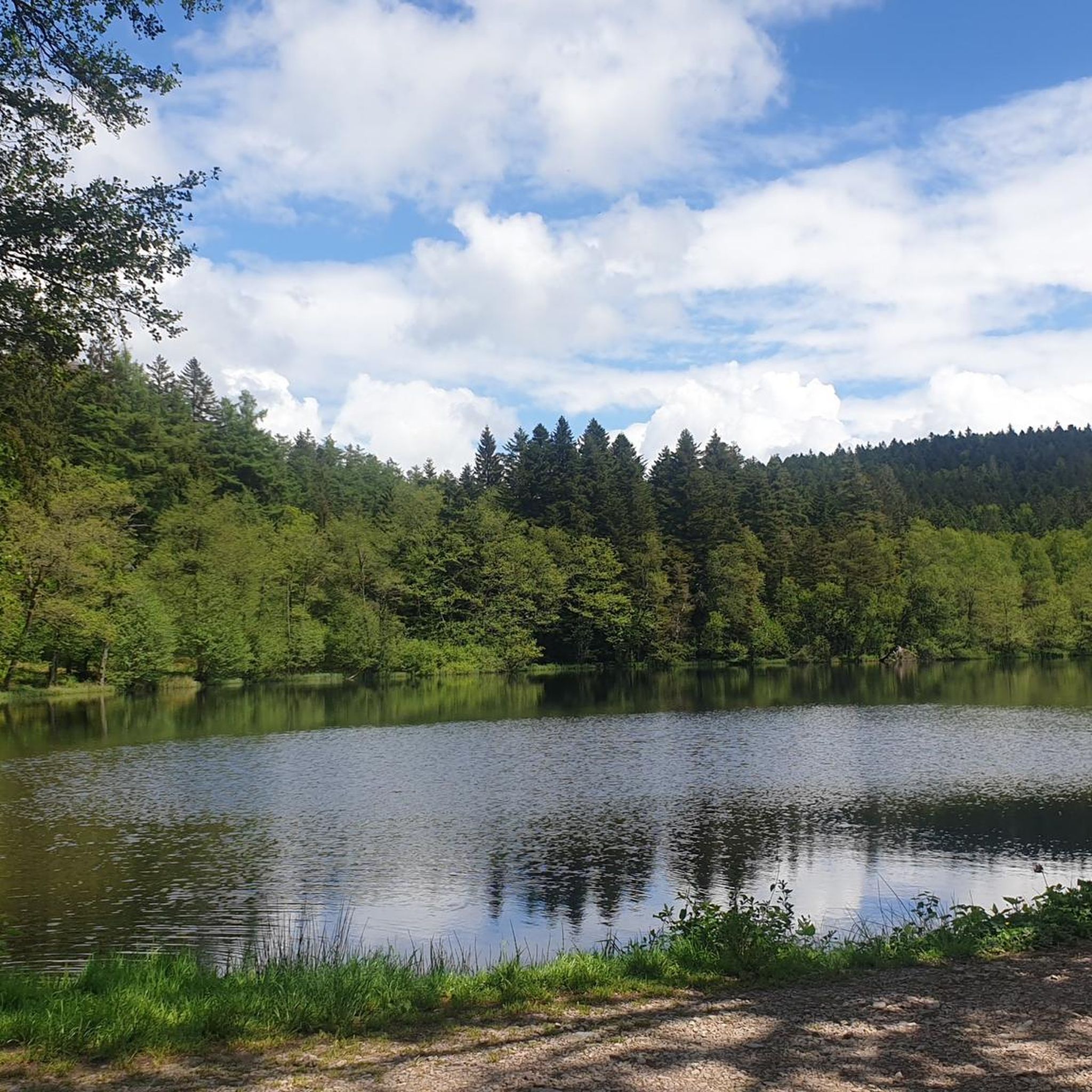
Very quiet road with a fairly random surface. Located in the valley of Combeauté, in Val d'Ajol, the natural site of the meadows of Hérival combines ecological interest and historical heritage. In 1090, the hermit Engidald settled in the valley but it was probably in the 13th century that a larger community of monks took place in the current priory of Hérival. To support themselves, they created a pond for fish farming and the meadows were used for agriculture and medicine (medicinal plants). After the Revolution and the eviction of the monks, the set of buildings that constituted the Priory of Hérival for centuries was abandoned, but traditional agriculture still remained in this remote area. Today, the Priory has become a private property and the surrounding meadows are recognized for their ecological value since they have been listed since 2005 in the inventory of Sensitive Natural Spaces of the Vosges Department. (Source: https://espacesnaturels.vosges.fr/les-ens/31-sites-a-visiter/les-prairies-du-prieure-dherival)
0
0
Frequently Asked Questions
What are some unique historical landmarks to explore in Plombières-Les-Bains?
Plombières-Les-Bains is rich in history. You can visit the Fort du Parmont, a significant historical site near Remiremont that was part of the "barrier de fer" defensive line. Another must-see is the Saint-Pierre Abbey of Remiremont, an impressive religious building showcasing Romanesque and Gothic architecture with ancient wall paintings. Don't miss the Grand Hotel and Napoleon Baths, a prime example of Second Empire architecture, or the Place du Bain Romain, which commemorates the town's Roman thermal origins.
Are there any family-friendly attractions or activities in the area?
Yes, Plombières-Les-Bains offers several family-friendly options. The Imperial Park (Parc Impérial) features the Alsace-Lorraine Miniature Park with 28 models of regional monuments, which is great for kids. You can also enjoy the Accro'Terrasses, an adventure park with tree-climbing, or explore the Sentier musical "Nous n'irons pas à l'opéra," an interactive musical trail with sound stations for a fun walk.
What natural features and viewpoints can I discover around Plombières-Les-Bains?
The region boasts beautiful natural spots. The Imperial Park offers dozens of tree species and the Stanislas Fountain. You can also explore the Terraced Gardens, which provide serene walks and breathtaking views, including one referred to as the "1001st balcony." For more expansive nature, the Fossard Massif offers pine forests, ponds, and peat bogs, ideal for nature lovers. Don't forget the Cascade Faymont, a natural waterfall attraction, and the Coteau de la Vierge for another scenic viewpoint.
Where can I go for cycling or walking routes near Plombières-Les-Bains?
The area is excellent for cycling and walking. The Voie Verte des Hautes-Vosges is a beautifully designed cycle path following former railway lines, offering a pleasant route for cyclists. You can also find the Former railway bridge over the Moselle near Remiremont, which is part of these scenic cycle paths. For more options, check out the Cycling around Plombières-Les-Bains guide or the Hiking around Plombières-Les-Bains guide for detailed routes.
What is the significance of the thermal baths in Plombières-Les-Bains?
Plombières-Les-Bains is a renowned spa town with a long history of thermal waters, dating back to Roman times. Its hot springs have attracted famous visitors like Voltaire and Napoleon Bonaparte. The Balneo-Roman center Calodaé is unique in France, utilizing five of the town's eight thermal baths, known for treating intestinal diseases and rheumatism. The town's development during the Second Empire under Napoleon III further solidified its reputation as a premier spa destination.
Are there any cultural or artistic sites worth visiting?
Beyond its historical architecture, Plombières-Les-Bains offers cultural insights. You can visit the Museum Louis Français, dedicated to the painter Louis Français. The town also hosts various events throughout the year, including craft markets and festivals like Plomb'Art, showcasing local artistry and culture. The Casino of Plombières-les-Bains provides entertainment with shows and gaming tables.
What are some hidden gems or less-known spots in the Plombières-Les-Bains region?
For a quieter experience, consider visiting the Hérival Priory, a former monastery with ecological value within the Sensitive Natural Spaces of the Vosges Department. The Église Saint-Jean-Baptiste in Ruaux, an 18th-century "barn church" made of sandstone, offers a unique architectural find. Exploring the narrow, terraced streets of the "City of a Thousand Balconies" itself can reveal charming, less-traveled corners.
What local specialties should I try in Plombières-Les-Bains?
When in Plombières-Les-Bains, you must try the local specialty: Plombières Ice Cream. This unique ice cream, flavored with kirsch and candied fruit, can be enjoyed in local restaurants, tea rooms, and pastry shops throughout the town.
What kind of outdoor activities are available for mountain biking enthusiasts?
Mountain biking is a popular activity in the region. The surrounding Vosges landscape, particularly the Fossard Massif, offers varied terrain for MTB. You can find numerous trails, including routes like 'The Abbey ruins – Abesse Start loop' or 'Gué du Saut Waterfall – Lake View Near Le Val-d'Ajol loop'. For a comprehensive list of routes and their difficulties, refer to the MTB Trails around Plombières-Les-Bains guide.
Is there public transport or parking available for attractions?
While specific details on public transport to every attraction are best checked locally, Plombières-Les-Bains is a compact town, making many central attractions walkable. For attractions further afield, such as the Fort du Parmont near Remiremont, driving is often the most convenient option. Parking is generally available in and around the town center, though it's advisable to check for specific parking areas near individual sites.
What is the best time of year to visit Plombières-Les-Bains for outdoor activities?
The warmer months, from late spring to early autumn, are generally ideal for outdoor activities like hiking and cycling in Plombières-Les-Bains. During this period, the weather is pleasant for exploring the Voie Verte, the Imperial Park, and the various trails in the Fossard Massif. Summer also brings local events and markets, adding to the vibrant atmosphere.
Are there any religious buildings of historical importance in the area?
Yes, the region has significant religious heritage. The Saint-Pierre Abbey of Remiremont is a major historical monument with an underground church dating back to the 11th century and featuring ancient wall paintings. Within Plombières-Les-Bains itself, the Église Saint-Amé, supported by Napoleon III, is a notable part of the town's Second French Empire heritage.
Most popular routes around Plombières-Les-Bains

Get inspired with the komoot mobile app


Explore more
Still not found the Highlight you’re looking for? See guides of the top attractions in other regions:
