The best cycling routes around Houx
4.6
(476)
2,474
riders
150
rides
Touring cycling around Houx, France, offers routes through the Eure-et-Loir department, characterized by its relatively flat terrain and rural landscapes. The area features green spaces and paths along the Eure river, providing a serene setting for cyclists. Small roads wind through wide fields, connecting to nearby historical sites and natural areas like the Forêt de Rambouillet. This region is well-suited for relaxed cycling experiences.
Best touring cycling routes around Houx
- The most popular touring cycling route is Saint-Piat Mill – The finish line in Chartres loop from Maintenon, a 23.1 miles (37.2 km) trail that takes 2 hours 6 minutes to complete. This route offers a moderate ride through the rural landscapes of the Eure-et-Loir.
- Another top favourite among local touring cyclists is Plan d'eau d'Ecluzelles – Maintenon loop from Maintenon, a moderate 30.0 miles (48.4 km) path. This route explores the area around Maintenon, passing by the Plan d'eau d'Ecluzelles.
- Local touring cyclists also love the Maintenon Castle – Maintenon loop from Maintenon, a 35.0 miles (56.4 km) trail leading through the scenic surroundings of the historic Château de Maintenon, often completed in about 3 hours 19 minutes.
- Touring cycling around Houx is defined by its flat rural landscapes, green spaces, and paths along the Eure river. The network offers options for different ability levels, from easy rides to more challenging routes.
- The routes in Houx are highly rated by the komoot community with an average score of 4.6 stars from over 300 reviews. More than 2000 touring cyclists have used komoot to explore Houx's varied terrain.
Last updated: August 1, 2026
5.0
(2)
19
riders
47.9km
03:00
140m
140m
Moderate bike ride. Good fitness required. Mostly paved surfaces. Suitable for all skill levels.
4
riders
56.9km
03:21
260m
260m
Hard bike ride. Good fitness required. You may need to push your bike for some segments of this route.

Sign up for free
5.0
(1)
11
riders
86.1km
05:11
460m
460m
Hard bike ride. Very good fitness required. Mostly paved surfaces. Suitable for all skill levels.
7
riders
13.9km
00:48
60m
60m
Easy bike ride. Great for any fitness level. Mostly paved surfaces. Suitable for all skill levels.
5.0
(1)
3
riders
67.4km
04:04
420m
420m
Moderate bike ride. Good fitness required. Mostly paved surfaces. Suitable for all skill levels.
Get access to more routes and recommendations from other explorers.
Sign up for free
Already have an account?
Our route recommendations are based on thousands of hikes, rides, and runs completed by other people on komoot.
Start today with a free account
Your next adventure awaits.
Login or Signup



Tips from the Community

Very nice route, 3/4 of which is in the forest. The few roads used are very quiet. The advantage of this route, if you like, is that it can easily be transformed into a mountain bike route. Just look to the right or left of the cycle path and there is a single track. Have a good trip to all those who wish to take it.
0
0

There were once two parishes in Maintenon: "St. Nicholas," a parish serving the castle and its dependent houses. The church of St. Nicholas, adjoining the castle, now deconsecrated, still stands on Maintenon's main square. "St. Peter," a parish covered by the surveys in this table, is a current parish in the commune. In addition, there was a priory, founded in 1220 under the name of the Priory of Our Lady of Maintenon. The church of Saint-Pierre in Maintenon is mentioned at the beginning of the 12th century, but nothing appears to have survived from this period. Indeed, the Count of Montgomery, a Huguenot, passed through Maintenon in 1567 and ruined the church. In 1692, Madame de Maintenon rebuilt the church of Saint-Pierre, which had fallen into ruin and had become too small for a population that had grown from 700 to 1,100 with the arrival of labor for the construction of the aqueduct. However, there is no evidence that the new church was built on the site of the old one. The foundation stone of the new church of Saint-Pierre was laid on June 4, 1692, by the Vicar General. The blessing took place on July 17, 1694. Bishop Godet des Marais subsequently consecrated the building. In 1736, the large "Henriette" bell was blessed by Mr. Jean François DEREYROLES, parish priest, in the presence of "the Most High and Most Powerful Lord, Monsignor Jean Paul François de NOAILLES, Count of AYEN" and by "the Most High and Most Powerful Lady, Madame Henriette Louise DAGUESSEAU de FRESNE, Countess of AYEN." From 1805 to 1813, Duke Jean-Paul de NOAILLES and his wife refurnished and decorated the Saint-Pierre church (the woodwork, credenzas, and pews were redone). The church's embellishment continued until 1899. The church's architecture is unremarkable. However, it is listed as one of the few Baroque churches in the department. The choir is flanked on one side by a sacristy and on the other by a room called "the vault." This is because, until the 1990s, it contained the bodies of some members of the Noailles family, who were buried there in stacked boxes that are still visible, but disused. The organ, installed in the gallery, is no longer in use. It had been partially dismantled for a renovation that proved too expensive, and some of the pipes were stolen. During the 1939-1945 war, almost all of the old stained-glass windows were destroyed and replaced with modern ones, the work of a master glassmaker from the region: Victor Cot-Dezan.
0
0
According to tradition, the church choir covers the remains of an older building, possibly dating back to the 6th century, which was built to house the saint's body. According to current knowledge, the commune of Saint-Piat (Sanctus Piatus in Latin) officially appeared in 1087, mentioned in a charter of the Nottonville Priory (Eure-et-Loir), on which it depended. The current building was rebuilt during the time of Francis I, as suggested by the date 1535 engraved on two buttresses of the apse and the date 1542 engraved on a piece of wood from the vault. This is according to a study by the SAEL (Eure-et-Loir Archaeological Society). The three-sided apses, the dripstone towers (horizontal members projecting from a wall), and the sculpted roof structures are a testament to the importance of the reconstructions carried out in the department during the 16th century. The church of Saint-Piat is one of them. While the church has not been officially recognized, it nevertheless contains objects that have attracted attention both for their antiquity and quality, but not always for good reason. Their artistic value, far from attracting only religious or aesthetic interest, has also aroused a covetousness that, unfortunately, remains for some of them. Fortunately, those still in place are carefully cared for and offer the curious a story to discover, a beauty to slowly ponder as they progress toward the choir.
0
0

The grounds are lovely with lots of bars and restaurants near by
0
0

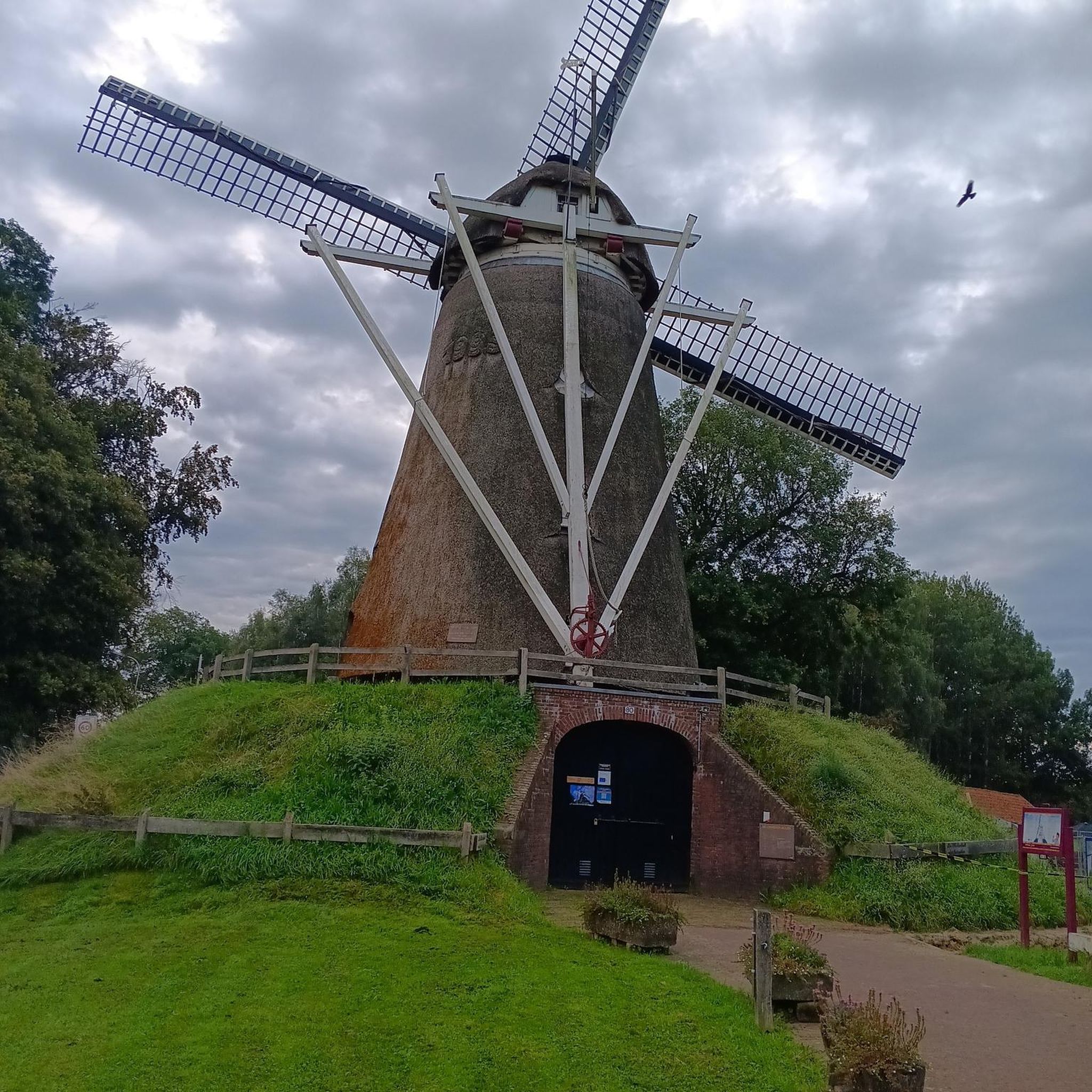
Many centuries ago, our ancestors discovered the possibility of harnessing the power of the elements—which, while helpful and useful on the one hand, could also be a threat as untamed forces of nature—for various purposes, thus eliminating the need for human or animal muscle power. Mills like these are a good example of the human engineering skills of earlier generations: The heavy millstones used to grind grain or press oil, for example, could be powered by wind or—as in this case—water.
0
0

The current remains are those of the 15th-century gate and its barbican or artillery boulevard. The earliest remains on the site date back to the 1st century, with the remains of an ancient domus, a street, and its wooden gutter. The first Guillaume Gate was built around 1185; a wall can still be seen a little further along Rue de la Porte Guillaume. Source: https://journals.openedition.org/cem/14214?lang=en
0
0


Very beautiful pond
0
0
Frequently Asked Questions
How many touring cycling routes are available around Houx?
There are over 130 touring cycling routes around Houx, offering a wide range of options for different skill levels and preferences. The komoot community has explored more than 2000 touring cycling adventures in this region.
What kind of terrain can I expect when touring cycling around Houx?
The area around Houx, France, is characterized by its relatively flat terrain, making it ideal for relaxed touring cycling. You'll find routes winding through picturesque rural landscapes, green spaces, and along the Eure river, with small roads passing through wide fields.
Are there routes suitable for families with children?
Yes, many of the routes around Houx are suitable for families, especially given the generally flat terrain. There are 62 easy routes available, perfect for a leisurely ride with children. For example, the Saint-Piat Mill – Maintenon loop from Houx is an easy 14.4 km route that takes just under an hour to complete.
Can I bring my dog on the touring cycling routes?
While komoot routes themselves don't specify dog-friendliness, the rural and natural settings around Houx often allow for dogs on leads, especially on quiet country roads and designated paths. Always ensure your dog is well-behaved and that you respect local regulations, particularly near agricultural areas or nature reserves.
Are there any circular touring cycling routes in the area?
Yes, many of the touring cycling routes around Houx are designed as loops, allowing you to start and end at the same point. Examples include the popular Saint-Piat Mill – The finish line in Chartres loop from Maintenon and the Plan d'eau d'Ecluzelles – Maintenon loop from Maintenon.
What are some notable landmarks or attractions I can see along the routes?
The region around Houx offers several interesting landmarks. You can cycle past the historic Maintenon Castle with its impressive aqueduct, or the charming Saint-Piat Mill. The magnificent Chartres Cathedral, a UNESCO World Heritage site, is also within cycling distance (approx. 16 km from Houx) and can be incorporated into longer tours like the Chartres – The finish line in Chartres loop from Maintenon.
Where can I find parking for touring cycling routes in Houx?
Given the rural nature of Houx and its surrounding communes like Maintenon, parking is generally available in village centers or near popular starting points for routes. For specific routes, checking the tour details on komoot often provides information on recommended parking spots.
Is it possible to reach the touring cycling routes by public transport?
Houx is located in the Eure-et-Loir department, which has some public transport options. Maintenon, a nearby town often serving as a starting point for routes, has a train station with connections. For detailed information on public transport to specific starting points, it's advisable to check local bus and train schedules.
What is the best time of year for touring cycling in Houx?
The best time for touring cycling in Houx is generally from spring to early autumn (April to October) when the weather is mild and the rural landscapes are at their most vibrant. The relatively flat terrain makes it enjoyable even in cooler shoulder seasons, but always check the forecast.
Are there options for both beginner and more experienced touring cyclists?
Absolutely. Houx caters to all levels. Beginners can enjoy the 62 easy routes, which are typically shorter and have minimal elevation gain. More experienced cyclists can challenge themselves with 55 moderate and 19 difficult routes, such as the 86.2 km Chartres – The finish line in Chartres loop from Maintenon, which features more significant elevation changes.
What do other cyclists say about the touring cycling routes around Houx?
The touring cycling routes around Houx are highly rated by the komoot community, with an average score of 4.6 stars from over 380 reviews. Cyclists often praise the serene rural landscapes, the well-maintained paths along the Eure river, and the opportunity to explore historical sites like the Château de Maintenon.
Are there places to stop for refreshments or accommodation along the routes?
Yes, the routes often pass through or near small villages and towns like Maintenon, where you can find cafes, restaurants, and local markets. For accommodation, options range from guesthouses in rural settings to hotels in larger towns like Chartres. Planning your route with komoot allows you to identify points of interest for breaks.
Are there any specific cycling events or larger routes that pass through Houx?
Houx is integrated into significant cycling networks. Sections of "La Véloscénie," the renowned route connecting Paris to Mont Saint-Michel, pass through the area. Additionally, a portion of the Camino de Santiago offers scenic rides through the Eure Valley. The region's suitability for cycling is further highlighted by events like the C'CHARTRES CYCLISME event scheduled in Houx for 2026.
Most popular attractions around Houx

Get inspired with the komoot mobile app


Explore more
Browse the best Cycling routes in other regions.
