Attractions and Places To See around Bapaume - Top 20
Best attractions and places to see around Bapaume include sites reflecting its pivotal role in past conflicts and its architectural heritage. Situated on a raised plateau, Bapaume historically served as a significant crossroads. The town's resilience is evident in its rebuilt structures, many of which replaced those destroyed during World War I. Visitors can explore a range of historical monuments and cultural sites.
Best attractions and places to see around Bapaume
- The most popular attractions is Delville Wood South African…
Last updated: May 21, 2026
Delville Wood South African National Memorial
Highlight • Monument
Translated by Google •
Tip by

1917 — Écoust-Saint-Mein
Highlight • Other
Translated by Google •
Tip by

Sign up now to discover places like this
Get recommendations on the best single tracks, peaks, & plenty of other exciting outdoor places.
Sign up for free
Bapaume Town Hall
Highlight • Monument
Translated by Google •
Tip by

Pipers' Memorial Longueval
Highlight • Monument
Translated by Google •
Tip by
Monument to Abel Guidet
Highlight • Monument
Translated by Google •
Tip by
Sign up for free to discover even more attractions around Bapaume.
Sign up for free
Already have an account?
Start today with a free account
Your next adventure awaits.
Login or Signup


Other adventures around Bapaume

Tips from the Community

The Pipers Memorial in Longueval is a special tribute to all pipers who died during the First World War, regardless of their regiment or origin. It was unveiled on 20 July 2002 and stands in the village square, just off the Rue de Bazentin. The bronze statue, designed by Andy De Comyn, shows a piper in full uniform climbing out of a trench playing—a powerful symbol of courage and moral support for troops under fire. Plaques around the plinth list the regiments that lost pipers, and the memorial also remembers heroes such as Piper James Richardson VC, who led his battalion into the attack with his music and was later killed trying to retrieve his bagpipes. It is a rare monument that honours not only military valour but also cultural identity and tradition. A place where music and memory come together in stone and bronze.
8
0
French politician, MP and then resistance fighter, born on November 6, 1890 in Bapaume, he became mayor of the town in 1929. In 1934, he was elected general councilor of Pas-de-Calais. In 1936, he ran in the legislative elections and was elected in the second round. He was arrested in 1943 by the Nazis as he left the prefecture, and deported to the Gross-Rosen camp where he died on November 27, 1944. Since 1948, a monument showing him at the time of his arrest honors his memory. At the Town Hall there is an urn with soil from Gross-Rosen as well as a painting of him.
0
0

The Piper's Memorial pays tribute to the pipers who fell during the Great War, regardless of nationality or unit. Unveiled in 2002, this 3-meter-high statue depicts one of these musicians, straddling the parapet of his trench, playing his instrument to encourage the soldiers heading into the assault.
1
0
French politician, MP and then resistance fighter, born on November 6, 1890 in Bapaume, he became mayor of the city in 1929, in 1934, he was elected general councilor of Pas-de-Calais. In 1936, he ran in the legislative elections and was elected in the second round. He was arrested in 1943 by the Nazis when he left the prefecture, and deported to the Gross-Rosen camp where he died on November 27, 1944. Since 1948, a monument showing him at the time of his arrest honors his memory. At the Town Hall there is an urn with soil from Gross-Rosen as well as a painting representing him.
5
0
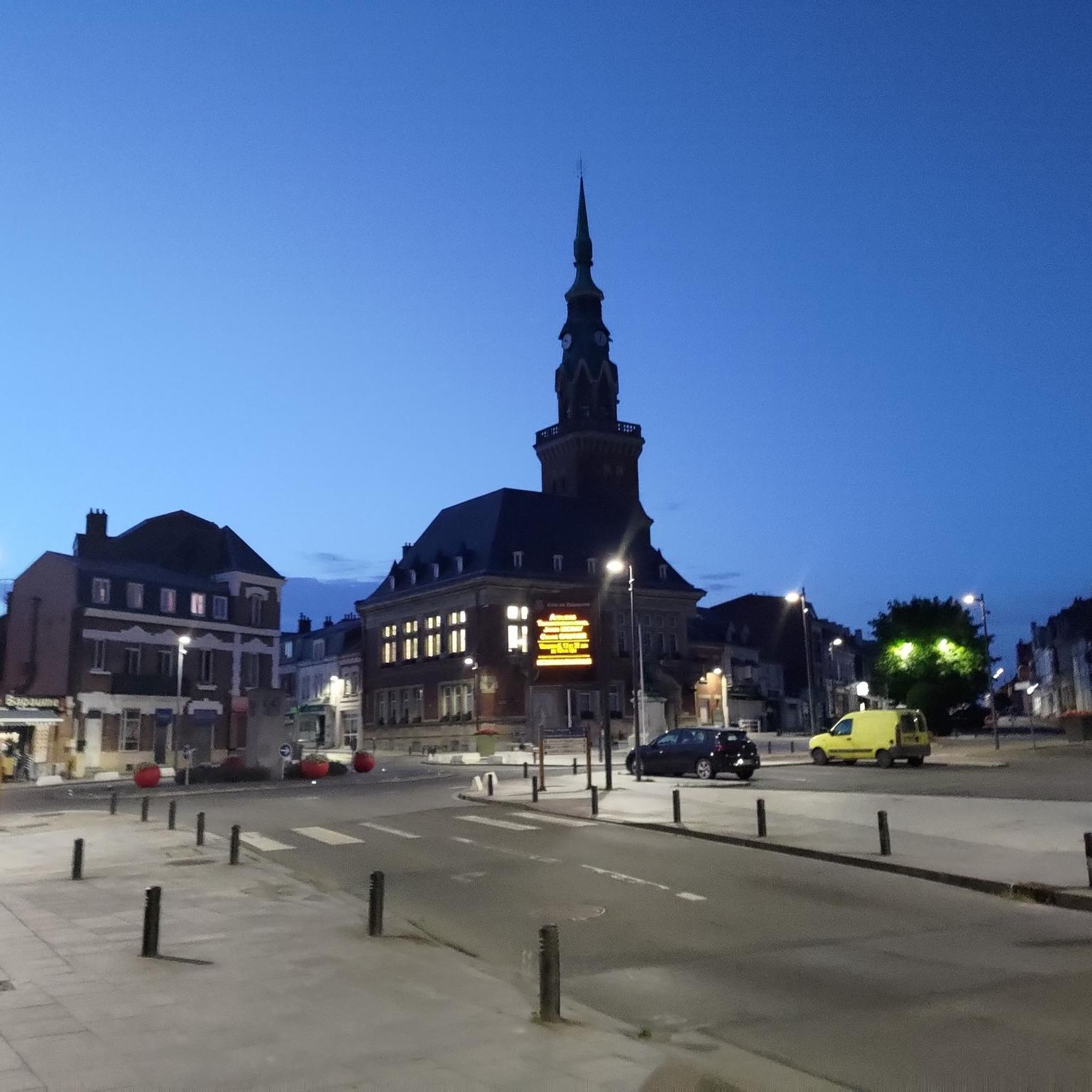
The town of Bapaume built its first Town Hall, a symbol of the city's independence, during the 12th century. The ground floor served as a market hall for merchants. Upstairs are the council chamber and the hall where public festivals were celebrated. The current architecture of the Town Hall is similar to the previous one, built between 1583 and 1611 and destroyed on March 25, 1917 following the explosion of a time bomb left by the Germans. After a slow and dangerous mine-clearing operation, it was rebuilt in its original location in 1931 and 1932 according to the plans of Mr. Eugène Bidard. The town's coat of arms is sculpted on the keystone of the entrance door. The slate roof is decorated with pointed dormers. At the top of the tower, an outdoor gallery allows you to admire the panorama. The belfry spire peaks at 55m.
6
0

The South African National Memorial at Delville Wood is a First World War memorial located on the territory of the municipality of Longueval, in the Somme department. It commemorates the engagement of South African troops during the Great War. A commemorative museum traces the history of South Africa's participation in World War I, World War II and the various conflicts of the Cold War. The British Military Cemetery at Delville Wood is located opposite the memorial. Delville Wood represents, for South Africans, the place where South African Union soldiers were first engaged on the Western Front. On July 14, 1916, the South African brigade, made up of four battalions, about 3,150 men, had been ordered to hold its positions "at all costs". Under the incessant fire of the enemy artillery, they had resisted and known a true hell (Delville wood will be renamed Devil wood, the wood of the Devil). When they were relieved on July 20, they left 1,080 of theirs, killed or missing, and 1,735 wounded. Wikipedia
2
0

passage on the scene of the battle of Arras at Ecoust st mein and bullecourt (where there is a museum), mentioned in the film "1917"
0
0
Frequently Asked Questions
What historical sites can I visit around Bapaume?
Bapaume is rich in history, particularly related to World War I. You can explore the Delville Wood South African National Memorial, which commemorates South African troops and features a museum. Another significant location is 1917 — Écoust-Saint-Mein, associated with the Battle of Arras. The Pipers' Memorial Longueval also pays tribute to pipers who fell during the Great War. Additionally, the town itself has landmarks like the rebuilt Bapaume Town Hall and the Monument to Abel Guidet.
Are there any family-friendly attractions in Bapaume?
Yes, several historical sites around Bapaume are suitable for families. The Delville Wood South African National Memorial and its museum offer an educational experience about World War I. The Bapaume Town Hall, with its impressive architecture and history of resilience, can also be an interesting visit for all ages.
What outdoor activities are available near Bapaume?
The area around Bapaume offers various outdoor activities, especially for those interested in exploring on foot or by bike. You can find numerous routes for hiking, road cycling, and running. These routes often pass by historical landmarks and through the region's characteristic flat landscapes.
Are there any hiking trails around Bapaume?
Yes, there are several hiking trails available. For example, you can explore routes like the 'Château de Saint-Léger loop from Ervillers' or the 'Bois Loupart loop from Grévillers'. These trails offer a chance to experience the local scenery. You can find more details and options on the Hiking around Bapaume guide.
What is the significance of the Bapaume Town Hall?
The Bapaume Town Hall is a symbol of the town's independence and resilience. Originally built in the 12th century, it was completely destroyed during World War I. The current building, rebuilt in the 1930s, mirrors its 17th-century predecessor with an impressive 55-meter belfry, showcasing the town's ability to rebuild after devastation. It also houses the funerary urn of local Resistance hero Abel Guidet.
Where can I learn about South Africa's involvement in World War I near Bapaume?
The Delville Wood South African National Memorial, located in Longueval, is dedicated to commemorating the engagement of South African troops during the Great War. It features a comprehensive museum detailing South Africa's participation in various conflicts, offering deep insights into their history.
Are there any memorials for soldiers in the Bapaume area?
Yes, the area is home to several significant memorials. Besides the Delville Wood South African National Memorial, you can visit the Pipers' Memorial Longueval, which honors pipers who fell during WWI. Other notable sites include the Bapaume Australian Cemetery and the Warlencourt British Cemetery, both resting places for WWI soldiers.
What is the '1917 — Écoust-Saint-Mein' attraction?
The 1917 — Écoust-Saint-Mein location is associated with the Battle of Arras, a significant historical battle during World War I. It provides insight into the events of that period and is even mentioned in the film "1917", highlighting its historical importance.
What natural features can be found in Bapaume?
While Bapaume is primarily known for its historical sites, it is situated on a raised plateau, which historically made it a strategic crossroads. The town also features the Parc du Donjon, built on the site of a former feudal château, offering walks along a sentry path and views over former moats. Beneath the park, 16th-century underground tunnels can be found.
What is the 'Monument to Abel Guidet'?
The Monument to Abel Guidet commemorates a French politician and Resistance fighter who was born in Bapaume and served as its mayor. He was arrested by the Nazis in 1943 and died in a concentration camp. The monument, erected in 1948, honors his memory, and an urn with soil from Gross-Rosen is housed in the Town Hall.
Are there cycling routes around Bapaume?
Yes, Bapaume offers various cycling routes for different skill levels. You can find options like the 'Canal de la Somme Cycle Path – Château de Suzanne loop' or the '1917 — Écoust-Saint-Mein loop'. These routes allow you to explore the region's flat landscapes and historical sites by bike. More details are available in the Road Cycling Routes around Bapaume guide.
What is the 'Pipers' Memorial Longueval'?
The Pipers' Memorial Longueval is a unique bronze statue honoring pipers who provided moral support to troops during battles in World War I. Unveiled in 2002, it depicts a piper in full uniform and lists regiments that lost pipers, serving as a tribute to both military valor and cultural identity.

Get inspired with the komoot mobile app


Explore more
Still not found the Highlight you’re looking for? See guides of the top attractions in other regions:
