Attractions and Places To See around Brimeux - Top 20
Best attractions and places to see around Brimeux include a variety of natural features and serve as a gateway to the wider Pas-de-Calais region in France. The area offers local natural spots like the Brimeux swamp and Etangs de Brimeux, ideal for walks. Nearby, visitors can explore historic fortified towns, abbeys, and extensive natural reserves. This blend provides opportunities for both tranquil nature discovery and cultural exploration.
Best attractions and places to see around Brimeux
- The most popular attractions is…
Last updated: May 11, 2026
Montreuil and its citadel
Highlight • Other
Translated by Google •
Tip by

Valloires Abbey and Gardens
Highlight • Natural Monument
Translated by Google •
Tip by

Sign up now to discover places like this
Get recommendations on the best single tracks, peaks, & plenty of other exciting outdoor places.
Sign up for free
Saint Saulve Abbey Church
Highlight • Other
Translated by Google •
Tip by

Chapelle Sainte Austreberthe
Highlight • Religious Site
Translated by Google •
Tip by

Moulin de maintenay
Highlight • Other
Translated by Google •
Tip by
Sign up for free to discover even more attractions around Brimeux.
Sign up for free
Already have an account?
Start today with a free account
Your next adventure awaits.
Login or Signup



Tips from the Community

A very worthwhile abbey, well worth a visit.
0
0


Montreuil on the sea
1
0
Montreuil on the sea
1
0

The origins of Montreuil, whose name derives from the Latin 'monasteriolum' (small monastery), are closely linked to its religious history. The abbey church of Saint-Saulve in Montreuil-sur-Mer was built in the 12th century and is located on the site of an older monastery dedicated to Saint Walloy, founded in the 10th century. In 926, the monks of Landévennec (Finistère) fled the Norman invasions and found refuge in Montreuil, where they founded the abbey of Saint-Walloy (local deformation of the name Saint Guénolé). In 1111, this abbey changed its name when the remains of Saint-Saulve were brought there. In its original design, the building had a layout typical of pilgrimage churches with an ambulatory and radiating chapels. In the Middle Ages, the numerous relics attracted pilgrims to Montreuil and gave the town a character of holiness. It was then nicknamed 'The Necropolis of Ponthieu'. The reconstruction after the earthquake of 1467 caused the collapse of at least six religious buildings, including the Hôtel-Dieu and the Saint-Saulve church, which was completely rebuilt at the beginning of the 16th century.
7
0
The Abbey of Sainte-Austreberthe is one of two large monasteries in Montreuil-sur-Mer, originally founded in the 10th century. The protection offered by the ramparts in the context of Viking raids gave the Norman nuns of Pavilly the certainty of preserving the relics of their patron saint: Austreberthe. She is a Merovingian aristocrat from Marconnes near Hesdin. The current buildings were built in 1736 and 1750. They still include the cloister and the chapel. During the French Revolution, the nuns temporarily left France for England, taking with them the treasure trove of sacred art and the relics it contained. With the dissolution of the community at the beginning of the 19th century, works of art and precious reliquaries, including the crosier of Saint Austreberthe, were deposited in the abbey church of Sainte-Saulve, where they are still located.
8
0

Beautiful garden that you should definitely see if you are in the area. You will discover different zones such as: The rose garden, the herb garden, the island garden, the ordinary garden, the garden of evolution, ...
4
0
Frequently Asked Questions
What historical sites can I explore near Brimeux?
The region around Brimeux is rich in history. You can visit the historic fortified town of Montreuil and its citadel, known for its 16th-century fortifications and views of the Canche valley. Another significant site is Valloires Abbey and Gardens, featuring the only complete 18th-century Cistercian abbey in France. Don't miss the Moulin de Maintenay, a 12th-century water mill with a rich history, or the Saint Saulve Abbey Church and Chapelle Sainte Austreberthe in Montreuil-sur-Mer.
Are there natural areas or features to visit in Brimeux itself?
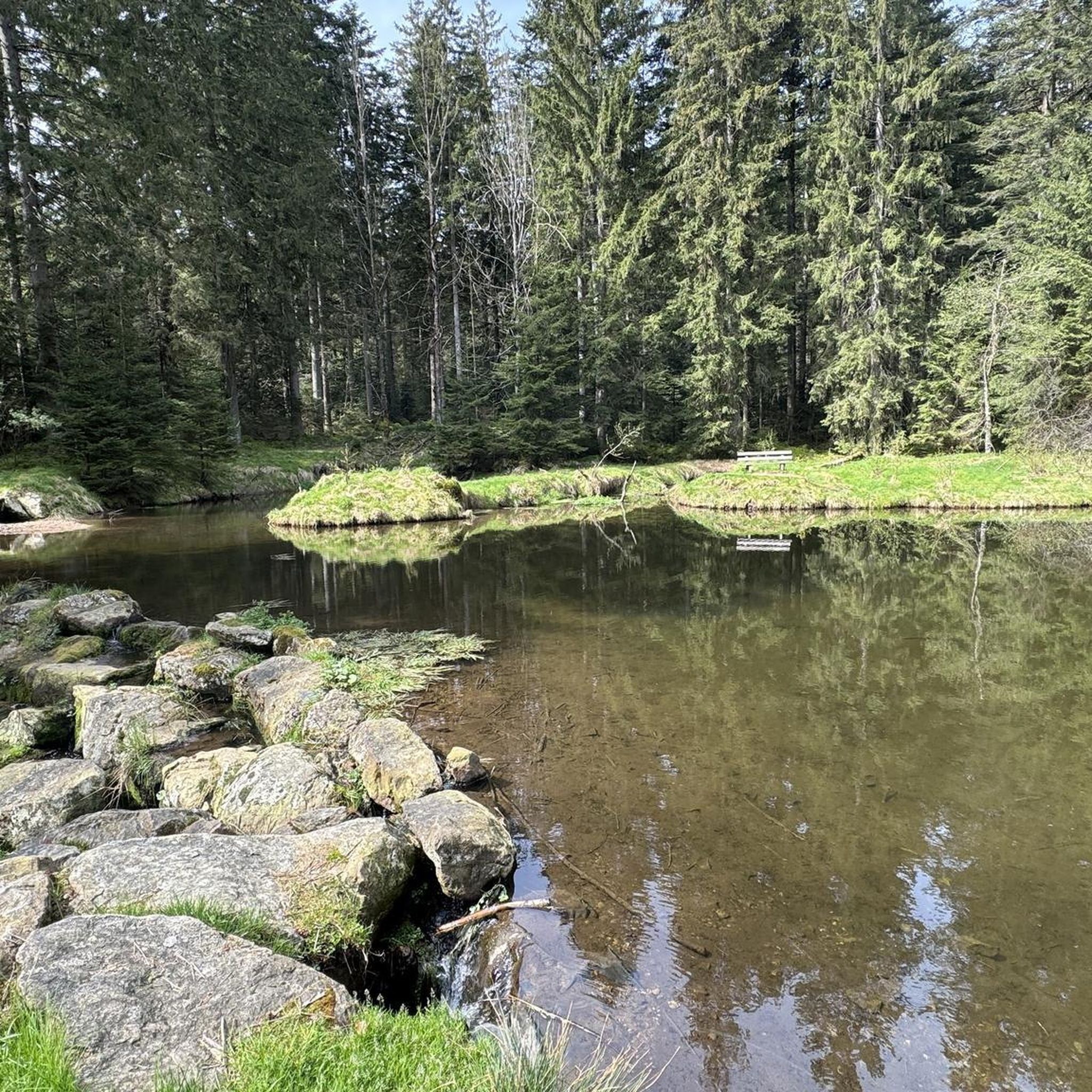
Yes, within Brimeux, you can explore local natural features such as the Brimeux swamp, which offers an easy 2.3-mile (3.7 km) walking route. The Etangs de Brimeux (Brimeux ponds/lakes) also provide opportunities for natural discovery and tranquil strolls.
What kind of outdoor activities can I do near Brimeux?
The area around Brimeux is excellent for various outdoor activities. You can find numerous routes for gravel biking, mountain biking, and road cycling. For example, explore the 'Citadel of Montreuil – Le Touquet-Paris-Plage loop' for gravel biking, or the 'Bois du Fond des Pendus – Forêt domaniale d'Hesdin loop' for mountain biking. Road cyclists might enjoy the 'View of Douriez loop'. For more details on these and other routes, check out the Gravel biking around Brimeux, MTB Trails around Brimeux, and Road Cycling Routes around Brimeux guides.
Are there any family-friendly attractions or activities near Brimeux?
Beyond historical sites, families can enjoy the natural beauty of the region. The Valloires Abbey and Gardens offer beautiful grounds to explore. For more active fun, nearby amusement parks like Parc Bagatelle and Laby'Parc du Touquet provide entertainment options. The coastal resorts such as Le Touquet also offer beaches and seaside activities suitable for families.
Where can I find beautiful gardens near Brimeux?
The most renowned gardens are at Valloires Abbey and Gardens, famous for their 5,000 species of rare roses and shrubs designed by Gilles Clément. Other notable gardens in the vicinity include the Jardin des Lianes, Jardin du château de Maizicourt, and Parc du château de Sericourt.
What are some significant natural reserves or coastal areas near Brimeux?
The region boasts several important natural reserves and coastal areas. You can visit the Réserve naturelle de la Baie de Canche and Baie d'Authie, both offering scenic landscapes and wildlife habitats. Further afield, the Parc du Marquenterre is a renowned bird sanctuary, and the Réserve naturelle de la Baie de Somme is a large bay known for its diverse natural habitat. Coastal natural areas like the Dunes d'Écault and Pointe du Hourdel are also worth exploring.
What is the best time to visit Brimeux for outdoor activities?
The best time to visit Brimeux for outdoor activities like hiking and cycling is generally during the spring (April to June) and autumn (September to October) months. During these periods, the weather is typically mild and pleasant, making it ideal for exploring the natural features and historical sites without the extreme heat of summer or the chill of winter.
Are there any viewpoints or scenic spots around Brimeux?
Yes, several locations offer scenic views. The ramparts of Montreuil and its citadel provide impressive views of the Canche valley. The natural features like the Etangs de Brimeux and the nearby forests such as Forêt d'Hesdin also offer picturesque settings for walks and enjoying the landscape.
What are some lesser-known attractions or 'hidden gems' near Brimeux?
While Montreuil and Valloires Abbey are popular, the Moulin de Maintenay offers a charming and less crowded experience, allowing visitors to discover the history of a 12th-century water mill in a tranquil setting with a tea room and bakery. Exploring the smaller belfries in towns like Hesdin or Rue, recognized as heritage sites, can also reveal unique local history away from the main tourist routes.
Can I find dog-friendly walking trails near Brimeux?
Many natural areas around Brimeux are suitable for walks with dogs, provided they are kept on a leash. The Brimeux swamp offers an easy walking route, and the Etangs de Brimeux are also good for strolls. Additionally, the Forêt d'Hesdin and Forêt de Crécy provide extensive forest paths where dogs are generally welcome. Always check local signage for specific rules regarding pets in nature reserves.
What do visitors enjoy most about the attractions around Brimeux?
Visitors particularly appreciate the blend of historical depth and natural beauty. The fortifications and rich history of Montreuil, the unique combination of history and horticulture at Valloires Abbey and Gardens, and the charming, historical atmosphere of the Moulin de Maintenay are frequently highlighted. The komoot community has contributed 25 photos and 59 upvotes, reflecting the appeal of these diverse attractions.
Are there any notable events or festivals in the region near Brimeux?
While Brimeux itself is small, the surrounding region hosts various events. Valloires Abbey and Gardens regularly host events such as Ladybug Day, Painters' Day, and the Pumpkin Festival. The nearby seaside resort of Le Touquet is known for events like the Touquet Music Beach Festival, offering cultural and entertainment options throughout the year.
Most popular routes around Brimeux

Get inspired with the komoot mobile app


Explore more
Still not found the Highlight you’re looking for? See guides of the top attractions in other regions:
