Attractions and Places To See around Cuinchy - Top 20
Best attractions and places to see around Cuinchy, a small village in the Pas-de-Calais department of France, are primarily linked to its significant World War I history and unique natural features. The area is characterized by the Canal d'Aire and several historical sites, offering a blend of cultural and natural exploration. Visitors can discover war memorials, reconstructed historical buildings, and distinctive landscapes shaped by industrial heritage.
Best attractions and places to see around Cuinchy
- The most popular attractions is Loos-en-Gohelle…
Last updated: July 16, 2026
The facades of the main square
Highlight • Historical Site
Translated by Google •
Tip by

Loos-en-Gohelle slag heap
Highlight • Natural Monument
Translated by Google •
Tip by

Sign up now to discover places like this
Get recommendations on the best single tracks, peaks, & plenty of other exciting outdoor places.
Sign up for free
Hill 70 Canadian Memorial
Highlight • Monument
Translated by Google •
Tip by
Terril 46 of Verquigneul
Highlight • Climb
Translated by Google •
Tip by

Back of St Vaast Church
Highlight • Religious Site
Translated by Google •
Tip by

Sign up for free to discover even more attractions around Cuinchy.
Sign up for free
Already have an account?
Start today with a free account
Your next adventure awaits.
Login or Signup


Tips from the Community

Beautiful panoramic view of Lens and the surrounding area. Be careful when you climb onto the spoil heap during a storm, it's a real hair-raiser!
1
0

The Grand'Place de Béthune is the focal point of the city of Buridan. Destroyed in 1918, it was rebuilt and stands as an architectural example. A group of architects led by L.M. Cordonnier gave it its present-day appearance: eclecticism, Art Deco, and neo-regionalism combine to create a diverse ensemble. Town Hall Rebuilt many times, the current Town Hall was designed by architect J. Alleman. Built between 1924 and 1929, the building stands out from the other buildings with its massive form. Its façade embodies the city's titles and glories: the Croix de Guerre and the Legion of Honor, as well as the city's coat of arms. The Town Hall has been listed as a Historic Monument since April 2002. Some of the square's façades, representative of the Art Deco style, are also listed as Historic Monuments. The Cellars of the Grand'Place Vast cellars, boves, and countermine galleries: the underground of Béthune bears witness to the city's intense activity. During the First World War, the cellars served as refuges for the inhabitants of Béthune. Some cellars of private homes are now open to the public. (Notably at No. 42 Grand'Place) (c) https://www.bethune.fr/bethune-brille/patrimoine-historique/la-grand-place-558.html
0
0
The Saint-Vaast Church boasts a 68-meter-high tower with three pointed arches at the entrance and a red brick structure with stone elements. The original church, dating from 1547, was destroyed during the First World War and rebuilt between 1924 and 1927 under the direction of architect Louis Marie Cordonnier. The stained-glass windows, created by master glazier Charles Champigneulle, depict the history of Béthune and the life of Saint-Vaast. The church houses four bells cast in 1927 by Charles Wauthy, each with specific dimensions and individual names. The building combines French Gothic architecture with regional Flemish influences, resulting in a neo-Flemish style characteristic of the post-war reconstruction. (c) https://nl.aroundus.com/p/7423599-eglise-saint-vaast-de-bethune
0
0

absolutely stunning
0
1
Magnificent brick architecture
1
0

Don't miss the Loos-en-Gohelle slag heap, an astonishing and unusual spectacle. There are five hills made of coal waste, and this one is the highest, reaching 146 meters, the highest in Europe! Hike to the top and admire the views. You can see how nature has transformed the hills with plants, animals and even grapes. Take the opportunity to learn about this UNESCO World Heritage site and discover its rich history and culture at Base 11/19.
4
0
This park commemorates the Battle of Hill 70, a strategic victory for the Canadian Army in August 1917. The park features an obelisk that symbolizes the courage and sacrifice of Canadians, as well as walkways, sculptures and interpretive panels which tell the story of the battle. You can also admire the view of the city of Lens, which was occupied by the Germans at the time.
2
0

These hills, which were named after their height, are known along the entire front. Hill 70 is a Canadian memorial to the troops who fought here at the time. Access via a level driveway, winding like a snail shell up to the stele at the top. The originally well-designed information boards at the foot of the hill are unfortunately currently damaged by vandalism.
0
0
Frequently Asked Questions
What historical sites related to World War I can I visit near Cuinchy?
Cuinchy and its surroundings are rich in WWI history. You can visit the Hill 70 Canadian Memorial, which commemorates a strategic Canadian victory. Within Cuinchy itself, the Woburn Abbey Military Cemetery and Guards Cemetery, Windy Corner, are significant burial sites. The Church of Saint-Pierre de Cuinchy, though rebuilt, also holds historical value from the war.
Are there any natural features or viewpoints to explore around Cuinchy?
Yes, the region offers unique natural features and viewpoints. The Loos-en-Gohelle slag heap is the highest in Europe, offering panoramic views after a hike to the top. Another site for ascents and views is Terril 46 of Verquigneul. The Canal d'Aire, which bisects Cuinchy, is also a notable natural feature.
What kind of outdoor activities are available near Cuinchy?
You can enjoy various outdoor activities. For running, explore routes like the 'Running loop from Cuinchy' or 'Post Office Rifles Cemetery loop' found in the Running Trails around Cuinchy guide. Mountain biking enthusiasts can try trails such as 'Tout in haut de ch'terril loop' or 'Fishing Ponds – Canal de Beuvry-Préolan loop' from the MTB Trails around Cuinchy guide. Road cycling routes, including 'Memorial loop' or 'Thr First – Béthune loop', are also available in the Road Cycling Routes around Cuinchy guide.
Are there family-friendly attractions in the Cuinchy area?
Yes, the Hill 70 Canadian Memorial is considered family-friendly, offering walkways and interpretive panels in a park setting. Additionally, the Loos-en-Gohelle slag heap can be an engaging hike for families, allowing them to explore a unique landscape and learn about its history.
What cultural or architectural highlights can I find nearby?
Just 8 km from Cuinchy, in Béthune, you can admire The facades of the main square, which showcase an eclectic mix of Art Deco and neo-regionalist architecture. The Belfry of Béthune, a UNESCO heritage site, is also located here. Further afield, the Louvre-Lens Museum (10.9 km) offers significant cultural exhibits.
Is Cuinchy accessible for visitors with wheelchairs?
Yes, some attractions in the area are wheelchair accessible. The Hill 70 Canadian Memorial features a level driveway winding up to the stele. In Béthune, The facades of the main square are also accessible.
What is the significance of the Canal d'Aire in Cuinchy?
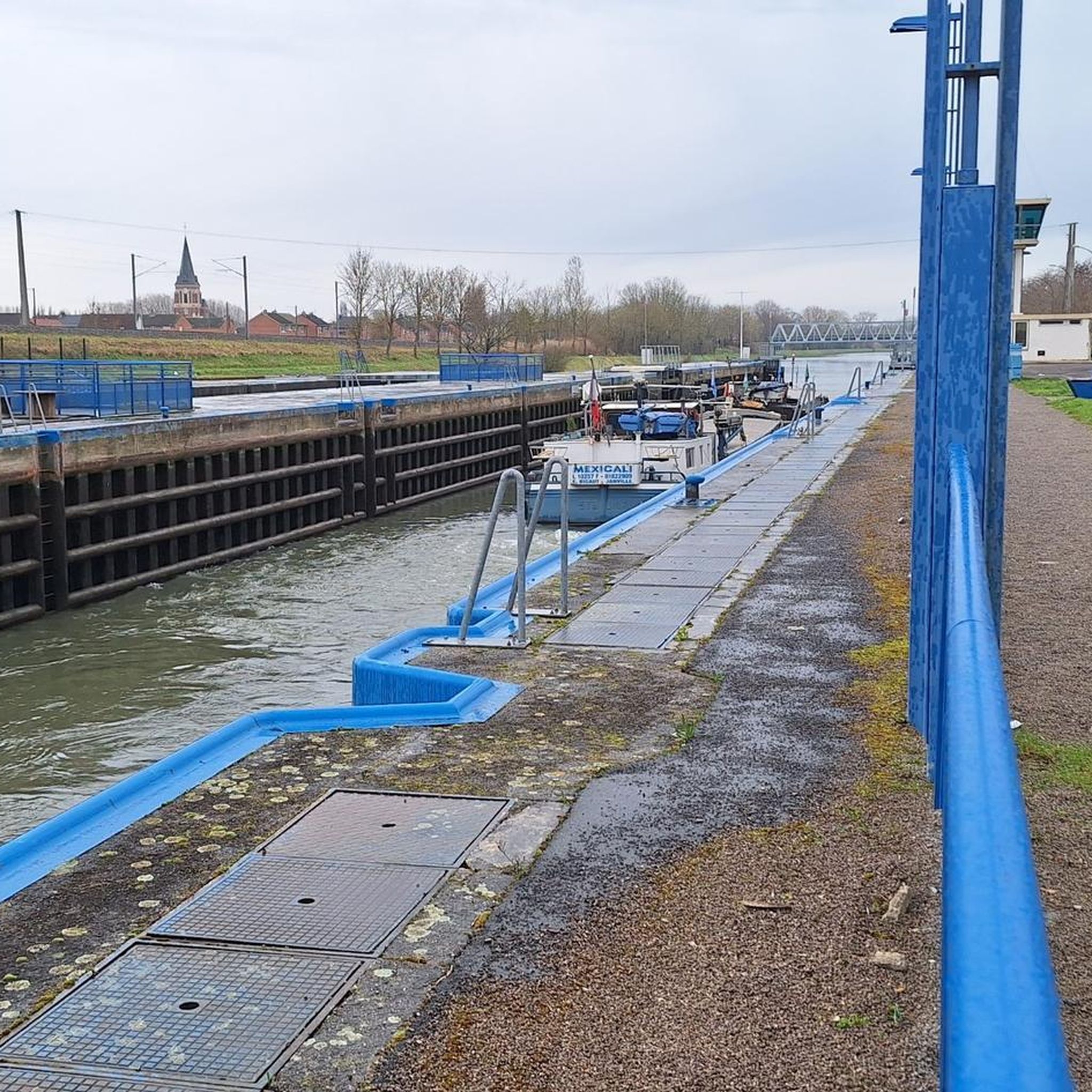
The Canal d'Aire is a prominent natural feature that bisects the village of Cuinchy. Historically, during World War I, the lock within the village was strategically important, located about half a mile behind British lines. Today, it offers scenic routes for cycling, particularly between La Bassée and Salomé.
Are there any unique natural landscapes or parks to visit?
Beyond the slag heaps, you can explore Les Prés du Hem, located about 22 km from Cuinchy, which is known for its natural beauty. The transformed industrial landscape of the Loos-en-Gohelle slag heap also offers a unique blend of nature reclaiming an industrial site, with plants, animals, and even grapes growing there.
What do visitors enjoy most about the attractions around Cuinchy?
Visitors particularly appreciate the panoramic views from the Loos-en-Gohelle slag heap and the historical significance of sites like the Hill 70 Canadian Memorial. The unique blend of WWI history and transformed industrial landscapes, now home to diverse flora and fauna, is also a highlight for many.
Can I find information about the Church of Saint-Pierre de Cuinchy on site?
Yes, the Church of Saint-Pierre de Cuinchy, rebuilt after WWI, offers a QR code on site. You can scan this code to access more information about its history and architecture in both French and English. For more details, you can also visit tourisme-bethune-bruay.fr.
What other towns or cities near Cuinchy offer additional attractions?
Several nearby towns offer a broader range of attractions. Béthune, about 8 km away, is known for its Grand'Place and Belfry. Lens, near the Hill 70 Canadian Memorial, hosts the Louvre-Lens Museum. Arras, approximately 27 km away, features a belfry, baroque architecture, and the Carrière Wellington museum. Lille, about 26 km from Cuinchy, is a vibrant city with a rich history and modern renaissance.
Most popular routes around Cuinchy
Most popular attractions around Cuinchy

Get inspired with the komoot mobile app


Explore more
Still not found the Highlight you’re looking for? See guides of the top attractions in other regions:
