Attractions and Places To See around Saint-Nicolas - Top 20
Best attractions and places to see around Saint-Nicolas include a variety of historical sites and natural landscapes. This region offers numerous opportunities for exploration, particularly for those interested in significant World War I memorials and serene natural areas. Visitors can discover a range of places, from preserved battlefields to protected wetlands, providing diverse experiences.
Best attractions and places to see around Saint-Nicolas
- The most popular attractions is Canadian National Vimy Memorial, a man-made monument that commemorates Canadian soldiers who…
Last updated: May 21, 2026
Canadian National Vimy Memorial
Highlight • Monument
Translated by Google •
Tip by

The ruined church of Ablain-Saint-Nazaire
Highlight • Historical Site
Translated by Google •
Tip by
Sign up now to discover places like this
Get recommendations on the best single tracks, peaks, & plenty of other exciting outdoor places.
Sign up for free
Marais de Maroeuil
Highlight (Segment) • Natural
Translated by Google •
Tip by
Towards the Canadian trenches of Vimy
Highlight • Monument
Translated by Google •
Tip by
Canadian Memorial
Highlight • Other
Translated by Google •
Tip by

Sign up for free to discover even more attractions around Saint-Nicolas.
Sign up for free
Already have an account?
Start today with a free account
Your next adventure awaits.
Login or Signup


Tips from the Community

The ruins of the old church of Ablain-Saint-Nazaire are an impressive and symbolic remnant of the First World War. Built in the 16th century in flamboyant Gothic style by Jacques Le Caron, this church was badly damaged during the fighting in 1915. The ruins have been preserved as a monument to commemorate the horrors of war.
7
0
A remarkable story about the Canadian trenches concerns the preparations for the attack on Vimy Ridge in April 1917. The Canadian divisions used an underground quarry and created additional corridors towards the front. These tunnels and trenches played a crucial role in the success of the attack, with the Canadians managing to retake the strategically important ridge in just three days.
7
0
A remarkable story about the Vimy Memorial concerns its unveiling in 1936. More than 50,000 people, including 6,200 Canadians, attended the ceremony. The presence of so many veterans and survivors underscored the profound impact of the war and the enduring bond between Canada and France. The memorial has since become a symbol of Canadian courage and sacrifice.
6
0
The Mémorial national du Canada à Vimy is an impressive war memorial, commemorating the members of the Canadian Expeditionary Force who died during the First World War. The memorial, designed by Walter Seymour Allward, was unveiled on 26 July 1936 by King Edward VIII. It commemorates the 11,169 Canadian soldiers who died in France and have no known grave.
7
0
A remarkable story about the ruins concerns the decision not to rebuild the church after the war. Although the church had been classified as a historical monument in 1908, the Commission for Historical Monuments decided that the ruins should remain as a testimony to the German destruction. Ironically, it was the French guns that had destroyed the church, but the ruins became a symbol of the war and the reconstruction.
6
0

The Vimy Memorial is the most prestigious Canadian monument in Europe. It is located on the very site of the 1917 fighting near Vimy in the Pas-de-Calais region of France. Erected on the highest point of the hill, Hill 145, the objective of the operations that began on April 9, 1917, it overlooks the Douai Plain. In 1921, architect and sculptor Walter S. Allward (1875-1955) won the competition from the Canadian Battlefield Memorials Commission. The significance of the battles at the site and the favorable location at the top of the hill allowed Vimy to receive the most prestigious work.
1
0

I went there late one evening, a calm that does you good, a great panorama night and day
0
0

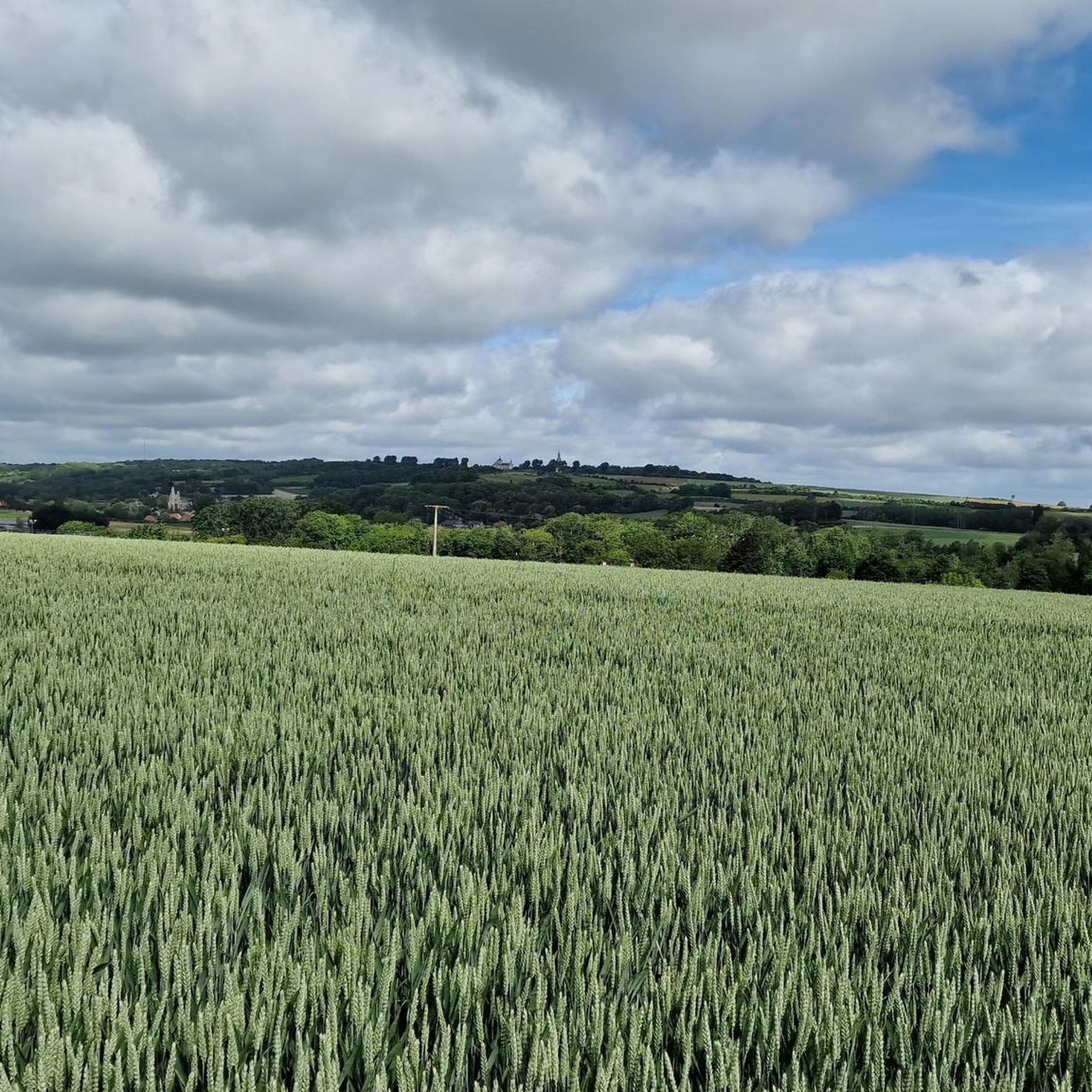
beautiful journey, beautiful scenery
0
0
Frequently Asked Questions
What historical sites and war memorials can I visit around Saint-Nicolas?
The region is rich in historical sites, particularly those commemorating World War I. Key sites include the Canadian National Vimy Memorial, which honors Canadian soldiers, and The ruined church of Ablain-Saint-Nazaire, a preserved 16th-century Gothic church left as a testament to the impact of war. You can also explore the area Towards the Canadian trenches of Vimy, offering a direct connection to the battlefield.
Are there natural areas to explore near Saint-Nicolas?
Yes, for nature lovers, the Marais de Maroeuil is a protected natural swamp area spanning approximately 20 hectares. It's known for its rich and varied flora and fauna, including rare species, and offers quiet walks along the Scarpe river.
Are there family-friendly attractions suitable for children around Saint-Nicolas?
Many of the historical sites are suitable for families. The Canadian National Vimy Memorial and the area Towards the Canadian trenches of Vimy offer educational experiences about history. The ruined church of Ablain-Saint-Nazaire also provides a poignant historical lesson.
Can I explore the trenches at Vimy Ridge?
Yes, you can explore the area Towards the Canadian trenches of Vimy. This site allows visitors to see preserved trenches and underground facilities that played a crucial role in the Battle of Vimy Ridge, offering a profound historical experience.
What is the significance of the ruined church of Ablain-Saint-Nazaire?
The ruined church of Ablain-Saint-Nazaire is a powerful symbol of the impact of World War I. This 16th-century Gothic church was severely damaged during the fighting in 1915 and was intentionally left unrestored as a monument to commemorate the horrors of war, serving as a poignant testimony.
Are there opportunities for hiking or walking around Saint-Nicolas?
Yes, the region offers various walking and running trails. You can find routes like the 'Riverbank View in France – V362 Greenway Along the Canal loop from Arras' or the 'World War 1 military cemetery loop from Arras'. For more options, explore the Running Trails around Saint-Nicolas guide.
What cycling routes are available near Saint-Nicolas?
Cyclists can enjoy a variety of routes. For gravel biking, options include the 'Scarpe riverbanks – The Scarpe by bike loop from Anzin-Saint-Aubin'. Road cyclists might prefer routes like the 'Abbey of Mont Saint-Éloi – Abbey of Mont-Saint-Éloi loop from Arras'. You can find detailed routes in the Gravel biking around Saint-Nicolas guide and the Road Cycling Routes around Saint-Nicolas guide.
What kind of wildlife can I expect to see in the natural areas?
At the Marais de Maroeuil, you can observe a rich and varied flora and fauna. This protected wetland is home to diverse species, including the fumeterre, a rare type of orchid, making it an excellent spot for wildlife spotting.
Is parking available at the main historical sites?
Yes, parking is generally available at major historical sites such as the Canadian National Vimy Memorial. These sites are well-equipped to accommodate visitors arriving by car.
What is the best time of year to visit the attractions around Saint-Nicolas?
The spring and autumn months typically offer pleasant weather for exploring both the historical sites and natural areas. Summer can also be enjoyable, though it may be busier. Visiting outside of peak season can provide a more serene experience.
Are the attractions around Saint-Nicolas dog-friendly?
While specific rules can vary, many outdoor historical sites and natural trails, like those around Marais de Maroeuil, often allow dogs, usually on a leash. It's always advisable to check specific site regulations before your visit.
Most popular routes around Saint-Nicolas
Most popular attractions around Saint-Nicolas

Get inspired with the komoot mobile app


Explore more
Still not found the Highlight you’re looking for? See guides of the top attractions in other regions:
