The best cycling routes around Affléville
4.6
(13)
90
riders
29
rides
Touring cycling around Affléville offers a diverse landscape characterized by rolling countryside, natural water bodies, and areas of historical significance. The region features a network of trails and quiet roads suitable for cycling, with gentle to moderate elevation changes. These routes often traverse open fields, wooded sections, and connect various local points of interest. The terrain provides an accessible environment for exploring the area on two wheels.
Best touring cycling routes around Affléville
- The most popular touring cycling route is…
Last updated: May 11, 2026
5.0
(5)
26
riders
34.8km
02:47
330m
330m
Moderate bike ride. Good fitness required. Mostly paved surfaces. Suitable for all skill levels.
5.0
(2)
6
riders
48.2km
02:55
340m
340m
Moderate bike ride. Good fitness required. Mostly paved surfaces. Suitable for all skill levels.

Sign up for free
5.0
(1)
5
riders
20.6km
01:12
110m
110m
Easy bike ride. Great for any fitness level. Mostly paved surfaces. Suitable for all skill levels.
4
riders
13.1km
01:05
50m
50m
Easy bike ride. Great for any fitness level. Mostly paved surfaces. Suitable for all skill levels.
4.0
(1)
4
riders
29.3km
01:44
110m
110m
Easy bike ride. Great for any fitness level. Mostly paved surfaces. Suitable for all skill levels.
Get access to more routes and recommendations from other explorers.
Sign up for free
Already have an account?
Our route recommendations are based on thousands of hikes, rides, and runs completed by other people on komoot.
Start today with a free account
Your next adventure awaits.
Login or Signup
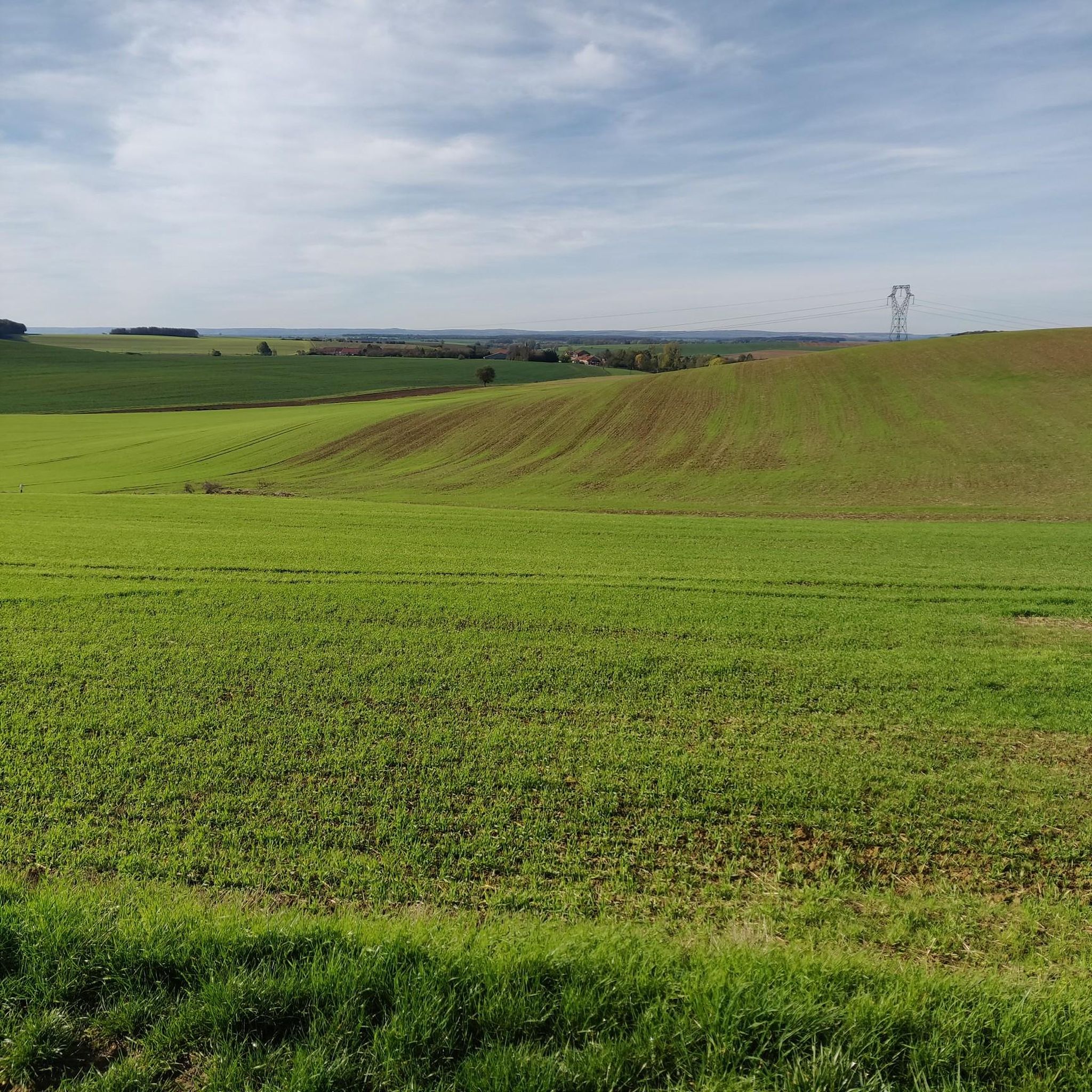
Tips from the Community

A very beautiful and interesting monument.
2
0

💧 Plan d'Eau de la Sangsue – Small Natural Lake Tucked away in the countryside lies the Plan d'Eau de la Sangsue, a small natural lake with wild shoreline vegetation, calm waters, and a natural charm. While its name ("Leech Pond") is unusual, the body of water is a peaceful spot for walkers, nature lovers, and birdwatchers. 🌿 Surrounded by forest and meadows, the pond is a refuge for amphibians, insects, and waterfowl. A narrow path leads along the shore – ideal for a quiet break in nature. Tip: Particularly beautiful in spring or when there is light fog – then the pond appears almost mystical. Perfect for a quiet rest off the beaten track.
0
0

Beautiful view over Verdun and the Meuse valley. On the nearby main road it is wonderful to drive downhill, but uphill is only recommended to a limited extent due to the busy traffic.
7
0
The Ossuary of Douaumont is an impressive memorial that holds the remains of more than 130,000 unknown French and German soldiers who died during the Battle of Verdun (1916). The bones are visible through small windows in the base – a confronting reminder of the horrors of war. In front of the ossuary is the Nécropole nationale de Douaumont, the largest French military cemetery of the First World War, with 16,142 graves, including a Muslim and Jewish plot. The complex was recognized as a UNESCO World Heritage Site in 2023.
8
0
Since 2006, a monument has stood on the hill of Douaumont in memory of the 30,000 Muslim soldiers who died for France during the First World War. Inaugurated by President Jacques Chirac, it consists of a semicircular gallery with Arab architectural elements. In the middle is a column with the inscription: “À la mémoire des soldats musulmans morts pour la France”. The monument recognizes the diversity of the French army and honors the contribution of soldiers from North Africa and other parts of the then French empire.
8
0
The Mémorial de Verdun, located near the ruined village of Fleury-devant-Douaumont, is a leading museum and commemoration site for the Battle of Verdun (1916). The museum displays more than 2,000 objects and uses authentic objects, photographs and audiovisual installations to show how French and German soldiers experienced this battle – in the exact same place where they fought.
8
3
The Lion of Souville Symbol of resistance at the gates of Verdun; This impressive monument, unveiled on 1 October 1922, stands on the site of the former Sainte-Fine chapel and commemorates the fallen of the 130th French Infantry Division. Designed by animal sculptor and veteran René Paris, the statue depicts a dying Bavarian lion – a powerful allegory for the defeat of the German troops and the heroic French defence during the Battle of Verdun. On 23 June 1916, the German attacks reached their peak at Fort de Souville, the last obstacle to the fall of Verdun. Thanks to the courage of a small French garrison led by Lieutenant Dupuy, the fort remained in French hands. The lion marks the extreme point of the German advance – the “last gate” to Verdun remained closed.
8
1
Built in 1881 above the Tunnel de Tavannes to reinforce the inner defensive belt of Verdun. The battery had three firing platforms and a traverse shelter, and was originally armed with two 220 mm mortars and one 22 cm smoothbore mortar. In 1900 it was disarmed and reused during the Battle of Verdun (1916) as an ammunition depot and shelter for troops. The traverse shelter is the best preserved element visible today.
9
0
Frequently Asked Questions
How many touring cycling routes are available around Affléville?
There are over 25 touring cycling routes in the Affléville region, offering a variety of options for different skill levels and preferences.
Are there easy touring cycling routes suitable for beginners or families in Affléville?
Yes, Affléville offers 13 easy routes perfect for beginners or family outings. For example, the Bike loop from Senon is an easy 20.5 km ride, and the Bike loop from Étain is a shorter, easy 13.1 km option.
Are there any challenging touring cycling routes in the Affléville area?
While the region is characterized by rolling countryside, there are 4 routes classified as difficult for those seeking more of a challenge. These routes typically feature more significant elevation changes and longer distances.
Is parking available near the touring cycling routes in Affléville?
Yes, parking is generally available in the villages and towns where many routes start, such as Mancieulles, Lubey, and Étain. Look for designated parking areas or public spaces in these communities.
Can I reach the touring cycling routes in Affléville using public transport?
Public transport options to access specific trailheads in this rural region might be limited. It's advisable to check local bus schedules or consider driving to a starting point for most routes.
What kind of scenery can I expect on the touring cycling routes around Affléville?
The routes in Affléville traverse a diverse landscape of rolling countryside, natural water bodies like the Plan d'Eau de la Sangsue, and wooded sections. You'll also encounter areas of historical significance and charming local villages.
Are there any circular touring cycling routes in Affléville?
Many of the touring cycling routes in Affléville are designed as loops, allowing you to start and finish in the same location. Examples include the Fond de la Noue trail – Plan d'Eau de la Sangsue loop from Mancieulles and the Plan d'Eau de la Sangsue – Cité Radieuse Le Corbusier loop from Lubey.
What do other touring cyclists enjoy most about cycling in Affléville?
The area is highly rated by the komoot community, with an average score of 4.6 stars. Reviewers often praise the diverse landscape, the combination of natural trails and quiet roads, and the opportunity to explore historical sites and water bodies.
What are some notable landmarks or points of interest I can explore along the routes?
Several routes pass by significant landmarks. For instance, the Verdun Memorial – Douaumont Ossuary loop from Étain takes you through historical sites. Other routes offer views of water bodies and architectural landmarks like the Cité Radieuse Le Corbusier.
What is the best season for touring cycling in Affléville?
The region's rolling countryside and natural settings are enjoyable throughout the warmer months, typically from spring to autumn. These seasons offer pleasant temperatures and lush scenery, ideal for exploring the trails and quiet roads.
Are there places to stop for refreshments or cafes along the touring cycling routes?
Many routes connect various local points of interest and pass through villages. While specific cafes might not be directly on every trail, you can often find options for refreshments in the towns and communities along or near the routes, such as Mancieulles, Lubey, and Étain.

Get inspired with the komoot mobile app


Explore more
Browse the best Cycling routes in other regions.
