Attractions and Places To See around Ameugny - Top 20
Best attractions and places to see around Ameugny include a blend of historical sites and natural landscapes in the Saône-et-Loire department of France. This commune is situated in the Burgundy region, offering views of the Mâconnais-Clunisois hills and traversed by the river Grosne. Ameugny serves as a base for exploring the rich heritage of the surrounding area, with several significant regional attractions nearby. The area provides opportunities to discover historical monuments and cultural centers.
Best attractions and places to see…
Last updated: October 5, 2026
Cluny
Highlight • Settlement
Translated by Google •
Tip by

Cormatin Castle
Highlight • Castle
Translated by Google •
Tip by

Sign up now to discover places like this
Get recommendations on the best single tracks, peaks, & plenty of other exciting outdoor places.
Cormatin Castle
Highlight • Castle
chateaudecormatin.com/le-chateau/histoire
Translated by Google •
Tip by

Aire de loisir de la gare de Saint-Gengoux-le-National
Highlight • Monument
Translated by Google •
Tip by
Cluny
Highlight • Other
Translated by Google •
Tip by

Sign up for free to discover even more attractions around Ameugny.
Already have an account?
Start today with a free account
Your next adventure awaits.


Tips from the Community


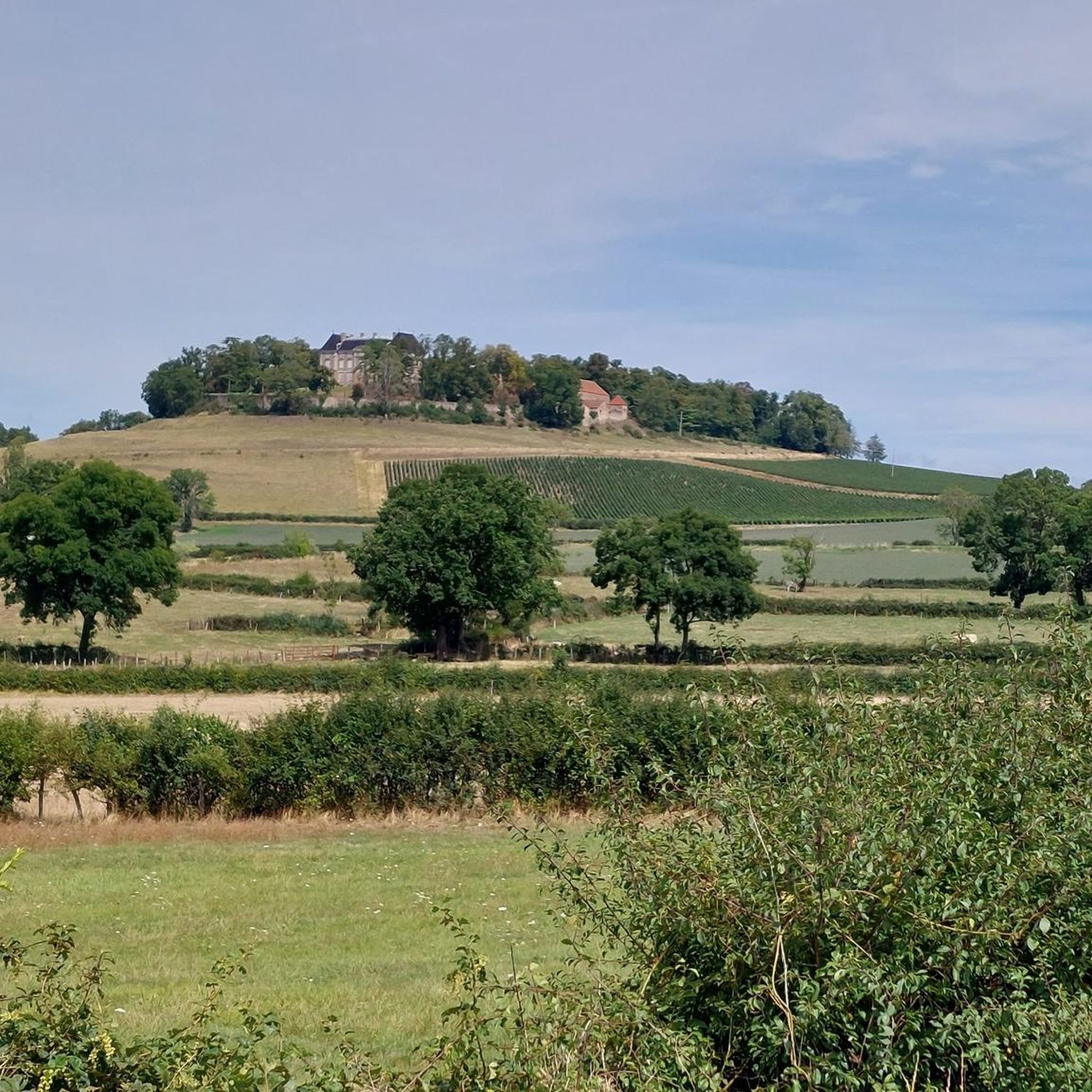
The Château de Cormatin is a magnificent moated castle from the early 17th century. The castle was built between 1606 and 1625 by the Marquises d'Huxelles. It houses the best-preserved state rooms from the Louis XIII era in all of France. Famous are the "Gilded Rooms" (Salles Dorées) with lavish paintings, sculptures, and gilded ceilings. The extensive grounds, covering around 12 hectares, are among the most beautiful gardens in France. Highlights in the outdoor area include a large boxwood labyrinth, an open-air Baroque theatre, water features, and a historic vegetable garden. This spot only offers a brief glimpse of the rear grounds.
3
0
The historic town of Cluny, located in the Bourgogne-Franche-Comté region, can best be admired from the viewing platform of the famous Cheese Tower (Tour des Fromages), from which you can enjoy a striking 360-degree view over the historic rooftops and the gentle, green hills of Southern Burgundy. Cluny is world-renowned for its Benedictine abbey, founded in 910 AD. In the High Middle Ages, the abbey was the starting point of the pioneering Cluniac reform movement and developed into the head of a Europe-wide monastic order with over 1,200 monasteries.
0
0
The recreational facility is located directly on the popular Voie Verte de Bourgogne du Sud, a scenic cycling route on a former railway line. The area offers numerous amenities for cyclists, hikers, and families: There are several shaded picnic tables and benches in a green setting. Directly at the old train station, there is a bicycle rental for classic bicycles and e-bikes, as well as a small repair station. A children's playground with 15 play structures, installed in April 2024, provides entertainment for younger visitors. Public toilets, a water point, and a large, free car park are available.
1
0
The Château de Cormatin is a magnificent early 17th-century water castle. The castle was built between 1606 and 1625 by the Marquises d'Huxelles. It houses the best-preserved state rooms from the time of Louis XIII in all of France. Famous are the "Gilded Rooms" (Salles Dorées) with lavish paintings, sculptures, and gold leaf ceilings. The extensive grounds, covering approximately 12 hectares, are among the most beautiful gardens in France. Highlights in the outdoor area include a large boxwood maze, an open-air baroque theatre, water features, and a historic vegetable garden.
3
0
In the Middle Ages, the abbey was one of the most influential spiritual and cultural centers in Europe. Cluny was the mother house of the Cluniac Reform and headed a federation of over 1,200 monasteries. The third abbey church (Cluny was the largest church in the Christian world until the construction of St. Peter's Basilica in Rome). Of the once-mighty complex, only parts of the southern transept remain today, as the abbey was largely used as a quarry and demolished after the French Revolution.
1
0

The town of Cluny was based on the Benedictine monastery (Cluniac Abbey), founded in 910. The abbey was the starting point and center of the Cluniac reform at the beginning of the 10th century. Cluny reached its peak membership at the beginning of the 12th century with approximately 400 monks. The last abbey church (Cluniac 3) was the world's largest Romanesque basilica and, until the construction of today's St. Peter's Basilica in Rome, the largest church in Christendom. The church had seven towers. Although large parts of the building were destroyed, the remaining relics are absolutely remarkable and make a visit to Cluny an unforgettable experience!
2
0

Beautiful cycling route along this little station
2
0
Frequently Asked Questions
What historical landmarks can I explore within Ameugny itself?
Within Ameugny, you can visit the Église paroissiale Notre-Dame de l'Assomption, an 11th-12th century Romanesque church known for its bell tower, barrel vault, and remarkable tympanum. The village also features the Château d'Ameugny and Château de Contenson, an ancient milepost marking the boundary with Taizé, and La Grange Sercy, a former Cluniac barn.
Are there any significant religious sites near Ameugny?
Yes, several important religious sites are close by. The town of Cluny, about 10 km away, grew around the historic Benedictine monastery, once the largest Romanesque basilica. Very close to Ameugny is the Sainte-Marie-Madeleine Church in Taizé, part of the renowned ecumenical Taizé Community. Additionally, the Chapaize Church, an early Romanesque priory church, is considered one of Burgundy's most beautiful.
What are the best outdoor activities to do around Ameugny?
The area around Ameugny offers various outdoor activities, particularly cycling and mountain biking. You can find numerous routes for cycling, gravel biking, and MTB trails. These routes often pass through picturesque fields, hills, and villages, offering views of the Mâconnais-Clunisois hills.
What natural features or viewpoints can I enjoy near Ameugny?
From the cemetery of the Église paroissiale Notre-Dame de l'Assomption in Ameugny, you can enjoy beautiful views of the rolling Mâconnais-Clunisois hills. The river Grosne also flows through the commune. Further afield, approximately 25 km away, is the prominent natural and archaeological site of Roche de Solutré.
Are there any family-friendly attractions in the vicinity of Ameugny?
Yes, Cormatin Castle is a highly recommended family-friendly attraction. Its extensive gardens feature a large boxwood labyrinth, a green theater, ponds, and flower beds that delight both children and adults. The castle also offers guided tours of its well-preserved Louis XIII apartments.
What is the best time of year to visit Ameugny and its surroundings?
The Burgundy region, including Ameugny, is generally pleasant to visit from spring through early autumn (April to October). During these months, the weather is typically mild, making it ideal for exploring historical sites, enjoying outdoor activities like cycling, and appreciating the scenic landscapes.
What kind of architecture can I expect to see in the towns and villages near Ameugny?
You'll encounter a rich variety of architecture. In Saint-Gengoux-le-National, you can admire authentic medieval streets with half-timbered houses and Renaissance residences. The churches in the region, such as the Église paroissiale Notre-Dame de l'Assomption in Ameugny and the Chapaize Church, showcase impressive Romanesque styles, often with Lombard influences, while others like the church in Saint-Gengoux-le-National blend Gothic and Romanesque elements.
Can I find any hidden gems or less-known historical sites around Ameugny?
Beyond the major attractions, Ameugny itself holds some lesser-known historical sites. The Ancient Milepost at the bottom of the village, displaying the coats of arms of Ameugny and Taizé, offers a glimpse into local history. Also, the former Cluniac barn of La Grange Sercy, now a farm, features a distinctive tower with a geminated bay.
What do visitors enjoy most about the attractions around Ameugny?
Visitors frequently praise the well-preserved historical sites and the beautiful natural settings. For instance, the gardens at Cormatin Castle are often highlighted for their beauty and the fun maze. The historical significance of places like Cluny and the authentic charm of Saint-Gengoux-le-National are also highly appreciated.
Are there any specific cycling routes recommended near Ameugny?
Yes, there are several recommended cycling routes. For an easy ride, consider the "Voie verte of Southern Burgundy – View of Cluny loop from Ameugny" or the "Taizé Community – Sainte-Marie-Madeleine Church loop from Cormatin." For a moderate challenge, the "Circuit through fields, hills and villages from Cormatin to Culles-les-Roches" is a good option. You can find more details on cycling routes around Ameugny.
Is the Taizé Community open to visitors, and what can I see there?
The Taizé Community, located very close to Ameugny, is an ecumenical monastic community that welcomes visitors. You can visit the 11th-12th century Romanesque Sainte-Marie-Madeleine Church, which is the old village church of Taizé, and the larger Church of Reconciliation, where the community gathers for prayer.
Most popular routes around Ameugny
Most popular attractions around Ameugny

Get inspired with the komoot mobile app


Explore more
Still not found the Highlight you’re looking for? See guides of the top attractions in other regions:
