Attractions and Places To See around Poullignac - Top 15
Attractions and places to see around Poullignac include historical sites and natural landscapes within a tranquil, rural setting in the Charente department. The village is situated in a valley, with elevations ranging from 79 meters to 167 meters, and features Cretaceous limestone geology. Its primary landmark is the Église Saint-Martin de Poullignac, an originally Romanesque parish church built around the late 11th or early 12th century. The surrounding Charente region offers diverse landscapes, including wooded hills and historical sites.
Best…
Last updated: November 12, 2026
Château de la Léotardie
Highlight • Castle
Translated by Google •
Tip by

Saint-Denys Church of Montmoreau
Highlight • Religious Site
Translated by Google •
Tip by

Sign up now to discover places like this
Get recommendations on the best single tracks, peaks, & plenty of other exciting outdoor places.
Notre-Dame-de-la-Nativité Church of Brossac
Highlight • Religious Site
Translated by Google •
Tip by
Saint-Étienne Church of Courgeac
Highlight • Religious Site
Translated by Google •
Tip by
Montmoreau Castle
Highlight • Castle
Montmoreau is a new French commune located in the Charente department, in the Nouvelle-Aquitaine region. It was created on …
Translated by Google •
Tip by
Sign up for free to discover even more attractions around Poullignac.
Already have an account?
Start today with a free account
Your next adventure awaits.

Tips from the Community

Château de La Léotardie in Nonac, in Charente, not in Dordogne. Listed as a Historic Monument, Château de la Léotardie in Nonac was originally the property of Hélie Léotard, then Archdeacon of Bourges. Part country house, part monastery, this former fortified castle was largely rebuilt in the 14th century and then renovated in the 15th. Visitors can discover a vaulted room and an ogival doorway on the ground floor. It is also possible to admire a medieval triple-nave barn a few hundred meters away. https://www.france-voyage.com/villes-villages/nonac-2918/chateau-leotardie-12663.htm
0
0
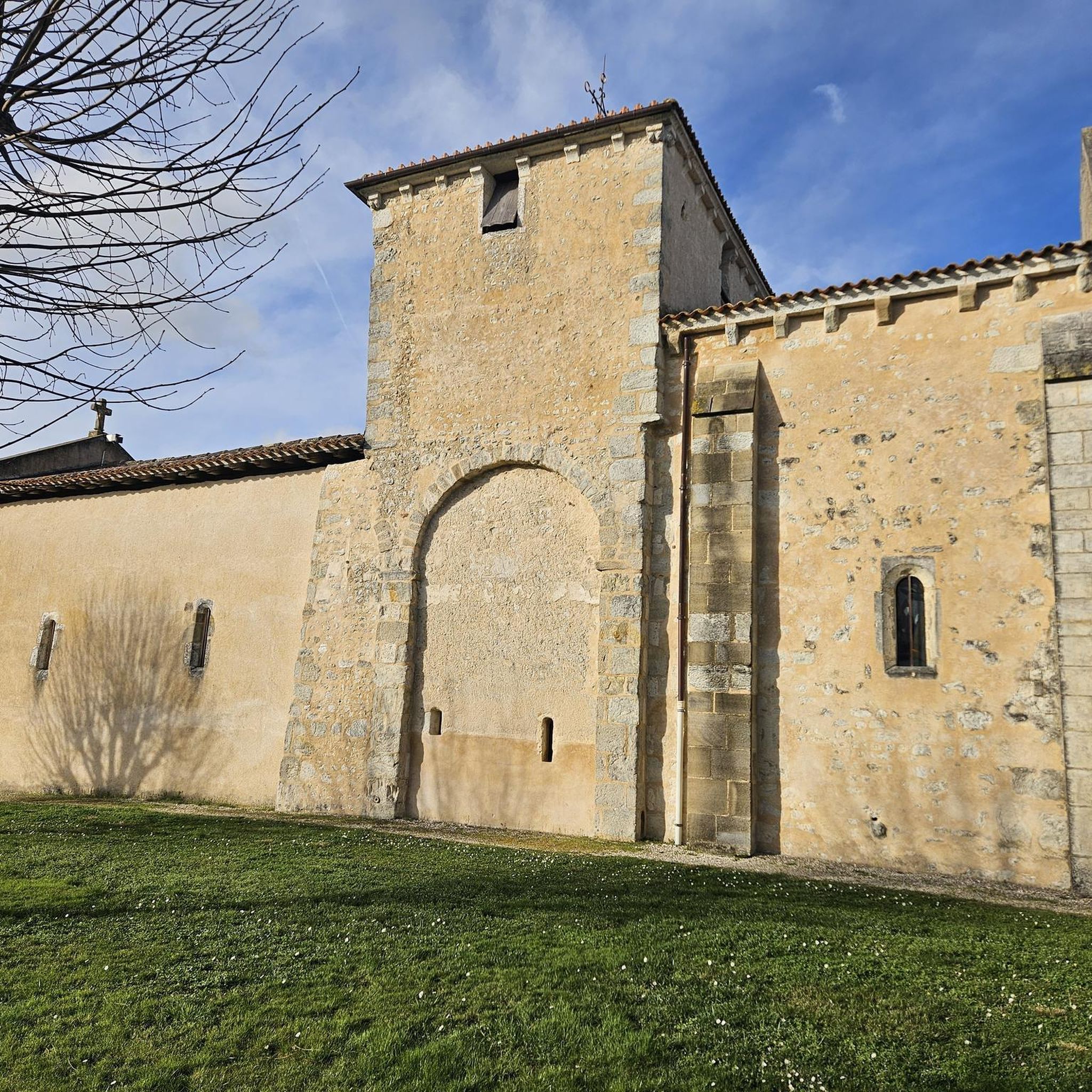
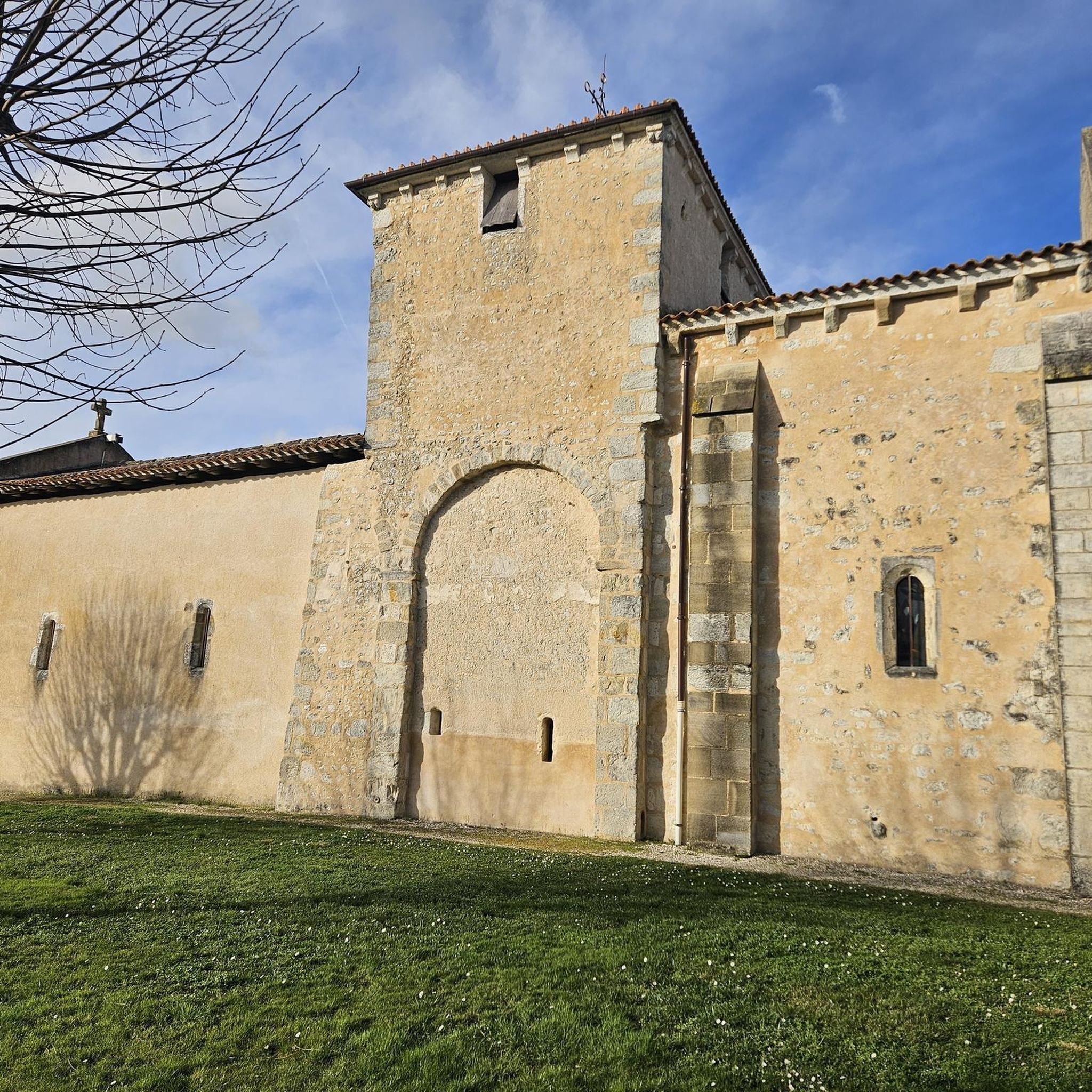
Saint-Étienne Church in Courgeac, in Charente, is a 12th-century Romanesque church composed of a single nave made of small cubic rubble (early 12th century), with a barrel vault, a square ribbed vault topped by a rectangular bell tower, and a semicircular Romanesque apse with a cul-de-four vault. In the 15th and 16th centuries, a porch was built in front of the nave and covered with frescoes. Above the apse, an upper chamber was built, probably during the Wars of Religion, for defensive purposes, including a battlement and gun ports. The church displays the architecture typical of modest churches of the early Romanesque period. You must enter the cemetery to get a full view. http://chapiteaux.free.fr/TXT_COURGEAC_16.html https://www.tripadvisor.fr/Attraction_Review-g1932328-d27157425-Reviews-Eglise_Saint_Etienne_a_Courgeac-Montmoreau_Saint_Cybard_Charente_Nouvelle_Aquit.html
0
0
Montmoreau Castle is in the new commune of Montmoreau in Charente Montmoreau is a new French commune located in the Charente department, in the Nouvelle-Aquitaine region. It was created on January 1, 2017 from the merger of Montmoreau-Saint-Cybard, Saint-Amant, Saint-Eutrope, Saint-Laurent-de-Belzagot and Aignes and Puypéroux. Montmoreau Castle stands at the top of a natural hill overlooking the Tude Valley. In the centuries of instability and disorder that followed the collapse of Roman Gaul, the invasion of the Arabs from Spain around 700 and the Viking raids in 844 added to the anxiety of the populations of our region. Then the disintegration of the Carolingian empire led to a dispersion of the centers of power from which feudalism would be born. This is why the 10th and 11th centuries were a time when a large number of fortified entrenchments or camps were established, often built on "castral mounds", which are at the origin of many of today's "castles". The hill of Montmoreau offered in a way a perfect natural mound for the construction of what was probably at first a simple fortified camp and became a feudal castle in the 11th century. It occupied the platform and was provided with a double fortified enclosure. The two round towers of the current building belonged to the feudal castle. Likewise the porch chapel, Notre-Dame chapel, which was located in the first enclosure. But excavations would surely reveal traces of other remains. The current castle was built on this same site in the middle of the 15th century, perhaps by Guy de Mareuil, lord of Montmoreau, Villebois and Mareuil. With the exception of the two feudal towers, the entire building is partly Gothic and partly Renaissance. It is a perfect witness to this pivotal period between a world that was ending and a world that was beginning. Over the centuries, it seems that the various lords and then owners of the castle never had enough money to add buildings from different periods to the building, as can be seen in so many other castles. Preserved almost intact since its construction, the castle of Montmoreau therefore offers an architectural heritage of exceptional purity. The renovations carried out by the current owner aim, by reinforcing the solidity of the buildings, to restore the original aspects under the few modifications that have been made. Towards the east, overlooking the Tude valley, the castle displays a façade that looks great with its high main building flanked by the two round feudal towers and its sloping roofs of flat tiles from which the chimneys emerge. On the side of the north tower, about halfway up, we can make out an old door that opened onto the castle's patrol path. The Gothic gables of the central body bristle with stone plant crosiers. Their bases are seated on two sculptures of "intimidating lions", one opening its mouth to the north, the other to the south, and they are crowned by a finial. To the north and south, a pavilion leans against the gable. The southern one has just regained its original three-sided roof. Towards the west, the façade that faces the park also mixes eras. The mullioned Renaissance windows retain civil Gothic motifs. The hexagonal tower of the staircase projects from the façade. It has a very beautiful door in flamboyant Gothic style, with a tympanum sculpted with prismatic ribs and intertwined foliage practically erased by the erosion of time. But if you look closely, you can make out a bird in profile among the foliage on the right side. Perhaps the signature of the stonemason artist. In the corner of this tower and the façade, stands a watchtower with a pointed bell tower made of chestnut essentes (a type of shingle) whose base in a "cul-de-lampe" is completely in the Renaissance style. Source: https://montmoreau.fr/index-module-orki-page-view-id-116.html#:~:text=L'%C3%A9difice%20a%20%C3%A9t%C3%A9%20class%C3%A9,%C3%A9difice%20par%20la%20nef%20porche. https://fr.wikipedia.org/wiki/Ch%C3%A2teau_de_Montmoreau https://monumentum.fr/monument-histoire/pa00104431/montmoreau-chateau
0
0
The Church of Our Lady of the Navitiy was built in the 12th century. This Romanesque-style monument was considerably altered with age, so much so that only the foundations are original today. The walls, for example, were raised shortly after the Hundred Years' War to allow refuge rooms to be built under the roof. The Romanesque façade, for its part, was remodeled during the Gothic period. The use of grison, a local grey stone very common in this area of Charente, limited the sculpted decoration to its strictest expression; this stone was unsuitable for sculpture. On the other hand, the church has a painted fresco, rediscovered in the sanctuary during restoration work. Like all medieval churches, Notre-Dame de Brossac was once surrounded by its cemetery, abandoned in 1843. Outside, in the north wall of the nave, there remain two funerary recesses intended to shelter the burial of high-ranking figures. https://www.sauvegardeartfrancais.fr/projets/brossac-eglise-notre-dame-de-la-nativite
0
0
Located on one of the paths to Santiago de Compostela, the Via Turonensis (Road to Tours), the Saint-Denys de Montmoreau church was built in the 12th century. It has retained its original appearance, with the exception of the square Romanesque bell tower which was completely modified in the mid-19th century by Paul Abadie. A Romanesque church whose façade is marked by a polylobed portal and two arcades. It consists of a nave covered with a barrel vault, a transept whose crossing has a dome on pendentives and a vast, very bright semicircular apse. The chevet bordering the road is decorated with a very prominent horizontal cordon supported by modillions representing human or animal faces. The magnificent Romanesque frontispiece has an arched portal whose five arches form an archivolt resting on slender columns with sculpted capitals. The inner arch is openworked by six lobes ending with symbolic animal heads. All the decorations bear witness to an oriental influence in the South-West Romanesque and especially to the virtuosity of the sculptors. https://www.montmoreau.fr/index-module-orki-page-view-id-115.html https://monumentum.fr/monument-historique/pa00104432/montmoreau-eglise-saint-denis
0
0

Why Visit Château de la Léotardie? For its enchanting setting: Nestled in the heart of the Périgord countryside, the château is a haven of peace where you can recharge your batteries while admiring a magnificent example of Renaissance architecture. For its history: This place full of history allows you to discover a part of the rich past of the Périgord, with architecture that reflects the art of living and elegance of yesteryear. For its role in social and event life: The château offers a perfect setting for private events or receptions, with beautifully designed indoor and outdoor spaces. Château de la Léotardie is a hidden gem in the Dordogne, combining history, elegance and nature. It is a place to discover for those looking to explore an authentic corner of Périgord heritage.
1
0
Park and Gardens: Exceptional Natural Setting: Surrounded by vast meadows, woods and gardens, the château offers an idyllic natural setting. Visitors can enjoy quiet strolls in the shaded paths, among century-old trees, or relax while observing the local wildlife. French Gardens: Some of the château's gardens are laid out in a classic "à la française" style, with geometric flowerbeds and boxwood-lined paths, adding to the charm of the place. Intimate and Historical Atmosphere: Venue for Receptions and Events: The Château de la Léotardie is often used for private receptions, weddings and other events, making it a choice venue for those wishing to celebrate in a historic and romantic setting. Authentic Atmosphere: Despite its prestigious past, the château retains an intimate and tranquil atmosphere, offering visitors a true immersion in the history of the Périgord. Proximity to Tourist Sites: Périgord Noir Region: Located close to the famous tourist sites of the Dordogne, such as Sarlat, the caves of Lascaux and the castles of Beynac and Castelnaud, the Château de la Léotardie is an ideal base for exploring the region. Cultural and Natural Heritage: The castle is surrounded by magnificent landscapes, dense forests and rivers, typical of the Dordogne, offering many opportunities for nature lovers, whether it be hiking, canoeing or visiting picturesque villages.
1
0
Château de la Léotardie is a magnificent château located in the Dordogne region of Nouvelle-Aquitaine. Nestled in the heart of the Périgord countryside, it embodies the elegance and history of the region, while offering a peaceful and green setting. Although it is less well-known than some of the great châteaux of the Dordogne, it has a particular charm, particularly due to its architecture and its environment. Points of Interest at Château de la Léotardie: Renaissance Architecture: Périgourdine Elegance: Château de la Léotardie, dating from the Renaissance, is distinguished by its refined architecture. It has features typical of manor houses of this period, with stone facades, sloping roofs covered with tiles and beautiful stone fireplaces. Historical Details: Certain architectural elements bear witness to the history of the château, such as mullioned windows and circular towers which give the whole an appearance that is both defensive and elegant.
1
0
Frequently Asked Questions
What historical landmarks can I explore in Poullignac itself?
Poullignac's primary historical landmark is the Église Saint-Martin de Poullignac. This parish church, originally Romanesque, dates back to the late 11th or early 12th century, offering a glimpse into the village's ancient past.
What are some notable historical churches in the wider Poullignac area?
Beyond Poullignac, the region boasts several significant historical churches. You can visit the Saint-Eutrope Church of Montmoreau, known for its 11th or 12th-century origins and unique self-supporting exterior staircase. Another is the Notre-Dame-de-la-Nativité Church of Brossac, a 12th-century Romanesque monument with a rediscovered painted fresco. Also, consider the Saint-Cybard Church in Blanzac-Porcheresse, one of the oldest in the region from the 11th century, and the Saint-Étienne Church of Courgeac, a typical modest Romanesque church from the 12th century.
Are there any castles to visit near Poullignac?
Yes, the region features historical castles. A notable one is Château de la Léotardie, a romantic castle built in the 13th century and renovated in the 15th century, known for its Renaissance architecture and beautiful natural setting. The broader Charente region also includes the Château de la Mercerie.
What natural features define the landscape around Poullignac?
Poullignac is situated in a tranquil valley cutting through a hilly plateau. The geology is characterized by Cretaceous limestone, with Tertiary deposits of pebbles, sand, and clay on its northern edge, which support chestnut woods. The Charente department offers diverse landscapes, including rolling, wooded hills that provide scenic views and change colors seasonally.
Are there opportunities for cycling around Poullignac?
Yes, the area around Poullignac is suitable for cycling. You can find various routes, including easy options like the "Bike loop from Blanzac-Porcheresse" or more challenging ones such as "Along the Charente River – La voie verte loop from Chillac." For more details, explore the Cycling around Poullignac guide.
Can I find mountain biking trails near Poullignac?
Absolutely. There are several mountain biking trails available. Options range from easy routes like the "Templar chapel loop from Blanzac-Porcheresse" to moderate ones such as the "Château le Châtelar in Passirac loop from Brossac." Discover more trails in the MTB Trails around Poullignac guide.
What kind of hiking trails are available in the Poullignac region?
While specific hiking trails are not detailed in the provided data, the region's diverse natural features, including wooded hills and valleys, suggest opportunities for enjoyable walks and hikes. The landscape, characterized by Cretaceous limestone and chestnut woods, offers varied terrain for exploring the outdoors.
Are there any unique villages or sites worth visiting close to Poullignac?
Yes, about 25 km away, you can visit Aubeterre-sur-Dronne, recognized as one of France's "Most Beautiful Villages." It is famous for its impressive Subterranean Monolithic Church of Saint-Jean, an underground church carved directly out of rock, offering a truly unique historical experience.
What do visitors particularly enjoy about the attractions near Poullignac?
Visitors appreciate the blend of history and nature. Highlights like Château de la Léotardie are loved for their romantic Renaissance architecture and idyllic natural settings, perfect for quiet strolls. The historical churches, such as Saint-Eutrope Church of Montmoreau, are valued for their primitive style and unique architectural details like self-supporting staircases.
What is the best time to visit Poullignac and its surrounding attractions?
The Charente region, where Poullignac is located, features rolling, wooded hills that change colors seasonally. This suggests that spring and autumn would be particularly beautiful for exploring the natural landscapes and historical sites, offering pleasant weather for outdoor activities and picturesque scenery.
Are there any specific considerations for road cycling routes in the area?
Road cyclists can find a variety of routes, including moderate options like the "Saint-Médard Church – Montchaude Church loop from Brossac" and more difficult ones such as the "Chillac - Bonneuil - Courgeac loop." These routes often traverse scenic countryside, offering a good workout with beautiful views. For more options, consult the Road Cycling Routes around Poullignac guide.

Get inspired with the komoot mobile app


Explore more
Still not found the Highlight you’re looking for? See guides of the top attractions in other regions:
