The best road cycling routes around La Chapelle-Du-Noyer
4.5
(25)
316
riders
171
rides
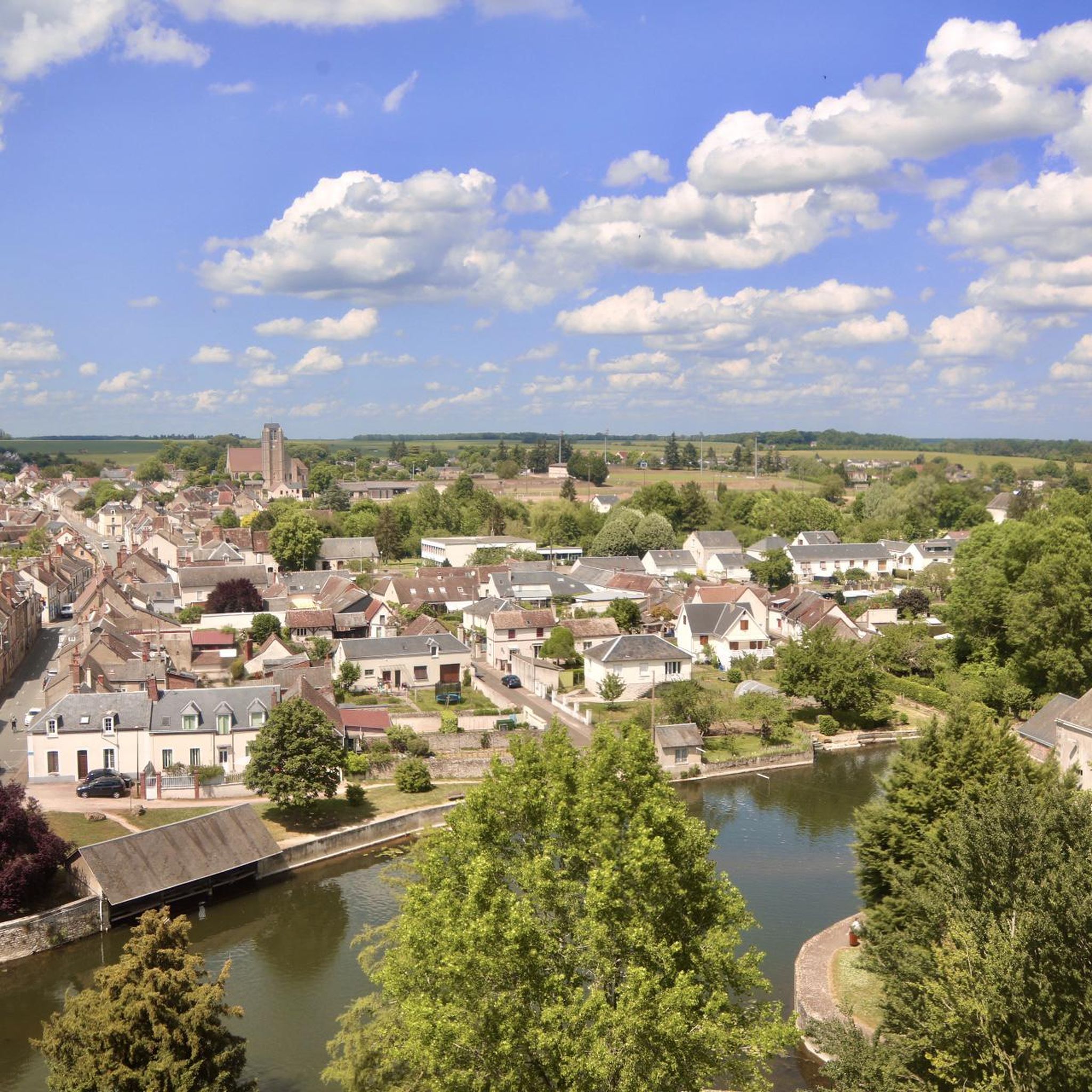
Road cycling around La Chapelle-Du-Noyer offers a varied landscape within the Centre-Val de Loire region of France. The area is characterized by the Loir River, providing picturesque views and a generally gentler topography. Terrain features gentle undulations and rolling hills, with elevations ranging from 102 to 146 meters (335-479 ft), making it suitable for diverse road cycling experiences. The commune's rural setting and proximity to Châteaudun, with its historic castle, provide points of interest along the routes.
Best road cycling…
Last updated: May 23, 2026
1
riders
126km
05:05
650m
650m
This difficult 78.5-mile road cycling circuit through Châteaudun and Brou offers a sporty challenge in the scenic Perche Natural Park.
127km
05:02
440m
440m
This difficult 79.0 miles (127.2 km) road cycling loop connects Châteaudun and Chartres via Bonneval, following the V41/47 routes.

Sign up for free
4.0
(2)
16
riders
32.1km
01:24
200m
200m
Easy road ride. Great for any fitness level. Mostly well-paved surfaces and easy to ride.
4.0
(3)
11
riders
46.5km
02:07
340m
340m
Moderate road ride. Good fitness required. Mostly well-paved surfaces and easy to ride.
3.0
(1)
8
riders
57.1km
02:22
280m
280m
Moderate road ride. Good fitness required. Mostly well-paved surfaces and easy to ride.
Get access to more routes and recommendations from other explorers.
Sign up for free
Already have an account?
Our route recommendations are based on thousands of hikes, rides, and runs completed by other people on komoot.
Start today with a free account
Your next adventure awaits.
Login or Signup


Tips from the Community

Placed under the patronage of Saint Hilaire, this parish was given by Gannelon de Montigny, lord of the place, to the abbey of Marmoutier around 1042. Its reconstruction probably dates from this period; it then became a priory. The church has a rectangular nave ending in a choir with a flat chevet. An examination of the masonry easily reveals two distinct periods of construction: the Romanesque period and the Renaissance. Built of flint rubble with rendering, the western part of the building appears to date from the 11th or 12th century. A limestone cornice supported by rather crude corbels underlines the base of the roof. To the south, two narrow Romanesque windows flared inwards light the nave. To the north, the bays were later reworked and enlarged. On this same side, a Romanesque doorway was walled up; It allowed the church to connect with a building whose traces of detachment remain. The bell tower was built to the north of the Romanesque nave, extending the western façade. The absence of a connection between the east and west walls of the bell tower and the north wall of the nave clearly indicates that it is an entirely later construction. However, its crowning is much later, as evidenced by its cornice, whose molding is in the classical style. Flanked by obliquely angled buttresses, it is covered with a saddleback roof. The eastern half of the church appears to be an extension built during the Renaissance period. Its ogee-shaped cornice and the decoration of the eastern gable, as well as the moldings of the buttress bands, attest to this dating. A vast rectangular choir then appears to have replaced a semicircular Romanesque apse; the eastern gable and the southern and northern façades were then pierced with networked bays. In the lower part of the north façade, projecting ashlars appear to have supported the roof of a lean-to building. To the south, a sacristy was built in the 19th century. Inside, the entire building is covered with a paneled vault with exposed tie beams and kingposts. The 18th-century high altar is surmounted by an Assumption of the Virgin inspired by Murillo's. For the restoration of the roofs and façades, the Sauvegarde de l'Art Français (French National Art Protection Agency) awarded a grant of €30,490 in 2001.
0
0
The Church of Saint Sauveur La Trinité, probably built in the 12th century, is notable for its Romanesque windows with columns and capitals. On its walls, alternating with the consecration crosses, one can admire a Stations of the Cross in blue enamel on earthenware. The choir is lit by five Romanesque windows decorated with stained glass depicting Our Lord and the four Evangelists.
0
0

The imposing structure known as the "Château de Chateaudun" that reveals itself to visitors here is, of course, also available in other sports in the komoot system. For the corresponding hiking highlight, you'll find further relevant information and additional photos under the tips. If you're interested, see =>> https://www.komoot.com/de-de/highlight/936307
0
0


The church dates from the 12th century and was remodeled in the 15th or 16th century, its buttresses and bell tower date from the 19th century. It houses a wrought iron communion table from the 18th century.
0
0

Porte de Boisville Its ogival portal opens into a thick quadrangular massif where there was a room for operating the portcullis. We can still see the groove in the thickness of the walls. On the left and right two small funnel-shaped spaces allowed the defenders to observe and repel the enemies who appeared on the bridge. The gate was topped by a building serving as a guardhouse which was demolished in 1761. The guarding of these doors and their keys was in the troubled times of the Hundred Years' War the subject of concern for the inhabitants and also a source of quarrels and trials between the city and the abbey. This gate is preceded by a bridge of 5 stone arches, the one adjoining the gate was built in 1774 and replaced a drawbridge which defended the entrance.
0
0

Of course there is the castle but the rest of the village is really worth a stop (church, wash house, half-timbered house, etc.)
0
0
Frequently Asked Questions
How many road cycling routes are available around La Chapelle-Du-Noyer?
There are over 180 road cycling routes available around La Chapelle-Du-Noyer, catering to various skill levels. You'll find a wide selection, from easy loops to more challenging excursions through the region's diverse landscapes.
What kind of terrain can I expect on road cycling routes in this area?
The terrain around La Chapelle-Du-Noyer is characterized by gentle undulations and rolling hills, with elevations ranging from 102 to 146 meters (335-479 ft). You'll experience picturesque views along the Loir River and through rural countryside, offering a smooth experience on mostly paved surfaces.
Are there any easy road cycling routes suitable for beginners or families?
Yes, the area offers 62 easy road cycling routes. An example of an easy route is the Saint Hilaire Church – Château de Châteaudun loop from Châteaudun, which is 20.0 miles (32.1 km) long and takes about 1 hour 24 minutes to complete. This route leads through the charming area around Châteaudun.
What are some challenging road cycling routes for experienced riders?
For experienced riders seeking a challenge, there are 5 difficult routes. Consider the Châteaudun and Brou route, a 78.5 miles (126.3 km) trail with significant elevation gain, typically taking over 5 hours. Another option is the Châteaudun and Chartres Loop via the Loir and Conie Valleys, which is 79.0 miles (127.2 km) long.
What interesting landmarks or attractions can I see along the road cycling routes?
Many routes pass by historical landmarks and scenic spots. You can explore the historic Château de Châteaudun, located just 5 km from La Chapelle-Du-Noyer. Other points of interest include the Château de Moléans and the Dheury bridge at Donnemain-Saint-Mamès. The Loir River itself provides picturesque scenery along its banks.
Are there any circular road cycling routes in the area?
Yes, many of the routes around La Chapelle-Du-Noyer are circular, allowing you to start and end in the same location. For example, the Saint-Marc Church – Montigny Castle loop from Douy is a moderate 28.9 miles (46.5 km) circular path winding through the rural landscape.
What do other road cyclists enjoy most about cycling in La Chapelle-Du-Noyer?
The area is highly rated by the komoot community, with an average score of 4.5 stars from over 25 reviews. Cyclists often praise the varied landscape, the charm of the river valleys and rolling hills, and the opportunity to pass by historical landmarks like the Château de Châteaudun. The rural setting provides a peaceful cycling experience.
What is the best time of year for road cycling in La Chapelle-Du-Noyer?
The Eure-et-Loir department, where La Chapelle-Du-Noyer is located, offers pleasant cycling conditions through much of the year. Spring and autumn generally provide comfortable temperatures and beautiful scenery. Summer is also suitable, but it's always advisable to check the local weather forecast before heading out.
Where can I find more information about the Eure-et-Loir region for cycling?
For additional information about cycling and exploring the Eure-et-Loir department, you can visit the official tourism website: tourisme28.com. This resource can provide further context on the region's cycling offerings.
Are there routes that incorporate the Loir River?
Absolutely. The Loir River is a prominent natural feature in the region, and several routes are designed to follow its picturesque banks. These routes offer gentler topography and beautiful riverside views, making them a popular choice for many cyclists.
Most popular attractions around La Chapelle-Du-Noyer

Get inspired with the komoot mobile app


Explore more
Browse the best Road cycling routes in other regions.
