Attractions and Places To See around Lutz-En-Dunois - Top 12
Attractions and places to see around Lutz-En-Dunois include 12 notable sites, offering a range of historical and natural points of interest. This region features a mix of historical sites, castles, and bridges, providing diverse options for exploration. Visitors can discover structures dating from the 12th to the 19th century, often situated along local waterways. The area provides opportunities for family friendly attractions and outdoor activities.
Best attractions and places to see around Lutz-En-Dunois
- The most popular attractions is Château de Châteaudun, a historical site that overlooks the Loir by more than 60 meters. This castle features a succession of medieval, Gothic, and Renaissance architecture, including a 12th-century tower and a collection of Flemish and French tapestries.
- Another must-see spot is Little Bridge of Vouvray, a bridge for pedestrians and bicycles. This location is suitable for picnics and crosses the Dormouse river, offering a picturesque setting.
- Visitors also love Dheury bridge at Donnemain-Saint-Mamès, an early 20th-century metal bridge spanning the Conie. Crossing it provides views of an old mill and a washhouse with a rouche roof, highlighting the local heritage.
- Lutz-En-Dunois is known for its historical sites, castles, and bridges. The region offers a variety of attractions to see and explore, from medieval fortresses to scenic river crossings.
- The attractions around Lutz-En-Dunois are appreciated by the komoot community, with 50 upvotes and 37 photos contributed by visitors.
Last updated: May 9, 2026
Château de Châteaudun
Highlight • Historical Site
chateau-chateaudun.fr
Translated by Google •
Tip by

Château de Moléans
Highlight • Castle
Translated by Google •
Tip by

Sign up now to discover places like this
Get recommendations on the best single tracks, peaks, & plenty of other exciting outdoor places.
Sign up for free
Dheury bridge at Donnemain-Saint-Mamès
Highlight • Bridge
Translated by Google •
Tip by

Little Bridge of Vouvray
Highlight • Bridge
Translated by Google •
Tip by

Monumental Fountain of Châteaudun
Highlight • Other
Translated by Google •
Tip by

Sign up for free to discover even more attractions around Lutz-En-Dunois.
Sign up for free
Already have an account?
Start today with a free account
Your next adventure awaits.
Login or Signup



Tips from the Community

The imposing structure known as the "Château de Chateaudun" that reveals itself to visitors here is, of course, also available in other sports in the komoot system. For the corresponding hiking highlight, you'll find further relevant information and additional photos under the tips. If you're interested, see =>> https://www.komoot.com/de-de/highlight/936307
0
0


At the gates of the Loir valley coming from Paris, between Chartres and Blois, the Château de Châteaudun raises its proud and massive silhouette to the eyes of the visitor who approaches it from the north. Property of Jean, bastard of Orléans, Count of Dunois and companion of Joan of Arc, it was a solid fortress before becoming a pleasant princely residence. Overlooking the Loir by more than 60 meters, Châteaudun Castle offers a succession of elements of medieval, Gothic and Renaissance architecture of exceptional authenticity. Clinging to its rocky promontory, the 12th century “big tower” is one of the tallest and best preserved dungeons in France. In the 15th century, Jean Dunois undertook work and transformed the castle, demolishing part of the fortifications. He made the old medieval castle a comfortable and bright residence and endowed it with a Sainte-Chapelle. In the following century, his descendants, the lords of Longueville, completed the construction of the chapel and enlarged the castle with the Longueville wing. The Dunois wing and the Longueville wing have two sumptuous staircases with loggias, one with flamboyant decor and the other from the Renaissance period. Château de Châteaudun also houses a remarkable collection of Flemish and French tapestries from the 16th and 17th centuries. The visit is completed by a medieval-inspired garden exploring the relationships between cuisine and medicine in the Middle Ages, while a hanging garden reveals a garden of idleness and relaxation, unique in the Central Region.
1
0

This large neo-Renaissance style fountain was inaugurated in 1860 to symbolize the arrival a few years earlier of a modern drinking water supply system in the upper town. It is topped by a dome with lantern and a phoenix, this mythical bird which is reborn from its ashes and which perfectly symbolizes the rebirth of the city after fires, the most important of which was the dramatic fire of 1723.
0
0
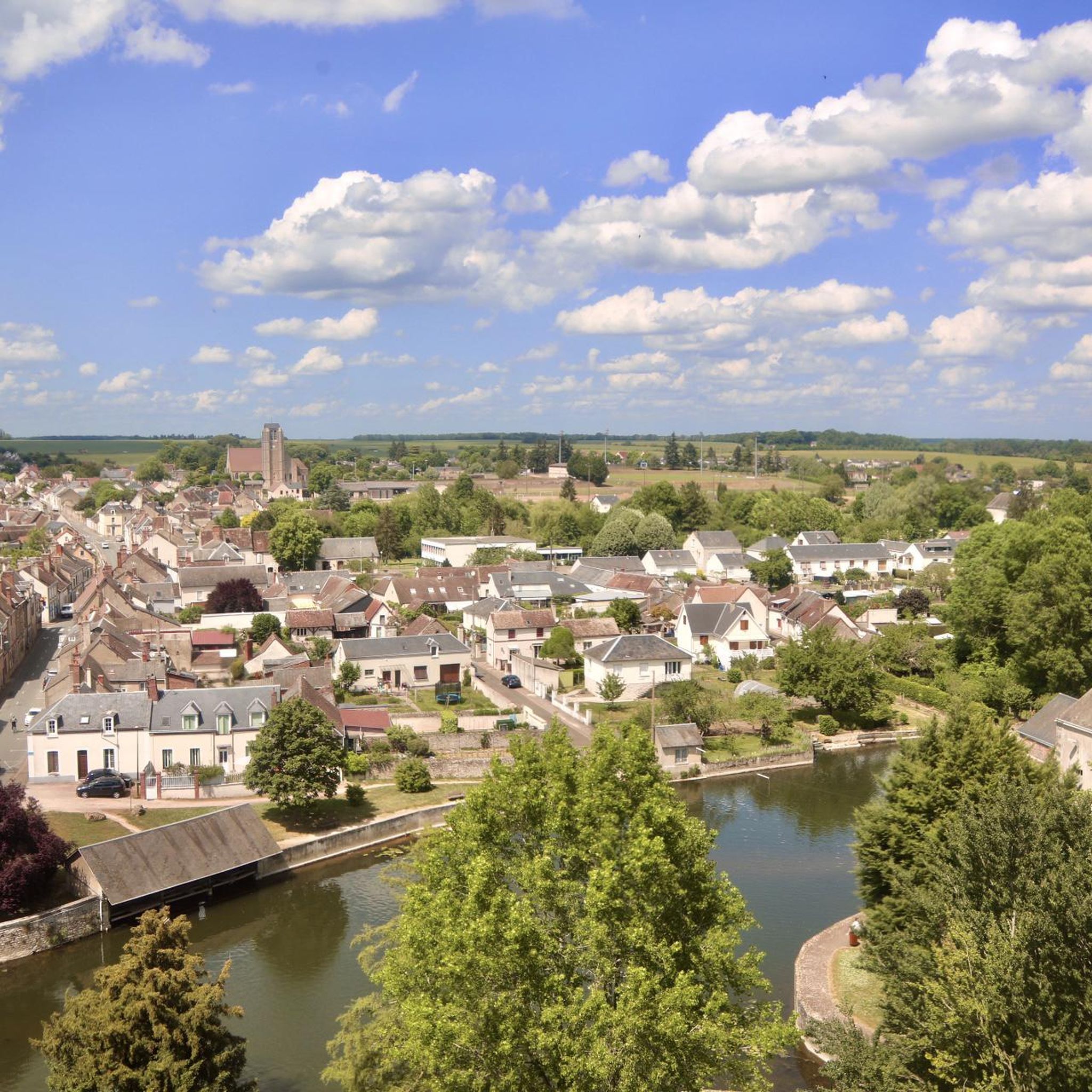
magnificent view of the castle on the banks of the Loir with a small corner perfect for a picnic.
1
0

The Château de Moléans is a castle which extends from the 16th century to the 19th century. You can admire the exterior of the castle which includes a terrace overlooking the Conie valley, a wing of outbuildings inspired by the Château de Fleury-en-Bière, two Louis XIII pavilions and 19th century additions. Be sure to appreciate it as you pass by.
2
0
The castle of Moléans is a castle which extends from the 16th to the 19th century. You can admire the exterior of the castle which includes a terrace overlooking the Conie valley, a wing of outbuildings inspired by the castle of Fleury-en-Bière, two Louis XIII pavilions and additions from the 19th century. The castle is open from July 1 to September 3, and you can book a guided tour in French for a small fee. The Château de Moléans is a piece of French architectural history not to be missed.
2
0

Frequently Asked Questions
What historical sites can I visit around Lutz-En-Dunois?
The region offers several historical sites. The prominent Château de Châteaudun showcases medieval, Gothic, and Renaissance architecture, including a 12th-century tower and a collection of tapestries. Another notable site is the Château de Moléans, which features architecture from the 16th to the 19th century and offers views of the Conie valley. You can also see the Dheury bridge at Donnemain-Saint-Mamès, an early 20th-century metal bridge with views of an old mill and washhouse, and the Monumental Fountain of Châteaudun, a neo-Renaissance structure from 1860.
Are there family-friendly attractions around Lutz-En-Dunois?
Yes, several attractions are suitable for families. The Little Bridge of Vouvray is a pleasant spot for pedestrians and cyclists, ideal for picnics by the Dormouse river. The Château de Moléans is also considered family-friendly, offering a glimpse into historical architecture.
What kind of outdoor activities can I do near the attractions?
The area around Lutz-En-Dunois is well-suited for various outdoor activities, particularly cycling. You can explore MTB Trails, Road Cycling Routes, and general Cycling routes that often pass by or near these historical sites and natural viewpoints.
Are there cycling routes that pass by the attractions?
Absolutely. Many cycling routes in the region are designed to take you past key attractions. For instance, you can find routes that include the Little Bridge of Vouvray. Explore options in the Cycling around Lutz-En-Dunois guide for detailed itineraries.
When is the best time to visit the attractions around Lutz-En-Dunois?
For outdoor activities and enjoying the scenic views, the warmer months are generally ideal. Specifically, the Château de Moléans is open for visits from July 1 to September 3, offering guided tours during this period. Spring and autumn also provide pleasant weather for exploring the historical sites and cycling routes.
What natural features or viewpoints can I find?
The region is characterized by its waterways. The Château de Châteaudun offers magnificent views overlooking the Loir river. The Château de Moléans features a terrace with views of the Conie valley. The Little Bridge of Vouvray crosses the picturesque Dormouse river, providing a charming viewpoint and picnic spot.
Are there any hidden gems or unique local heritage sites?
Beyond the main castles, the Dheury bridge at Donnemain-Saint-Mamès is a unique early 20th-century metal bridge that offers views of an old mill and a washhouse with a rouche roof, highlighting local heritage along the Conie river. The Monumental Fountain of Châteaudun, with its neo-Renaissance style and phoenix symbolism, also tells a unique story of the city's rebirth.
What do visitors enjoy most about the attractions in Lutz-En-Dunois?
Visitors particularly appreciate the blend of historical grandeur and natural beauty. The impressive architecture and historical significance of sites like the Château de Châteaudun are highly rated. Many also enjoy the picturesque settings of the bridges, such as the Little Bridge of Vouvray, which are perfect for leisurely strolls and picnics by the river.
Can I find easy cycling routes suitable for beginners?
Yes, there are easy cycling routes available. For example, the MTB Trails around Lutz-En-Dunois guide includes routes like the 'Château de Villebeton loop from Ozoir-le-Breuil' and 'Moulin de Courgain loop from Châteaudun' which are rated as easy. Similarly, the Road Cycling Routes guide offers easy options like the 'Saint Hilaire Church – Château de Châteaudun loop from Châteaudun'.
Are there any circular walks or routes around the attractions?
While specific 'circular walks' aren't explicitly detailed for all attractions, many of the cycling and MTB routes are circular, allowing you to start and end in the same location. For instance, the MTB Trails guide lists several loop routes, such as the 'Church of Saint John of the Chain loop from Les Garennes' and 'Historic Estate of Moléans loop from Marboué', which can be adapted for walking in parts or enjoyed by bike.
What kind of architecture can I expect to see?
The architecture in the region spans several centuries. The Château de Châteaudun is a prime example, featuring a blend of medieval, Gothic, and Renaissance styles. The Château de Moléans showcases elements from the 16th to the 19th century, including Louis XIII pavilions. You'll also find early 20th-century industrial design in bridges like the Dheury bridge and neo-Renaissance style in the Monumental Fountain of Châteaudun.
Are there opportunities for picnics near the attractions?
Yes, several spots are ideal for picnics. The Little Bridge of Vouvray is specifically mentioned as a suitable place for picnics with family or friends by the Dormouse river. Additionally, the area around the Château de Châteaudun offers a small corner perfect for a picnic with a magnificent view of the castle and the Loir.

Get inspired with the komoot mobile app


Explore more
Still not found the Highlight you’re looking for? See guides of the top attractions in other regions:
