Attractions and Places To See around Ruan-Sur-Egvonne - Top 18
Best attractions and places to see around Ruan-Sur-Egvonne include a variety of historical sites and natural viewpoints. This region offers more than 15 distinct places to explore, ranging from ancient churches to castle ruins. The landscape is characterized by its historical architecture and riverine settings, providing diverse options for visitors.
Best attractions and places to see around Ruan-Sur-Egvonne
- The most popular attractions is View of Montigny-le-Gannelon Castle, a castle that offers a viewpoint from the bridge crossing the Loir.…
Last updated: July 29, 2026
Château de Montigny-le-Gannelon
Highlight • Castle
Montigny-le-Gannelon Castle dates from the Renaissance period; it was redesigned …
Translated by Google •
Tip by

Saint George's Church
Highlight • Other
Translated by Google •
Tip by

Sign up now to discover places like this
Get recommendations on the best single tracks, peaks, & plenty of other exciting outdoor places.
Sign up for free
Saint Peter's Church
Highlight • Other
Translated by Google •
Tip by
La Gaudinière Castle (ruins)
Highlight • Castle
Translated by Google •
Tip by

Saint Hilaire Church
Highlight • Other
Translated by Google •
Tip by

Sign up for free to discover even more attractions around Ruan-Sur-Egvonne.
Sign up for free
Already have an account?
Start today with a free account
Your next adventure awaits.
Login or Signup


Tips from the Community


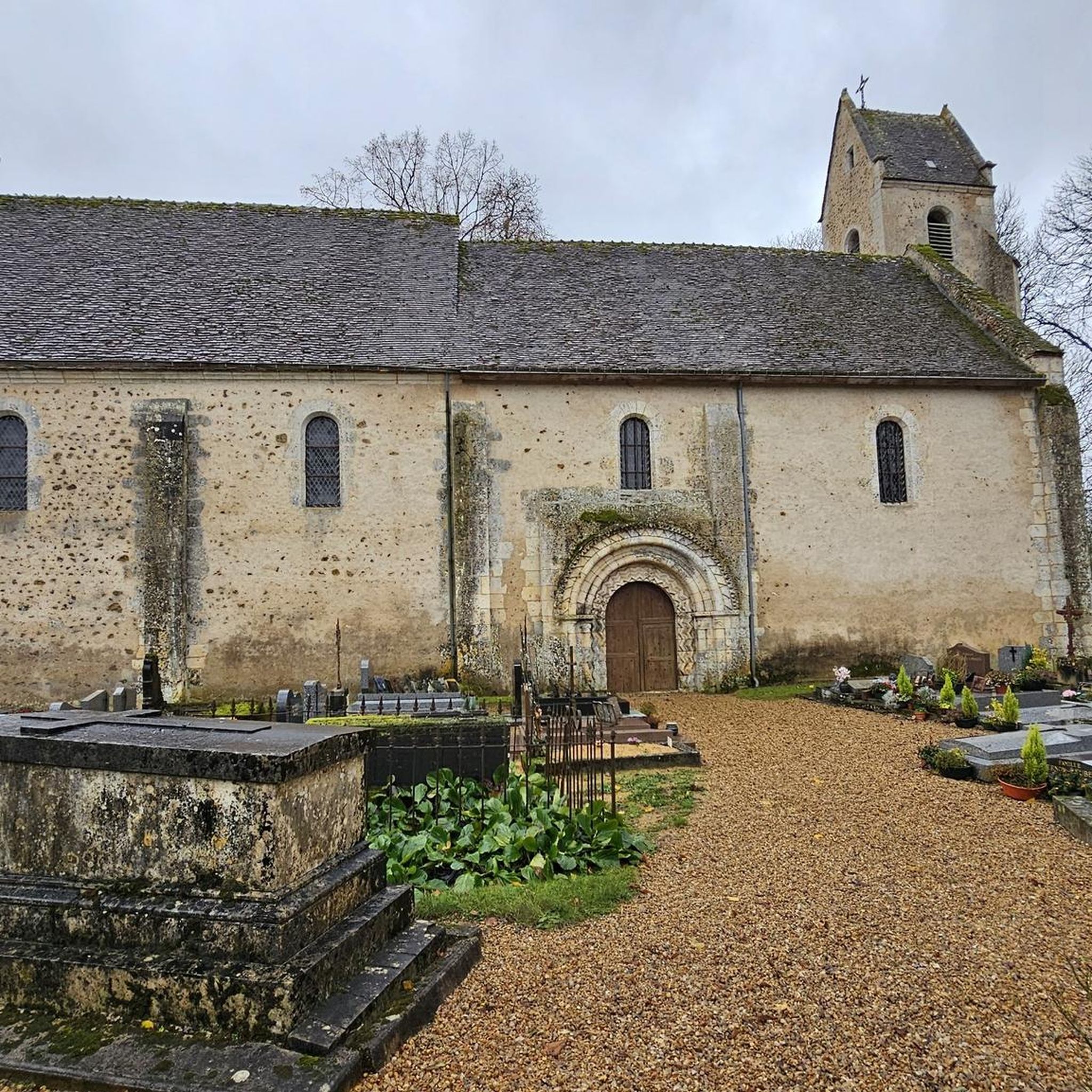
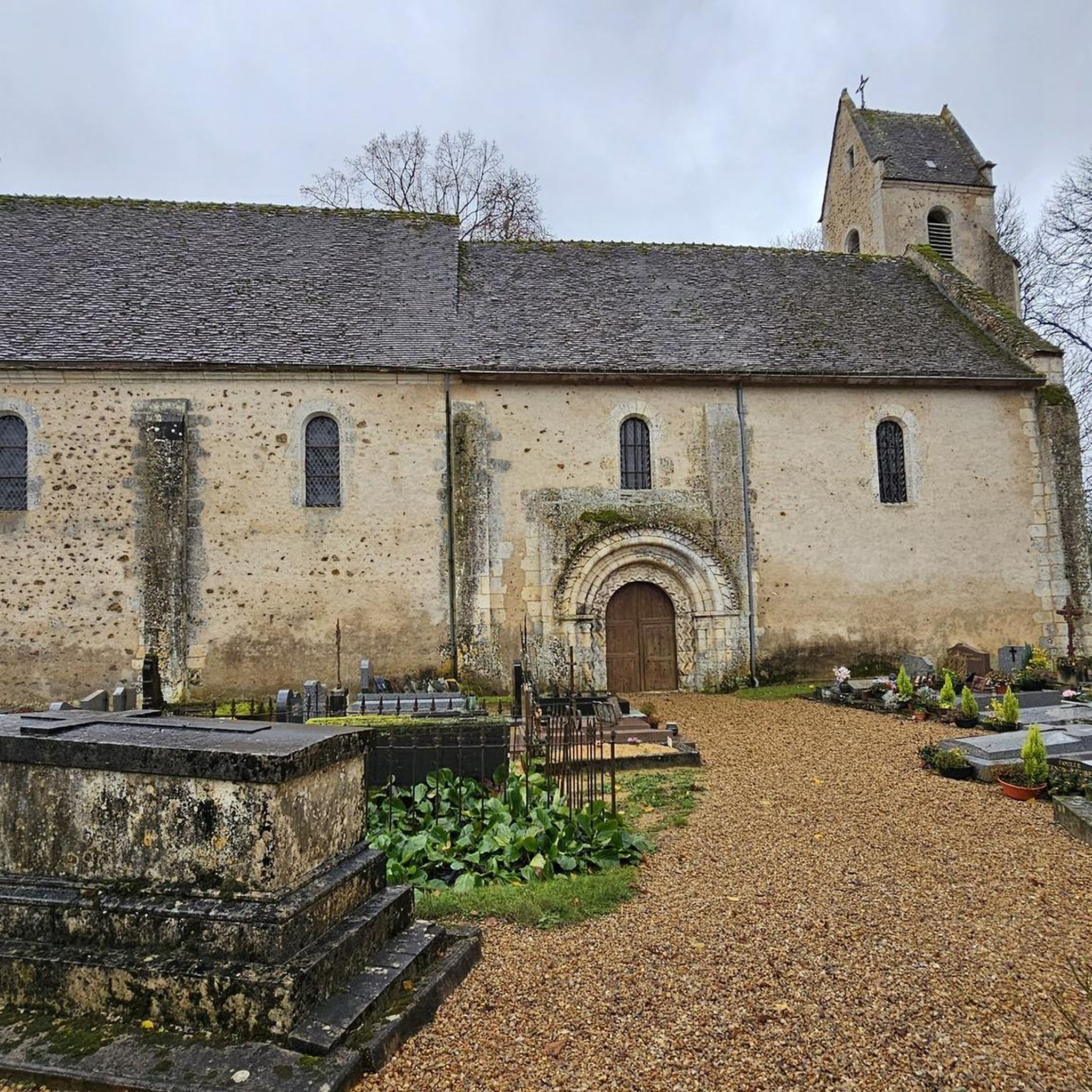
Placed under the patronage of Saint Hilaire, this parish was given by Gannelon de Montigny, lord of the place, to the abbey of Marmoutier around 1042. Its reconstruction probably dates from this period; it then became a priory. The church has a rectangular nave ending in a choir with a flat chevet. An examination of the masonry easily reveals two distinct periods of construction: the Romanesque period and the Renaissance. Built of flint rubble with rendering, the western part of the building appears to date from the 11th or 12th century. A limestone cornice supported by rather crude corbels underlines the base of the roof. To the south, two narrow Romanesque windows flared inwards light the nave. To the north, the bays were later reworked and enlarged. On this same side, a Romanesque doorway was walled up; It allowed the church to connect with a building whose traces of detachment remain. The bell tower was built to the north of the Romanesque nave, extending the western façade. The absence of a connection between the east and west walls of the bell tower and the north wall of the nave clearly indicates that it is an entirely later construction. However, its crowning is much later, as evidenced by its cornice, whose molding is in the classical style. Flanked by obliquely angled buttresses, it is covered with a saddleback roof. The eastern half of the church appears to be an extension built during the Renaissance period. Its ogee-shaped cornice and the decoration of the eastern gable, as well as the moldings of the buttress bands, attest to this dating. A vast rectangular choir then appears to have replaced a semicircular Romanesque apse; the eastern gable and the southern and northern façades were then pierced with networked bays. In the lower part of the north façade, projecting ashlars appear to have supported the roof of a lean-to building. To the south, a sacristy was built in the 19th century. Inside, the entire building is covered with a paneled vault with exposed tie beams and kingposts. The 18th-century high altar is surmounted by an Assumption of the Virgin inspired by Murillo's. For the restoration of the roofs and façades, the Sauvegarde de l'Art Français (French National Art Protection Agency) awarded a grant of €30,490 in 2001.
0
0
Before the 13th century there were two parishes, Saint-Sauveur and Saint-Gilles, in 1300 the bishop of Chartres united them into one by a charter of Berchères, because of the smallness of the two parishes. The church dates from the beginning of the 17th century. Rebuilt on the foundations of an old Romanesque church, its originality comes from its bell tower with saddle roof, its caquetoire and its paneled vault redone in 2003. At the initiative of the Prince Duke of Montmorency-Laval, it has contained the reliquary of Sainte-Félicité since 1838. Saint Félicité, whose relics are in Montigny-le-Gannelon, is a martyr whose life is unknown, whose body was taken from the sacred cemeteries of Rome. We have his body, the skull, the bones of his arms, fingers and feet. They were removed from the Saint-Cyriaque cemetery in 1828 and placed in their respective places on a body artistically modeled in wax and measuring more than 1.40 meters in length. A magnificent chase, of the shape and size of an altar tomb, all furnished with glazing and embellished with gilding received this precious deposit. Pope Leo XII donated it to the Duke of Laval, then Charles X's ambassador to Rome. On his death, he bequeathed it by will to the church of Montigny-le-Gannelon where the old historic castle of Laval-Montmorency is located. The venerated hunt is now placed under the main altar of which it forms the tomb.
0
0

Almost nothing is reliably known about the life of Saint George (Saint-GEORGES), to whom the church of Cloyes-sur-le-Loir was dedicated, but the veneration of his person goes back to early Christianity. A martyr identified with George is said to have lived in the third century. However, the legend of St. George as a dragon slayer is well known and widespread; he is usually depicted - in paintings or as a statue - as the conqueror of the monster, often as a knight on horseback. The memorial day of the very popular George - he is, among other things, patron of the English kingdom - in the calendar of saints is April 23rd.
2
0
This church in Romilly-sur-Aigre was dedicated to Saint Peter (Saint Pierre). Simon, nicknamed Peter (Rock), was a fisherman on the Sea of Galilee when he - together with his brother Andrew - was called by Jesus Christ to be "fishers of men". According to Catholic understanding, he is the supreme apostle, and the two millennia-long line of popes - currently Francis - are his successor. On statues and paintings, Peter is almost always depicted with two keys in his hand; this attribute refers to the biblical saying in Matthew: “I will give you the keys of the kingdom of heaven; Whatever you bind on earth will be bound in heaven, and whatever you loose on earth will be loosed in heaven” (Chapter 16, verse 19). Peter and Paul are also known as the “Princes of the Apostles”; their common feast day in the saints' calendar is June 29th.
3
2

At the end of the 15th century, a first construction project made it possible to rebuild this church dedicated to Saint Peter. The current building consists of a nave, a choir bay and a three-sided apse. The bell tower was probably built at the beginning of the 20th century. The peculiarity of this building lies above all in the facade framed by two corner towers from the 18th century. Inside the porch, on the ground floor, you can still admire the old 16th-century gabled gate and two large western Gothic bay windows. Source: https://www.sauvegardeartfrancais.fr/projets/romilly-sur-aigre-eglise-saint-pierre/
4
0


The house of La Rochefoucauld is one of the oldest families of the French nobility. In 1863, the Duke of La Rochefoucauld undertook the construction of a magnificent castle in the middle of the forest of Gaudinière. The castle was bought in the early 1920s by a wealthy Armenian merchant from New York, who wanted to organize a reception center for orphans from Armenia. Chance made that this castle was chosen, and transformed to accommodate a hundred children. After long and expensive development work, the center worked in good harmony with the surroundings, including the village of Ville aux Clercs. The estate created its own resources and even provided a profession for the accommodated teenagers. The castle experienced several fire alerts at the end of the 1920s. On Saturday November 17, 1934, around 9:30 am, an employee of the estate saw smoke emanating from the roof on the northeast side. Firefighters from neighboring towns rushed to the scene. They could not contain the fire, but a lot of furniture, and objects were saved from the disaster. The investigation concluded that there was a short circuit in the attic. The residents were housed in the redeveloped outbuildings, but their situation could not last like this. The New York patron, after two years of study and reflection, preferred to shift his efforts to the Armenian communities in Greece, and more recently in 1991 in Syria and Lebanon. The domain was then sold for a few thousand Francs between the years 1937 and 1938. It is a company, a subsidiary of the "Mines de Lens" in the north of France which bought the entire domain to reforest it, in order to s '' supply mine poles. The ruins were then demolished, dispersed, even looted.
1
0
Frequently Asked Questions
What historical sites can I visit around Ruan-Sur-Egvonne?
The region is rich in historical architecture. You can explore sites like Saint Peter's Church, a 15th-century church with unique 18th-century corner towers, and Saint George's Church, known for its beautiful setting. Additionally, Saint Hilaire Church offers insights into Romanesque and Renaissance construction periods.
Are there any castle ruins to explore near Ruan-Sur-Egvonne?
Yes, you can visit La Gaudinière Castle (ruins). These are the remains of a once magnificent castle built in the middle of the Gaudinière forest, with a fascinating history of fires and subsequent demolition.
What outdoor activities can I do near these attractions?
The area around Ruan-Sur-Egvonne offers various outdoor activities. You can find numerous cycling routes, including touring bicycle and road cycling options, as well as mountain biking trails. For more details, explore the guides for MTB Trails, Cycling, and Road Cycling Routes around Ruan-Sur-Egvonne.
Are there cycling routes suitable for different skill levels?
Yes, the cycling routes around Ruan-Sur-Egvonne cater to various skill levels. You'll find moderate MTB trails like the 'Courgain Mill – Church of Saint John of the Chain loop' (48 km) and 'Moulin de Courgain loop' (46 km). For road cycling, there are moderate routes such as 'Château de Châteaudun – Château de Meslay loop' (90 km), alongside more difficult options for experienced riders.
What is the best time to visit Ruan-Sur-Egvonne attractions?
The best time to visit Ruan-Sur-Egvonne attractions, especially for outdoor activities and exploring historical sites, is generally during the spring (April-June) and autumn (September-October) months. The weather is typically mild and pleasant, ideal for walking and cycling. Summer can also be enjoyable, though it might be warmer.
Are there family-friendly activities around Ruan-Sur-Egvonne?
While specific 'family-friendly' categories aren't listed for all attractions, exploring the historical churches and castle ruins can be an engaging educational experience for families. Gentle walks along the riverine settings also offer pleasant outings for all ages. Consider the View of Montigny-le-Gannelon Castle for a scenic spot that can be enjoyed by everyone.
What do visitors particularly enjoy about the attractions in Ruan-Sur-Egvonne?
Visitors appreciate the historical depth and architectural beauty of the region. For instance, the View of Montigny-le-Gannelon Castle is highly praised for its splendid Renaissance facades visible from the Loir bridge. The unique features of churches like Saint Peter's Church and the historical narrative of La Gaudinière Castle (ruins) also captivate visitors.
Are there any easy walks for beginners near Ruan-Sur-Egvonne?
While specific 'easy' walking trails are not detailed in the provided data, the general riverine landscape suggests opportunities for gentle strolls. Many of the cycling routes also have less strenuous sections that can be adapted for walking. Look for local paths along the Loir for relaxed exploration.
What kind of wildlife can I expect to see in the nature reserves around Ruan-Sur-Egvonne?
Given the region's riverine settings and forests, you might encounter various bird species, small mammals, and aquatic life. While specific nature reserves aren't detailed, exploring the natural areas around the Loir river and the Gaudinière forest could offer opportunities for wildlife spotting.
Are the attractions in Ruan-Sur-Egvonne accessible by public transport?
Information on specific public transport links to individual attractions is not readily available. It is generally recommended to have a car for exploring the attractions around Ruan-Sur-Egvonne, as many historical sites and natural viewpoints are located in rural settings. Local bus services might connect larger towns, but direct access to all highlights may be limited.
Are there dog-friendly walks near Ruan-Sur-Egvonne?
Many of the outdoor paths and trails in the natural areas around Ruan-Sur-Egvonne are suitable for dog walking, provided dogs are kept on a leash and owners clean up after them. Always check local regulations for specific sites or nature areas before visiting with your dog.
What are some hidden gems or less-known spots worth visiting?
Beyond the more prominent sites, exploring the smaller, less-visited churches like Saint Hilaire Church can reveal architectural details and local history often overlooked. The quiet paths through the Gaudinière forest leading to the castle ruins also offer a sense of discovery away from typical tourist routes.
Most popular routes around Ruan-Sur-Egvonne

Get inspired with the komoot mobile app


Explore more
Still not found the Highlight you’re looking for? See guides of the top attractions in other regions:
